World
China’s Trade Ties With Africa Continue to Strengthen
By Virusha Subban
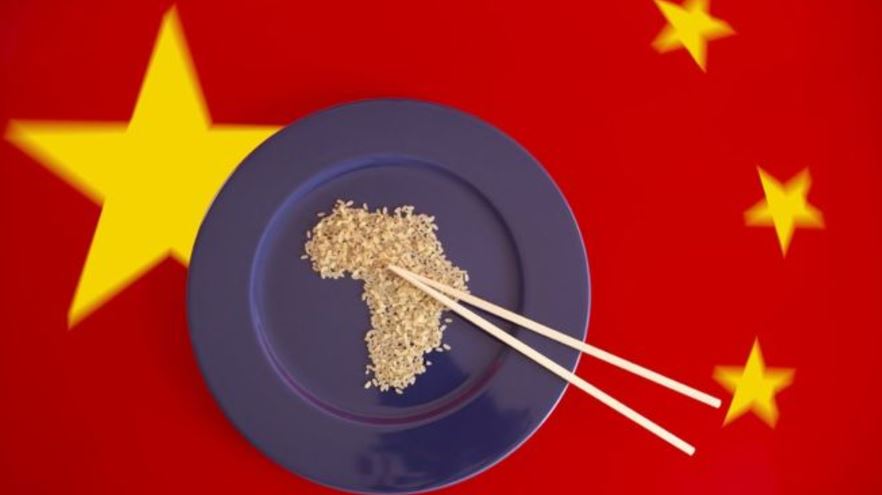
Trade between China and Africa is growing. The General Administration of Customs of China recently noted that bilateral trade between China and Africa amounted to $254.3 in 2021, an increase of 35.3% from 2020. In the first quarter of 2022, China’s Customs Data confirmed that trade between the two regions increased by 23% to $64.8 million.
Africa exported goods worth $105.9 billion to China, an increase of 43.7% from the previous year. China is increasingly importing agricultural products and manufacturing goods from Africa, in addition to its continued strong focus on oil, precious minerals and metals. African imports from China mainly focus on manufactured goods such as electronics, clothing and appliances, and technology.
While COVID lockdown in the large port city of Shanghai and other large Chinese cities resulted in logistics bottlenecks, trade with Africa has not been severely impacted. China has continued to import African agricultural goods and raw materials, with food security and materials needed for the energy transition being prioritized. However, China’s capacity to export products to Africa was temporarily affected by its strict lockdowns.
Data from the Chinese Ministry further revealed that over the last 20 years, China’s trade with Africa has risen 20-fold, showing that China is one of Africa’s biggest bilateral trading partners. To balance the trade gap, China has also pledged to import $300 billion of African products by 2025. The country has also increased the number of products that can be exported to China tariff-free.
A recent report by Economist Corporate Network, supported by Baker McKenzie and Silk Road Associates, BRI Beyond 2020 (Economist report), showed how these strengthening trade links are, in part, a result of favourable financial incentives offered to African jurisdictions by China.
According to the Economist report, 33 of the poorest jurisdictions in Africa export 97% of their exports to China with no tariffs and no customs duties. This report noted that bilateral trade was still heavily centred on China’s import of Africa’s natural resources. However, in recent years China had increased its import of manufacturing products from more diversified economies such as South Africa.
A Baker McKenzie report with Oxford Economics – AfCFTA: A Three Trillion Dollar Opportunity (AfCFTA report) – revealed that over three-quarters of African exports to the rest of the world were still heavily focused on natural resources, but that on the import side, manufactured goods accounted for more than half the total volume of imports into African jurisdictions. Africa’s most important suppliers of manufactured goods were listed as Europe (35%) China (16%) and the rest of Asia, including India (14%).
Infrastructure
Africa’s strong reliance on foreign jurisdictions for its manufactured goods shows that for intra-regional trade under the African Continental Free Trade Area (AfCFTA) to fully succeed, more jurisdictions in the region must develop their manufacturing bases and reduce their reliance on natural resources. As such, reliable transport infrastructure is vital for businesses in Africa to be able to scale up production for regional export. The continent also needs to redouble efforts to ensure that an adequate supply of water and electricity is available. Additional investments in utility infrastructure will have the added benefit of incentivising foreign companies to set up production facilities on the continent.
To aid Africa with these massive infrastructure needs, China has provided significant capital for key infrastructure projects in Africa in the last few years. A further Baker McKenzie report – New Dynamics: Shifting Patterns in Africa’s Infrastructure Funding (infrastructure report) – showed that lending by Chinese banks into energy and infrastructure projects in Sub-Saharan Africa saw a small uplift in 2020, despite the pandemic, although deal values were well below their 2017 peak.
In 2017, Chinese banks lent $11 billion to African infrastructure projects, which decreased to $4.5 billion in 2018, $2.8 billion in 2019 and $3.3 billion in 2020. Overall, the numbers show that there has been a slowdown in the number of infrastructure deals from China, although they are by far still the biggest investors in the region. In the short term, the report notes that more targeted lending from China is expected.
Forum on China-Africa Trade Cooperation
The Economist report pointed out that political and policy commitments between China and Africa have strengthened and expanded in their scope in recent years. Since its launch in 2000, the Forum on China-Africa Trade Cooperation (FOCAC) has focused on forming closer relationships between China and Africa.
At FOCAC’s latest conference, held at the end of 2021, China announced that it would move away from state-backed projects in Africa, partly due to the impact of COVID-19. Instead, the focus would be on increasing reciprocal China-Africa trade, incentivizing private firm investments from China into Africa and strengthening cooperation between the two regions.
At the 2021 FOCAC conference, President Xi pledged $40 billion to infrastructure projects in Africa as part of China’s Belt and Road Initiative and the China-Africa Cooperation Vision 2035. Nine programs were identified as part of this initiative – medical and health; poverty reduction and agricultural development; trade promotion; investment promotion; digital innovation; green development; capacity building; cultural and people-to-people exchanges; and peace and security. Also discussed at the conference was China’s intention to focus on bilateral cooperation with African countries with regard to aviation, finance, tourism, and the digital, marine and green economies.
As Africa reduces its over-dependence on natural resources and increases its manufacturing capacity, it must also ensure it develops other industries in a sustainable way. To this end, the Economist report outlined how China and Africa have agreed to work together on improving Africa’s capacity for green, low-carbon and sustainable development, and to roll out more than 50 projects on clean energy, wildlife protection, and environment-friendly agriculture and low-carbon development. The trade-in of sustainable goods and services is also expected to reap benefits for the African continent in future years.
Successful regional trade under AfCFTA will connect the region’s wealthier and poorer nations, promote the growth of value chains and lay the foundations for increased international trade in the process. As free trade under AfCFTA takes hold, the existing strong trade ties that African jurisdictions already enjoy with China are expected to be further boosted.
Virusha Subban is a Partner specialising in Customs and Trade, and Head of the Tax Practice at Baker McKenzie in Johannesburg
World
Russian-Nigerian Economic Diplomacy: Ajeokuta Symbolises Russia’s Remarkable Achievement in Nigeria
By Kestér Kenn Klomegâh
Over the past two decades, Russia’s economic influence in Africa—and specifically in Nigeria—has been limited, largely due to a lack of structured financial support from Russian policy banks and state-backed investment mechanisms. While Russian companies have demonstrated readiness to invest and compete with global players, they consistently cite insufficient government financial guarantees as a key constraint.
Unlike China, India, Japan, and the United States—which have provided billions in concessionary loans and credit lines to support African infrastructure, agriculture, manufacturing, and SMEs—Russia has struggled to translate diplomatic goodwill into substantial economic projects. For example, Nigeria’s trade with Russia accounts for barely 1% of total trade volume, while China and the U.S. dominate at over 15% and 10% respectively in the last decade. This disparity highlights the challenges Russia faces in converting agreements into actionable investment.
Lessons from Nigeria’s Past
The limited impact of Russian economic diplomacy echoes Nigeria’s own history of unfulfilled agreements during former President Olusegun Obasanjo’s administration. Over the past 20 years, ambitious energy, transport, and industrial initiatives signed with foreign partners—including Russia—often stalled or produced minimal results. In many cases, projects were approved in principle, but funding shortfalls, bureaucratic hurdles, and weak follow-through left them unimplemented. Nothing monumental emerged from these agreements, underscoring the importance of financial backing and sustained commitment.
China as a Model
Policy experts point to China’s systematic approach to African investments as a blueprint for Russia. Chinese state policy banks underwrite projects, de-risk investments, and provide finance often secured by African sovereign guarantees. This approach has enabled Chinese companies to execute large-scale infrastructure efficiently, expanding their presence across sectors while simultaneously investing in human capital.
Egyptian Professor Mohamed Chtatou at the International University of Rabat and Mohammed V University in Rabat, Morocco, argues: “Russia could replicate such mechanisms to ensure companies operate with financial backing and risk mitigation, rather than relying solely on bilateral agreements or political connections.”
Russia’s Current Footprint in Africa
Russia’s economic engagement in Africa is heavily tied to natural resources and military equipment. In Zimbabwe, platinum rights and diamond projects were exchanged for fuel or fighter jets. Nearly half of Russian arms exports to Africa are concentrated in countries like Nigeria, Zimbabwe, and Mozambique. Large-scale initiatives, such as the planned $10 billion nuclear plant in Zambia, have stalled due to a lack of Russian financial commitment, despite completed feasibility studies. Similar delays have affected nuclear projects in South Africa, Rwanda, and Egypt.
Federation Council Chairperson Valentina Matviyenko and Senator Igor Morozov have emphasized parliamentary diplomacy and the creation of new financial instruments, such as investment funds under the Russian Export Center, to provide structured support for businesses and enhance trade cooperation. These measures are designed to address historical gaps in financing and ensure that agreements lead to tangible outcomes.
Opportunities and Challenges
Analysts highlight a fundamental challenge: Russia’s limited incentives in Africa. While China invests to secure resources and export markets, Russia lacks comparable commercial drivers. Russian companies possess technological and industrial capabilities, but without sufficient financial support, large-scale projects remain aspirational rather than executable.
The historic Russia-Africa Summits in Sochi and in St. Petersburg explicitly indicate a renewed push to deepen engagement, particularly in the economic sectors. President Vladimir Putin has set a goal to raise Russia-Africa trade from $20 billion to $40 billion over the next few years. However, compared to Asian, European, and American investors, Russia still lags significantly. UNCTAD data shows that the top investors in Africa are the Netherlands, France, the UK, the United States, and China—countries that combine capital support with strategic deployment.
In Nigeria, agreements with Russian firms over energy and industrial projects have yielded little measurable progress. Over 20 years, major deals signed during Obasanjo’s administration and renewed under subsequent governments often stalled at the financing stage. The lesson is clear: political agreements alone are insufficient without structured investment and follow-through.
Strategic Recommendations
For Russia to expand its economic influence in Africa, analysts recommend:
- Structured financial support: Establishing state-backed credit lines, policy bank guarantees, and investment funds to reduce project risks.
- Incentive realignment: Identifying sectors where Russian expertise aligns with African needs, including energy, industrial technology, and infrastructure.
- Sustained implementation: Turning signed agreements into tangible projects with clear timelines and milestones, avoiding the pitfalls of unfulfilled past agreements.
With proper financial backing, Russia can leverage its technological capabilities to diversify beyond arms sales and resource-linked deals, enhancing trade, industrial, and technological cooperation across Africa.
Conclusion
Russia’s Africa strategy remains a work in progress. Nigeria’s experience with decades of agreements that failed to materialize underscores the importance of structured financial commitments and persistent follow-through. Without these, Russia risks remaining a peripheral player (virtual investor) while Arab States such as UAE, China, the United States, and other global powers consolidate their presence.
The potential is evident: Africa is a fast-growing market with vast natural resources, infrastructure needs, and a young, ambitious population. Russia’s challenge—and opportunity—is to match diplomatic efforts with financial strategy, turning political ties into lasting economic influence.
World
Afreximbank Warns African Governments On Deep Split in Global Commodities
By Adedapo Adesanya
Africa Export-Import Bank (Afreximbank) has urged African governments to lean into structural tailwinds, warning that the global commodity landscape has entered a new phase of deepening split.
In its November 2025 commodity bulletin, the bank noted that markets are no longer moving in unison; instead, some are powered by structural demand while others are weakening under oversupply, shifting consumption patterns and weather-related dynamics.
As a result of this bifurcation, the Cairo-based lender tasked policymakers on the continent to manage supply-chain vulnerabilities and diversify beyond the commodity-export model.
The report highlights that commodities linked to energy transition, infrastructure development and geopolitical realignments are gaining momentum.
For instance, natural gas has risen sharply from 2024 levels, supported by colder-season heating needs, export disruptions around the Red Sea and tightening global supply. Lithium continues to surge on strong demand from electric-vehicle and battery-storage sectors, with growth projections of up to 45 per cent in 2026. Aluminium is approaching multi-year highs amid strong construction and automotive activity and smelter-level power constraints, while soybeans are benefiting from sustained Chinese purchases and adverse weather concerns in South America.
Even crude oil, which accounts for Nigeria’s highest foreign exchange earnings, though still lower year-on-year, is stabilising around $60 per barrel as geopolitical supply risks, including drone attacks on Russian facilities, offset muted global demand.
In contrast, several commodities that recently experienced strong rallies are now softening.
The bank noted that cocoa prices are retreating from record highs as West African crop prospects improve and inventories recover. Palm oil markets face oversupply in Southeast Asia and subdued demand from India and China, pushing stocks to multi-year highs. Sugar is weakening under expectations of a nearly two-million-tonne global surplus for the 2025/26 season, while platinum and silver are seeing headwinds from weaker industrial demand, investor profit-taking and hawkish monetary signals.
For Africa, the bank stresses that the implications are clear. Countries aligned with energy-transition metals and infrastructure-linked commodities stand to benefit from more resilient long-term demand.
It urged those heavily exposed to softening agricultural markets to accelerate a shift into processing, value addition and product diversification.
The bulletin also called for stronger market-intelligence systems, improved intra-African trade connectivity, and investment in logistics and regulatory capacity, noting that Africa’s competitiveness will depend on how quickly governments adapt to the new two-speed global environment.
World
Aduna, Comviva to Accelerate Network APIs Monetization
By Modupe Gbadeyanka
A strategic partnership designed to accelerate worldwide enterprise adoption and monetisation of Network APIs has been entered into between Comviva and the global aggregator of standardised network APIs, Aduna.
The adoption would be done through Comviva’s flagship SaaS-based platform for programmable communications and network intelligence, NGAGE.ai.
The partnership combines Comviva’s NGAGE.ai platform and enterprise onboarding expertise with Aduna’s global operator consortium.
This unified approach provides enterprises with secure, scalable access to network intelligence while enabling telcos to monetise network capabilities efficiently.
The collaboration is further strengthened by Comviva’s proven leadership in the global digital payments and digital lending ecosystem— sectors that will be among the biggest adopters of Network APIs.
The NGAGE.ai platform is already active across 40+ countries, integrated with 100+ operators, and processing over 250 billion transactions annually for more than 7,000 enterprise customers. With its extensive global deployment, NGAGE.ai is positioned as one of the most scalable and trusted platforms for API-led network intelligence adoption.
“As enterprises accelerate their shift toward real-time, intelligence-driven operations, Network APIs will become foundational to digital transformation. With NGAGE.ai and Aduna’s global ecosystem, we are creating a unified and scalable pathway for enterprises to adopt programmable communications at speed and at scale.
“This partnership strengthens our commitment to helping telcos monetise network intelligence while enabling enterprises to build differentiated, secure, and future-ready digital experiences,” the chief executive of Comviva, Mr Rajesh Chandiramani, stated.
Also, the chief executive of Aduna, Mr Anthony Bartolo, noted that, “The next wave of enterprise innovation will be powered by seamless access to network intelligence.
“By integrating Comviva’s NGAGE.ai platform with Aduna’s global federation of operators, we are enabling enterprises to innovate consistently across markets with standardised, high-performance Network APIs.
“This collaboration enhances the value chain for operators and gives enterprises the confidence and agility needed to launch new services, reduce fraud, and deliver more trustworthy customer experiences worldwide.”
-
Feature/OPED6 years agoDavos was Different this year
-
Travel/Tourism9 years ago
Lagos Seals Western Lodge Hotel In Ikorodu
-
Showbiz3 years agoEstranged Lover Releases Videos of Empress Njamah Bathing
-
Banking7 years agoSort Codes of GTBank Branches in Nigeria
-
Economy3 years agoSubsidy Removal: CNG at N130 Per Litre Cheaper Than Petrol—IPMAN
-
Banking3 years agoFirst Bank Announces Planned Downtime
-
Banking3 years agoSort Codes of UBA Branches in Nigeria
-
Sports3 years agoHighest Paid Nigerian Footballer – How Much Do Nigerian Footballers Earn