Connect with us

General

Nigeria Seeks Stronger Ties Against Gulf of Guinea Piracy

Published

on

Gulf of Guinea

By Adedapo Adesanya

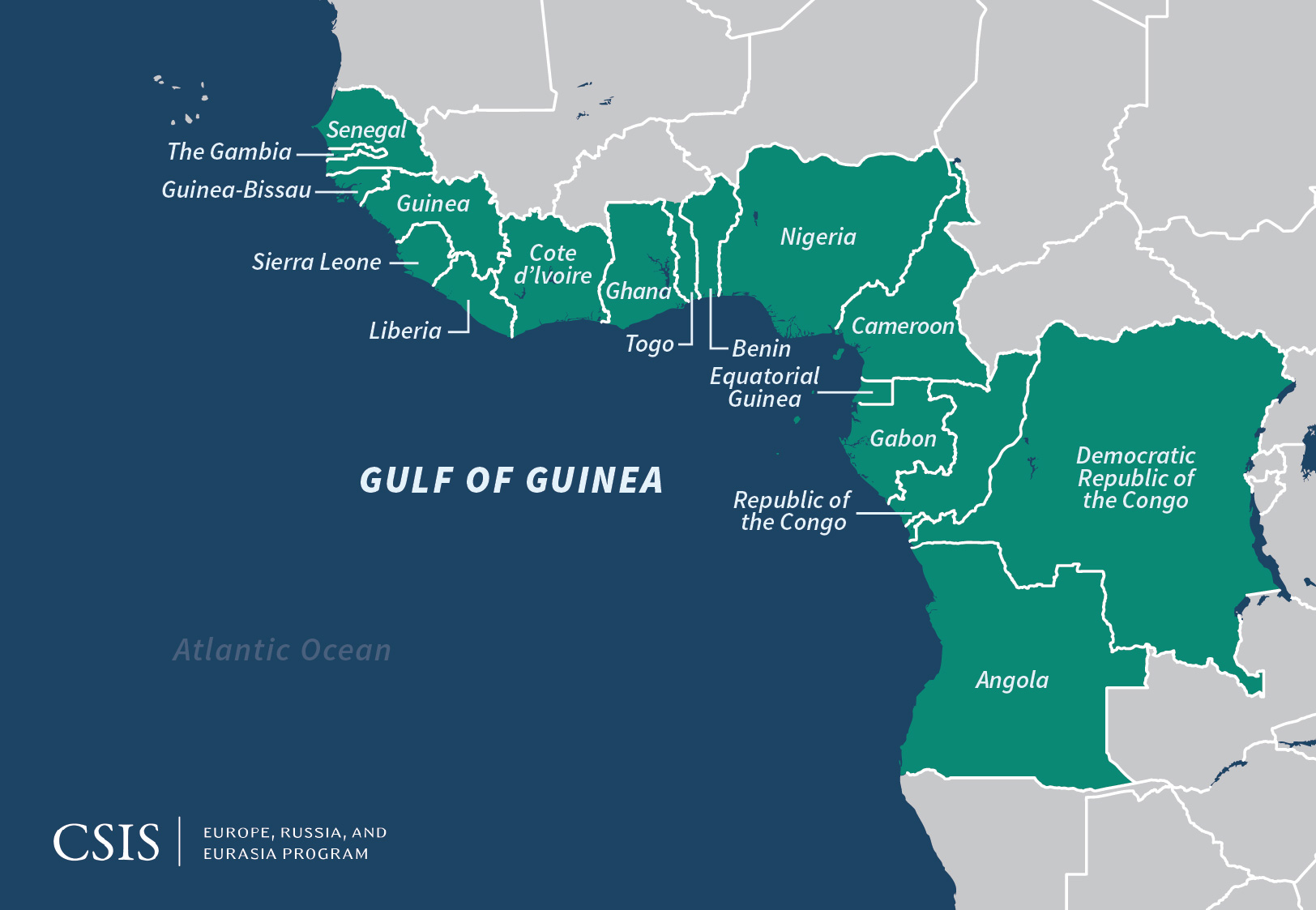
The Federal Government of Nigeria has called on countries in the Gulf of Guinea to strengthen ties towards ensuring regional stability.

The Minister of State for Budget and National Planning, Mr Clement Agba, made the call at the graduation of the Anti-Piracy Course 3/2022 organised by the Martin Luther Agwai International Leadership and Peacekeeping Centre (MLAILPKC) in Abuja recently.

The course was organised in partnership with the United Nations Development Programme (UNDP) with the support of the Government of Japan.

The Minister was represented by the Director of International Cooperation, Ministry of Finance, Budget and National Planning, Mr Lanre Adekanye.

He said the course was meant to checkmate the recurrent phenomenon of piracy in the Gulf of Guinea region and countries bordering it.

According to him, being a major international economic route, the need to improve maritime security along the coastlines, territorial economic seas, and exclusive zones cannot be overemphasised.

“It is, therefore, heartwarming to note that the Government of Japan has spearheaded the funding of the project as a bilateral cooperation effort through the UNDP and MLAILPKC.

“This Project aligns with international best practices towards enhancing the capabilities and capacity of relevant security institutions with the assistance of Member State Governments to create a more secure, stable and prosperous continent.

“It is important to protect and utilise our natural resources as a means for economic growth, jobs creation through robust regional and international trade, increased export and import, and balance of payment, amongst others.

“The menace of piracy has, however, denied us these opportunities and has further impoverished the continent,” he said.

Mr Agba emphasised the need for maritime countries in the Gulf of Guinea to be equipped with strong, professional military and law enforcement institutions that could provide the setting for maritime trade to flourish.

He added that when maritime trade freely sailed across the seas, economic development and the opportunity for prosperity were possible.

He said the initiative of the Counter-Piracy and Response Project would help countries in the region protect their resources and help provide these resources for their prosperity and their people.

On his part, the Commandant, MLAILPKC, Maj.-Gen. Auwal Fagge said the objective of the course was to enhance participants’ understanding of the issues involved in piracy, its implications and measures required to counter the high-security challenges, conflicts and other maritime crimes in the region.

He said the objectives had been fully achieved, adding that it had broadened their horizon on the root causes of piracy and other maritime crimes in the Gulf of Guinea and measures put in place to counter piracy.

Some of the measures, according to him, include inter agencies’ roles, and member states’ efforts to counter piracy through the judiciary, armed forces and other security agencies.

“It is hoped that what you have learnt here would reflect on your performances and general conduct in your various places of deployment or work,” he said.

The commandant thanked UNDP, the Japanese government, services chiefs and participating countries for making the course a reality.

The Japanese Ambassador to Nigeria, Mr Matsunaga Kazuyoshi, represented by the Defence Attaché, Lt.-Col. Kazuaki Uchiumi, urged participants to redouble their anti-piracy efforts upon returning to their home institutions.

He said the government of Japan had emphasised the importance of human resource development and business promotion in Africa and the government of Japan’s contribution to such efforts during the 8th Tokyo International Conference on Africa (TICAD8) in Tunisia.

He also called for stronger collaboration among the countries in the region to tackle the menace of piracy in the Gulf of Guinea.

One of the participants, Cdr Kanu Kabadi of the Angolan Navy, said the course had broadened his understanding of the need for member states to strengthen partnerships in countering piracy in the Gulf of Guinea, pledging to deploy the knowledge gained in the fight against pirates in the region in various ways.


Adedapo Adesanya is a journalist, polymath, and connoisseur of everything art. When he is not writing, he has his nose buried in one of the many books or articles he has bookmarked or simply listening to good music with a bottle of beer or wine. He supports the greatest club in the world, Manchester United F.C.

Click to comment

Leave a Reply

Your email address will not be published. Required fields are marked *

General

FG Issues Data Protection Compliance Directive to All MDAs

Published

on

data protection compliance

By Adedapo Adesanya

The federal government has issued a data protection compliance circular to all Ministries, Departments and Agencies (MDAs) to promote public trust through data-driven governance.

The compliance directive is contained in Circular No. 59805/S.I/74, dated 27 July 2026, and signed by the Secretary to the Government of the Federation, Mr George Akume, according to a statement by the Head, Legal, Enforcement & Regulations, Mr Babatunde Bamigboye.

The initiative forms part of a continuum of regulatory measures that will be vigorously pursued as Nigeria advances towards the decisive frontiers of the Fourth Industrial Revolution.

The circular drew the attention of MDAs to a statement of President Bola Tinubu, where he said: “Data is the new oil”.

Mr Akume then directed all Ministries, Extra-Ministerial Departments and Agencies to capture the information rigorously and safeguard it under the Nigeria Data Protection Act, 2023 (NDP Act).

The circular also directed MDAs to ensure full compliance with the NDP Act, Regulations, Guidelines, and Directives issued by the Nigeria Data Protection Commission (NDPC) in relation to the processing of personal data.

To this end, the Circular directs MDAs to, designate suitably qualified officers as Data Protection Officers (DPOs) to oversee data protection compliance and advise management on all matters relating to the lawful processing of personal data, ensure that the names and contact details of their designated DPOs are communicated to the NDPC for registration and official records; engage licensed Data Protection Compliance Organisations (DPCOs), where required, to facilitate compliance with the NDP Act and support the conduct of statutory compliance audits.

It also directed them to provide adequate budgetary allocation for data protection compliance activities, including capacity building, awareness programmes, deployment of appropriate technical safeguards, and periodic compliance audits; and submit all mandatory Data Protection Compliance Audit Returns and other statutory returns to the NDPC within the timelines prescribed by law.

The circular further states that “Permanent Secretaries, Accounting Officers and Chief Executive Officers of all MDAs shall be personally responsible for ensuring institutional compliance with the Circular and the provisions of the NDP Act.”

The National Commissioner/Chief Executive Officer of the NDPC, Mr Vincent Olatunji, expressed the commission’s commitment to supporting data-driven governance.

Mr Olatunji maintained that data accountability is pivotal to achieving the eight Presidential Priorities. To provide full technical support to MDAs for the purpose of achieving compliance, the commission has constituted a regulatory clinic.

Continue Reading

General

Yellow Card Raises $40m to Expand Stablecoin Payment Infrastructure

Published

on

yellow card trade digital assets

By Adedapo Adesanya

Yellow Card, a global stablecoin infrastructure provider, has raised $40 million in a strategic funding round to accelerate its international expansion and strengthen its digital payment infrastructure.

The funding round attracted investments from SC Ventures, the innovation and investment arm of Standard Chartered, Sony Innovation Fund, Polychain Capital, Blockchain Capital, and other strategic investors. With the latest raise, Yellow Card’s total equity financing has now exceeded $120 million.

The company said the fresh capital will be used to scale its Global US Dollar Accounts, an end-to-end dollar account designed for businesses, while expanding the stablecoin payment rails that connect businesses to markets around the world.

Yellow Card’s chief executive, Mr Chris Maurice, described the investment as a strong endorsement of the company’s long-term vision, noting that the company has spent years building infrastructure that allows businesses to move money globally without relying on traditional correspondent banking systems.

He added that the next phase of growth will focus on helping banks connect directly to stablecoin payment rails, enabling faster and more efficient cross-border transactions while expanding access to US Dollar services for businesses.

SC Ventures chief executive, Mr Alex Manson, said stablecoins are becoming an important part of global payments, but noted that widespread adoption will depend on reliable infrastructure and practical use cases.

He said Yellow Card has built the payment rails businesses across Africa need to move money efficiently across borders and expressed confidence in the company’s ability to expand both within Africa and internationally.

The investment also marks growing interest from global institutions in stablecoin-based payments. Sony Innovation Fund said its backing reflects confidence in Yellow Card’s ability to build digital payment infrastructure for emerging markets.

Mr Austin Noronha, Managing Director at Sony Ventures-US, said the company believes Yellow Card is creating the technology needed to help banks, financial technology firms and enterprises move money faster and more securely.

He added that the company looks forward to supporting Yellow Card as it expands beyond Africa into Latin America, the Middle East, Europe and the Asia-Pacific region.

Yellow Card said the funding will also support the wider rollout of its Global USD Accounts, which allow businesses to hold U.S. dollars, manage treasury operations, swap stablecoins, and collect or make payments in local currencies across more than 50 countries.

The company noted that the platform is already being used by major customers, including Visa and Western Union.

Founded to simplify cross-border payments through digital assets, Yellow Card has processed more than $10 billion in transactions across its network. The company supports over 50 currencies and holds licences, authorisations and registrations in 22 jurisdictions across North America, Europe and Africa.

Yellow Card has also established strategic partnerships with global payment companies including Visa, Mastercard, PayPal and Coinbase as it positions itself as a key infrastructure provider for international digital payments.

Continue Reading

General

NEC Approves $4.5bn Refinancing of NNPC Oil-Backed Loan

Published

on

bayo ojulari nnpc

By Adedapo Adesanya

The National Economic Council (NEC) has approved a $4.5 billion arrangement for the Nigerian National Petroleum Company (NNPC) Limited aimed at strengthening the country’s external reserves and freeing up funds for infrastructure.

This is part of the refinancing of the $3.3 billion Project Gazelle Pre-Export Finance Facility through a new $4.5 billion facility named “Project Gazelle 2”.

The approval allows NNPC Limited to refinance the outstanding balance of approximately $1.5 billion under the original 2023 facility, while unlocking an additional $3 billion in liquidity to strengthen the country’s external reserves and support ongoing fiscal and infrastructure priorities of the government.

NEC’s approval followed a presentation by the Minister of Finance, Mr Taiwo Oyedele, which was presented by the Chairman of the Council, Vice President Kashim Shettima, underscoring the importance of the project.

NEC observed the significance of unlocking additional liquidity to the federation, among other benefits, pledging its support for the actualisation of the initiative.

The Finance Minister explained that the refinancing has been structured on more favourable terms than the original facility, including a reduction in the volume of pledged crude oil from 90,000 barrels of oil per day to approximately 78,750 barrels of oil per day – a 12.5 per cent reduction.

He noted that under the new arrangement, an additional 11,250 barrels of oil per day for the federation will be released, while there will be a reduction in the pledged crude volumes by the state oil company.

Mr Oyedele added that while accessing additional liquidity on improved terms, the arrangement is freeing up resources for strategic national priorities while strengthening the country’s financing structures.

“The arrangement is freeing up resources for strategic national priorities while strengthening the country’s financing structures,” he said.

VP Shettima called for a responsive, scalable, and data-driven social protection policy to tackle multidimensional poverty in Nigeria.

According to Mr Shettima, government policies are often heard before they are seen, speak through the price of food, condition of hospitals, records in schools, strain on families, the confidence of those who invest their labour in the nation’s future, and, very importantly, the ambitions of state governments.

He implored members of Council to ensure that every decision they make assure the citizens “that their government is paying attention to the pulse of the nation and is resolved to respond with competence, compassion and purpose.”

Continue Reading