Feature/OPED
Bridging Africa’s Economic Horizons in 2025: Broader Strategic Perspectives
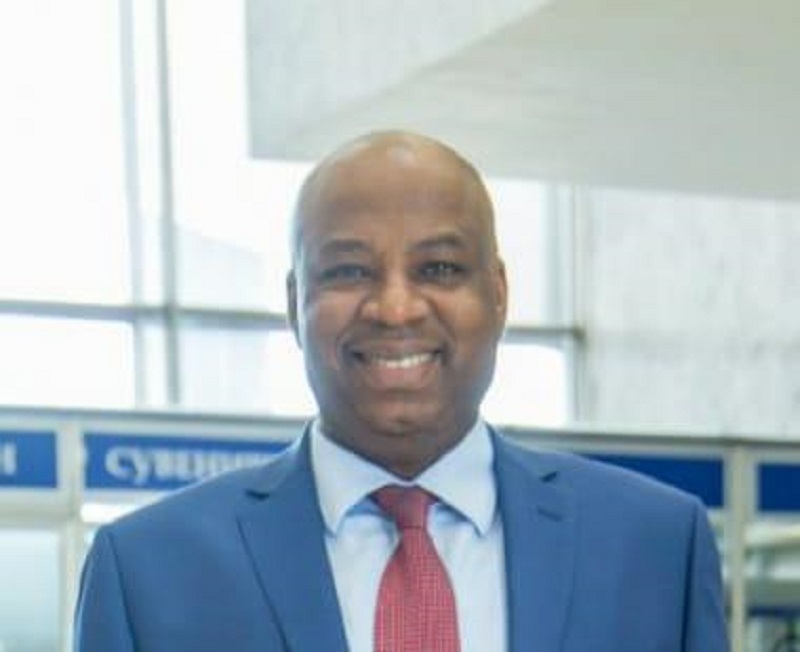
By Professor Maurice Okoli
African continent to a very great degree is rich in natural resources encompassing a wide range of both renewable and non-renewable assets. Africa is home to some 30 per cent of the world’s minerals, eight per cent of the world’s natural gas and 12 per cent of the world’s oil reserves. The continent has 40 per cent of the world’s gold and up to 90 per cent of its chromium and platinum.
The largest reserves of cobalt, diamond and uranium in the world are in Africa. It holds 65 per cent of the world’s arable land and 10 per cent of the planet’s internal renewable freshwater source.
For decades, Africa with its vast untapped natural resources has been the world’s geographical region of attention and priority, attracting various global players from all over the world for economic and political engagement.
In a quick assessment, China has emerged as the most powerful player with its geopolitical clout and leadership in fostering multifaceted economic growth. These can be interpreted differently and from different perspectives, and their unequivocal implications are also varied in terms of the current Africa’s transformations and future directions.
For Africa’s future pathway, the year 2025 could perhaps be set as another distinctive new chapter of strategic qualitative development and push for significant growth. The conditions for this expected growth could be linked to the fact that the continental organization African Union will install a new leadership in February 2025, South Africa chairs the G20, Commonwealth Secretariat and World Trade Organization are headed by two African women, a Ghanaian and a Nigerian citizen.
These resounding organizational features, at least, make 2025 an African year to facilitate investment and economic development opportunities, and through wide multilateral collaborations, both external investors and stakeholders, for remarkable changes.
(i) Kenya’s AUC leadership:
As well known, four candidates are slated for the February 2025 polls. Raila Odinga will face off with Djibouti’s Mohamoud Youssouf, Anil Gayan (Mauritius) and Richard Randriamandrato (Madagascar) for the African Union Commission chairmanship in the race to succeed the outgoing chairman Moussa Faki of Chad.
The latest development monitored for this article explicitly showed that Kenya’s candidate for the Africa Union Commission chairmanship Raila Odinga, highlighted his priorities and strategies to include enhancing intra-African trade by establishing a common market, implementing a broader economic transformation, strengthening regional integration and cooperation, and peace and security.
Undoubtedly, the African Union (AU) is a critical institution for promoting unity, peace, and development across the continent. However, there is a growing consensus that it requires reforms to increase its effectiveness, efficiency, and relevance in addressing Africa’s challenges. Here are reasons why reforms are necessary:
1. Structural and Institutional Weaknesses: The AU has been criticized for its slow decision-making processes and lack of streamlined operations. The relationship between the AU and Regional Economic Communities (RECs) is often unclear, leading to duplication of efforts and fragmented initiatives.
2. Financial Dependence: Over 60% of the AU’s budget comes from external donors, raising concerns about the organization’s independence and ability to prioritize African-led solutions. Worse, many member states have unsuccessfully been in a position to meet promptly their financial obligations, hindering the AU’s ability to execute its programs effectively. This is most often reflected in the limited success of peacekeeping: Despite efforts, the AU has struggled to resolve protracted conflicts in regions like the Sahel, Somalia, and the Great Lakes.
3. Geopolitical and Global Challenges: Adapting to a changing world, with shifts in global power dynamics, the AU must reform to ensure Africa’s interests are adequately represented on the global stage.
4. Lack of Accountability and Governance: There have been concerns over deep-seated corruption. Internal mismanagement and corruption have undermined the credibility of the AU. There is a need for stronger accountability mechanisms to ensure compliance with AU protocols and charters by member states.
Raila Odinga’s tremendous political experience and pan-African vision unreservedly underscored the unwavering commitment to reforms as potential steps to advance the basic objectives of uplifting the economic status of the continent under the banner “Africa We Want” incorporated into the Agenda 2063.
Kagame Report (2017): Spearheaded by Rwandan President Paul Kagame, this initiative proposed actionable reforms to address structural inefficiencies and financial sustainability. Efforts to reduce the number of AU departments and improve coordination among stakeholders. Reforming the African Union is essential for building a stronger, more unified Africa capable of addressing its internal challenges and asserting its position on the global stage.
As frequently reiterated, Africa with its huge human and natural resources can take its rightful position in the current 21st century in the world. But for the realization of this, Africa still has to coordinate with the Commonwealth Secretariat, WTO, G20 and BRICS in promoting industrialization, supporting manufacturing, and enhancing innovation through investments in education, technology, healthcare, affordable energy and skills development. These invariantly fall within the Africa’s Agenda 2063.
(ii) South Africa’s G20 chairmanship: South Africa is now the biggest economy in Africa, with a GDP of $373 billion in 2024. (WorldStatistics) In addition to its economic prominence in Africa, South Africa is a staunch member of BRICS+ (Brazil, Russia, India, China and South Africa), an informal association joined by Egypt, Ethiopia, Iran and the United Arab Emirates.
On one hand, it is important to mention here the role of South Africa as it takes the chairmanship of the Group of 20 (G20) in 2025. It is an intergovernmental forum comprising 19 sovereign countries, the European Union (EU), and the African Union (AU). In 2023, during its summit, the African Union joined as its 21st member and was officially represented at the 2024 G20 summit in Brazil.
On the other hand, since its inception, the recurring themes covered by G20 summit participants have related in priority to global economic growth,
international trade and financial market regulation – these are issues affecting Africa. South Africa could direct G20’s win-win influence in streamlining the beneficial economic sphere considered key to Africa’s development and which would unprecedentedly impact on aspects of life of an estimated 1.4 billion people in the 21st century.
With South Africa at the helm of G20 affairs, it is therefore paramount to seriously “re-evaluate” both the group and individual member’s relations with Africa. South Africa has a unique opportunity to influence the global agenda, especially in addressing the priorities of developing nations. Here are key actions South Africa should undertake:
1. Advocate for African and Global South Priorities
Debt Relief and Financing: Push for frameworks that support debt restructuring and sustainable financing for developing nations, ensuring equitable access to funds for recovery and development. Climate Justice: Emphasize the need for climate financing and support for adaptation, particularly for African nations facing severe climate vulnerabilities.
2. Enhance Multilateralism
Strengthen international cooperation on trade, technology transfer, and global health, highlighting Africa’s role in the global economy. Support reforms in global governance institutions, such as the IMF and World Bank, to give emerging economies more say in decision-making.
3. Promote Inclusive Growth
Champion policies to address inequality, including initiatives to improve education, health, and digital inclusion across member states. Focus on creating partnerships to promote job creation, particularly in green and digital economies.
4. Strengthen Food and Energy Security
Address disruptions in global supply chains exacerbated by geopolitical conflicts. Advocate for sustainable agricultural practices and support energy transition strategies that align with Africa’s development needs.
5. Foster Trade and Investment Opportunities
Use the G20 platform to attract investments in Africa, highlighting the African Continental Free Trade Area (AfCFTA) as a mechanism for growth. Advocate for fair trade practices that enable African products to access global markets without undue barriers.
If South Africa effectively prioritizes these actions, it could strengthen Africa’s influence in global decision-making drive sustainable development and reduce inequality. The position of South Africa and the African continent are central players in solving global challenges. In a nutshell, South Africa’s leadership in the G20 offers an opportunity to align the group’s actions with Africa’s development aspirations while fostering global solidarity in an era of increasing geopolitical complexity.
(iii) Ghana’s directorship of Commonwealth Secretariat: In late October 2024, the Commonwealth of Nations marked yet another milestone with the appointment of Ghana’s Foreign Minister and Regional Integration, Shirley AyorkorBotchwey, as the next Secretary-General. For West Africans, her appointment was a prestigious testament, first to women’s empowerment and second, to resilience and a reminder that Africa’s voice matters on the world stage.
Despite these two reasons, however, it further presented a step forward in broadening African representation at the helm of international organizations and most importantly the extent this could impact the development of the multifaceted relations with the continent. The Commonwealth has played various roles and continues to attach indivisible value in fostering partnerships with various African countries.
Through these relations, Africa’s economy may benefit from a renewed diverse set of attention to sustainable development and job creation opportunities. It could also see increased investment and trade partnerships among its 56 member nations. Without mincing words, the Commonwealth has shown, in various ways, commitment to unity, peace, and sustainable progress in Africa.
Africa’s relationship with the Commonwealth presents several opportunities, particularly in the context of current geopolitical shifts. For instance, access to markets: The Commonwealth provides a platform for enhancing intra-Commonwealth trade, which is projected to reach $1 trillion annually. Africa can leverage this to diversify trade partners amid shifting global alliances. The next question relates to existing investment opportunities: the Commonwealth programs promote investment, particularly in sustainable industries, offering African countries opportunities to attract Foreign Direct Investment (FDI) in green and digital economies.
As the Secretary-General, Shirley AyorkorBotchwey has the possibility of negotiating for initiatives like the Commonwealth scholarships and fellowships to promote education and capacity building, helping African nations develop skilled workforces. And also for strengthening cultural programs and exchanges foster mutual understanding and cooperation.
With increasing competition between global powers, Africa can use the Commonwealth to diversify alliances, reducing over-reliance on single blocs like China or the West. By actively engaging with the Commonwealth, Africa can harness these opportunities to navigate the complexities of global power dynamics while fostering development and regional stability.
(iv) Nigeria’s pedalling World Trade Organization: Today’s transformations and reforms at the World Trade Organization have practical evidence to support the newly created single borderless market in Africa.
The African Continental Free Trade Agreement (AfCFTA) being the flagship of the African Union (AU) is intended to consolidate the intra-African trade to an expected tune of $2.7 trillion and the diverse spheres of the continental economy. In its 2024 report, the UNECA estimated that by 2045 intra-African trade will increase by nearly 35% compared to a situation without the AfCFTA.
This is one signal pointing to the fact that WTO has to strike a groundbreaking impactful collaboration with AfCFTA, but a lot would depend on how critical and important Africa’s partnership with external players is designed and pursued, uttermost offering Africa better opportunities for noticeable economic, socio-cultural and political growth.
In practical reality, Director-General Ngozi Okonjo-Iweala and WTO top management have to show seriousness in changing to result-oriented partnerships, especially in its historic trade cooperation these decades with Africa. Both the World Trade Organization (WTO) and the African Continental Free Trade Area (AfCFTA) aim to reduce barriers to trade, such as tariffs and non-tariff barriers, fostering economic integration and market access.
The WTO provides a global framework for trade regulations, while AfCFTA operates within a similar rule-based framework at the continental level, ensuring predictability and transparency. Both organizations focus on enhancing the trade capacity of member states. The WTO supports developing nations with trade-related technical assistance, while AfCFTA includes initiatives to boost the trade readiness of African countries. The WTO and AfCFTA could work together to harmonize regional trade rules with global trade agreements, ensuring coherence between Africa’s trade policies and international standards.
In summary, the WTO and AfCFTA share common goals in promoting fair and inclusive trade practices, and collaboration between the two can significantly enhance the global trade integration of African countries.
(v) Conclusion – The Year of Africa: Achievable and strategic recommendations for 2025: Judging from the discussion, the African Union and individual African States, therefore in 2025, have to consider the absolute necessity to outlook for strategic collaboration with external partners and corporate shareholders within the framework of the African Union’s Agenda 2063. The necessity for African leaders to prioritize economic parameters and their related proactive measures that enhance practical support for both public and private-sector collaboration.
In furtherance to this, the necessity to draw a roadmap for businesses to achieve long-term sustainable growth, and utilize the opportunities in the intra-African single market while simultaneously adapting to shifting global market demands.
In addition, African leaders, in order to claim the public nobility, instead of rattling anti-western rhetoric have to build and muster their own negotiation capacity to deal with developed countries. In the subsequent years, reawaking the African Union and other Regional Economic Communities, and African leaders should arguably be the main priority, predictably as possible to play the economic development catch-up, in the Global South.
Professor Maurice Okoli is a fellow at the Institute for African Studies and the Institute of World Economy and International Relations, Russian Academy of Sciences. He is also a fellow and lecturer at the North-Eastern Federal University of Russia. He serves as an expert at the Roscongress Foundation and the Valdai Discussion Club.
As an academic researcher and economist with a keen interest in current geopolitical changes and the emerging world order, Maurice Okoli frequently
contributes articles for publication in reputable media portals on different aspects of the interconnection between developing and developed countries, particularly in Asia, Africa, and Europe. With comments and suggestions, he can be reached via email: markolconsult (at) gmail (dot) com.
Feature/OPED
On the Gazetted Tax Laws: What if Dasuki Was Indifferent?
By Isah Kamisu Madachi
For over a week now, flipping through the pages of Nigerian newspapers, social media, and other media platforms, the dominant issue trending nationwide has been the discovery of significant discrepancies between the gazetted version of the tax laws made available to the public and what was actually passed by the Nigerian legislature.
Since this shocking discovery by a member of the House of Representatives, opinions from tax experts, public affairs analysts, activists, civil society organisations, opposition politicians, and professional bodies have been pouring in.
Many interesting events capable of burying the tempo of the debate have recently surfaced in the media, yet the tax law discussion persists due to how deeply entrenched public interest is in the contested laws.
However, while many view the issue from angles such as a breach of public trust, a violation of legislative privilege by the executive council, the passage of an ill-prepared law and so on, I see it from a different, narrower, and governance-centred perspective.
What brought this issue to public attention was an alarm raised by Abdulsammad Dasuki, a member of the House of Representatives from Sokoto State, during a plenary on December 17, 2025. He called the attention of the House to what he identified as discrepancies between the gazetted version of the tax laws he obtained from the Federal Ministry of Information and what was actually debated, agreed upon, and passed on the floors of both the House and the Senate.
He requested that the Speaker ensure all relevant documents, including the harmonised versions, the votes and proceedings of both chambers, and the gazetted copies, are brought before the Committee of the Whole for careful scrutiny. The lawmaker expressed concern over what he described as a serious breach of his legislative privilege.
Beyond that, however, my concern is about how safe and protected Nigerians’ interests are in the hands of our lawmakers at the National Assembly. This ongoing discussion raises a critical question about representation in Nigeria. Does this mean that if Dasuki had also been indifferent and had not bothered to utilise the Freedom of Information Act 2011 to obtain the gazetted version of the laws from the Federal Ministry of Information, take time to study it, and make comparisons, there would have been no cause for alarm from any of Nigeria’s 360 House of Representatives members and 109 senators? Do lawmakers discard the confidence we reposed in them immediately after election results are declared?
This debate should indeed serve a latent function of waking us up to the reality of the glaring disconnect between public interest and the interests of our representatives. The legislature in a democratic setting is a critical institution that goes beyond routine plenaries that are often uninteresting and sparsely attended by the lawmakers. It is meant to be a space for scrutiny, deliberation, and the protection of public interest, especially when complex laws with wide social consequences are involved.
We saw Ali Ndume in a short video clip that recently swept the media, furiously saying during a verbal altercation with Adams Oshiomhole over ambassadorial screening that “the Senate is not a joke.” The Senate is, of course, not a joke, and either should the entire National Assembly be.
Ideally, it should not be a joke to us or to the legislators themselves. Therefore, we should not shy away from discussing how disinterested those entrusted with the task of representing us, and primarily protecting our interests, appear to be in our collective affairs.
It is not a coincidence that even before the current debate around the tax reform law, it had continued to generate controversy since its inception. It also does not take quantum mechanics to understand that something is fundamentally wrong when almost nobody truly understands the law. Thanks to social media, I have come across numerous skits, write-ups, and commentaries attempting to explain it, but often followed by opposing responses saying that the authors either did not understand the law themselves or did not take sufficient time to study it.
The controversy around the gazetted Tax Reform Laws should not end with public outrage or media debates alone. It should force a deeper reflection on how laws are made, checked, and defended in Nigeria’s democracy. A system that relies on the alertness of one lawmaker to prevent serious legislative discrepancies is not a resilient or reliable system. Representation cannot be occasional and vigilance cannot be optional.
Nigerians deserve a legislature that safeguards their interests, not one that notices breaches only when a few individuals choose to be different and look closely. If this ongoing debate does not lead to formidable internal checks and a renewed sense of responsibility among lawmakers, then the problem is far bigger than a flawed gazette. When legislative processes fail, it is ordinary Nigerians who bear the cost through policies they did not scrutinize and consequences they did not consent to.
Isah Kamisu Madachi is a public policy enthusiast and development practitioner. He writes from Abuja and can be reached via: [email protected]
Feature/OPED
After the Capital Rush: Who Really Wins Nigeria’s Bank Recapitalisation?
By Blaise Udunze
By any standard, Nigeria’s ongoing bank recapitalisation exercise is one of the most consequential financial sector reforms since the 2004-2005 consolidation that shrank the number of banks from 89 to 25. Then, as now, the stated objective was stability to have stronger balance sheets, better shock absorption, and banks capable of financing long-term economic growth.
The Central Bank of Nigeria (CBN), in 2024, mandated a sweeping recapitalisation exercise compelling banks to raise substantially higher capital bases depending on their license categories. The categorisation mandated that every Tier-1 deposit money bank with international authorization is to warehouse N500 billion minimum capital base, and a national bank must have N200 billion, while a regional bank must have N50 billion by the deadline of 31st March 2026. According to the apex bank, the objectives were to strengthen resilience, create a more robust buffer against shocks, and position Nigerian banks as global competitors capable of funding a $1 trillion economy.
But in the thick of the race to comply and as the dust gradually settles, a far bigger conversation has emerged, one that cuts to the heart of how our banking system works. What will the aftermath of recapitalisation mean for Nigeria’s banking landscape, financial inclusion agenda, and real-sector development?
Beyond the headlines of rights issues, private placements, and billionaire founders boosting stakes, every Nigerians deserve a sober assessment of what has changed, and what still must change, if recapitalisation is to translate into a genuinely improved banking system.
The points are who benefits most from its evolution, and whether ordinary Nigerians will feel the promised transformation in their everyday financial lives, because history has taught us that recapitalisation is never a neutral policy. The fact remains that recapitalization creates winners and losers, restructures incentives, and often leads to unintended outcomes that outlive the reform itself.
Concentration Risk: When the Big Get Bigger
Recapitalisation is meant to make banks stronger, and at the same time, it risks making them fewer and bigger, concentrating power and risks in an ever-narrowing circle. Nigeria’s Tier-1 banks, those already controlling roughly 70 percent of banking assets, are poised to expand further in both balance sheet size and market influence. This deepens the divide between the “haves” and “have-nots” within the sector.
A critical fallout of this exercise has been the acceleration of consolidation. Stronger banks with ready access to capital markets, like Access Holdings and Zenith Bank, have managed to meet or exceed the new thresholds early by raising funds through rights issues and public offerings. Access Bank boosted its capital to nearly N595 billion, and Zenith Bank to about N615 billion.
In contrast, banks that lack deep pockets or the ability to quickly mobilise investors are lagging. The results always show that the biggest banks raise capital faster and cheaper, while smaller banks struggle to keep pace.
As of mid-2025, fewer than 14 of Nigeria’s 24 commercial banks met the required capital base, meaning a significant number were still scrambling, turning to rights issues, private placements, mergers, and even licensing downgrades to survive.
The danger here is not merely numerical. It is systemic: as capital becomes more concentrated, the banking system could inadvertently mimic oligopolistic tendencies, reducing competition, narrowing choices for customers, and potentially heightening systemic risk should one of these “too-big-to-fail” institutions falter.
Capital Flight or Strategic Expansion? The Foreign Subsidiary Question
One of the most contentious aspects of the recapitalisation aftermath has been the deployment of newly raised capital, especially its use outside Nigeria. Several banks, flush with liquidity from rights issues and injections, have signalled or executed investments in foreign subsidiaries and expansions abroad, like what we are experiencing with Nigerian banks spreading their tentacles to the Ivory Coast, Ghana, Kenya, and beyond. Zenith Bank’s planned expansion into the Ivory Coast exemplifies this outward push.
While international diversification can be a sound strategic move for multinational banks, there is an uncomfortable optics and developmental question here: why is Nigerian money being deployed abroad when millions of Nigerians remain unbanked or underbanked at home?
According to the World Bank, a large number of Nigeria’s adult population still lack access to formal financial services, while millions of SMEs, micro-entrepreneurs, and rural households remain on the edge, underserved by traditional banks that now chase profitability and scale.
Of a truth, redirecting Nigerian capital to foreign markets may deliver shareholder returns, but it does little in the short term to advance domestic financial inclusion, poverty reduction, or grassroots economic participation. The optics of capital flight, even when legal and strategic, demand scrutiny, especially in a nation still struggling with deep regional and demographic disparities.
Impact on Credit and the Real Economy
For the ordinary Nigerian, the most important question is simple: will recapitalisation make credit cheaper and more accessible?
History suggests the answer is not automatic. The tradition in Nigeria’s bank system is mainly to protect returns, and for this reason, many banks respond to higher capital requirements by tightening lending standards, raising interest rates, or focusing on low-risk government securities rather than private-sector loans, because raising capital is expensive, and banks are profit-driven institutions. Small and medium-sized enterprises (SMEs), often described as the engine of growth, are usually the first casualties of such risk aversion.
If recapitalisation results in stronger balance sheets but weaker lending to the real economy, then its benefits remain largely cosmetic. The economy does not grow on capital adequacy ratios alone; it grows when banks take measured risks to finance production, innovation, and consumption.
Retail Banking Retreat: Handing the Mass Market to Fintechs?
In recent years, we have witnessed one of the most striking shifts, or a gradual retreat of traditional banks from mass retail banking, particularly low-income and informal customers.
The question running through the hearts of many is whether Nigerian banks are retreating from retail banking, leaving space for fintech disruptors to fill the void.
In recent years, players like OPAY, Moniepoint, Palmpay, and a host of digital financial services arms have become de facto retail banking platforms for millions of Nigerians. They provide everyday payment services, wallet functionalities, micro-loans, and QR-enabled commerce, areas traditional banks once dominated. This trend has accelerated as banks chase corporate clients where margins are higher and risk profiles perceived as more manageable. The true picture of the financial landscape today is that the fintechs own the retail space, and banks dominate corporate and institutional finance. But it is unclear or uncertain if this model can continue to work effectively in the long term.
Despite the areas in which the Fintechs excel, whether in agility, product innovation, and customer experience, they still rely heavily on underlying banking infrastructure for liquidity, settlement, and regulatory compliance. Should the retail banking ecosystem become split between digital wallets and corporate corridors, rather than being vertically integrated within banks, systemic liquidity dynamics and financial stability could be affected.
Nigerians deserve a banking system where the comforts and conveniences of digital finance are backed by the stability, regulatory oversight, and capital strength of licensed banks, not a system where traditional banks withdraw from retail, leaving unregulated or lightly regulated players to carry that mantle.
Corporate Governance: When Founders Tighten Their Grip
The recapitalisation exercise has not been merely a technical capital-raising exercise; it has become a theatre of power plays at the top. In several banks, founders and major investors have used the exercise to increase their stakes, concentrating ownership even as they extol the virtues of financial resilience.
Prominent founders, from Tony Elumelu at UBA to Femi Otedola at First Holdco and Jim Ovia at Zenith Bank, have all been actively increasing their shareholdings. These moves raise legitimate questions about corporate governance when founders increase control during a regulatory exercise. Are they driven by confidence in their institutions, or are they fortifying personal and strategic influence amid industry restructuring?
Though there might be nothing inherently wrong with founders or shareholders demonstrating faith in their institutions, one fact remains that the governance challenge lies not simply in who holds the shares, but how decisions are made and whose interests are prioritised. Will banks maintain robust internal checks and balances, ensuring that capital deployment aligns with national development goals? The question is whether the CBN is equipped with adequate supervisory bandwidth and tools to check potential excesses if emerging shareholder concentrations translate into undue influence or risks to financial stability. These are questions that transcend annual reports; they strike at the heart of trust in the system.
Regional Disparity in Lending: Lagos Is Not Nigeria
One of the persistent criticisms of Nigerian banking is regional lending inequality. It has been said that most bank loans are still overwhelmingly concentrated in Lagos and the Southwest, despite decades of financial deepening in this region; large swathes of the North, Southeast, and other underserved regions receive disproportionately smaller shares of credit. This imbalance not only undermines inclusive growth but also fuels perceptions of economic exclusion.
Recapitalisation, in theory, should have enhanced banks’ capacity to support broader economic activity. Yet, the reality remains that loans and advances are overwhelmingly concentrated in economic hubs like Lagos.
The CBN must deploy clear incentives and penalties to encourage geographic diversification of lending. This could include differentiated capital requirements, credit guarantees, or tax incentives tied to regional loan portfolios. A recapitalised banking system that does not finance national development is a missed opportunity.
Cybersecurity, Staff Welfare, and the Technology Deficit
Beyond balance sheets and brand expansion, there is a human and technological dimension to the banking sector’s challenge. Fraud remains rampant, and one of the leading frustrations voiced by Nigerians involves failed transactions, delayed reversals, and poor digital experience. Banks can raise capital, but if they fail to invest heavily in cybersecurity, fraud detection, staff training, and welfare, the everyday customer will continue to view the banking system as unreliable.
Nigeria’s fintech revolution has thrived precisely because it has pushed incumbents to become more customer-centric, agile, and tech-savvy. If banks now flush with capital don’t channel a portion of those funds into robust IT systems, workforce development, fraud mitigation, and seamless customer service, then the recapitalisation will have achieved little beyond stronger balance sheets. In short, Nigerians should feel the difference, not merely in stock prices and market capitalisation, but in smooth banking apps, instant reversals, responsive customer care, and secure platforms.
The Banks Left Behind: Mergers, Failures, or Forced Restructuring?
With fewer than half the banks having fully complied with the recapitalisation requirements deep into 2025, a pressing question is: what awaits those that lag? Many banks are still closing capital gaps that run into hundreds of billions of naira. According to industry estimates, the total recapitalisation gap across the sector could reach as much as N4.7 trillion if all requirements are strictly enforced.
Banks that fail to meet the March 2026 deadline face a few options:
– Forced M&A. Regulators could effectively compel weaker banks to merge with stronger ones, echoing the consolidation wave of 2005 that reduced the sector from 89 to 25 banks.
– License downgrades or conversions. Some banks may choose to operate at a lower license category that demands a smaller capital base.
– Exits or closures. In extreme cases, banks that can neither raise capital nor find a merger partner might be forced out of the market.
This regulatory pressure should not be construed merely as punitive. It is part of the CBN’s broader architecture of ensuring that only solvent, well-capitalised, and risk-prepared institutions operate. However, the transition must be managed carefully to prevent contagion, protect depositors, and preserve confidence.
Why Are Tier-1 Banks Still Chasing Capital?
Perhaps the most intriguing puzzle is why some Tier-1 banks, long regarded as strong and profitable, are aggressively raising capital. Even banks thought to be among the strongest, such as UBA, First Holdco, Fidelity, GTCO, and FCMB, have struggled to close their capital gaps. UBA, for instance, succeeded in raising around N355 billion toward its N500 billion target at one point and planned additional rights issues to bridge the remainder.
This reveals another reality that capital is not just numbers on paper; it is investor confidence, market appetite, and macroeconomic stability.
One can also say that the answer lies partly in ambition to expand into new markets, infrastructure financing, and compliance with stricter global standards.
However, it also reflects deeper structural pressures, including currency depreciation eroding capital, rising non-performing loans, and the substantial funding required to support Nigeria’s development needs. Even giants are discovering that yesterday’s capital is no longer sufficient for tomorrow’s challenges.
Reform Without Deception
As the Nigerian banking sector recapitalization exercise comes to a close by March 31, 2026, the ultimate test will be whether the reforms deliver on their transformational promise.
Some of the concerns in the minds of Nigerians today will be to see a system that supports inclusive growth, equitable credit distribution, world-class customer service, and resilient financial intermediation. Or will we see a sector that, despite larger capital bases, still reflects old hierarchies, geographic biases, and operational friction? The cynic might say that recapitalisation simply made big banks bigger and empowered dominant shareholders.
But a more hopeful perspective invites stakeholders, including regulators, customers, civil society, and bankers themselves, to co-design the next chapter of Nigerian banking; one that balances scale with inclusion, profitability with impact, and stability with innovation. The difference will be made not by press releases or shareholder announcements, but by deliberate regulatory action and measurable improvements in how banks serve the economy.
For now, the capital has been raised, but the true capital that counts is the confidence Nigerians place in their banks every time they log into an app, make a transfer, or deposit their life’s savings. Only when that trust is visible in everyday experience can we say that recapitalisation has truly succeeded.
Blaise, a journalist and PR professional, writes from Lagos and can be reached via: [email protected]
Feature/OPED
Ledig at One: The Year We Turned Stablecoins Into Real Liquidity for the Real World
Ledig, one of Africa’s leading fintech infrastructure companies, marked its first anniversary this year. The company used the anniversary to reflect on how it has approached one of the most persistent problems in cross-border finance: moving large sums of money into and out of emerging markets without the uncertainty, delays, or volatility present in emerging markets.
According to the company, many businesses operating across Africa and similar markets had long dealt with unreliable settlement timelines, opaque processes, and a lack of credible hedging options. Transactions often depended on manual coordination and informal assurances, leaving companies exposed to both operational risk and volatile exchange rates.
Ledig said this reality shaped its decision to enter the market with a focus on scale, speed, and predictability rather than small retail transfers.
The company explained that its infrastructure was designed from the outset to handle high-value flows, ranging from hundreds of thousands of dollars to several million, with settlement measured in seconds rather than days. It built an instant liquidity engine, demonstrating a two-way system that allows businesses to convert stablecoins to local currencies and local currencies back to stablecoins with equal efficiency, demonstrating that corporate cash flows frequently move in both directions, sometimes within the same week.
Ledig noted that early users typically began with smaller test transactions before increasing volumes once they saw payments settle quickly and reliably. That pattern, it said, contributed to the platform crossing $100 million in processed volume within its first year, driven largely by international companies operating across Africa and other emerging markets.
Much of the underlying complexity associated with stablecoin payments, the company added, remains intentionally hidden from users. Wallet management, local settlement rails, and an adaptive foreign exchange engine operate in the background, while clients interact through a simple dashboard or API. Ledig emphasised that users do not need to engage directly with crypto mechanics, as stablecoins function as an internal settlement layer rather than a product they must actively manage.
Beyond settlement speed, Ledig identified currency volatility as a major challenge facing businesses in emerging markets. To address this, the firm introduced a derivatives hedging protocol designed to help businesses lock in value earlier and reduce exposure to adverse exchange rate movements.
The company reported that this hedging product initially operated off-chain and still facilitated over $55 million in activity. It is now transitioning the protocol fully on-chain, with Base selected as the deployment network due to its compatibility with the stablecoins used in Ledig’s settlement flows. Ledig said the move is intended to provide greater transparency and a cleaner execution environment tailored to commercial hedging needs rather than speculative trading.
Ledig also pointed out that its relatively small team has been an advantage rather than a limitation. By avoiding excessive expansion early on, the company said it was able to focus on building modular components that work independently but integrate into a broader treasury and risk management system. These components cover stablecoin-to-fiat conversion, fiat-to-stablecoin flows, foreign exchange management, treasury support, and hedging, allowing businesses to assemble a unified setup for money movement and risk control.
While the company does not publicly disclose detailed revenue figures, it stated that its strongest indicator of growth has been repeat, high-volume usage. Ledig said clients continue to route core operational payments through its platform, including payroll, supplier settlements, and expansion-related transfers, particularly in markets where delays can disrupt entire business operations.
Looking ahead to 2026, Ledig said its priorities include scaling the on-chain deployment of its derivatives hedging protocol, expanding liquidity capacity to support even larger transactions, and strengthening its licensing and regulatory framework to accommodate more institutional partners. The company added that it remains focused on reducing friction for businesses entering or operating in emerging markets.
In closing, Ledig described its first year as an early step rather than a milestone. It reiterated that its objective remains centered on enabling fast, large-value money movement and protecting businesses from currency volatility through a proven hedging framework, while keeping the underlying technology largely invisible to users.
-
Feature/OPED6 years agoDavos was Different this year
-
Travel/Tourism9 years ago
Lagos Seals Western Lodge Hotel In Ikorodu
-
Showbiz3 years agoEstranged Lover Releases Videos of Empress Njamah Bathing
-
Banking8 years agoSort Codes of GTBank Branches in Nigeria
-
Economy3 years agoSubsidy Removal: CNG at N130 Per Litre Cheaper Than Petrol—IPMAN
-
Banking3 years agoFirst Bank Announces Planned Downtime
-
Banking3 years agoSort Codes of UBA Branches in Nigeria
-
Sports3 years agoHighest Paid Nigerian Footballer – How Much Do Nigerian Footballers Earn