Connect with us

Economy

Don’t Trigger Social Unrest in Quest to Raise Revenue—IMF Advises Nigeria, Others

Published

on

Rethink Relationship With IMF Nigeria

By Adedapo Adesanya

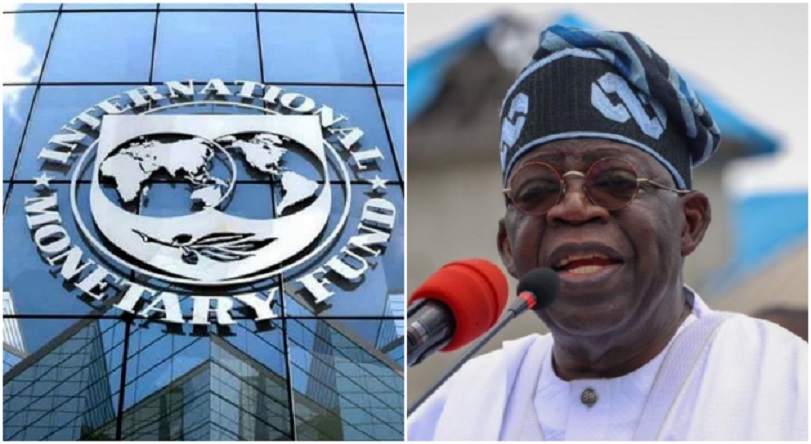
The International Monetary Fund (IMF) has warned Nigeria and other Sub-Saharan Africa (SSA) countries not to prioritise higher earnings over the poor living condition of their citizens so as not to trigger social unrest.

This call came from the Bretton Woods institution in its World Economic Outlook (WEO), July 2025 edition, where it upgraded its forecasts for Nigeria’s economic growth for 2025 and 2026 to 3.4 per cent and 3.2 per cent, respectively.

In the same vein, the IMF raised its forecast for the Sub-Saharan African region to 4.0 per cent for 2025 and 4.3 per cent for 2026, representing a 0.2 percentage point and 0.1 percentage point increase from 3.8 per cent and 4.2 per cent, respectively, projected in the April 2025 WEO.

“Growth is expected to be relatively stable in 2025 in sub-Saharan Africa at 4.0 per cent, before picking up to 4.3 per cent in 2026,” the IMF said.

However, the multilateral institution called for urgent structural and institutional reforms across SSA as the region grapples with a complex mix of economic challenges.

Commenting on the SSA region, Division Chief, Research Department, Ms Deniz Igan said: “Given the challenges Sub-Saharan Africa is facing, this is an important pillar for renewed growth in the region. There’s a need for both structural and institutional reforms. And what we mean there is to give some specific examples.

“Further, regional trade integration is one. More investment in infrastructure transportation is another one. And reform of state-owned enterprises, again, especially in the energy sector and transportation sector, is another priority.”

Ms Igan also stressed the importance of equitable fiscal reforms, noting that efforts to raise revenues must avoid deepening inequality or triggering social unrest.

She advocated the removal of poorly targeted tax exemptions, greater reliance on progressive income taxes, and the need to build public trust through transparent governance. According to her, engaging with stakeholders and sequencing reforms carefully would be essential to protect vulnerable groups and ensure broad-based support for policy changes.

“Now we understand that on the fiscal front, with high debt levels as well, there’s a need for mobilising revenues, and that can generate a sense of unfairness and inequity that could create social backlash.

“And on that front, our advice has been for the design of fiscal reforms that are equitable, that are efficient, and more specifically, there. What we have in mind is removing poorly targeted exemptions in the tax code, making use of progressive income taxes much more, and building trust and support, as we had covered in detail in our October 2024 report in one of our analytical chapters, by engaging with stakeholders, hearing what they need, improving governance and protecting the vulnerable, and at same time, bundling, sequencing and pacing different measures to make sure that the most vulnerable in the society are protected.”


Adedapo Adesanya is a journalist, polymath, and connoisseur of everything art. When he is not writing, he has his nose buried in one of the many books or articles he has bookmarked or simply listening to good music with a bottle of beer or wine. He supports the greatest club in the world, Manchester United F.C.

Click to comment

Leave a Reply

Your email address will not be published. Required fields are marked *

Economy

Nigeria Needs More Taxpayers, Not Higher Taxes—Oyedele

Published

on

FIRS taxes

By Adedapo Adesanya

The Minister of Finance and Coordinating Minister of the Economy, Mr Taiwo Oyedele, yesterday clarified that the federal government is not increasing taxes but making efforts to raise the tax net.

Mr Oyedele made this remark on Thursday while receiving a delegation from the Chartered Institute of Taxation of Nigeria (CITN) at his office in Abuja.

He hailed the institute for introducing a National Tax Awareness Day and for supporting the current tax reforms of the federal government.

The minister charged the institute to double its effort in public enlightenment, stressing that many Nigerians still view taxation as a means for the government to take money from citizens.

He reiterated that the priority of the government is not to increase tax rates but to broaden the tax base by ensuring that all eligible taxpayers meet their obligations.

“We are still not getting enough revenue from taxes.

“It is not about increasing taxes but making sure that those who are supposed to pay taxes. We want to promote fairness in tax administration,” he said.

Nigeria is challenged by the inability to generate adequate revenue from taxation despite ongoing reforms, stressing that a significant number of eligible taxpayers have yet to fulfil their civic obligations.

He said the challenge facing the country was not necessarily about raising tax rates but ensuring that individuals and businesses that ought to pay taxes do so in a fair and transparent system.

The minister also commended the institute for supporting the federal government’s tax reform agenda and promoting public understanding of taxation, but urged it to intensify its advocacy efforts, noting that many Nigerians still harbour misconceptions about taxation.

According to him, many citizens continue to view taxation merely as a tool for the government to take money from the people rather than as a critical instrument for national development.

“We are still not getting enough revenue from taxes. It is not about increasing taxes, but making sure that those who are supposed to pay taxes. We want to promote fairness in tax administration,” he added.

Mr Oyedele stressed that if Nigeria succeeds in building an efficient and equitable tax system, the impact on infrastructure, public services and economic development would be transformative, challenging the institute to introduce annual awards for the country’s most tax-compliant individuals and organisations as a means of encouraging voluntary compliance and recognising responsible taxpayers.

Continue Reading

Economy

Akara, Kulikuli, Roasted Corn Business Not Capital Intensive—Remi Tinubu

Published

on

remi tinubu

​By Modupe Gbadeyanka

Nigeria’s First Lady, Mrs Oluremi Tinubu, has given Nigerians business advice that may not involve a lot of money to start.

Speaking with newsmen recently, the wife of President Bola Tinubu said businesses like akara (fried bean cake), kulikuli (a crunchy snack from roasted peanuts or groundnuts) and roasted corn can be set up without breaking the bank.

She disclosed that to support her husband’s Renewed Hope agenda, she has provided funding packages to traders and others to the tune of N3.5 billion.

“To start akara business doesn’t take a lot of money. To start roasting corn and kuli-kuli doesn’t take much. We didn’t give them a loan; we gave it to them as a grant,” she stated.

She further said, “We’ve encouraged Nigerians as best as we could, what is within our hands, I have given, and I keep giving. Those are the things we’ve done.”

“I remember giving for TB (tuberculosis) when I heard of many TB cases; I gave N2 billion, to breast cancer, I gave N1 billion, and to [tackle] malnutrition, I gave N500 million.

“These are the things we’ve been doing to assist the government. So, we’ve had impact in agriculture, social investment, education (as scholarship and ICT training) and others. We are still open to doing more,” she disclosed.

Continue Reading

Economy

NASD Exchange Extends Winning Streak by 1.70%

Published

on

NASD OTC stock exchange

By Adedapo Adesanya

The NASD Over-the-Counter (OTC) Securities Exchange rallied by 1.70 per cent on Thursday, June 25, after three price gainers overpowered the two price losers recorded at the close of business.

Consequently, the market capitalisation of the trading platform increased by N43.79 billion to N2.618 trillion from N2.574 trillion, and the NASD Security Index (NSI) improved by 72.96 points to close at 4,362.32 points, in contrast to Wednesday’s 4,289.36 points.

Yesterday, the price advancers were led by Nipco Plc, which chalked up N31.79 to close at N349.76 per unit versus the preceding day’s N317.97 per unit. Okitipupa Plc gained N18.00 to end at N298.00 per share versus the previous session’s N280.00 per share, and Central Securities Clearing System (CSCS) Plc went up by N7.11 to N86.79 per unit from N79.68 per unit.

On the flip side, Nitrox Industrial Gases Plc crumbled by 32 Kobo to close at N21.09 per share compared with the N21.41 per share it closed at midweek, and Food Concepts Plc depreciated by 25 Kobo to N2.51 per unit from N2.76 per unit.

During the session, the value of securities traded by investors went down by 86.7 per cent to N10.9 million from the preceding session’s N82.9 million, and the volume of securities dropped 84.9 per cent to 10.9 million units from the previous 82.9 million, while the number of deals grew by 84.2 per cent to 35 deals from 19 deals.

At the close of trades, Great Nigeria Insurance (GNI) Plc remained the most traded stock by value on a year-to-date basis, with 3.4 billion units sold for N8.4 billion, trailed by Infrastructure Credit Guarantee (Infracredit) Plc with 2.3 billion units valued at N6.5 billion, and CSCS Plc with 68.4 million units exchanged for N4.7 billion.

GNI Plc was also the most traded stock by volume on a year-to-date basis, with 3.4 billion units worth N8.4 billion, followed by Infracredit Plc with 2.3 billion units traded for N6.5 billion, and Resourcery Plc with 1.1 billion units transacted for N415.7 million.

Continue Reading

Trending