Connect with us

Banking

Stanbic IBTC Calls for Innovative Climate-smart Financing

Published

on

Innovative Climate-smart Financing

By Adedapo Adesanya

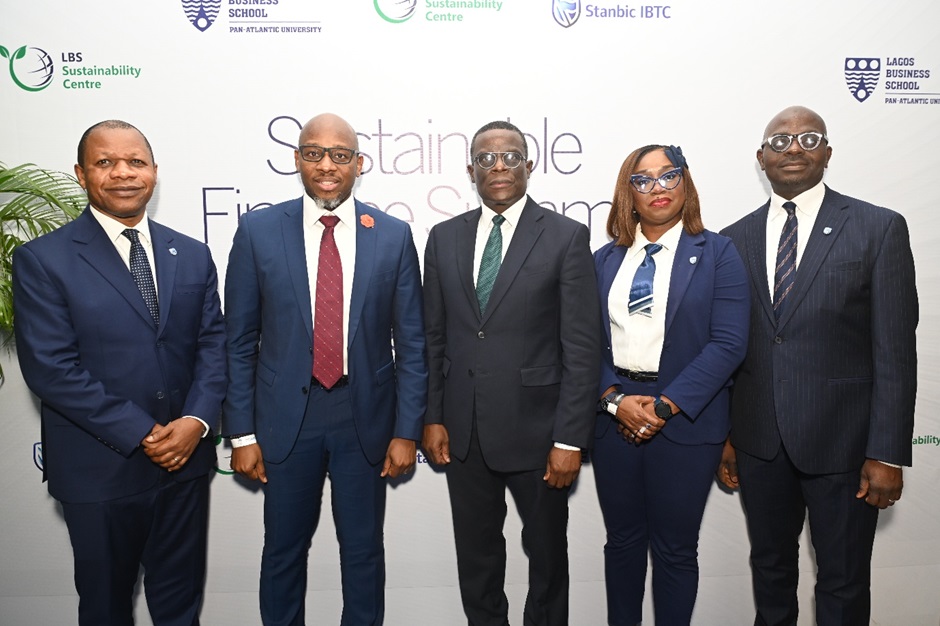
Stanbic IBTC Holdings through its Sustainable Finance Summit 2.0 has sets the pace for leveraging innovative climate-smart financing.

The event, held in partnership with the Lagos Business School Sustainability Centre (LBSSC), concluded with unprecedented success, establishing new benchmarks for sustainable finance discourse and innovation in Nigeria and across Africa to tackle climate challenges.

The hybrid summit, themed Financing Resilience: Digital Innovation and AI for Climate Smart Communities, attracted over three thousand participants both physically at the Civic Centre, Lagos and through YouTube live streaming, representing diverse sectors from across Nigeria and internationally.

The forum delivered significant value across multiple dimensions. Industry impact included the unveiling of innovative AI-powered climate risk assessment tools being developed by leading Nigerian fintech companies.

Mr Kunle Adedeji, Acting Chief Executive, Stanbic IBTC Holdings, expressed, “The overwhelming success of this summit validates our vision of positioning Nigeria at the forefront of sustainable finance innovation. We have witnessed remarkable collaboration between financial institutions, technology innovators, and policymakers, resulting in concrete commitments and actionable solutions.

“This event has not only strengthened our position as industry leaders but has also demonstrated the transformative power of bringing together diverse stakeholders around our shared commitment to climate-smart financial solutions,” he said.

On his part, Mr Wole Adeniyi, Chief Executive, Stanbic IBTC Bank also reiterated that the seminar delivered concrete value to all participant categories.

Financial professionals gained practical insights into implementing AI-driven ESG assessment tools and accessing new sustainable investment opportunities—technology innovators connected with potential investors and partners, with several startups securing follow-up meetings for funding discussions. Regulators participated in productive policy dialogues and gained exposure to international best practices in sustainable finance regulation.

The summit’s emphasis on meaningful dialogue and active participation proved phenomenally successful. Live Q&A sessions generated probing questions and insightful answers, networking sessions facilitated new business connections and potential partnerships, technology demonstration zones attracted significant engagement with firsthand exploration of climate finance tools, and panel discussions sparked animated debates on the future of sustainable finance in Africa.

In her presentation titled The Power of digitisation in Stanbic IBTC’s climate risk management and opportunity discovery, Mrs Bunmi Dayo-Olagunju, Deputy Chief Executive, Stanbic IBTC Bank, highlighted the significance of digitisation.

She emphasised that data digitisation enables more precise and timely measurement of climate risks across various portfolios. She described how AI and machine learning facilitate predictive modelling for various scenarios, including floods, droughts, and credit stress situations.

According to her, “Nigeria must persist in implementing strong and effective measures to combat climate risks. We should prioritise sustainable land use practices, promote environmental education, and strengthen policies that support climate adaptation and mitigation.

“Collective action at all levels; government, businesses, and civil society is essential to ensure a sustainable future for our nation in the face of climate change,” she stated.

Speaking during the event, Professor Kemi Ogunyemi, Business Ethics and Members, Management Board, Lagos Business School, stated, “At the Lagos Business School Sustainability Centre, we believe that collaboration between academia and industry is vital in addressing the pressing challenges posed by climate change. The success of the Stanbic IBTC Sustainable Finance Summit 2.0 highlights the collective potential of diverse stakeholders coming together to drive innovation in sustainable finance.

“As we continue to foster meaningful dialogue and partnership, we are excited to see the tangible impact our efforts will have on creating climate-smart communities across Nigeria and beyond.”

According to the lender, the success of the Sustainable Finance Summit 2.0 reinforces Stanbic IBTC’s position as Nigeria’s leading innovator in sustainable finance, demonstrating the powerful impact of academic-industry collaboration in addressing climate challenges.

In his keynote address titled Artificial Intelligence and Sustainable Finance: Steps for a Climate-Resilient Economy, Mr Segun Ajayi, Country Director, Oracle Nigeria, emphasised the transformative potential of artificial intelligence (AI) in reshaping Africa’s economic landscape. He articulated a vision where AI acts as a catalyst for the continent’s transition from being viewed primarily as a region characterised by high risks to one abundant with high potential.

“With AI, Africa can transition from being perceived as high risk to being seen as high potential.”

Through his address, Mr Ajayi called for collaboration among governments, the private sector, and technology providers to effectively harness the power of AI. He emphasised the importance of developing the right policies and frameworks that facilitate the implementation of AI solutions while upholding ethical standards.

Mr Ajayi’s insights serve as a hopeful reminder of the role technology can play in paving the way for a climate-resilient economy in Africa, fostering an environment where potential is recognised and nurtured.


Adedapo Adesanya is a journalist, polymath, and connoisseur of everything art. When he is not writing, he has his nose buried in one of the many books or articles he has bookmarked or simply listening to good music with a bottle of beer or wine. He supports the greatest club in the world, Manchester United F.C.

Banking

Toxic Bank Assets: AMCON Repays CBN N3.6trn, Still Owes N3trn

Published

on

AMCON headquarters

By Modupe Gbadeyanka

About N3.6 trillion has been repaid to the Central Bank of Nigeria (CBN) by the Asset Management Corporation of Nigeria (AMCON) since its inception in 2010.

This information was revealed by the chief executive of AMCON, Mr Gbenga Alade, during a media parley to update the press on the activities of the agency.

Mr Alade said at the moment, the organisation still owes the central bank about N3 trillion for toxic assets of banks in the country.

He praised the organisation for its asset recovery drive, stressing that when compared with others across the world, Nigeria has done well.

“It is important to stress that the corporation has done tremendously well, especially when compared to other notable government-owned Asset Management Corporations around the world.

“Based on the balance at purchase, AMCON outperformed other Asset Management Corporations all over the world by achieving over 87 per cent in recoveries despite the unique challenges associated with debt recovery in Nigeria.

“The Malaysian Danaharta, which is adjudged one of the best performing Asset Management Corporation’s, only achieved 58 per cent. The Chinese Asset Management Corporation, despite its stricter laws, achieved just 33 per cent.

“Only the Korean Asset Management Corporation (KAMCO), South Korea, has achieved more recoveries than AMCON, with about 100 per cent. This was due to their brute force with which they chased the obligors.

“Despite KAMCO’s recovery records, the agency is still operational to date with slight realignments in its mandate.

“Other noted Asset Management Corporations that have transitioned into a perpetual institution of the various governments include, China Asset Management Company, Federal Deposit Insurance Corporation (FDIC) USA, and KFW Germany.

“So, gentlemen, without sounding immodest, AMCON has done well, and we will not relent until all the outstanding debts are fully realized,” Mr Alade stated.

On the financial performance of AMCON, he said last year, the firm posted a revenue of N156.25 billion and operating expenses of N29.04 billion, while for the 2025 fiscal year should be a revenue of N215.15 billion and operating expenses of N29.06 billion.

Continue Reading

Banking

The Alternative Bank Opens Effurun Branch in Delta

Published

on

The Alternative Bank Effurun

By Modupe Gbadeyanka

One of the non-interest banks in Nigeria, The Alternative Bank (AltBank), has opened a new branch in Effurun, Delta State.

The new office will serve the Edo-Delta region and provide purposeful banking and real financial empowerment for individuals, entrepreneurs, and businesses, a statement from the firm stated.

The lender disclosed that the Effurun branch is a bold move in its mission to reshape banking in Nigeria.

The launch was graced by key dignitaries, including the Ovie of Uvwie Kingdom, Emmanuel Ekemejewa Sideso Abe I; the Chairman of Uvwie Local Government, Anthony O. Ofoni, represented his vice, Andrew Agagbo; and the Special Adviser to the Governor of Delta State on Community Development, Mr Ernest Airoboyi; amongst others.

The Divisional Head for South at The Alternative Bank, Mr Chukwuemeka Agada, emphasised the institution’s commitment to Warri and its surrounding communities.

“By establishing a presence here, we are initiating a transformation in the way banking serves the people of Delta. Our purpose-driven approach ensures that customers’ financial goals are not just met but exceeded,” he stated.

“This branch represents our pledge to empower Warri’s dynamic businesses and families, providing them with the tools to grow without compromise,” Mr Agada added.

“We understand the heartbeat of this community, and we are excited to integrate our bank into the fabric of this dynamic region,” he stated further.

On his part, the representative of the Ovie, Mr Samuel Eshenake, challenged the bank to facilitate development and employment within the Effurun community.

The Regional Head for Edo/Delta at The Alternative Bank, Mr Akanni Owolabi, embraced this challenge, pledging that the bank will work sustainably to drive local commerce.

“At The Alternative Bank, we are committed to being an active partner in the development of Effurun. We see this branch as a catalyst for creating opportunities, driving employment, and supporting the growth of local businesses.

“Our mission is to empower this community, ensuring that every step forward is one of progress, prosperity, and shared success.”

Continue Reading

Banking

Payattitude, PAPSSCARD to Co-brand Payment Card

Published

on

Payattitude PAPSSCARD Payment Card

By Aduragbemi Omiyale

A partnership aimed to enable seamless, real-time and secure transactions for cardholders across Africa and the rest of the world has been entered into by Payattitude and PAPSSCARD, the card scheme initiative of the Pan-African Payment & Settlement System (PAPSS).

The collaboration will allow Payattitude cards issued by banks and other deposit-taking institutions to be co-branded with PAPSSCARD, Discover, Diners and Pulse for acceptance across their networks in Nigeria, Africa and worldwide.

As an initiative of the African Export-Import Bank (Afreximbank) and a key financial infrastructure supporting the African Continental Free Trade Area (AfCFTA), the PAPSSCARD scheme will facilitate instant cross-border payments in local currencies.

“This partnership reflects our commitment to cross-enterprise alliances and enabling inclusive, efficient, and borderless payments across Africa and the world

“With Payattitude, Nigerian cardholders and financial institutions can now enjoy the benefits of a Nigerian card that can be used worldwide,” a director at Payattitude, Dr Agada Apochi, said.

The acting chief executive of PAPSSCARD, Mr John Bosco Sebabi, said the aim is “to connect African payment ecosystems, reduce the cost and inefficiencies of cross-border payments, and strengthen African sovereignty over payments infrastructure.

“Collaborating with Payattitude, a key innovator in Nigeria’s payment space, represents a significant step towards a more unified African payment landscape.”

The chief executive of PAPSS, Mr Mike Ogbalu, said, “By bringing together PAPSSCARD’s robust cross-border payment capabilities with Payattitude’s leadership in the Nigerian digital payments, we are taking tangible steps toward building a single African market where individuals and businesses can transact easily and securely, both within and beyond Africa.”

Payattitude is the first-in-kind Nigerian Payment Scheme to pioneer multibank App and USSD Code *569#.

Continue Reading

Trending