Connect with us

Economy

Nigeria to Demand Higher OPEC+ Output Quota at November Meeting

Published

on

OPEC Meeting US Stocks

By Adedapo Adesanya

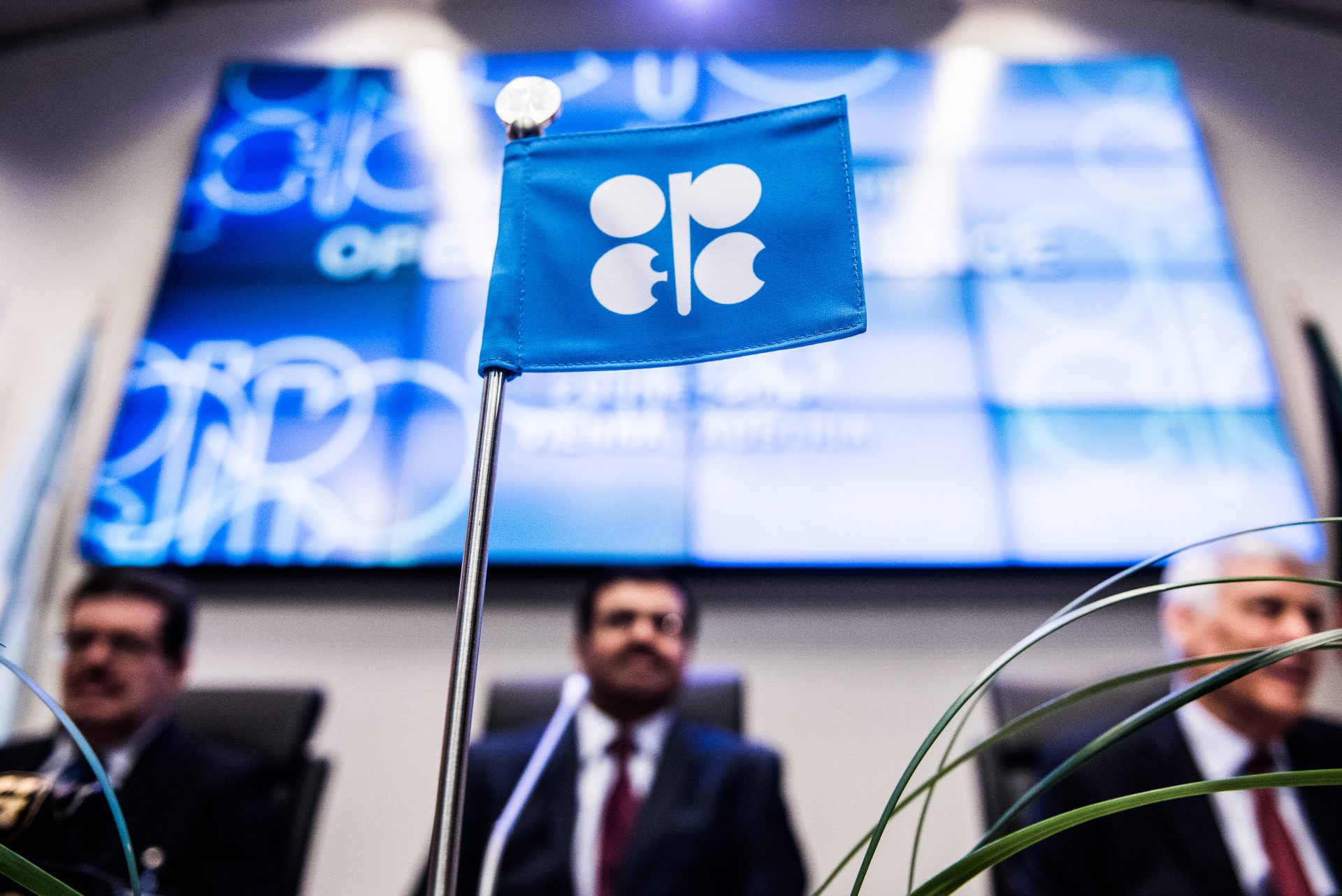
Nigeria will put forward its demand for a higher oil production quota at the next meeting of the Organisation of Petroleum Exporting Countries and allies (OPEC+) scheduled for November.

This was disclosed by the Minister of State for Petroleum Resources (Oil), Mr Heineken Lokpobiri, during an interview with the media team of the Nigerian Upstream Petroleum Regulatory Commission (NUPRC), where he reviewed the country’s upstream oil performance four years after the enactment of the Petroleum Industry Act and the establishment of the commission.

He said the country’s current quota, pegged at about 1.5 million barrels per day, no longer reflects its true production capacity, noting that the upcoming OPEC meeting provides an opportunity for Nigeria to make a strong case for an upward review to at least two million barrels per day.

“The OPEC quota is subject to periodic review, and by November, when we attend the annual meeting, we will certainly be making a case for a higher quota for Nigeria. And I believe that there’s no better time than now for us to make a strong case for Nigeria’s quota to be reviewed to two million and above,” the minister said.

He expressed confidence that Nigeria’s improved output levels, strengthened infrastructure, and renewed investments in the upstream sector would support the country’s case for an increase.

Mr Lokpobiri said the sustained recovery in production, improved regulatory environment, and fresh inflow of investment into the oil and gas sector have positioned Nigeria to make a strong case for a higher OPEC quota.

“When I became minister, the OPEC quota for Nigeria was 1.5 million barrels per day because our production then was below that.

“Today, we are producing around 1.7 million barrels daily, including condensates, and we have the capacity to produce above two million barrels per day. It is time to review the quota upward,” he noted.

He explained that Nigeria’s actual output includes condensates, a lighter, higher-value form of crude not covered by OPEC’s production limits, adding that this gives the country flexibility without violating its quota.

“Condensate is not counted in OPEC production, yet it sells at a higher price,” he said. “If we do 1.5 million barrels of crude and one million barrels of condensate, we are still within the rules. And because we have capacity, we are also going to show that we have capacity. Right now, there is something going on to assess our capacity, and that assessment is currently going on. And we believe that we will show the world that we have the capacity to produce more than two million barrels.”

The minister added that verifiable production data, domestic crude supply obligations under the PIA, and evidence of renewed capacity would form part of Nigeria’s case at the OPEC meeting.

Mr Lokpobiri attributed the production rebound to improved security and better pipeline integrity across the Niger Delta.

He said years of pipeline vandalism and oil theft had crippled Nigeria’s production capacity, but recent interventions by security agencies and community partnerships had reversed the trend.

According to him, Nigeria’s rig count, a key indicator of upstream activity, has jumped from about 14 to nearly 50 and is expected to rise further by year-end.

The minister also expressed optimism that the country’s goal of achieving 2.06 million barrels per day by 2025 was within reach, citing improved infrastructure, new investments, and policy stability.

“When I took office, production was around one million barrels a day. Today, it’s between 1.7 and 1.8 million barrels. That’s progress, but we’re not stopping there.

“Our cost of production is higher than the global average, but we’re also bringing it down. The cost of production is bound to be high depending on the circumstances. But today, we have taken steps to ensure that the cost of production is made competitive, and the executive orders have been very helpful in ensuring that we take certain steps that will reduce the cost of per-barrel production.

“Saudi Arabia is getting about eight dollars per barrel. I mean, some of the things that they do there are not available here. Circumstances here are different. But we definitely will get there. The global average is perhaps $12, but ours is way above that. But that doesn’t mean that we are not taking steps. So, having identified the problem, we are taking steps to ensure that we address that problem,” he affirmed.


Adedapo Adesanya is a journalist, polymath, and connoisseur of everything art. When he is not writing, he has his nose buried in one of the many books or articles he has bookmarked or simply listening to good music with a bottle of beer or wine. He supports the greatest club in the world, Manchester United F.C.

Economy

NASD OTC Exchange Drops 0.44%

Published

on

NASD OTC stock exchange

By Adedapo Adesanya

The NASD Over-the-Counter (OTC) Securities Exchange dipped by 0.44 per cent on Tuesday, January 27, with the market capitalisation declining by N9.70 billion to N2.174 trillion from N2.184 trillion, and the NASD Unlisted Security Index (NSI) falling by 16.21 points to 3,634.73 points from 3,650.94 points.

The bourse was under pressure from two securities, which lost weight, overpowering the gains recorded by three securities.

Business Post reports that FrieslandCampina Wamco Nigeria Plc lost N5.70 to sell at N64.00 per share compared with Monday’s price of N69.70 per share and Central Securities Clearing System (CSCS) Plc dropped 17 Kobo to close at N40.50 per unit, in contrast to the preceding day’s N40.67 per unit.

On the flip side, Air Liquide Plc added N1.69 to settle at N18.63 per share versus the previous session’s N16.94 per share, UBN Property Plc appreciated by 20 Kobo to N2.20 per unit from N2.00 per unit, and Industrial and General Insurance (IGI) Plc gained 6 Kobo to trade at 69 Kobo per share versus 63 Kobo per share.

During the session, the volume of securities traded by investors fell further by 80.9 per cent to 1.3 million units from 6.8 million units, the value of securities went down by 57.3 per cent to N57.3 million from N156.7 million, and the total number of deals shrank by 13.6 per cent to 38 deals from 44 deals.

At the close of business, CSCS Plc was the most traded stock by value on a year-to-date basis with 14.4 million units traded for N586.1 million, the second spot was occupied by FrieslandCampina Wamco Nigeria Plc with 1.6 million units worth N107.9 million, and the third spot was taken by MRS Oil Plc with 297,101 units valued at N59.3 million.

CSCS  Plc also ended as the most active stock by volume on a year-to-date basis with 14.4 million units valued at N586.1 million, followed by Geo-Fluids Plc with 1.6 million units worth N107.9 million, and Mass Telecom Innovation Plc with 6.4 million units sold for N2.6 million.

Continue Reading

Economy

Naira Firms to N1,401/$1 at Official Market as Reforms Bear Fruits

Published

on

reject old Naira notes

By Adedapo Adesanya

The value of the Nigerian Naira appreciated against the US Dollar in the Nigerian Autonomous Foreign Exchange Market (NAFEX) on Tuesday, January 27 by N17.73 or 1.25 per cent to close at N1,401.22/$1, in contrast to the previous day’s value of N1,418.95/$1.

Also, the domestic currency improved its value against the Euro by N10.09 in the same market window yesterday to trade at N1,672.22/€1 versus the previous session’s N1,682.31/€1, but declined against the Pound Sterling by N4.72 to trade at N1,925.84/£1 compared with Monday’s closing price of N1,921.12/£1.

At the GTBank FX desk, the Naira appreciated against the greenback during the session by N4 to close at N1,426/$1 compared with the previous day’s N1,430/$1 and at the parallel market, it remained unchanged at N1,480/$1.

The Naira continues to align with projections and reforms. Analysts largely expect the local currency to remain within a relatively stable range in the medium term. Many projections suggest the currency will trade between N1,400/$1 and N1,450/$1 this year, supported by improved FX liquidity and ongoing macroeconomic reforms.

Nigeria’s external reserves have continued on a steady upward trajectory, providing additional support for the domestic currency. According to figures published by the CBN on its website, external reserves rose to $46.03 billion as of January 26, 2026, reflecting sustained inflows and improved confidence in the FX market.

Ongoing reforms in the oil sector that have buoyed investments, rising foreign capital inflows, and stronger diaspora remittances are also combining to underpin exchange rate stability and sustain confidence in the FX market.

Meanwhile, the cryptocurrency market rose on Tuesday and the US Dollar remained under pressure ahead of a closely watched Federal Reserve decision on Wednesday.

The weaker Dollar has fueled strong rallies in gold and silver, but crypto has so far lagged that trade.

Ethereum (ETH) gained 2.5 per cent to trade at $3,000.05, Dogecoin (DOGE) increased by 2.4 per cent to $0.1249, Solana (SOL) expanded by 2.3 per cent to $126.84, Binance Coin (BNB) added 2.1 per cent to sell for $900.33, Cardano (ADA) jumped by 1.6 per cent to $0.3568, Ripple (XRP) appreciated by 0.9 per cent to $1.91, Bitcoin (BTC) soared by 0.9 per cent to $89,016.63, and Litecoin (LTC) grew by 0.6 per cent to $69.69, while the US Dollar Tether (USDT) and the US Dollar Coin (USDC) traded flat at $1.00 apiece.

Continue Reading

Economy

Crude Oil Jumps 3% as US Winter Storm Affects Output

Published

on

Crude Oil Loan Facility

By Adedapo Adesanya

Crude oil appreciated by 3 per cent on Tuesday as a winter storm in the United States affected crude production and drove US Gulf Coast crude exports to zero over the weekend.

During the session, Brent crude futures went up by $1.98 or 3.02 per cent to $67.57 a barrel and the US West Texas Intermediate (WTI) crude futures grew by $1.76 or 2.9 per cent to trade at $62.39 a barrel.

US oil producers lost up to 2 million barrels per day or roughly 15 per cent of national production over the weekend as a severe winter storm swept across the country, straining energy infrastructure and power grids.

The severe weather has boosted crude futures, with short-term risks rising on fears of supply disruptions.

According to Reuters, the Permian Basin experienced the largest share of that decline at around 1.5 million barrels per day. Production losses eased on Monday, with Permian shut-ins estimated at about 700,000 barrels per day and production set to be fully restored by January 30.

The exports of crude oil and liquefied natural gas from US Gulf Coast ports tumbled to zero on Sunday amid frigid weather. However, this has rebounded in the last days.

Also boosting prices,  Kazakhstan’s biggest oilfield, Tengiz, is likely to restore less than half of its normal production by February 7 as it slowly recovers from a fire and power outage.

The slow pace of recovery of Tengiz’s production is keeping the oil market tighter while a weaker US Dollar also lended some support.

However, the CPC, which operates Kazakhstan’s main exporting pipeline, said it returned to full loading capacity at its terminal on the Russian Black Sea coast after maintenance was completed at one of its three mooring points.

On the geopolitical front, the US landed an aircraft carrier and supporting warships in the Middle East, adding to the slim chance of a military action against Iran.

President Donald Trump Trump had repeatedly threatened to intervene if Iran continued to kill protesters, but the countrywide demonstrations have since abated. The US president said he had been told that killings were subsiding and that he believes there is currently no plan for the executions of prisoners.

Meanwhile, the Organisation of the Petroleum Exporting Countries and its allies (OPEC+) is set to keep its pause on oil output increases for March at a meeting on February 1.

Continue Reading

Trending