Connect with us

Brands/Products

Starbucks, Alibaba Partner to Satisfy Coffee Customers in China

Published

on

By Dipo Olowookere

A partnership aimed to transform the coffee industry in China has been signed between Starbucks Coffee Company and Alibaba Group Holding Limited.

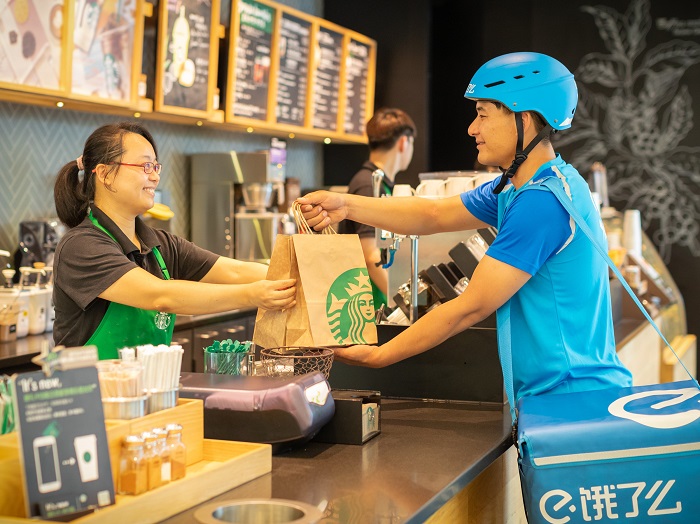
The strategic “New Retail” partnership will enable a seamless Starbucks Experience in China allowing the firm use the Alibaba ecosystem, including Ele.me, Hema, Tmall, Taobao and Alipay, to offer delivery services beginning September 2018.

This will allow the company establish “Starbucks Delivery Kitchens” for delivery order fulfilment and integrate multiple platforms to co-create an unprecedented virtual Starbucks store – an unparalleled and even more personalized online Starbucks Experience for Chinese customers.

The announcement marks a historic moment as two iconic, global companies build on their distinct retail and technology strengths to revolutionize the customer experience. Leveraging the Alibaba ecosystem and New Retail infrastructure, Starbucks will be able to further unify a seamless Starbucks Experience between its stores and online for customers.

“Thanks to the elevated customer experience delivered by our over 45,000 partners, Starbucks is growing and innovating faster in China than anywhere else in the world,” said Kevin Johnson, president and chief executive officer, Starbucks Coffee Company. “Our transformational partnership with Alibaba will reshape modern retail, and represents a significant milestone in our efforts to exceed the expectations of Chinese consumers. Starbucks China is one to watch, and I have full confidence in the team that will bring the new innovation behind the Starbucks Experience to life.”

Daniel Zhang, Chief Executive Officer of the Alibaba Group, said, “Starbucks is more than a destination for premium coffee and we share the same vision to pioneer a new coffee culture and lifestyle through innovation and technology. Alibaba is thrilled to expand our existing partnership with Starbucks by leveraging our cutting-edge New Retail infrastructure and digital power to enable an unprecedented experience for consumers. This partnership is again a testament to the success of our New Retail strategy.”

The strategic partnership is part of Alibaba’s broader New Retail push, which aims to transform how commerce is conducted by merging online and offline experiences. New Retail was introduced by Alibaba in 2016 and has since become a hallmark strategy of the retail industry.

Creating an Unparalleled Order and Delivery Experience Powered by the Alibaba Ecosystem

Best-in-class coffee delivery service through Ele.me

Working with Ele.me, China’s leading on-demand food delivery platform with 3 million registered delivery riders, Starbucks will pilot delivery this September in 150 stores located in key trade zones in Beijing and Shanghai with plans to accelerate and expand its delivery program to more than 2,000 Starbucks stores across 30 cities by the end of calendar year 2018.

Both Starbucks and Ele.me collaborated to develop a unique, customized delivery infrastructure that has been meticulously determined each step along the way, including dedicated Ele.me delivery riders, precise delivery time, and custom carriers. Both companies have created a tailored order-to-delivery Starbucks program that upholds the unparalleled experience and quality that customers have come to expect in Starbucks retail stores. Through this delivery partnership, Starbucks and Ele.me have pioneered a best-in-class coffee delivery service standard for Chinese customers.

“Ele.me has a robust infrastructure for on-demand delivery in China. We are pleased to partner with Starbucks to launch these reliable and trusted delivery services to satisfy customers’ needs and capitalize on the delivery sector’s great potential. It is an important milestone for Ele.me to deepen our collaboration with retail chains and further expand our penetration in the food delivery sector,” said Wang Lei, Chief Executive Officer of Ele.me.

Distinct Fulfillment and Delivery Capabilities through Hema Supermarkets

In addition, Starbucks will partner with Hema supermarkets to be the first retail brand to establish dedicated “Starbucks Delivery Kitchens” within their locations. The “Starbucks Delivery Kitchens” will utilize Hema’s distinct fulfillment and delivery capabilities to complement the delivery of handcrafted Starbucks coffee and tea beverages offered through existing Starbucks stores. Starbucks will also leverage Hema’s highly effective consumer insights and unique fulfillment expertise to further penetrate and better serve the needs of individuals and families in communities across China.

This intentional strategy will inform the future network planning for new Starbucks stores, combined with “Starbucks Delivery Kitchen” locations, to further expand the scale and reach of Starbucks delivery services, while enabling our partners (employees) to continue to elevate the third-place experience for the customer. Starbucks will open “Starbucks Delivery Kitchens” in selected Hema supermarkets in Shanghai and Hangzhou as soon as September 2018, with plans to expand its presence to other cities over time.

“Our Chinese customers have a high expectation of their Starbucks Experience and we are proud to introduce a premium delivery experience that reflects the same service and quality they’ve come to love and expect from us in our stores – we will never compromise,” said Belinda Wong, chief executive officer, Starbucks China. “More significantly, through our partnership with Alibaba, we are breaking the physical and virtual barriers between the home, office, in-store and digital space, making China the first Starbucks market to deliver a seamless Starbucks Experience across all facets of our customers’ lives and further reflecting the uniqueness and strategic importance of the market.”

Digital Innovations Transforming the Retail Industry

A key strategic initiative under the partnership is the development of a pioneering, first-of-its-kind virtual Starbucks store in China. This digital partnership will see Alibaba develop a centralized online management hub, with the unique capabilities to integrate and deliver a consistent Starbucks Experience across multiple digital platforms. This innovation will transcend the traditional limitations of a single-app visit by providing the consumer an elevated, and even more personalized Starbucks digital experience across the Starbucks app and Alibaba’s customer-facing mobile apps, including Taobao, Alipay, Tmall and Koubei.

This latest innovation will revolutionize the traditional offline-to-online model by effectively extending the reach of the Starbucks Experience into the everyday lifestyle ritual of the Chinese consumer, regardless of time or place. Whether it is at home or in the office, within a Starbucks store or online, Starbucks customers will be able to access and enjoy a one-stop Starbucks Experience when purchasing merchandise online, buying a Starbucks handcrafted beverage to be delivered to a friend or sending a Starbucks gift of love on the “Say it with Starbucks” social gifting platform. Starbucks will progressively integrate its Starbucks Rewards (SR) membership platform onto the centralized system to leverage its consumer insights to deliver a truly personalized experience to its customers, while establishing a strong foundation for the future development of Starbucks digital experiences in China.

Starbucks and Alibaba are trusted business partners who share common values in the spirit of innovation and the unrelenting pursuit of product and service excellence. This deepened partnership is a significant step as both companies partner together to elevate the customer experience across China.


Dipo Olowookere is a journalist based in Nigeria that has passion for reporting business news stories. At his leisure time, he watches football and supports 3SC of Ibadan. Mr Olowookere can be reached via [email protected]

Advertisement
1 Comment

Leave a Reply

Your email address will not be published. Required fields are marked *

Brands/Products

Reputation Economy: How Nigerian Brands Won and Lost Public Trust in 2025

Published

on

Reputation Economy

Nigeria’s leading independent media intelligence consultancy, P+ Measurement Services, has released its 2025 Industry Media Reputation Report, revealing that corporate reputation has emerged as one of the most decisive assets for Nigerian companies, rivaling financial performance and market share in shaping public trust.

The report analysed and audited thousands of print and online news reports published in 2025 across the banking, insurance, telecommunications, and e-hailing sectors. In total, coverage of 29 commercial banks, 13 insurance companies, five e-hailing platforms, and four telecommunications operators was examined to determine how corporate actions translated into public perception.

According to the findings, rising operational costs, currency pressures, regulatory scrutiny, labour relations, and service reliability now directly influence how brands are judged in the media and by stakeholders.

“Reputation is no longer a soft outcome of publicity. It is a measurable business asset shaped by corporate behaviour, governance quality, customer experience, and crisis response,” said a Senior Analyst at P+ Measurement Services, Ms Tumininu Balogun.

She added, “For more than a decade, we have been at the forefront of media intelligence in Nigeria. Our commitment to the PR and communications industry is to ensure that reliable media data and actionable insight are always available, so professionals can move beyond intuition and make truly data-driven decisions.”

E-Hailing Industry: Driver Relations Reshaped Corporate Reputation

The e-hailing sector recorded one of the clearest shifts in reputation dynamics in 2025, driven largely by labour policies and platform economics.

inDrive Nigeria led the sector with 39% of positive reputation share, following extensive media coverage of its decision to reduce driver commission to 0.1% during peak hours in Abuja. Bolt Nigeria followed with 32%, supported by reports on its electric tricycle deployment in Lagos. LagRide recorded 17%, driven by coverage of its electric vehicle infrastructure partnership, while Uber Nigeria accounted for 11% and Rida 1%.

On the negative reputation scale, Bolt recorded the highest share at 40%, linked to driver protests following fare reduction policies. Uber accounted for 29%, inDrive 20%, LagRide 8%, and Rida 3%, largely associated with reports on strike threats, platform reliability concerns, and driver earnings disputes.

The report notes that how platforms treat drivers has become as influential to reputation as rider experience.

Banking Industry: Profitability Confronted by Governance Risk

Among commercial banks, Stanbic IBTC recorded the strongest positive reputation position at 26%, driven by recognition as KPMG’s top retail bank. Zenith Bank followed with 22%, supported by dividend payout coverage. Fidelity Bank (19%), UBA (17%), and FirstBank (16%) gained positive reputation visibility through education initiatives, digital service upgrades, and branch automation projects.

However, reputational exposure remained significant. GTCO recorded the highest negative reputation share at 28%, followed by FirstBank at 26%, FCMB at 18%, and both UBA and Ecobank at 14%, mainly due to media reports concerning legal disputes, fraud investigations, and customer-related controversies.

The report highlights that in the banking sector, strong earnings and digital innovation strengthen reputation, but governance failures can rapidly undermine it.

Insurance Industry: Financial Stability and Data Protection Define Trust

In the insurance sector, AXA Mansard led positive reputation share with 36%, followed by Leadway Assurance (29%), AIICO (16%), NEM Insurance (11%), and SanlamAllianz (8%).

AXA Mansard also accounted for the highest negative reputation exposure at 68%, driven by reports of a significant decline in pre-tax profit. AIICO recorded 18%, Leadway 12%, and NEM 2%, largely connected to regulatory matters and data protection concerns, including coverage of customer data breaches.

The findings indicate that insurers are now judged as much by financial resilience and cybersecurity posture as by product offerings.

Telecommunications Industry: Infrastructure Investment Meets Rising Public Expectations

MTN Nigeria led positive reputation share with 47%, driven by infrastructure expansion narratives and innovation campaigns. Glo followed with 28%, Airtel Nigeria with 16%, and T2 (formerly 9mobile) with 9%, largely supported by its rebranding coverage.

On the negative reputation side, MTN recorded 44%, T2 31%, Glo 13%, and Airtel 12%, influenced by reports on service quality challenges and the Nigeria Labour Congress boycott directive targeting telecommunications operators.

The sector’s results suggest that while capital investment enhances visibility, network reliability and customer experience increasingly determine long-term reputation.

Reputation Has Become a Strategic Business Asset

Across all four industries, the report finds a consistent pattern: reputation in 2025 closely followed corporate behaviour.

Brands that demonstrated transparency, operational fairness, financial discipline, digital reliability, and customer focus were more likely to build positive public trust. Companies facing labour unrest, legal disputes, regulatory sanctions, data breaches, or service disruptions saw these issues rapidly reflected in their reputation profile.

For brand owners, investors, regulators, and communication professionals, the implication is clear: reputation is no longer managed only through messaging, but through measurable actions that are permanently recorded in the media ecosystem and searchable online.

Continue Reading

Brands/Products

Nigeria Must Accelerate Adoption of Renewable Energy Solutions—JMG

Published

on

JMG Renewable Energy Solutions

By Modupe Gbadeyanka

A leading provider of integrated electromechanical solutions in Nigeria, JMG Limited, recently showcased real-world impact of its solar and hybrid energy solutions across key sectors of the economy to members of the media.

At the media tour held at JMG’s head office in Lagos, the Chief Commercial Officer of JMG, Mr Rabih Jammal, stressed the urgent need for Nigeria to accelerate its adoption of renewable energy solutions.

“Clean energy is no longer a future concept – it is happening now – and it is working. At JMG, we are not just advocating for renewables; we are delivering them.

“From our 150-kilowatt solar installation at our Victoria Island head office to multiple large-scale deployments nationwide, we have proven that clean energy works technically, commercially and financially,” he said at the event hosted to commemorate the International Day of Clean Energy.

According to him, JMG’s solar and hybrid projects have helped clients save millions of naira in diesel costs, improve energy reliability and significantly reduce carbon emissions.

“As more countries move toward sustainable solutions, clean energy has become an economic imperative for Nigeria. It enhances competitiveness, lowers operating costs and enables communities. This is only the beginning as we will continue to invest in solar solutions, technology, partnerships and people to scale clean energy across the country,” he added.

Also speaking, the Head of Marketing at JMG, Ms Oluwatomi Faniran, described clean energy as a core responsibility embedded in the company’s business strategy.

“At JMG, clean energy is more than technology; it is a responsibility. Our track record speaks for itself,” Ms Faniran said, highlighting the successful deployment of solar hybrid systems at NIPCO fuel stations, the powering of a government state house, and energy-efficient solutions delivered at facilities such as Nourdm Global and Rack Centre.

With decades of experience delivering solutions that enhance comfort, safety and efficiency across residential, commercial and industrial spaces, JMG operates across critical business units including conventional and renewable power, electrical infrastructure, HVAC systems, elevators and escalators, air compressors and energy-efficient technologies. Its operations are backed by internationally recognised ISO certifications in quality management, health and safety, and environmental sustainability.

Continue Reading

Brands/Products

Paystack Launches Holding Company The Stack Group

Published

on

The Stack Group

By Adedapo Adesanya

Top payment solutions company, Paystack, has launched a holding company, known as The Stack Group (TSG), in its bid to aggregate the tech-focused family of brands connected with the Paystack brand.

TSG founding shareholders include Stripe, Shola Akinlade (Founder and CEO of Paystack), and existing Paystack employees. The agreements establishing TSG as the parent holding company were signed in October 2025, and are subject to the requisite regulatory approvals.

The announcement comes as Paystack celebrates its 10-year anniversary in January 2026.

Since its acquisition by Stripe in 2020, Paystack has grown its payment volume by 12x and is licensed and operational in Côte d’Ivoire, Ghana, Kenya, Nigeria, and South Africa, with regulatory approvals for Egypt and Rwanda, representing 46 per cent of Africa’s GDP, the company said in a press statement.

The statement added that this product-first approach to pan-African growth has led to Paystack becoming profitable at the group level.

The development follows the recent launch of Paystack MFB in Nigeria after it acquired Ladder Microfinance Bank in its push into consumer products.

The company noted that as a standalone bank, Paystack MFB allows the group to internalise core financial rails and provide the banking and credit infrastructure required by over 300,000 Nigerian merchants.

“These capabilities enable the development of elegant, compliant, and much-needed end-to-end money-movement solutions and will continue to power the company’s mission of building technology solutions for Africa, to power African ambition,” parts of the statement added.

TSG will provide a corporate umbrella for a family of complementary brands that are solving Africa-specific challenges, while remaining operationally independent. At the outset, TSG will include merchant payments solution, Paystack, its controversial consumer payments product, Zap, the recently launched Paystack Microfinance Bank and TSG Labs, which will serve as hub for  emerging technologies and building new products both within and beyond financial technology.

According to Mr Akinlade, “The launch of TSG signals a larger scope of ambition for us and sets the tone for the next decade of our company. Having worked with thousands of companies across the continent since 2016, it is clear that there are significant opportunities to support businesses beyond payments, and TSG enables us to address the challenges African companies face.”

“Thank you to the Stripe team for their continued belief in Africa’s potential, and our ability to create transformative technology companies for the continent, and beyond,” he added.

Continue Reading

Trending