Connect with us

Feature/OPED

Such a Dangerous time to be a Student

Published

on

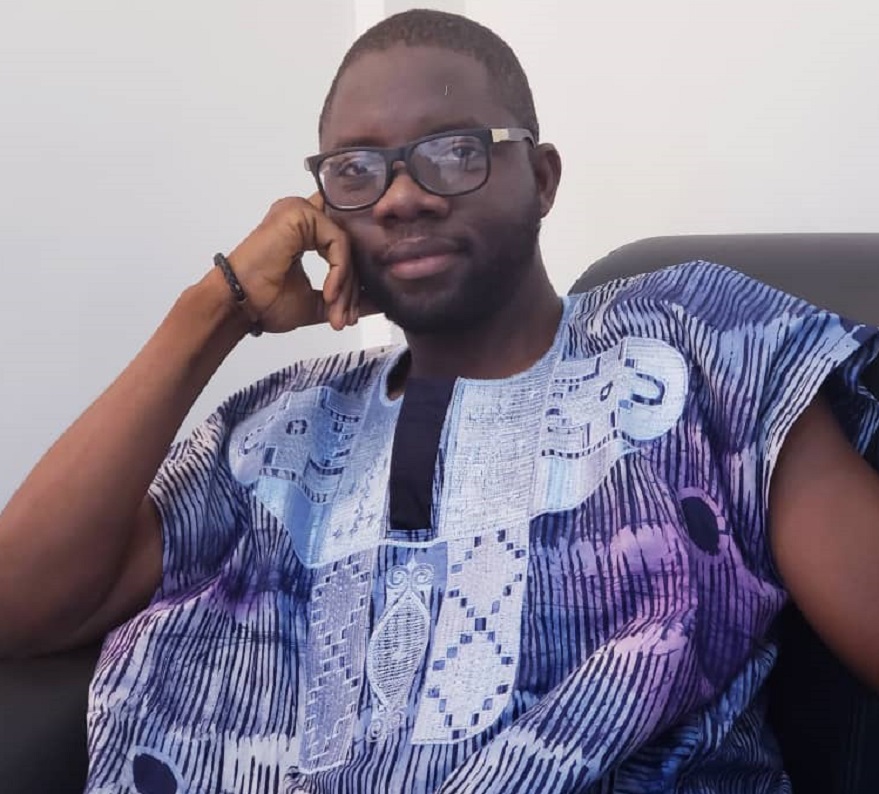
Olutayo Irantiola With Our Uniform

By Olutayo Irantiola

Growing up in this country some years ago was full of fun and pleasant memories; from your classmates to your teachers, the school authority, and everyone around.

It was a grand community wherein all the misdemeanour of children were corrected by neighbours and children still plead not to be reported to their immediate parent; parenting was done by the community.

Reading newspaper reports daily has negatively impacted the mental health of many persons. Howbeit, would one remain perpetually deaf to what is happening in one’s community? Life has got so bad that being a student has become a difficult journey to embark upon.

The happenings in the North-Eastern part of Nigeria have made schooling very dangerous. Well, as said, that is the meaning of Boko Haram from the beginning is Western Education is forbidden and it is depicted with the various killings and abductions.

In the last few years, students in that region of the country have been turned into refugees in their homeland. Although, recently, the Borno State Government is making attempts at resettling the Internally Displaced Persons (IDPs), and schools are being built and commissioned all over. This signifies the beginning of Western Education for this set of Nigerians.

Imagine the recent happening in Greenfield University, Kaduna State. Some students were killed for no just cause. The situation is critically alarming that lecturers, workers, and students have become targets of kidnappers.

About the same time, a Professor of the University of Jos, Grace Ayanbimpe and her husband were also kidnapped. All of these led the Senior Staff Union of Universities to demand weapons to guard themselves if they cannot be safe on their various campuses.

It is such a challenging time to be a student when you think about the number of auto crashes that claim the lives of students annually while trying to commute to their various institutions of learning and back to their homes. This also brings to the fore the unfortunate death of the students of the Adekunle Ajasin University, Akungba-Akoko, earlier in the year, who were crushed to death by a truck.

When you encounter Nigerian students, you need to pity them specially. They would spend years in a tertiary institution of learning, either state or federal because the Academic Staff Union of Universities and the Nigerian Government are always at loggerheads over things they usually claim would benefit the students.

It is so saddening that you can only know the year in which you resume school but you can never know the year in which you will graduate. Every day, the heartbeat of parents and the students keep palpitating strongly because nobody knows what would be the next occurrence that would make interrupt learning.

Despite all these, female students are exposed to several ills within few years of maturity. They are trailed by lecturers old enough to be their fathers; some evil students rape and murder them amongst others.

The journey of a female student needs special care with all that is heard and seen these days. Kudos to the University of Lagos for firing two randy lecturers.

At the moment, Nigeria is just heading for a more grievous crisis in terms of the labour force. As stated by Professor Olayinka Idowu, the former Vice-Chancellor of the University of Ibadan. Every Senator wants a university to be sited in his hometown, as such, quality education is fast depreciating in Nigeria.

Asides from that, all the polytechnics are being converted to universities; for instance, Yaba College of Technology and the Federal Polytechnic, Ilaro. These schools may become universities but what of the technical know-how that we are losing. The skillset of a graduate of the polytechnic is very different from that of a university graduate.

Although the Senate has removed the dichotomy lately, we still need everyone to understand the differences, if not, polytechnics would becoming ghost tertiary institutions.

Ultimately, if you are fortunate to get through school without any scar or blemish; the hurdle of serving your fatherland is staring at you in the face.

With all the various uprisings in the country, where is the safe haven for a one-year period, that reminds me, the NYSC Orientation Camp in Maiduguri, has been turned into an IDP camp. Where exactly is the place that one would want to serve with the current state of the country? If you are not thinking of all these, it becomes frightening for the Director-General of NYSC saying that Corps Members can be deployed to a war zone if a war breaks out. Can a Corps member defend the integrity of this nation by mere marching when trained soldiers are being killed by terrorists in our nation?

Have you noted the rising spate of the kidnapping of those in search of work lately? The syndicate is getting more organised daily. They would lure victims to a particular location, thereafter abducting such individuals. It is getting sophisticated to a fault. There jokes about the situation about how lucrative the kidnapping business has become. People now notify others to look out for certain addresses as they are the hideout of people perpetrating such heinous crimes.

It is such a challenging time to be a student; it is such a challenging thing to be out of school and it is such a challenging time to be in search of work! May the Lord see us through these trying times.

Olutayo Irantiola is a Public Relations Consultant and Creative Writer based in Lagos, Nigeria. His writings are available on www.peodavies.com.


Click to comment

Leave a Reply

Your email address will not be published. Required fields are marked *

Feature/OPED

Building 234 Solutions: A Response to Everyday Workforce Challenges

Published

on

Owoloye Emmanuel 234 Solutions

By Owoloye Emmanuel

Every business starts with a problem. For us, that problem was hiding in plain sight.

Across organisations, we kept seeing HR professionals, payroll teams, and business leaders spend significant time navigating processes that should be simpler. Employee records sat across multiple systems, payroll processes required manual intervention, and routine workforce tasks often became more complicated than they needed to be.

As businesses grow, workforce operations naturally become more complex. Yet many organisations still rely on disconnected tools and workflows that create unnecessary friction for both employers and employees.

The consequence is more than operational inefficiency. HR teams spend valuable time managing systems instead of supporting people. Business leaders struggle to access timely workforce insights, while employees experience delays in processes that should be seamless.

These weren’t isolated challenges. They were recurring realities across workplaces, regardless of industry or size.

That observation led us to a simple question: what if workforce management could be easier?

What if HR, payroll, and workforce operations could work together within a single, connected experience?

That question became the foundation for 234 Solutions.

We are building 234 Solutions with a clear belief that workplace technology should reduce complexity, not add to it. Our goal is to help organisations spend less time navigating processes and more time focusing on productivity, growth, and people.

As we prepare for launch, our focus remains simple: building practical solutions for real workplace challenges and helping organisations create better experiences for the people who power them every day.

Owoloye Emmanuel is the founder of 234 Solutions

Continue Reading

Feature/OPED

The Role of TV in Preserving African Stories and Identity

Published

on

Preserving African Stories

Scroll through social media today, and you will notice something interesting: everyone is either reacting to a series, quoting a movie line, or debating a character as though they personally know them. Beneath the memes and binge-watch culture, however, lies something deeper. Television remains one of the most powerful tools shaping how Africans see themselves, remember their history, and tell their own stories. In a continent as diverse and expressive as Africa, that matters more than ever.

TV as a Cultural Archive, Not Just Entertainment

Long before streaming algorithms began shaping our viewing habits, television was already preserving African identity. From Nollywood dramas that capture the rhythm of everyday Lagos life to documentaries exploring Maasai traditions and Ghanaian folklore, TV has served as a living archive of the continent’s stories.

It preserves more than entertainment; it preserves language, culture, humour, values, and shared experiences. Unlike fleeting social media content, television allows stories to unfold with depth, exploring the realities of family, tradition, ambition, and modern African life without reducing them to stereotypes. That is the power of TV: preserving not just stories, but perspective.

Why Representation on TV Still Matters

There is a subtle but important truth: if people do not see themselves on screen, they may begin to believe their stories are not worth telling. This is why African TV content is more than entertainment; it is affirmation.

Seeing a character who speaks like you, struggles like you, or celebrates like your community does something powerful. It validates identity and challenges outdated narratives that have historically defined Africa through external lenses.

This is where MultiChoice Group, through platforms such as DStv and GOtv, plays an important role. They do not simply broadcast content; they help distribute cultural memory at scale.

GOtv, DStv, and the Everyday African Viewer

Think about a typical evening in many African homes: the TV is on in the background, someone is laughing at a comedy show, another person is watching a local series, and someone else is catching up on the news. That shared viewing experience remains very real.

Through platforms such as DStv and GOtv, African households are exposed to a blend of local storytelling and global content. More importantly, they have helped amplify African-produced content by bringing Nollywood films, African reality shows, talk shows, and documentaries into mainstream rotation.

It is not just about access. It is about visibility.

A young filmmaker in Lagos today is more likely to believe their story matters because they have seen similar stories broadcast widely. A child in Accra grows up hearing familiar accents and seeing environments that look like their own on screen, not as exceptions, but as the norm.

TV Is Also Shaping Modern African Identity

African identity is not static; it is evolving. Television reflects that evolution in real time.

Today, audiences see:

  • Young Africans balancing tradition and modern dating culture

  • Stories tackling mental health in African households

  • Fashion and music influences spreading through TV series

  • Political satire shaping public conversation

Conversations that were once confined to homes are now being explored on screen, giving audiences the language to discuss issues that were previously unspoken.

In many ways, television is doing what oral tradition has always done: passing stories, values, humour, warnings, and history from one generation to the next. The difference is that today’s griots are writers, directors, and broadcasters.

The Future: From Watching to Owning Our Narratives

The next stage of African storytelling is not just about being seen; it is about ownership.

As more African creators produce content and platforms continue to invest in regional storytelling, television becomes more than a mirror. It becomes a tool for shaping how Africa is represented to itself and to the world.

While streaming continues to grow, television, particularly accessible platforms such as GOtv, remains one of the most effective ways to reach everyday audiences across different income levels and regions. After all, storytelling only matters if people can access it.

African stories are not new. They have always existed in families, on streets, in markets, in history books, and through oral traditions. What television has done, and continues to do, is give those stories a stage wide enough for millions to experience them at once.

The next time you watch a local series or documentary on DStv or GOtv, remember that you are not just being entertained. You are participating in the preservation of African identity itself.

Continue Reading

Feature/OPED

The Future of AI in Nigerian SMEs: Overcoming Barriers to Implementation

Published

on

Kehinde Ogundare 2025

By Kehinde Ogundare

Ask a tech entrepreneur in San Francisco what AI means for their business, and they are likely to talk about competitive advantage, product differentiation, and scale. Ask a small business owner in Kano or Onitsha the same question, and the conversation shifts entirely.

For many Nigerian SMEs, the priority is keeping the lights on, managing costs, and finding sustainable ways to grow in a challenging economic environment. This difference in perspective explains why the global AI conversation, often shaped by assumptions about stable infrastructure, deep capital, and abundant technical talent, frequently fails to address the realities facing Nigerian SMEs.

This matters because Nigerian SMEs are not a peripheral concern. In 2024 alone, MSMEs contributed 46.32% to Nigeria’s GDP, accounting for 96.9% of businesses and 87.9% of employment. These businesses are the backbone of the Nigerian economy, and if AI is going to mean anything for Nigeria’s development, it has to work for them in the daily conditions they actually operate in.

However, research drawing on empirical data from 144 Nigerian SMEs found that inadequate infrastructure, low digital literacy, skills shortages, and regulatory gaps are collectively preventing them from meaningfully engaging with AI. Awareness of AI is high and growing. What is missing is a clear and honest conversation about what adoption actually requires in this specific context. The barriers are real, but none of them are insurmountable. The question is whether the tools, pricing models, and support structures being offered to Nigerian SMEs are designed with those barriers in mind, or whether they have been built for another market entirely.

Subscription models making AI affordable for small businesses

When most small business owners hear “AI,” they imagine expensive software, specialist consultants, and a hefty upfront bill.

That assumption is not entirely wrong, but it describes a particular way of buying technology, not AI itself. The shift that makes AI genuinely accessible at the SME level is the move away from large, one-time capital purchases towards tools that charge a predictable monthly subscription. Businesses can pay for what they use, scale back when necessary, and avoid the debt that a major technology investment can create.

The deeper opportunity here is consolidation. Many SMEs are already spending money across multiple disconnected tools—one for invoicing, another for customer records, another for stock tracking—none of which talk to each other. An integrated platform that handles several of these functions together, with AI built in, can actually cost less than the sum of those separate subscriptions while giving business owners a clearer picture of their operations.

With margins already under pressure, any technology a business adopts needs to visibly show an increase in productivity or bottom line. Subscription-based, integrated platforms, priced transparently and honestly, are the model that best fits this reality.

Infrastructure challenges demand a mobile-first approach

No conversation about technology in Nigeria is complete without confronting the infrastructure problem, and AI is no exception. Nigeria continues to face major infrastructure barriers, including limited broadband access, unreliable power supply, and high data costs, all of which constrain deeper AI adoption. These are structural features of the operating environment that any sensible technology strategy must account for today.

The electricity situation alone is significant. The World Bank estimates that the lack of stable electricity costs Nigeria’s economy approximately $26.2 billion annually, equivalent to about 2% of GDP, forcing many businesses to run on expensive diesel generators. That cost ripples outward.

In practical terms, AI tools built for Nigeria cannot assume a stable broadband connection or a computer that is always powered on. The tools that will actually get used are the ones that work on a smartphone, consume minimal data, and can function offline when connectivity drops, syncing back up when it returns. The mobile phone is already how many Nigerian SME owners run their businesses. AI that meets them there, rather than demanding infrastructure they do not have, is AI that has a genuine future in this market.

The direction is clear: build capability from within, using tools that make that possible. Recent AI performance research reveals that 64% of African workers are already actively using AI at work, signalling massive grassroots readiness and driving forward-thinking organisations across Nigeria, Kenya, and South Africa to aggressively prioritise internal upskilling frameworks to bridge the talent gap.

As the policy groundwork is being laid, the commercial ecosystem is beginning to respond. What remains is a clear-eyed acceptance that AI tools built for this market need to look different from those built for markets with different realities. Low cost, low bandwidth, and usability for non-technical people are not modest ambitions; they are the actual requirements. Build for those realities, and AI has a real future in Nigeria’s SME economy.

Continue Reading

Trending