Connect with us

Economy

How to Build an Investment Portfolio

Published

on

Investment Portfolio

By FBNQuest

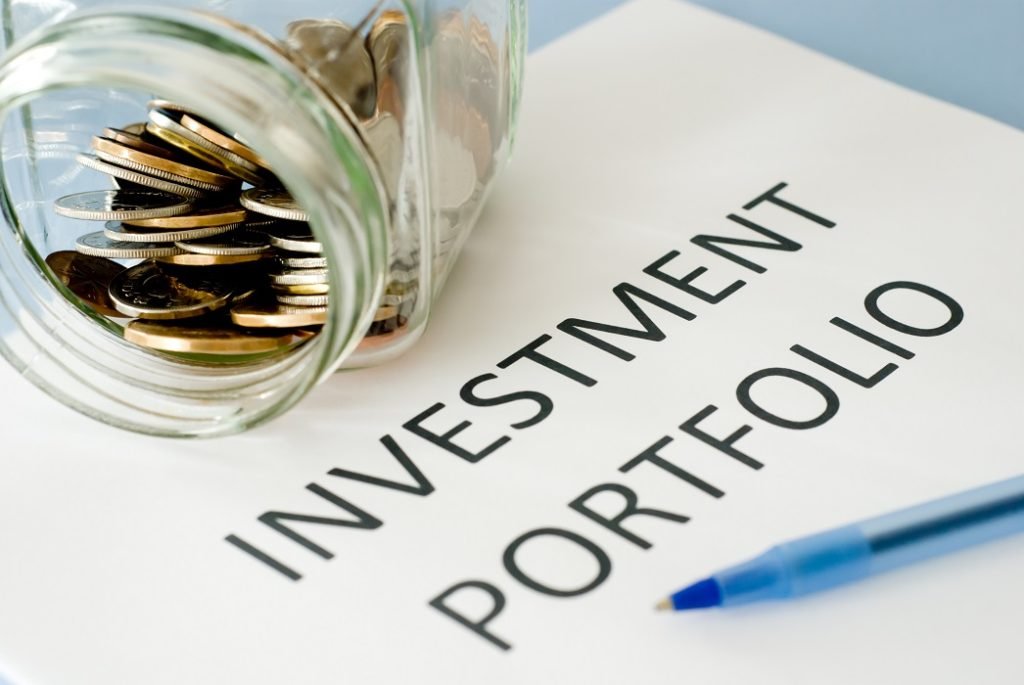
Every investor who desires to build and grow wealth should have an investment portfolio. Wealth creation efforts are less likely to succeed if they are approached haphazardly, so building an investment portfolio is a great way to add the necessary strategy and intention to these efforts.

An investment portfolio, simply defined, is a collection of all the assets an investor owns. It can be likened to a roof under which you house all your investments. A good investment portfolio will be diversified and contain a wide variety of assets such as stocks, bonds, mutual funds, real estate, fine art, gold etc.

Types of Investment Portfolios

There are five major types of investment portfolios and they are built by taking the financial goals and risk appetite of the investor into consideration.

The Aggressive Portfolio – This type of portfolio is specially designed for investors with a high tolerance for risk. Investments that fall under this category are high risk but also have the potential to yield high returns. High beta stocks are an example of this kind of asset. They are more volatile and experience a greater fluctuation in price when compared to the overall market.

The Defensive Portfolio – This category is for people who have a low-risk appetite. Building a defensive portfolio usually involves investing in stocks of companies that will stay in business no matter what. These are companies that make products that are important for everyday survival.

The Income Portfolio – The goal of an income portfolio is to generate positive cash flow. This includes stocks that pay regular dividends and provide a steady source of income for the investor. An income portfolio can serve as a great supplement to an investor’s salary or retirement income.

The Speculative Portfolio – This portfolio is also tailored to an investor with a high-risk tolerance. It basically involves pre-empting which stocks are likely to do well. An example of speculative investment is an initial public offering (IPO) of a new tech company. Financial advisors usually advise investors against putting more than 10 per cent of their investment funds into such assets.

The Hybrid Portfolio – The hybrid portfolio, as the name implies, is a combination of different assets. This portfolio encourages diversification and provides the investor with a diversified portfolio which can include stocks, mutual funds, bonds, commodities, real estate, and even art. This portfolio category comes with the advantage of flexibility for the investor; it also reduces the negative impact of losses from one asset class.

How to start building an investment portfolio

Building an investment portfolio can seem like an uphill task, but it does not have to be. The first step is to identify your financial goals. As Bloomberg financial analyst and Chief Investment Officer of Ritholtz Wealth Management LLC, Barry Ritholtz aptly points out: “When it comes to investing, there is no such thing as a one-size-fits-all portfolio.”

Identifying your unique goals will determine if your money should go into short-term or long-term investments. It will also predict what kind of portfolio would be best suited to your needs. A portfolio tailored towards retirement will be different from one that is intended to provide income within the next five years.

It is also important to assess your risk tolerance. If you are risk-averse, this means you are careful about putting your money at risk for promising rewards. Therefore, your money should be invested as safely and predictably as possible. However, if you have a high tolerance for risk, you are open to taking risks for the possibility of making greater returns.

Once this is completed, you would need to honestly examine your investing skills, to establish whether you can build a portfolio yourself or would require the support of a Financial Adviser.

The next step is to decide on asset allocation. How much of your money will go into each investment? How do you plan to balance your portfolio and continue to diversify as time goes on? These are all questions that must be answered and it’s advisable to seek the help of a professional for this stage of the process.

In conclusion, the major keys to keep in mind when building an investment portfolio are to identify your goals, assess your risk appetite and talk to an expert. Ready support is available to you, as FBNQuest offers a variety of investment products and is available to offer advice to investors based on their risk appetite.


Advertisement
Click to comment

Leave a Reply

Your email address will not be published. Required fields are marked *

Economy

Nigerian Stocks Close 1.13% Higher to Remain in Bulls’ Territory

Published

on

Nigerian Stocks1

By Dipo Olowookere

The local stock market firmed up by 1.13 per cent on Friday as appetite for Nigerian stocks remained strong.

Investors reacted well to the 2026 budget presentation of President Bola Tinubu to the National Assembly yesterday, especially because of the more realistic crude oil benchmark of $64 per barrel compared with the ambitious $75 per barrel for 2025. This year, prices have been between $60 and $65 per barrel.

Business Post observed profit-taking in the commodity and energy sectors as they respectively shed 0.14 per cent and 0.03 per cent.

But, bargain-hunting in the others sustained the positive run, with the consumer goods index up by 3.82 per cent.

Further, the industrial goods space appreciated by 1.46 per cent, the banking counter improved by 0.08 per cent, and the insurance industry gained 0.04 per cent.

As a result, the All-Share Index (ASI) increased by 1,694.33 points to 152,057.38 points from 150,363.05 points and the market capitalisation chalked up N1.080 trillion to finish at N96.937 trillion compared with Thursday’s closing value of N95.857 trillion.

A total of 34 shares ended on the advancers’ chart, while 24 were on the laggards’ log, representing a positive market breadth index and bullish investor sentiment.

Austin Laz gained 10.00 per cent to close at N2.42, Union Dicon also jumped 10.00 per cent to N6.60, Tantalizers increased by 9.80 per cent to N2.69, Aluminium Extrusion improved by 9.78 per cent to N12.35, and Champion Breweries grew by 9.71 per cent to N16.95.

Conversely, Sovereign Trust Insurance dipped by 7.42 per cent to N3.87, Royal Exchange lost 6.84 per cent to trade at N1.77, Omatek slipped by 6.84 per cent to N1.09, Eunisell depreciated by 5.88 per cent to N80.00, and Eterna dropped 5.63 per cent to close at N28.50.

Yesterday, traders transacted 1.5 billion units worth N21.8 billion in 25,667 deals compared with the 839.8 million units sold for N32.8 billion in 23,211 deals in the preceding session, showing a surge in the trading volume by 76.61 per cent, an uptick in the number of deals by 10.58 per cent, and a shrink in the trading value by 33.54 per cent.

Continue Reading

Economy

FrieslandCampina, Two Others Erase N26bn from NASD OTC Bourse

Published

on

FrieslandCampina

By Adedapo Adesanya

Three stocks stretched the bearish run of the NASD Over-the-Counter (OTC) Securities Exchange by 1.21 per cent on Friday, December 19, with the market capitalisation giving up N26.01 billion to close at N2.121 billion compared with the N2.147 trillion it ended a day earlier, and the NASD Unlisted Security Index (NSI) dropping 43.47 points to 3,546.41 points from 3,589.88 points.

The trio of FrieslandCampina Wamco Nigeria Plc, Central Securities Clearing System (CSCS) Plc, and NASD Plc overpowered the gains printed by four other securities.

FrieslandCampina Wamco Nigeria Plc lost N6.00 to sell at N54.00 per unit versus N60.00 per unit, NASD Plc shrank by N3.50 to N58.50 per share from N55.00 per share, and CSCS Plc depleted by N2.91 to N33.87 per unit from N36.78 per unit.

On the flip side, Air Liquide Plc gained N1.01 to close at N13.00 per share versus N11.99 per share, Golden Capital Plc appreciated by 70 Kobo to N7.68 per unit from N6.98 per unit, Geo-Fluids Plc added 39 Kobo to sell at N5.50 per share versus N5.11 per share, and IPWA Plc rose by 8 Kobo to 85 Kobo per unit from 77 Kobo per unit.

During the trading day, market participants traded 1.9 million securities versus the previous day’s 30.5 million securities showing a decline of 49.3 per cent. The value of trades went down by 64.3 per cent to N80.3 million from N225.1 million, but the number of deals jumped by 32.1 per cent to 37 deals from 28 deals.

Infrastructure Credit Guarantee Company (InfraCredit) Plc finished the session as the most active stock by value on a year-to-date basis with 5.8 billion units valued at N16.4 billion, followed by Okitipupa Plc with 178.9 million units transacted for N9.5 billion, and MRS Oil Plc with 36.1 million units traded for N4.9 billion.

The most active stock by volume on a year-to-date basis was still InfraCredit Plc with 5.8 billion units worth N16.4 billion, trailed by Industrial and General Insurance (IGI) Plc with 1.2 billion units sold for N420.7 million, and Impresit Bakolori Plc with 536.9 million units traded for N524.9 million.

Continue Reading

Economy

Naira Crashes to N1,464/$1 at Official Market, N1,485/$1 at Black Market

Published

on

Official FX Market

By Adedapo Adesanya

It was not a good day for the Nigerian Naira at the two major foreign exchange (FX) market on Friday as it suffered a heavy loss against the United States Dollar at the close of transactions.

In the black market segment, the Naira weakened against its American counterpart yesterday by N10 to quote at N1,485/$1, in contrast to the N1,475/$1 it was traded a day earlier, and at the GTBank forex counter, it depreciated by N2 to settle at N1,467/$1 versus Thursday’s closing price of N1,465/$1.

In the Nigerian Autonomous Foreign Exchange Market (NAFEX) window, which is also the official market, the nation’s legal tender crashed against the greenback by N6.65 or 0.46 per cent to close at N1,464.49/$1 compared with the preceding session’s rate of N1,457.84/$1.

In the same vein, the local currency tumbled against the Euro in the spot market by N2.25 to sell for N1,714.63/€1 compared with the previous day’s N1,712.38/€1, but appreciated against the Pound Sterling by 73 Kobo to finish at N1,957.30/£1 compared with the N1,958.03/£1 it was traded in the preceding session.

The market continues to face seasonal pressure even as the Central Bank of Nigeria (CBN) is still conducting FX intervention sales, which have significantly reduced but not remove pressure from the Naira. Also, there seems to be reduced supply from exporters, foreign portfolio investors and non-bank corporate inflows.

President Bola Tinubu on Friday presented the government’s N58.47 trillion budget plan aimed at consolidating economic reforms and boosting growth.

The budget is based on a projected crude oil price of $64.85 a barrel and includes a target oil output of 1.84 million barrels a day. It also projects an exchange rate of N1,400 to the Dollar.

President Tinubu said inflation had plunged to an annual rate of 14.45 per cent in November from 24.23 per cent in March, while foreign reserves had surged to a seven-year high of $47 billion.

Meanwhile, the cryptocurrency market was dominated by the bulls but it continues to face increased pressure after million in liquidations in previous session over accelerating declines, with Dogecoin (DOGE) recovering 4.2 per cent to trade at $0.1309.

Further, Ripple (XRP) appreciated by 3.9 per cent to $1.90, Cardano (ADA) rose by 3.5 per cent to $0.3728, Solana (SOL) jumped by 3.4 per cent to $126.23, Ethereum (ETH) climbed by 2.9 per cent to $2,982.42, Binance Coin (BNB) gained 2.0 per cent to sell for $853.06, Bitcoin (BTC) improved by 1.7 per cent to $88,281.21, and Litecoin (LTC) soared by 1.2 per cent to $76.50, while the US Dollar Tether (USDT) and the US Dollar Coin (USDC) traded flat at $1.00 each.

Continue Reading

Trending