General
Reps to Discuss Buhari’s Refusal to Sign Electoral Act in January
By Modupe Gbadeyanka
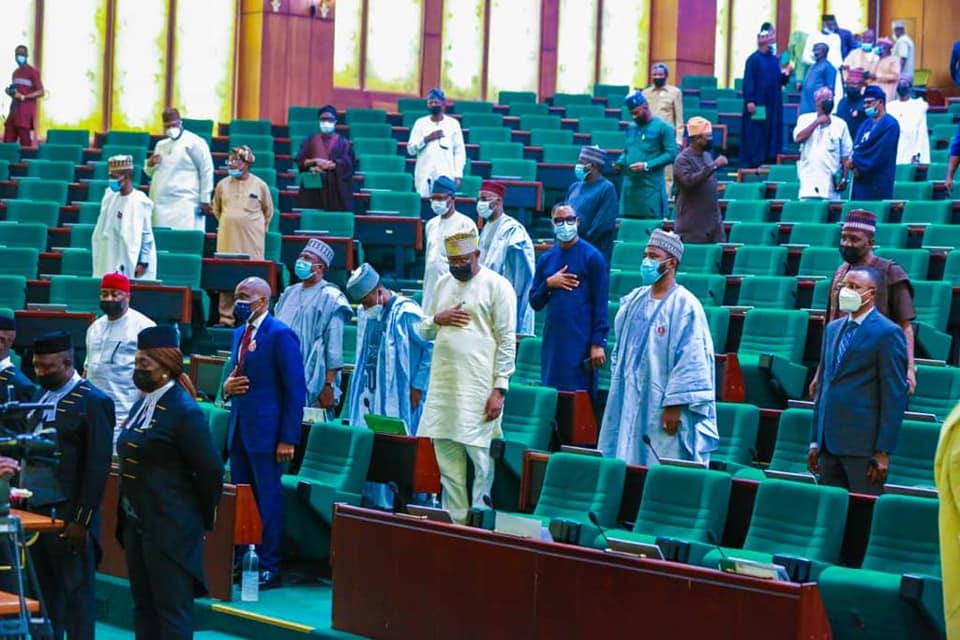
Speaker of the House of Representatives, Mr Femi Gbajabiamila, has said when the parliament resumes next year, the presidential decline of assent to the Electoral Act (Repeal and Re-Enactment) Bill, 2021 would be discussed.
Mr Gbajabiamila said this on Tuesday when the lower chamber of the National Assembly held its last plenary for 2021.
President Muhammadu Buhari had refused to sign the electoral bill into law, citing the cost of conducting direct primary elections, security challenges and possible manipulation of electoral processes by political actors as reasons.
After reading a letter from Mr Buhari on why he refused to sign the act, the Speaker informed his colleagues that the short notice made it impossible to deliberate the issue before going for the Christmas and New Year break.
“As it is now, that bill has not received presidential assent, and it falls to parliament to decide the best way forward. When we return in the new year, we will resume our efforts to reform the electoral system in our country. And we will do it together.
“That is what the Nigerian people expect of us, and we will do our duty for God and country. As long as this one breathes, it will survive. When we return, we will address it,” Mr Gbajabiamila said.
The Speaker, who commended members for the efforts they made to ensure the passage of the bill, also recalled other reform initiatives by the House in 2021, including further interventions in the COVID-19 pandemic, proposals to tackle insecurity and enhancing the capacities of the Nigerian Customs Service and the Nigerian Security Civil Defence Corps to deliver on their mandate.
He said in 2022, the House would sustain its commitment to serve the nation, adding that unlike in the past, politics and preparations for the next elections would not distract members from their duty.
Mr Gbajabiamila reminded lawmakers of the Legislative Agenda of the 9th House, which he said must be followed through to its conclusion.
“In the past, election years have witnessed a decline in governance activities as political pursuits cloud the calendar. That will not be the case this time around.
“As you are aware, we have a legislative agenda in this 9th House of Representatives, which we tagged Our Contract with Nigerians. I expect that we will do everything within our power to keep the commitments we made in that document. So that when we appear before our various constituencies, we can stand tall in the knowledge that despite challenges and difficulties, we did what we promised to do, and given a chance again, will do even more,” he said.
Specifically, on COVID-19, Mr Gbajabiamila said vaccination was the way to go, else the country faced the risk of being denied access to participation in cross-national engagements in the in-coming year.
The Speaker recalled that evidently, the virus would not go away soon, a reason the House foresaw the future in 2020 by introducing the infectious diseases bill, which was later marred by controversies.
“At that time, our good faith efforts were wilfully mischaracterised by individuals who saw the moment as an opportunity to score cheap political points. Today, the whole world is grappling with the issues we sought to identify and address then.
“There are many lessons to be learned from that experience. Most paramount of them all, is that public policy is serious business and the welfare of the Nigerian people must never be surrendered on the altar of cheap populism or the pursuit of short term political advantage,” he said.
Mr Gbajabiamila disclosed the plan of the legislature to consider the merging of many Ministries, Departments and Agencies of the federal government with overlapping functions, to help address the increasing inadequacy of budgeting as well as scrapping the envelope system.
The Speaker paid glowing tributes to the personnel of Nigerian security agencies and other Nigerians working in very difficult situations to keep Nigeria safe and together at the risk of sacrificing their own lives.
“I honour their service and sacrifice, and I ask you to join me in doing the same. I also celebrate all Nigerians who, despite challenges, still believe in the promise of Nigeria. And who acting in that belief, continue investing in Nigeria and innovating here.
“I want to assure you that you have the gratitude of the 9th House, and more importantly, our support in every way required,” he said.
Before adjourning the plenary till 2022, the House of Representatives passed the 2022 budget of N17.126 trillion.
General
$1.126bn Financing for Lagos-Calabar Coastal Highway Excites Tinubu
By Modupe Gbadeyanka
The successful closing of about $1.126 billion in financing for the execution of Phase 1, Section 2 of the Lagos–Calabar Coastal Highway has been welcomed by President Bola Tinubu.
A statement issued on Friday by the Special Adviser to the President on Information and Strategy, Mr Bayo Onanuga, disclosed that the funding package was secured by the Federal Ministry of Finance.
Mr Tinubu described this as a landmark because it marks a significant milestone in the delivery of Africa’s most ambitious and transformative infrastructure projects.
He praised the Ministries of Finance and Works and the Debt Management Office (DMO) for working together on the transaction, adding that the federal government will continue to explore creative financing to fund critical projects across the country.
“This is a major achievement, and closing this transaction means the Lagos-Calabar Coastal Highway will continue unimpeded. Our administration will continue to explore available funding opportunities to execute critical economic and priority infrastructural projects across the country,” the President was quoted as saying in the statement.
Phase 1, Section 2 covers approximately 55.7 kilometres, connecting Eleko in Lekki to Ode-Omi, key economic corridors and significantly enhancing national trade efficiency and logistics connectivity.
The successful financing follows the earlier closing of the $747 million financing for Phase 1, Section 1, and demonstrates the scalability and bankability of the Lagos–Calabar Coastal Highway project.
The financing was fully underwritten by First Abu Dhabi Bank (FAB) and Afreximbank, with partial risk mitigation support provided by the Islamic Corporation for the Insurance of Investment and Export Credit (ICIEC), marking ICIEC’s largest transaction since the country’s institutional and regulatory reforms. The structure reflects growing confidence in Nigeria’s reformed investment climate and its capacity to deliver infrastructure.
SkyKapital acted as Lead Financial Advisor, coordinating structuring, lender engagement, and execution. Environmental and Social advisory services were provided by Earth Active (UK), ensuring complete alignment with the IFC Performance Standards, the Equator Principles, and international ESG best practices. Hogan Lovells, as International Counsel, and Templars, as Nigerian Legal Counsel, led the legal advisory services.
Describing the transaction as a “defining moment in Nigeria’s infrastructure journey,” the Minister of Finance and Coordinating Minister of the Economy, Mr Wale Edun, said the fund will be deployed responsibly and judiciously to deliver on the project within timelines.
“The signing on December 19, 2025, of $1.126 billion financing for Phase one — section two of the Lagos-Calabar Coastal road marks a defining moment in Nigeria’s infrastructure journey, following the successful closing of the $747 million financing for Phase one section one on July 9, 2025.
“Collectively, these landmark transactions firmly establish the Lagos-Calabar Coastal Highway as one of the defining flagship projects of President Bola Tinubu’s Renewed Hope agenda, embodying the administration’s commitment to bold, transformational infrastructure.
“This financing is particularly notable as it represents, for the first time, a truly underwritten transaction of this magnitude for a Nigerian road infrastructure project. The facility was fully underwritten by First Abu Dhabi Bank ($626 million) and Afreximbank ($500 million), with partial coverage provided by ICIEC, making it the largest ICIEC-supported transaction since the institution’s creation,” Mr Edun said.
Construction is being executed by Hitech Construction Company Limited, whose rapid on-site progress and early opening of key road sections have earned commendation from lenders for engineering excellence, operational discipline, and execution speed.
In line with the federal government’s commitment to transparency and fiscal discipline, a comprehensive Value-for-Money (VfM) assessment was conducted by the Federal Ministry of Works in coordination with SkyKapital, and the assessment was independently reviewed and confirmed by GIBB.
The successful close of Phase 1, Section 2, represents a clear step-change in market confidence. It demonstrates Nigeria’s ability to move decisively from vision to execution and from reform to delivery.
General
Ekpo Lauds NNPC Over Completion of AKK Mainline Works
By Adedapo Adesanya
The Minister of State for Petroleum Resources (Gas), Mr Ekperikpe Ekpo, has commended the Nigerian National Petroleum Company (NNPC) Limited and its partners for the rapid pace and completion of the mainline welding and associated works of the Ajaokuta–Kaduna–Kano (AKK) gas pipeline ahead of schedule.
The Minister made the remark during a recent inspection of Kilometre Zero of the landmark pipeline project, accompanied by the chief executive officer of the Nigerian state oil company, Mr Bashir Bayo Ojulari, Executive Vice President (Gas, Power, and New Energy) Mr Olalekan Ogunleye, and the managing director of Ajaokuta Steel Company Limited, Mr Nasir Abdulsalam.
“Completing the AKK Mainline ahead of schedule demonstrates the resilience, professionalism, and commitment of the project team,” Mr Ekpo said, describing the milestone as a clear reflection of the Federal Government’s renewed focus on energy infrastructure under President Bola Tinubu’s Renewed Hope Agenda.
The Minister noted that the AKK Gas Pipeline is a strategic national infrastructure poised to drive economic growth across Northern States by supplying natural gas for power generation, supporting gas-based industries, and advancing Compressed Natural Gas (CNG) initiatives.
“This project will enhance industrialisation, create jobs, and strengthen energy security, ushering in a new era of economic opportunities for Nigerians,” he added.
Mr Ekpo concluded by urging all stakeholders to maintain momentum, noting that the AKK Pipeline’s operationalisation will catalyze industrialisation, employment, and inclusive economic growth, aligning with the Federal Government’s broader strategic vision.
Speaking at the site, Mr Ojulari linked the project to tangible national development, highlighting Nigeria’s industrial heritage while projecting a resurgence driven by gas as a transition fuel.
“The AKK Pipeline reflects our commitment to timely project delivery and its strategic importance to national industrialisation and economic security,” he stated.
The inspection tour, according to him, further reinforced the Federal Government and NNPCL’s pledge to ensure the AKK Pipeline’s timely completion, which remains critical to expanding energy access, boosting industrial growth, and supporting shared prosperity across the country.
The Minister and the NNPC management team commended the project workforce for their dedication, emphasizing the role of discipline, collaboration, and technical excellence in achieving the early completion of this landmark project.
The AKK Gas Pipeline, spanning over 614 kilometers, is designed to deliver natural gas to power plants, industries, and CNG facilities, providing a major boost to Nigeria’s energy infrastructure and positioning the country as a regional energy hub.
General
Nigeria Confirms US Airstrikes On ISWAP Targets in Sokoto
By Adedapo Adesanya
Nigeria’s Ministry of Foreign Affairs has confirmed that the latest United States airstrikes on Islamic State West African Province (ISWAP) targets in northwest Nigeria were conducted at the request of the Nigerian government.
According to reports, the US struck at ISWAP targets in Jabo, Sokoto State, on Christmas night.
The ministry described the operation as a product of established counterterrorism cooperation between both countries.
In a press statement issued on Friday, the Ministry said the strikes were “undertaken following formal engagement and with the full knowledge and coordination of the Government of the Federal Republic of Nigeria.”
“The Government of Nigeria wishes to clarify that the airstrikes conducted by the United States against Islamic State elements in parts of northwest Nigeria were carried out at the request of Nigerian authorities and in line with existing bilateral security cooperation frameworks,” the statement said.
The Ministry stressed that Nigeria “remains firmly in control of all counterterrorism operations within its sovereign territory,” adding that international partners only provide support “where such assistance aligns with Nigeria’s national security objectives.”
According to the statement, the strikes form part of Nigeria’s broader strategy to “degrade terrorist capabilities, disrupt logistics networks, and protect civilian populations from violent extremist threats.”
The Foreign Ministry further emphasised that the federal government “will continue to work with trusted international partners to confront terrorism, banditry, and transnational criminal networks that threaten national and regional stability.”
Reacting to concerns around sovereignty, the Ministry said:
“At no time was Nigeria’s sovereignty compromised. All actions were conducted with due respect for Nigeria’s laws, institutions, and command structures.”
The statement also cautioned against mischaracterising Nigeria’s security challenges, noting that extremist violence “has affected communities across religious and ethnic lines and should not be framed in sectarian terms.”
Nigeria reaffirmed its commitment to a multi-layered response combining military operations, intelligence sharing, community engagement, and socio-economic interventions, adding that counterterrorism efforts remain focused on protecting lives and restoring stability.
The US Africa Command (AFRICOM) said the strikes were carried out in Sokoto State and that multiple militants were killed.
US President Donald Trump described the strikes as “powerful and deadly,” saying they were directed at Islamic State militants responsible for violent attacks on Christians in Nigeria.
The Nigerian government has clearly denied that only Christians are affected by the killings, saying the terror spread across all faiths.
Meanwhile, US Defence Secretary Pete Hegseth has warned that “more to come” as part of sustained efforts against extremist groups.
-
Feature/OPED6 years agoDavos was Different this year
-
Travel/Tourism9 years ago
Lagos Seals Western Lodge Hotel In Ikorodu
-
Showbiz3 years agoEstranged Lover Releases Videos of Empress Njamah Bathing
-
Banking8 years agoSort Codes of GTBank Branches in Nigeria
-
Economy3 years agoSubsidy Removal: CNG at N130 Per Litre Cheaper Than Petrol—IPMAN
-
Banking3 years agoFirst Bank Announces Planned Downtime
-
Banking3 years agoSort Codes of UBA Branches in Nigeria
-
Sports3 years agoHighest Paid Nigerian Footballer – How Much Do Nigerian Footballers Earn