Connect with us

Technology

Digital Wellness 101: Taking Control of Your Life Online

Published

on

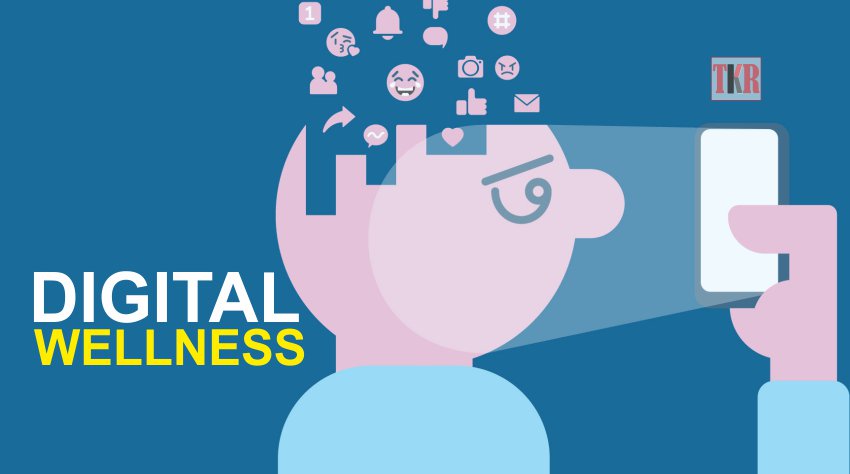
Digital Wellness

Most people use all the advantages that modern technologies offer. Technology is constantly changing and evolving, allowing us to witness incredible advances in security, safety, transportation, business, architecture, education, medicine, healthcare, communications, etc.

Technology is the answer to the problems facing the modern world these days, but it always comes with some risks. While you have a lot of freedom to learn, connect with others, and find affordable entertainment online, you are also a target for cybercriminals.

With that in mind, let’s look at some of the ways you can take control of your online life.

Leading a digital life can leave certain consequences on a person

While the internet made the world more connected than ever before, it has also made people feel under pressure, depressed, stressed, anxious, fatigued, and simply overwhelmed by constantly dealing with loads of information.

Whether you’re studying, working, just checking your device, browsing websites, or spending time on social media, you’re either experiencing pressure from being constantly connected or dealing with other risks, such as cybersecurity threats. Thankfully, there are certain things you can do to take control of your life online and usher in a new era of digital wellness for yourself.

Social media and you

While social media can do so many great things for you, it can also negatively impact your life, mood, and wellbeing. It can become as addictive as alcohol or tobacco.

Even though your favorite social media platforms allow you to connect with your peers and express your thoughts on various subjects, they can also be mentally challenging, exhausting, even depressing.

Too much social media can cause various mood disorders, including anxiety, stress, and depression. It can cause loneliness and feelings of low self-worth, even self-loathing. Fortunately, you can reduce compulsive behaviors and negative emotions associated with social media use by taking control of your social media life online:

  • Set clear goals and intentions on what you want from social media.
  • Limit the time you spend online each day.
  • If someone or something makes you feel bad about yourself, eliminate it from your online life.
  • Don’t believe everything you read on social media and ask yourself if the stories you read there can make your life better in any way.
  • Instead of judging someone online, try to find the morale of the other person’s life choices.
  • Don’t compete or compare yourself to others because social media isn’t a competition; it’s just entertainment.

Try to shift your online focus on the things that you find interesting and that make you feel happy and good about yourself instead of absorbing all the negative aspects of everything around you.

Online dating and you

Online dating websites took the world by storm, gathering billions of people from every corner of the planet. While these sites and apps can help people find serious relationships, friends, and everything in between, they can also put them at risk in terms of privacy and safety. Many users also seek seksiä on these platforms, hoping to connect with others on a deeper, more intimate level. However, it’s important to approach such encounters responsibly and respectfully to ensure positive experiences.

Online dating scams are on the rise, and hackers are constantly coming up with innovative ways to get their hands on your personal information and financial details.

Online dating can endanger your safety, expose you to fraud, put you at risk of ransomware or photo or video blackmail, phishing attacks, and identity theft, among many other things.

If you’re looking for a date online, keep the following things in mind:

  • Avoid oversharing your personal information online.
  • Do some research on the common red flags in online dating.
  • Check your date on social media and Google before you meet in person.
  • Meet in public spaces only and let everyone know where you’re going.
  • Only use strong passwords and create a different username and password for your online accounts.

Learn how to protect yourself from cyber threats

There are countless forms of cyber threats on the internet, and they are constantly evolving just as the internet is. However, there is also an array of things you can do to avoid these threats, such as:

  • Do not reveal too much information about yourself. For instance, you might enjoy posting about your life on social media. However, there are certain things that you should keep private. Never share your location in real time as it could allow vicious individuals to take advantage of this information.
  • Always use antivirus software and make sure your device is up to date with the latest safety and security updates. After all, vulnerabilities could allow attackers to compromise your device, steal data, or infect you with malware.
  • Protect your IP address by using a VPN or a proxy. While proxies can offer a certain level of protection online, VPNs are more effective when it comes to hiding your IP and masking your physical location. An Atlas VPN app is an excellent option for adding another layer of protection to your online traffic and keeping your browsing activities to yourself.

All it takes is a bit of planning and some simple tools to stay safe online, so don’t neglect your cybersecurity.

Conclusion

It isn’t that hard to stay safe online, but it does require a certain amount of knowledge about how the internet works and the proper cybersecurity protocols. If you stick to these tips and do some research on your own on how to keep your data and identity safe online, you won’t have to worry about your digital wellness ever again.


Dipo Olowookere is a journalist based in Nigeria that has passion for reporting business news stories. At his leisure time, he watches football and supports 3SC of Ibadan. Mr Olowookere can be reached via [email protected]

Advertisement
1 Comment

1 Comment

Leave a Reply

Your email address will not be published. Required fields are marked *

Technology

Interswitch Technovation 4.0 Hackathon Winners Share N10m

Published

on

Interswitch Technovation 4.0 Hackathon

By Modupe Gbadeyanka

The winners of the Technovation 4.0 Hackathon, themed The Wicked Hackathon, organised by Interswitch, have been given N10 million in cash prizes for their efforts.

At the one-day finale event, which took place on Wednesday, March 4, 2026, at the Interswitch Innovation Lab and Co-Working Space, the money was shared among the top teams whose innovative solutions stood out during the rigorous multiple phases of the competition.

Team Quickteller Fashion emerged as the overall winner, securing the grand prize of N4 million for a solution that impressed judges with its originality, practicality, and strong strategic relevance. Team Kampe claimed second position with N2.5 million, while Team Stable placed third, receiving N1.5 million. Up to N300,000 worth of cash prizes were also awarded to the fourth, fifth and sixth qualifying teams.

For nine months, cross-functional teams from across the organisation collaborated to conceptualise, validate, develop, and refine solutions, moving from raw ideas to minimum viable products (MVPs) with ready-to-market potential and deployment across the business.

The atmosphere at the grand finale reflected that of preparation and anticipation as the top 9 teams presented their innovations through live demonstrations and detailed pitches, fielding questions from a distinguished panel of judges before the top three winners were selected. Each presentation highlighted rigorous validation processes, thoughtful market considerations, and a strong emphasis on measurable impact.

While many of the solutions remain confidential due to their strategic relevance, the diversity and depth of ideas showcased during the hackathon’s final underscored the organisation’s growing culture of intrapreneurship and structured innovation. The projects illustrated how technology-driven thinking can unlock efficiencies, strengthen operational capabilities, and open new pathways for growth across the digital payments and commerce ecosystem.

“Technovation continues to reflect who we are as an organisation, bold, forward-thinking, and deeply committed to building impactful solutions from within. Over the years, we have seen ideas conceived during this programme evolve into meaningful capabilities that strengthen our ecosystem.

“The passion, discipline, and ingenuity demonstrated by our teams this year reinforce our belief in the power of African innovation to solve complex challenges and shape the future of technology on the continent,” the Chief Innovation Officer for Interswitch, Ms Adaobi Okerekeocha, stated.

Continue Reading

Technology

Google Introduces Yorùbá, Hausa Language Support for AI Search Features

Published

on

google AI Search

By Modupe Gbadeyanka

The language support for its AI Search features has been expanded by Google, with the inclusion of Yoruba and Hausa in Nigeria.

This is part of a broader effort to make AI more inclusive across the continent, with support now extending to a total of 13 African languages.

Under the AI Overviews and AI Mode, speakers of both Nigerian languages can utilise AI-powered Search experiences in their mother tongue for quick summaries and conversational exploration.

This means existing AI features in Google Search are now accessible to people like the student in Kano asking a question in Hausa, and the trader in Ibadan seeking advice in Yorùbá.

By addressing language barriers, this update ensures that technology reflects the identity and culture of the people it serves. With this expansion, more people can now use AI Mode to ask complex questions in their preferred language, while exploring the web more deeply and naturally through text or voice.

The 13 languages now supported across Africa include Afrikaans, Akan, Amharic, Hausa, Kinyarwanda, Afaan Oromoo, Somali, Sesotho, Kiswahili, Setswana, Wolof, Yorùbá, and isiZulu.

These languages were chosen based on the vibrant search activity across the continent, ensuring that our AI experiences reach the communities that need them most.

Commenting on the development, the Communications and Public Affairs Manager for Google in West Africa, Taiwo Kola-Ogunlade, said, “Building a truly global Search goes far beyond translation — it requires a nuanced understanding of local information.

“With the advanced multimodal and reasoning capabilities of our custom version of Gemini in Search, we’ve made huge strides in language understanding, so our most advanced AI search capabilities are locally relevant and useful in each new language we support.

“This is about ensuring Nigerians can converse with Search in their mother tongues, making information more helpful for everyone.”

To use AI Overviews and AI Mode in the local language, users must open the Google app on an Android or iOS device, or via the Web. They are required to tap on AI Mode within the Search experience. Thereafter, they can type or speak the question in their preferred language, such as Hausa or Yorùbá, and let the AI guide the journey.

Continue Reading

Technology

Telecom Operators to Issue 14-Day Notice Before SIM Disconnection

Published

on

SIM Cards Nigeria

By Adedapo Adesanya

Telecommunications operators in Nigeria will now be required to give subscribers a minimum of 14 days’ notice before deactivating their SIM cards over inactivity or post-paid churn, following a fresh proposal by the Nigerian Communications Commission (NCC).

The proposal is contained in a consultation paper, signed by the Executive Vice Chairman and Chief Executive Officer of the NCC, Mr Aminu Maida, and titled Stakeholders Consultation Process for the Telecoms Identity Risks Management Platform, dated February 26, 2026, and published on the Commission’s website.

Under the proposed amendments to the Quality-of-Service (QoS) Business Rules, the Commission said operators must notify affected subscribers ahead of any planned churn.

“Prior to churning of a post-paid line, the Operator shall send a notification to the affected subscriber through an alternative line or an email on the pending churning of his line,” the document stated.

It added that “this notification shall be sent at least 14 days before the final date for the churn of the number.”

A similar provision was proposed for prepaid subscribers. According to the Commission, operators must equally notify prepaid customers via an alternative line or email at least 14 days before the final churn date.

Currently, under Section 2.3.1 of the QoS Business Rules, a subscriber’s line may be deactivated if it has not been used for six months for a revenue-generating event. If the inactivity persists for another six months, the subscriber risks losing the number entirely, except in cases of proven network-related faults.

The new proposal is part of a broader regulatory review tied to the rollout of the Telecoms Identity Risk Management System (TIRMS), a cross-sector platform designed to curb fraud linked to recycled, swapped and barred mobile numbers.

The NCC explained in the background section of the paper that TIRMS is a secure, regulatory-backed platform that helps prevent fraud stemming from churned, swapped, barred Mobile Station International Subscriber Directory Numbers in Nigeria.

It said this platform will provide a uniform approach for all sectors in relation to the integrity and utilisation of registered MSISDNs on the Nigerian Communications network.

In addition to the 14-day notice requirement, the Commission also proposed that operators must submit details of all churned numbers to TIRMS within seven days of completing the churn process, strengthening oversight and accountability in the system.

The consultation process, which the Commission said is in line with Section 58 of the Nigerian Communications Act 2003, will remain open for 21 days from the date of publication. Stakeholders are expected to submit their comments on or before March 20, 2026.

Continue Reading

Trending