Banking
Don’t Give Loans to Customers—CBN Orders Payment Service Banks
By Dipo Olowookere
Payment Service Banks (PSBs) operating in the country have been directed not to grant loans to their customers because they are not authorised to do so.
This directive was contained in the guidelines for licencing and regulation of PSBs released a few days ago by the Central Bank of Nigeria (CBN).
In the guidelines analysed by Business Post, the apex bank said operators in the sector “shall not…grant any form of loans, advances and guarantees (directly or indirectly)” in the country, stressing that “as such, the provisions for the management of credit risk applicable to Deposit Money Banks (DMBs) shall not apply to PSBs.”
Also, the central bank said PSBs are not allowed to accept foreign currency deposits, deal in the foreign exchange market except the sale of foreign currencies realized from inbound cross-border personal remittances to authorized foreign exchange dealers.
In addition, they are prohibited from doing insurance underwriting, undertake any other transaction which is not prescribed by the guidelines or accept any closed scheme electronic value like airtime as a form deposit or payment or establish any subsidiary except as prescribed in the CBN Regulation on the Scope of Banking and Ancillary Matters, No 3, 2010.
However, the PSBs are permitted to accept deposits from individuals and small businesses, which shall be covered by the deposit insurance scheme; and carry out payments and remittances (including inbound cross-border personal remittances) services through various channels within Nigeria.
In addition, they are authorised to issue debit and pre-paid cards on their names; operate electronic wallet; render financial advisory services; invest in FGN and CBN securities; and carry out such other activities as may be prescribed by the CBN from time to time.
The CBN said to commence operations in Nigeria, A PSB must pay a non-refundable application fee of N500,000; pay another non-refundable licensing fee N2 million and then have a minimum capital of N5 billion alongside other key requirements.
The central bank said operators must adhere to some fair competition clauses, warning that failure to comply “may lead to revocation of the license of the PSB.”
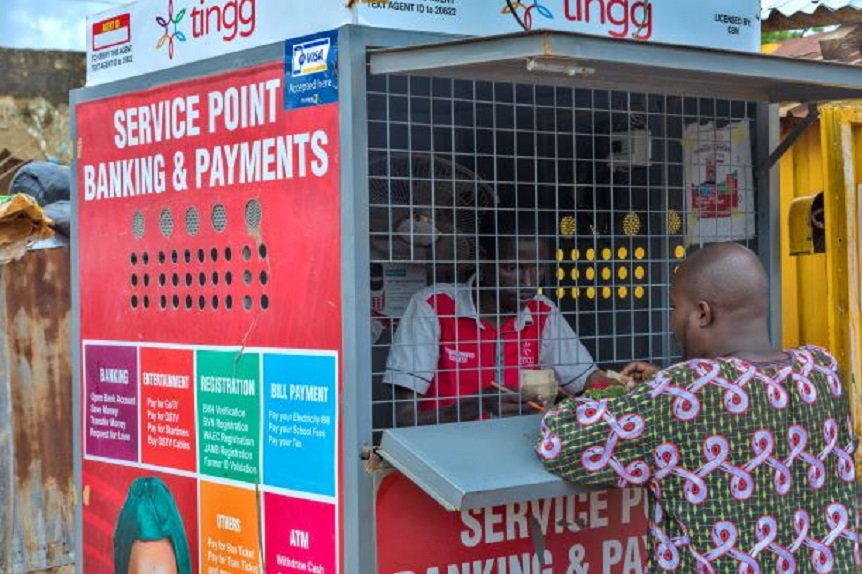
Business Post reports that PSBs have the mandate to promote a sound financial system in Nigeria and make financial services accessible to low-income earners and unbanked segments of the society so as to make the financial services sector more robust.
They are established to enhance financial inclusion by increasing access to deposit products and payment/remittance services to small businesses, low-income households and other financially excluded entities through high-volume low-value transactions in a secured technology-driven environment.
They are expected to operate mostly in the rural areas and unbanked locations, targeting financially excluded persons, with not less than 25 per cent financial service touch points in such rural areas as defined by the CBN from time to time.
Read the full guidelines HERE
Banking
Flutterwave Partners PayPal’s Xoom to Enable Direct Money Transfers to Nigeria
By Aduragbemi Omiyale
A collaboration to enable fast money transfers into Nigeria has been entered into between Flutterwave and Xoom, PayPal’s international digital money transfer service.
The partnership allows Xoom transfers to be converted by Flutterwave and settled locally in Naira, enabling quick transfers directly into recipients’ bank accounts at Access Bank, UBA, Zenith Bank, First Bank, GTBank, and additional participating banks across Nigeria.
The deal also enables Xoom’s global network with Flutterwave’s local payout infrastructure, allowing users globally to send funds directly into Nigerian bank accounts with improved speed and efficiency.
Nigeria is the leading remittance recipient in Sub-Saharan Africa, receiving over $20 billion in personal remittances in 2024. Despite this volume, receiving international payments has historically remained complex due to FX constraints and settlement delays. This collaboration helps address those challenges in a market of more than 232 million people, where the ICT sector is projected to contribute 21 per cent of GDP by 2027.
By combining Xoom’s expansive reach with Flutterwave’s local compliance and banking partnerships, the two companies are providing a more accessible financial corridor for the continent.
Xoom, a PayPal service, is a fast and secure international digital money transfer service that enables consumers to send money, pay bills, and reload phones for friends and family in approximately 160 markets globally.
As part of PayPal’s global payments ecosystem, Xoom leverages advanced fraud protection, compliance capabilities, and a trusted global network to help millions of customers move money quickly and securely across borders.
“We’re excited to have been chosen by Xoom for their Nigeria expansion. Millions of Nigerians rely on money from abroad to support everyday needs, whether it’s families receiving help from loved ones, freelancers getting paid for their work, or individuals earning income from the global economy. This helps make it easy and more reliable for people in Nigeria to receive funds and stay connected to opportunities beyond borders,” the chief executive of Flutterwave, Mr Olugbenga GB Agboola, stated.
Banking
ProvidusUnity Bank, gener8tor Launch Nigeria Lightning Rounds for Startups
By Aduragbemi Omiyale
An initiative known as Nigeria Lightning Rounds, designed to expand funding opportunities for Nigerian startups and small businesses by connecting founders with local and international investors, has been launched by ProvidusUnity Bank, in partnership with US-based global venture firm and accelerator, gener8tor.
Scheduled to be held on July 15, 2026, Nigeria Lightning Rounds will feature carefully selected startups engaging with targeted investors who have expressed interest in supporting Nigerian innovation.
Participating founders will have the opportunity to pitch their businesses through focused 15-minute virtual sessions facilitated by gener8tor and ProvidusUnity Bank’s networks.
The program will focus on high-growth sectors including fintech, healthtech, manufacturing, sustainability, and AI, but welcomes SMEs from all industries, with intending participants urged to apply via https://www.gener8tor.com/lightning-rounds/nigeria.
“We recognise that access to capital remains one of the biggest challenges facing entrepreneurs in Nigeria. Through our partnership with gener8tor, we are creating a platform that connects promising Nigerian founders with investors who can provide the support required to scale their businesses,” the Head of Business Development at ProvidusUnity Bank, Mr Ernest Elue, stated.
“The partnership reinforces ProvidusUnity Bank’s commitment to strengthening Nigeria’s entrepreneurial ecosystem by supporting innovation, enabling access to opportunities, and creating pathways for businesses with high-growth potential,” he added.
Also commenting, the Director of Lightning Rounds at gener8tor, Ms Elizabeth Larios, said, “gener8tor is thrilled to partner with ProvidusUnity Bank to extend the Lightning Rounds model into Nigeria.
“This collaboration reflects our commitment to building equitable ecosystems and driving capital to the most promising and underrepresented entrepreneurs.”
Lightning Rounds are a signature initiative of gener8tor’s investment platform, which has facilitated thousands of investor-startup meetings globally. The format is optimised to eliminate friction, reduce bias in early-stage fundraising, and help founders secure capital from investors aligned with their mission and stage. gener8tor’s previous Lightning Rounds for Nigerian Founders in 2025 featured 18 participating Investors and led to 50 investment meetings facilitated.
Banking
NDIC Begins Verification of Depositors of 46 Failed Microfinance Banks
By Modupe Gbadeyanka
The verification of the depositors of the 46 microfinance banks, whose operating licenses were revoked by the Central Bank of Nigeria (CBN) over a week ago, has commenced.
The exercise, aimed at refunding those whose funds were trapped in the small lenders, is being conducted by the Nigeria Deposit Insurance Corporation (NDIC).
In a statement on Thursday, the agency said its staff members have been positioned at the offices of the affected banks across the country to attend to depositors.
It was disclosed that depositors of the defunct banks, who had their Bank Verification Numbers (BVNs) linked to their accounts in the failed banks, will be paid through their alternative accounts in existing banks.
However, depositors whose BVNs were not linked to their accounts in the failed banks have been encouraged to visit the affected banks’ offices with proof of account ownership, a passport photograph, verifiable means of identification (Driver’s Licence, Permanent Voter’s Card, International Passport or National ID Card) and BVN.
NDIC also stated that depositors can alternatively file their claims online through its website: www.ndic.gov.ng, to complete the Pre-Verification Claims Form by clicking on the Search Bar, and typing Pre-Verification Claims Form; opening the Form and filling in their details. They can also do so by clicking the link: https://ndic.gov.ng/ndic-pre-verification-claims-form/ or by visiting any of the NDIC offices closest to them to file their claims.
For further enquiries, the corporation can be reached on any of the following lines: 09037273810, 09038197064, 08104220807, 09064657140.