Banking
Ecobank Nigeria Celebrates ‘Africa Day’
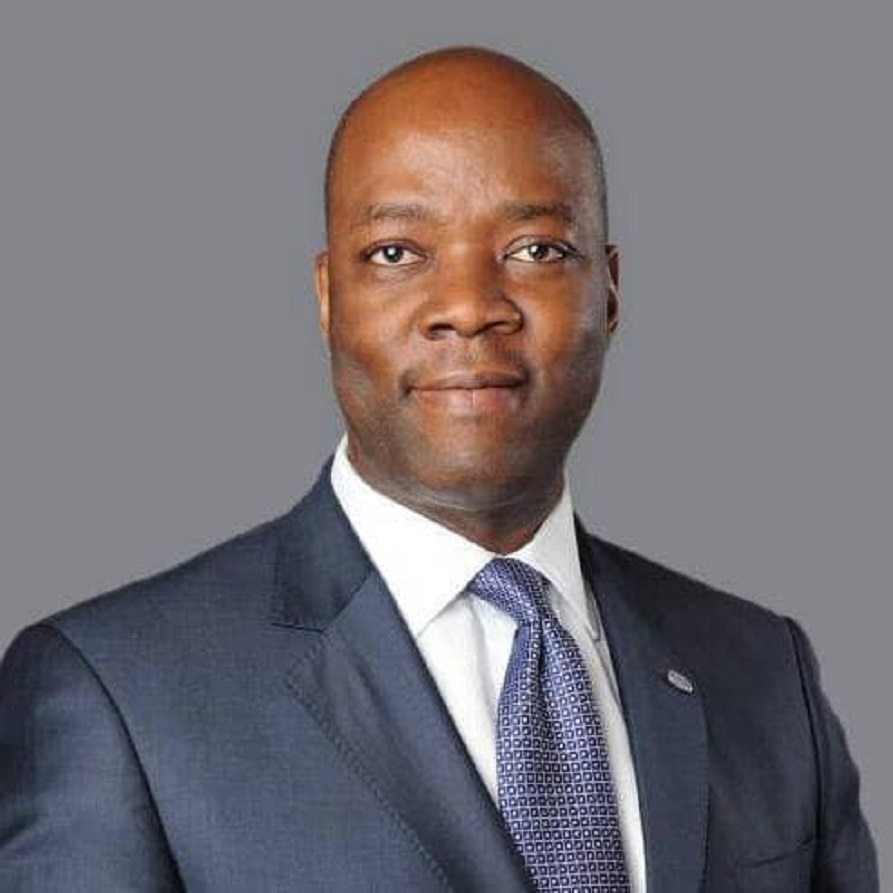
Managing Director of Ecobank Nigeria, Mr Patrick Akinwuntan, has stated that Africa is the strategy of Ecobank.
Mr Akinwuntan who was speaking in commemoration of Africa Day 2019, noted that Ecobank’s “approach to doing business in Africa is to create a united and integrated brand and platform that reflects the values of Africa as a whole whilst leveraging its diverse talents and resources to tackle its common challenges and realize its immense opportunities as one market”.
“With a larger African footprint than any other bank in the world operating in West, Central East and Southern Africa, we are the only bank that spans 36 African countries, but operates a truly integrated African network. That is One unified integrated Ecobank Mobile Banking App, that works seamlessly across all 33 operating countries in Africa; One Ecobank Omni and Omnilite serving all Multinationals and SMEs in Africa; One Rapidtransfer app that breaks down country borders and allows the diaspora community send money directly to their loved ones, instantly and affordably across Africa; One Ecobank Online Banking platform that you can access easily whether you are in Abuja or Kinshasha,” he stated.
Further, Mr Akinwuntan reiterated that Ecobank is the Pan Africa bank, contributing to the development and advancement of the continent through financial integration with uniform world –class practices and proprietary technologies. According to him Ecobank is making profound impact across the continent by ensuring customers can own a bank account, transact and unlock opportunities with ease.
“We make Africa better. On this year’s Africa Day, we celebrate who we are, where we have come from and where we are going; but most of all, we are celebrating our commitment to make Africa greater”.
Banking
Jim Ovia Retires as Zenith Bank Chairman, Mustafa Bello Takes Over
By Aduragbemi Omiyale
After 12 years on the board as a non-executive director, Mr Jim Ovia has retired as the chairman of Zenith Bank Plc, paving the way for Mr Mustafa Bello to take over.
Mr Ovia established Zenith Bank in 1990 and became its chief executive before retiring in 2010, and handing over to Mr Godwin Emefiele. He was appointed as the head of the board as a non-executive director in 2014 until his retirement.
At a board meeting held on April 27, 2026, the appointment of Mr Bello as the new chairman was approved to ensure continuity.
According to the statement, Bello, an engineer who joined the board on December 29, 2017, is currently the bank’s longest-serving director.
At the Annual General Meeting (AGM) of the lender in Lagos on Tuesday, Mr Ovia announced his retirement after completing the mandatory 12 years, and in compliance with the corporate governance guidelines of the Central Bank of Nigeria (CBN).
During his tenure as chairman, Mr Ovia gave direction to the financial institution and ensured strong leadership, strategic direction, and effective board oversight.
“The board expresses its deep appreciation to Mr Jim Ovia for his outstanding service and invaluable contributions.
“His visionary leadership, unwavering commitment to good governance, and dedication to stakeholder value creation significantly strengthened the group’s strategic positioning and reputation during his tenure.
“He has extensive leadership experience at board and executive levels, a strong understanding of corporate governance principles and regulatory expectations and a proven track record in strategic oversight and organisational growth. He has also demonstrated integrity, independence, and sound judgment,” the lender said.
Banking
Educating Nigeria, One Community at a Time: Inside Union Bank of Nigeria’s Approach to Corporate Responsibility
Nigeria’s economic ambitions, whether higher productivity, a more competitive private sector, or stronger household resilience, all eventually run through the same bottleneck: the quality of the country’s human capital. For a bank, that fact carries a quiet implication. The customers, entrepreneurs, and employees of the next two decades are sitting in classrooms today, and many of those classrooms are under-resourced.
It is in that context that Union Bank of Nigeria has built its corporate social responsibility agenda around one of its major pillars – education. The thinking is not that a bank can fix Nigerian education, but that a bank has both the reach and the long-term interest to contribute meaningfully to it.
The Scope of the Work
Union Bank’s education work runs through Edu360, a platform that gathers the Bank’s various school, teacher, and youth interventions under one roof. Three threads run through it.
The first is teacher development, anchored by the Bank’s partnership with the Maltina Teacher of the Year (MTOTY) programme, which recognises and rewards classroom excellence. Teachers are the highest-leverage point in any education system, and supporting the people who already do the work well tends to produce more durable gains than one-off interventions with students alone.
The second is practical, future-facing learning. School hackathons supported by the Bank give students the chance to work in teams, tackle real problems, and encounter technology as something they can build with rather than simply consume. For young people who may otherwise meet computing only as a subject on a timetable, that shift in posture matters.
The third is financial literacy, delivered through outreach tied to globally recognised events like World Savings Day and Financial Literacy Day. The premise is straightforward: habits formed early outlast lessons learned late. A student who understands saving, budgeting, and the basic mechanics of a bank account at fourteen carries that understanding into adulthood, regardless of which institution they eventually bank with.
Beyond these threads, Edu360 has anchored long-running partnerships with educational institutions outside the Bank. One of the most established was with Greensprings School in Lagos, where Union Bank sponsored eleven consecutive editions of an annual football academy that pairs sport with leadership development for children aged five to seventeen, run alongside coaches from West Bromwich Albion Football Club. Reflecting on the partnership at the close of the 2025 edition, the school’s founder and chief executive, Mrs Lai Koiki, put it plainly:
“We are being future-ready, we are preparing the youth for the future.”
It is the kind of unadorned framing that the Edu360 intervention tends to invite from the people closest to it.
The work is mapped to Sustainable Development Goals 4 and 8, which deal with quality education and decent work, but the more useful test is whether the interventions show up in the lives of the people they are meant to serve.
A Morning at Ebutte Elefun
That test is easier to apply at the level of a single school.
As part of its back-to-school programme this year, Union Bank visited Ebutte Elefun High School in the Lafiaji Ward community on Lagos Island, distributing school bags and learning materials to hundreds of students. The contribution was funded and delivered by the Bank.
Present at the school that day was the Bank’s Chief Financial Officer, Oluwagbenga Adeoye, who attended the school as a boy. His role during the visit was personal, rather than operational. He spoke to the students about his own journey from those classrooms to the office he now holds, took their questions, and stayed to meet teachers. For students who rarely encounter senior professionals in person, the conversation was as much a part of the day as the supplies.
Outreaches of this kind are modest in scale. Distributing hundreds of bags does not transform a school system, and Union Bank does not claim that they do. What they do is reduce friction at a moment – the start of a school year, when small financial pressures can quietly push children out of consistent attendance. They also send a signal, both to the students and to the teachers around them, that someone outside the school gates is paying attention.
Why a Bank, and Why Education
There is a reasonable question about why a financial institution should be in this work at all, and it deserves a direct answer rather than a sentimental one.
A bank’s long-term performance is bound up with the financial health of the households and small businesses around it. Children who stay in school longer earn more, save more, and are more likely to use formal financial services when they do. Teachers who feel supported produce students who can read a contract, manage a budget, and start a business. None of this is altruism dressed up as strategy; it is simply the recognition that a bank’s commercial future and the country’s educational present are connected.
That recognition shapes how Union Bank approaches the work. Programmes are run with partner organisations that have deeper roots in the communities than any bank can claim on its own. Interventions are chosen for whether they address a real constraint, not whether they photograph well, and inclusion is treated as a discipline rather than a slogan, with specific work supporting girls, underserved learners, and students with disabilities.
The Honest Limits
It is worth naming what corporate education work cannot do. It cannot replace public investment, fix curriculum gaps, or compensate for the structural challenges facing Nigerian schools. A back-to-school outreach addresses access at a moment; it does not address learning outcomes over a year. A hackathon introduces students to technology; it does not, on its own, build a pipeline into the digital economy. Financial literacy sessions plant seeds; whether those seeds grow depends on what happens in the years that follow.
Union Bank of Nigeria is candid about this internally, and the structure of Edu360 reflects it.
The platform is designed to keep the Bank engaged with the same schools and communities over time, rather than rotating through one-off events. Whether that consistency translates into measurable shifts in attendance, completion, and downstream economic participation is the question the Bank itself is most interested in answering, and the next phase of the work is increasingly oriented around tracking it.
A Quieter Kind of Corporate Citizenship
There is a tendency, in Nigerian corporate communications, to describe CSR interventions in language larger than the work itself. Union Bank’s education programme is not transformational in any single year. It is steady, locally grounded, and built on the recognition that education is a long game in which banks are one of many players.
Ebutte Elefun is a useful illustration of the posture.
A school on Lagos Island. Hundreds of students started the year with what they needed. A senior executive who walked back into the corridors he once knew, not to take credit but to remind a room full of teenagers that the distance between where they sit and where he sits is shorter than it looks.
That, more than any platform name or programme title, is what corporate responsibility in education looks like when it is taken seriously.
Show up. Stay. Build the systems that let the showing-up scale, and measure honestly in years, rather than headlines, whether it worked.
Banking
CBN Targets Stronger Banks, Investor Trust with New Risk Framework—Cardoso
By Adedapo Adesanya
The Governor of the Central Bank of Nigeria (CBN), Mr Yemi Cardoso, has said the new risk-based capital framework would serve as a critical anchor for financial system stability, ensuring that recent banking sector recapitalisation translates into real resilience and renewed investor confidence.
Mr Cardoso said this at the Chartered Institute of Directors, Nigeria, induction ceremony in Lagos on Thursday.
The CBN chief, represented by the Director of Banking Supervision at the apex bank, Mrs Olubukola Akinwunmi, charged directors to guide institutions through consolidation, strengthen governance frameworks, and rebuild stakeholder trust through transparency and accountability.
Mr Cardoso stated that the apex bank complemented recapitalisation with a series of regulatory measures aimed at strengthening governance and empowering directors across the banking system.
According to him, key among these are the Circular on Compliance with Insider Related Credit Limits (February 17, 2025), which reinforces prudential discipline by restricting preferential lending to insiders; the Corporate Governance Guidelines (2023), which define clear standards on board composition, independence, tenure, and responsibilities in line with global best practice; and the end of regulatory forbearance alongside the introduction of risk-based capital requirements to align capital adequacy with institutional risk profiles.
Others include stricter fit-and-proper criteria for directors to ensure only qualified individuals serve on boards, enhanced disclosure and transparency rules covering financial reporting and related-party transactions, and mandatory board evaluation and succession planning requirements to ensure continuity and stability.
He stressed that these measures were not punitive but enabling, providing directors with a stronger framework to exercise stewardship with discipline, foresight, and confidence.
He said, “The adoption of Risk-Based Capital Requirements represents a cultural shift in our financial system. Capital adequacy is no longer about size alone; it is about risk alignment, ensuring capital planning anticipates both current and emerging risks, strengthening frameworks for credit, market, and operational risk, taking responsibility for compliance without reliance on regulatory forbearance and promoting prudent expansion and discouraging reckless lending or overexposure.
“Risk-Based Capital Requirement embeds risk awareness into every strategic decision, ensuring that recapitalisation translates into genuine stability, entrenches the going concern status of our banks, and instils confidence by both the banking and investing public in the Nigerian banking system.
“Given the position of the banking system and the pivotal role it plays in the economy, this stance of the Central Bank of Nigeria is expected to reverberate across all sectors of the Nigerian economy with an elevation in the standards of corporate governance observed across corporations in Nigeria.”
Mr Cardoso urged directors to move beyond passive oversight to become active custodians of institutional stability, balancing profitability with prudence and ensuring that compliance is matched with strategic foresight.
He said, “As directors, your responsibilities extend beyond boardrooms. You are custodians of governance in a time when regulatory expectations are higher, requiring boards to align with prudential standards. Stakeholder trust must be rebuilt and sustained. Strategic foresight is essential as institutions adapt to technological disruption, global competition, and evolving customer needs.
“The central bank views directors as partners in ensuring that recapitalisation and regulatory reforms translate into stronger institutions, not just larger balance sheets.
“To our newly inducted directors, your induction today is not just ceremonial; it is a call to stewardship. You are joining a community dedicated to advancing corporate governance and ethical leadership. The choices you make in boardrooms will shape the future of Nigeria’s economy.
“The Central Bank of Nigeria stands ready to engage with you, to provide clarity, and to work collaboratively in building a financial system that is resilient, inclusive, and globally competitive. “
-
Feature/OPED6 years agoDavos was Different this year
-
Travel/Tourism10 years ago
Lagos Seals Western Lodge Hotel In Ikorodu
-
Showbiz3 years agoEstranged Lover Releases Videos of Empress Njamah Bathing
-
Banking8 years agoSort Codes of GTBank Branches in Nigeria
-
Economy3 years agoSubsidy Removal: CNG at N130 Per Litre Cheaper Than Petrol—IPMAN
-
Banking3 years agoSort Codes of UBA Branches in Nigeria
-
Banking3 years agoFirst Bank Announces Planned Downtime
-
Sports3 years agoHighest Paid Nigerian Footballer – How Much Do Nigerian Footballers Earn