
Brands/Products
Reputation Economy: How Nigerian Brands Won and Lost Public Trust in 2025

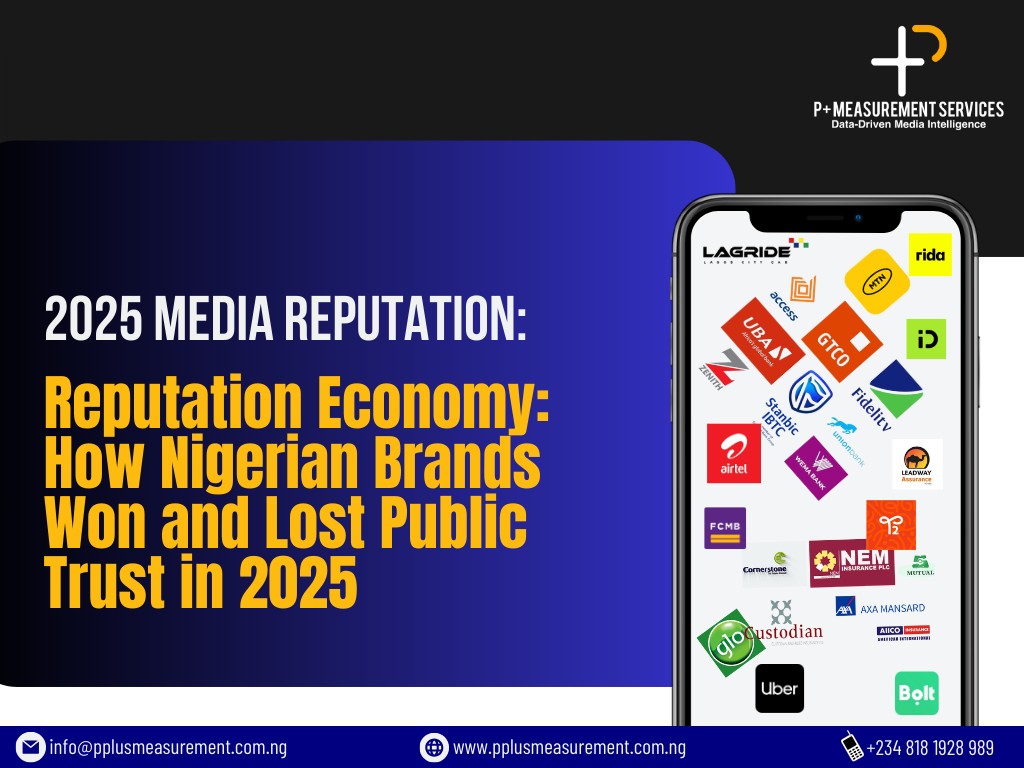
Nigeria’s leading independent media intelligence consultancy, P+ Measurement Services, has released its 2025 Industry Media Reputation Report, revealing that corporate reputation has emerged as one of the most decisive assets for Nigerian companies, rivaling financial performance and market share in shaping public trust.
The report analysed and audited thousands of print and online news reports published in 2025 across the banking, insurance, telecommunications, and e-hailing sectors. In total, coverage of 29 commercial banks, 13 insurance companies, five e-hailing platforms, and four telecommunications operators was examined to determine how corporate actions translated into public perception.
According to the findings, rising operational costs, currency pressures, regulatory scrutiny, labour relations, and service reliability now directly influence how brands are judged in the media and by stakeholders.
“Reputation is no longer a soft outcome of publicity. It is a measurable business asset shaped by corporate behaviour, governance quality, customer experience, and crisis response,” said a Senior Analyst at P+ Measurement Services, Ms Tumininu Balogun.
She added, “For more than a decade, we have been at the forefront of media intelligence in Nigeria. Our commitment to the PR and communications industry is to ensure that reliable media data and actionable insight are always available, so professionals can move beyond intuition and make truly data-driven decisions.”
E-Hailing Industry: Driver Relations Reshaped Corporate Reputation
The e-hailing sector recorded one of the clearest shifts in reputation dynamics in 2025, driven largely by labour policies and platform economics.
inDrive Nigeria led the sector with 39% of positive reputation share, following extensive media coverage of its decision to reduce driver commission to 0.1% during peak hours in Abuja. Bolt Nigeria followed with 32%, supported by reports on its electric tricycle deployment in Lagos. LagRide recorded 17%, driven by coverage of its electric vehicle infrastructure partnership, while Uber Nigeria accounted for 11% and Rida 1%.
On the negative reputation scale, Bolt recorded the highest share at 40%, linked to driver protests following fare reduction policies. Uber accounted for 29%, inDrive 20%, LagRide 8%, and Rida 3%, largely associated with reports on strike threats, platform reliability concerns, and driver earnings disputes.
The report notes that how platforms treat drivers has become as influential to reputation as rider experience.
Banking Industry: Profitability Confronted by Governance Risk
Among commercial banks, Stanbic IBTC recorded the strongest positive reputation position at 26%, driven by recognition as KPMG’s top retail bank. Zenith Bank followed with 22%, supported by dividend payout coverage. Fidelity Bank (19%), UBA (17%), and FirstBank (16%) gained positive reputation visibility through education initiatives, digital service upgrades, and branch automation projects.
However, reputational exposure remained significant. GTCO recorded the highest negative reputation share at 28%, followed by FirstBank at 26%, FCMB at 18%, and both UBA and Ecobank at 14%, mainly due to media reports concerning legal disputes, fraud investigations, and customer-related controversies.
The report highlights that in the banking sector, strong earnings and digital innovation strengthen reputation, but governance failures can rapidly undermine it.
Insurance Industry: Financial Stability and Data Protection Define Trust
In the insurance sector, AXA Mansard led positive reputation share with 36%, followed by Leadway Assurance (29%), AIICO (16%), NEM Insurance (11%), and SanlamAllianz (8%).
AXA Mansard also accounted for the highest negative reputation exposure at 68%, driven by reports of a significant decline in pre-tax profit. AIICO recorded 18%, Leadway 12%, and NEM 2%, largely connected to regulatory matters and data protection concerns, including coverage of customer data breaches.
The findings indicate that insurers are now judged as much by financial resilience and cybersecurity posture as by product offerings.
Telecommunications Industry: Infrastructure Investment Meets Rising Public Expectations
MTN Nigeria led positive reputation share with 47%, driven by infrastructure expansion narratives and innovation campaigns. Glo followed with 28%, Airtel Nigeria with 16%, and T2 (formerly 9mobile) with 9%, largely supported by its rebranding coverage.
On the negative reputation side, MTN recorded 44%, T2 31%, Glo 13%, and Airtel 12%, influenced by reports on service quality challenges and the Nigeria Labour Congress boycott directive targeting telecommunications operators.
The sector’s results suggest that while capital investment enhances visibility, network reliability and customer experience increasingly determine long-term reputation.
Reputation Has Become a Strategic Business Asset
Across all four industries, the report finds a consistent pattern: reputation in 2025 closely followed corporate behaviour.
Brands that demonstrated transparency, operational fairness, financial discipline, digital reliability, and customer focus were more likely to build positive public trust. Companies facing labour unrest, legal disputes, regulatory sanctions, data breaches, or service disruptions saw these issues rapidly reflected in their reputation profile.
For brand owners, investors, regulators, and communication professionals, the implication is clear: reputation is no longer managed only through messaging, but through measurable actions that are permanently recorded in the media ecosystem and searchable online.













By Adedapo Adesanya
Canal+, which now owns MultiChoice, a pay-TV firm, has announced its decision to discontinue the streaming service, Showmax.
The company said the Showmax board has made the decision to discontinue the service in the near future.
“This decision reflects our focus on strengthening our overall digital offering and ensuring long-term sustainability in an increasingly competitive streaming environment.
“Importantly, at the moment, there will be no interruption to your current service. You can continue streaming as usual, and no action is required from you at this time,” it said.
It added that it will share further details in the future, including timelines and any future steps, should they be required.
MultiChoice launched Showmax across Africa 10 years ago in August 2015 to compete with the advent of streamers like Netflix, Apple TV, Amazon’s Prime Video, Disney+ and others, which all became available on the continent and started biting into MultiChoice’s legacy pay-TV subscriber base on DStv and GOtv.
However, it soon faced some challenges and couldn’t hit its target.
In February 2024, MultiChoice, in partnership with Comcast’s NBCUniversal, relaunched Showmax, utilising the technology behind the Peacock streaming service.
The investment, which was pegged at over $300 million, still did not bear the expected fruit, with other streaming giants seeing growth over the years.
With Canal+’s takeover and its aggressive cost-cutting moves, it was no doubt that Showmax got the axe.
Regardless, it said, “Streaming remains central to our strategy. We will continue to invest in premium content, technology innovation and partnerships to deliver the best possible entertainment experience to our customers.”
Canal+ is looking to cut a combined €400 million by 2030, which will affect content.
NBCUniversal has a 30 per cent stake in Showmax as a joint venture. In its last annual results before the Canal+ takeover, MultiChoice revealed that Showmax’s trading losses had worsened by 88 per cent while revenue significantly declined.
According to the company, “The decision to axe Showmax was made by the Showmax board and reflects the continued focus of MultiChoice, a Canal+ company, on financial discipline and investment optimisation, in an increasingly competitive and capital-intensive global streaming environment.”
Since Canal+, as part of its agreement to take over MultiChoice, isn’t allowed to get rid of any staff for a period of three years, MultiChoice won’t let any Showmax staff go but will reassign them to other positions within the broader company.
MultiChoice has already started to quietly rebrand Showmax Originals as Africa Magic, M-Net, kykNET and Mzansi Magic Originals, with original series that will transition to these various DStv linear TV channels on the MultiChoice pay-TV platform.
Showmax’s closure comes two years after Amazon MGM Studios shocked Nigeria and South Africa’s creative community in January 2024 when it announced that it would stop commissioning any new local original content in Africa, and also ended already-existing development deals with a dozen production companies.

By Modupe Gbadeyanka
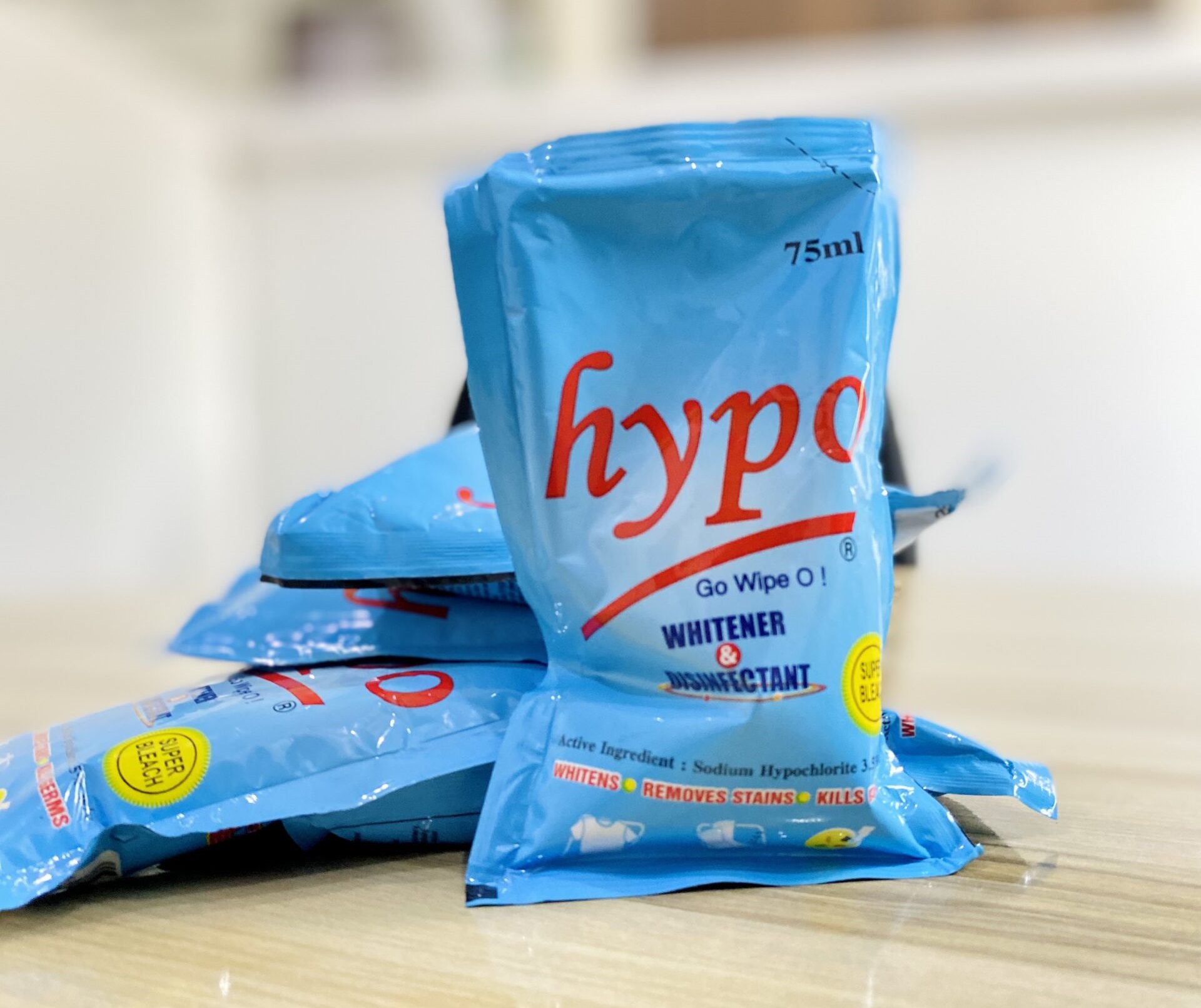
The Marketing Manager of a leading bleach brand in Nigeria, Hypo Bleach, Mr Adebayo Adeyemo, has condemned the presentation of the brand as a beverage for trends, jokes, or views by influencers and bloggers.
In a statement, Mr Adeyemo said Hypo Bleach was formulated to “remove stains, whiten your white fabric, deodorise and kill 99.9 per cent of germs” and not produced as a “drink.”
“We have observed people seeming to have fun creating and sharing videos and AI-generated images designed to make Hypo look like a beverage.
“Your health and safety are serious business. We want to be unambiguous: those images are fabricated, that framing is false, and anyone encouraging others to consume Hypo, even as a joke, even for views, is putting lives at risk. It is not something to consume for the sake of trends,” the Marketing Manager stated.
He further said, “To every influencer, blogger, and content creator. Your reach is real; so is your responsibility. A trend that ends in ill-health is not a trend worth starting.”
“To every young Nigerian seeing this content, you do not have to prove anything to anyone. Not online. Not offline. Not ever. If someone is pressuring you to try this, that is not a dare. That is harm.
|If you or someone you know is struggling emotionally or feeling pressure they cannot handle, please reach out to someone you trust.
A guardian. A counsellor. A healthcare professional. Asking for help is not a weakness; it is a strength.
“Also, we urge people to prioritise their mental health. Evaluate the quality of your conversations with people. Should you notice inconsistencies in their thinking, encourage them to seek professional help. Depression is real and should be treated with utmost concern. Let’s keep social media fun, but safe,” Mr Adeyemo added.

By Dipo Olowookere
A conference designed to examine how Artificial Intelligence (AI) is fundamentally reshaping crisis communication, institutional response systems, governance frameworks, and reputational risk management is slated to take place on Wednesday, March 25, 2026, in Lagos, at 10 am.
The event, planned by a renowned Public Relations (PR) firm, CMC Connect LLP, is themed Crisis Management in the AI Milieu: New Threats, Smarter Responses.
It is an offshoot of the company’s flagship industry initiative, Crisis Management Advocacy Month, scheduled to be held throughout March 2026.
The Minister of Communications, Innovation and Digital Economy, Mr Bosun Tijani, is expected to deliver the keynote address, while the Minister of Information and National Orientation, Mr Mohammed Idris Malagi, is the Special Guest of Honour.
Earlier in the month, the Vice President for Corporate Communications and CSR at Airtel Africa, Mr Emeka Oparah, will headline a closed-door media workshop convened exclusively for senior media executives in Lagos.
The 2026 edition will also feature strategic collaborations with the Nigerian Institute of Public Relations (NIPR) through its Monthly PR Clinics in both the Lagos and Abuja Chapters, where the Senior Corporate Communications Analyst at CMC Connect LLP, Ms Affiong Edet, will deliver a thematic presentation aligned with this year’s focus.
The initiative will also partner with the Nigerian Bar Association Section on Legal Practice through its weekly webinar series to interrogate the intersection of AI, Crisis Management, and the Law.
“Artificial Intelligence has fundamentally altered the crisis landscape. Crisis Management Advocacy Month 2026 is intentionally designed to convene cross-sector leaders to interrogate emerging risks, strengthen institutional preparedness, and promote smarter, ethical response architectures in an AI-driven environment,” the Project Coordinator, Ms Bright Emmanuel Okon, commented.
Also, the Lead Partner of CMC Connect LLP, Mr Yomi Badejo-Okunsanya, said, “In today’s digital ecosystem, crises evolve at unprecedented speed. Institutions must move beyond reactive communication toward intelligent crisis architecture. Crisis Management Advocacy Month represents our commitment to advancing national and institutional resilience in the age of AI.”













-
 Feature/OPED6 years ago
Davos was Different this year
-
Travel/Tourism10 years ago
Lagos Seals Western Lodge Hotel In Ikorodu
-

 Showbiz3 years ago
Estranged Lover Releases Videos of Empress Njamah Bathing
-
 Banking8 years ago
Sort Codes of GTBank Branches in Nigeria
-

 Economy3 years ago
Subsidy Removal: CNG at N130 Per Litre Cheaper Than Petrol—IPMAN
-

 Banking3 years ago
Sort Codes of UBA Branches in Nigeria
-

 Banking3 years ago
First Bank Announces Planned Downtime
-

 Sports3 years ago
Highest Paid Nigerian Footballer – How Much Do Nigerian Footballers Earn