Economy
Brent Falls Below $85 as Demand Woes Outweigh Supply Tightening
By Adedapo Adesanya
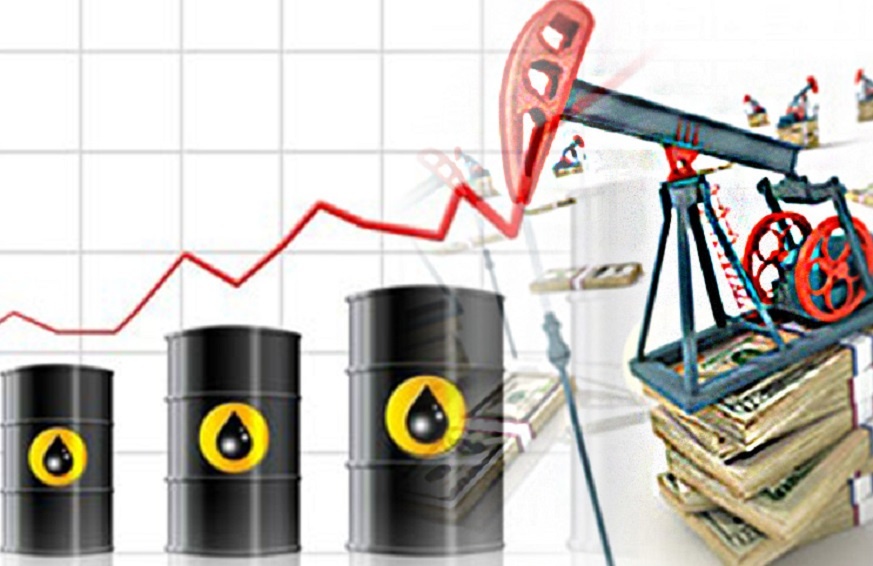
Brent crude price declined by $1.74 or 2.0 per cent to sell at $84.07 per barrel on Thursday as worries about fuel demand outweighed the decision to maintain oil output cuts, keeping supply tight.
Also, the price of the US West Texas Intermediate crude futures went down by $1.91 or 2.3 per cent to settle at $82.31 a barrel during the session.
Both crude futures have declined about $10 a barrel in less than 10 days after edging close to $100 in late September.
The combined percentage drop over the last two days was the steepest since May for both crude benchmarks.
Oil settled more than $5 lower on Wednesday, its biggest daily drop in over a year, even after a meeting of a ministerial panel of the Organisation of the Petroleum Exporting Countries and allies led by Russia, OPEC+.
It made no changes to the group’s oil output policy, and Saudi Arabia said it would maintain a voluntary cut of 1 million barrels per day until the end of 2023, while Russia would keep a 300,000 barrels per day voluntary export curb until the end of December.
Prices had risen about 30 per cent in the third quarter as OPEC+ production cuts squeezed global crude supply.
Now, investors are worried that peak demand for fuel consumption is behind and are now taking profits.
US government data on Wednesday showed a sharp decline in petrol demand. A drop in demand was at its lowest since the start of this year in the world’s largest economy and oil consumer.
The market will also be hoping that a Russian fuel export ban introduced last month will be lifted soon and supply disruptions will be less severe than markets had anticipated.
Data on Wednesday also showed the US services sector slowed while the eurozone economy probably shrank last quarter.
The US economy’s resilience, 18 months after the Federal Reserve started raising interest rates to cool demand, suggests that monetary policy could remain tight for some time.
Meanwhile, the US Dollar eased but continued to remain near 11-month highs, making crude more expensive for holders of other currencies.
On Thursday, the Turkish energy minister said a crude oil pipeline from Iraq through Turkey, which has been suspended for about six months, was ready for operations.
Turkey had halted flows on the pipeline, Iraq’s northern oil export route, after an arbitration ruling by the International Chamber of Commerce (ICC) ordered the country to pay Iraq damages for unauthorised exports between 2014 and 2018.
Turkey later started maintenance work on the pipeline that contributes about 0.5 per cent of global crude supply. The two countries agreed to wait until a maintenance assessment on the pipeline was complete to restart flows while still engaging in a legal battle on arbitration awards.
Economy
SEC Opens Capital Market to Free Trade Zone Companies
By Adedapo Adesanya
The Securities and Exchange Commission Nigeria (SEC) has unveiled a new regulatory framework that would allow companies operating within free trade zones to raise capital from the Nigerian public, subject to strict eligibility and disclosure requirements.
The proposal, titled New Rules for Public Offering of Securities by a Free Trade Zone Entity, is anchored on provisions of the Investments and Securities Act (ISA) 2025 and is designed to integrate free trade zone enterprises into the domestic capital market while strengthening investor protection.
Under the proposed rules, only entities duly licensed by recognised free zone authorities, such as the Nigeria Export Processing Zones Authority and the Oil and Gas Free Zones Authority, will be eligible to issue shares to the public.
The commission clarified that the rules will apply strictly to free trade zone entities (FTZEs), excluding companies operating outside designated zones, even if licensed by zone authorities. It also emphasised that no FTZE will be permitted to offer securities to the public without prior approval from the Commission.
To qualify, an FTZE must demonstrate a minimum of three years’ operating track record immediately preceding its application, with at least two years of independent business activity within a free trade zone. Additionally, such entities are required to have competent senior management and a minimum paid-up share capital of not less than N7.5 billion.
The SEC said FTZEs seeking to access the capital market must subject themselves to Nigeria’s tax laws and comply fully with ongoing disclosure and reporting obligations applicable to publicly listed companies.
The proposed framework also outlines extensive registration requirements. Issuers will be required to submit evidence of licensing by a free zone authority, constitutional documents, and verified details of shareholding structure and board composition.
A “No Objection” letter from the relevant free zone authority will also be mandatory, alongside a commitment to list the offered shares on a registered securities exchange.
The SEC noted that the rules are intended to provide clarity on eligibility criteria and operational conditions for FTZEs seeking to conduct public offerings, thereby deepening the capital market and aligning free zone operations with national financial system standards.
Economy
Guinness Nigeria Shareholders to Pocket N4.38bn Interim Dividend for Q1’26
By Aduragbemi Omiyale
Shareholders of Guinness Nigeria Plc will share about N4.38 billion as an interim dividend for the first quarter of 2026, the board has disclosed.
This cash reward amounts to N2.00 per share, as the company has shares outstanding of 2,190,382,819 on the floor of the Nigerian Exchange (NGX) Limited.
The brewer stated that the interim dividend would be paid to investors whose names appear on the register of members as of the close of business on April 20, 2026.
The dividend payout is being proposed following the sustained profitability reflected in the unaudited financial results of the company in the first three months of this year and its “strong performance in FY 2025.”
It would be “paid from distributable profits in accordance with Sections 426–428 of the Companies and Allied Matters Act (CAMA) 2020.”
Analysis of the performance of the brewery giant between January and March 2026 showed that revenue grew by 4 per cent on a year-on-year basis to N122.77 billion from N118.34 billion in the same period of last year, while the gross profit contracted to N43.48 billion from N44.52 billion due to prevailing cost pressures within the operating environment.
The company’s operating profit also shrank to N17.18 billion from N18.00 billion in the first quarter of 2025 due to elevated marketing & distribution costs and administrative expenses.
However, the reduction in net finance costs to N1.43 billion from N7.72 billion in Q1 of 2025 helped the organisation to grow its post-tax profit to N10.39 billion in the period under review versus the N7.03 billion recorded in the corresponding period of last year.
Economy
Right Institutional Structures Critical to Unlocking Sustainable Growth—Kwairanga
By Aduragbemi Omiyale
The chairman of the Nigerian Exchange (NGX) Group Plc, Mr Umaru Kwairanga, says enabling entrepreneurship requires more than access to funding.
He said this at a workshop held in Kano under the theme Unlocking Growth – Harnessing the Capital Market for SME Growth.
The event was organisation by the NGX in partnership with the Bank of Industry (BoI) as part of their financing advocacy.
Mr Kwairanga noted that the right institutional structures and market platforms are critical to unlocking sustainable growth.
“Kano provides a fitting backdrop for this engagement, not only as a historic commercial hub but as a gateway to significant untapped potential. The priority is to connect that potential to capital and the frameworks required for long-term growth,” he stated.
The programme was put together to integrate small and medium-sized enterprises (SMEs) into Nigeria’s formal capital market.
The Kano workshop follows the inaugural edition held in Lagos last year, signalling a more structured push by both institutions to bridge the gap between Nigeria’s SME ecosystem and long-term capital.
Participants were equipped with insights on financing pathways, governance structures, and long-term growth strategies within the capital market.
On his part, the chief executive of NGX Limited, Mr Jude Chiemeka, emphasised the central role of SMEs in strengthening market depth and resilience, noting that recent market performance continues to reflect investor confidence despite macroeconomic pressures.
“Through initiatives like this, we are demystifying the capital market and demonstrating that with the right structure and governance, SMEs can access capital to scale sustainably,” he said.
An Executive Director for MSME at BOI, Mr Oluwatoyin Ahmed Edu, said the bank remains focused on bridging financing gaps for businesses that may not yet meet listing requirements.
“Where viable enterprises require capacity building before accessing the market, BOI is positioned to provide the necessary support to prepare them for that transition,” he noted.
Delivering remarks on behalf of the Emir of Kano, Mr Shehu Muhammed Dankade highlighted the region’s strong entrepreneurial base, particularly the growing participation of women-led businesses, describing it as a signal of resilience and economic potential.
The workshop featured detailed presentations from NGX on listing requirements, corporate governance, and the use of the NGX Growth Board as a platform for raising long-term capital.
It also created space for direct engagement with SME operators across Northern Nigeria, offering insights into their challenges, growth ambitions, and readiness to access structured financing.
The initiative aligns with NGX Group’s broader strategy to position SMEs as a critical engine of economic growth, while strengthening the institutional pathways that enable businesses to transition from informal operations to investment-ready enterprises.
-
Feature/OPED6 years agoDavos was Different this year
-
Travel/Tourism10 years ago
Lagos Seals Western Lodge Hotel In Ikorodu
-
Showbiz3 years agoEstranged Lover Releases Videos of Empress Njamah Bathing
-
Banking8 years agoSort Codes of GTBank Branches in Nigeria
-
Economy3 years agoSubsidy Removal: CNG at N130 Per Litre Cheaper Than Petrol—IPMAN
-
Banking3 years agoSort Codes of UBA Branches in Nigeria
-
Banking3 years agoFirst Bank Announces Planned Downtime
-
Sports3 years agoHighest Paid Nigerian Footballer – How Much Do Nigerian Footballers Earn