Economy
Buhari’s Critics Making Nigeria’s Debt Looks Big—FG
By Adedapo Adesanya
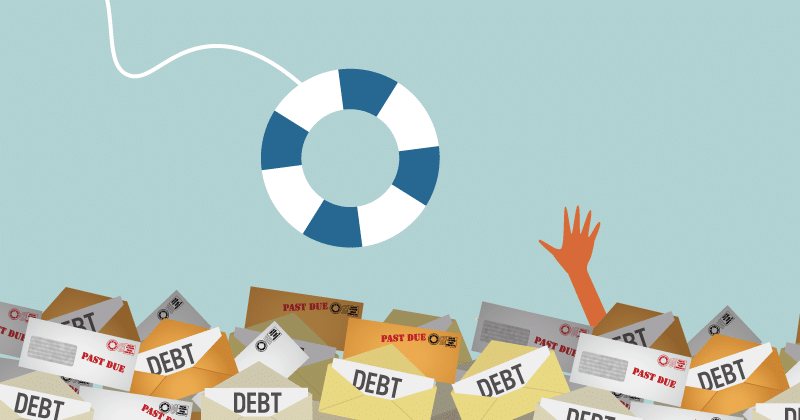
The federal government of Nigeria has reiterated that there is no need for panic over the country’s rising debt profile, blaming critics of the administration of President Muhammadu Buhari of amplifying the issue so as to discredit the government.
Minister of Information and Culture, Mr Lai Mohammed, made this claim on Monday during a media briefing on the achievements recorded by the present administration in the outgoing 2019.
Mr Mohammed noted that the country’s debt was still within a reasonable range, emphasising that the panic was not needed because it was not backed by enough numerical facts, giving room for exaggeration.
According to the Debt Management Office (DMO), Nigeria’s external debt as at June 2019 was $27.1 billion, with the 36 states and Abuja owing $4.2 billion. A further breakdown showed that domestic debt level as at June was $56.7 billion, with the states owing $12.9 billion.
In Naira terms, external debt stood as N8.3 trillion in June and domestic debt was N17.3 trillion, making the country’s total debt at N25.5 trillion.
Business Post recently reported that the debt stock to Gross Domestic Product (GDP) of Nigeria reduced to 18.99 percent as at June 30, 2019 from 19.09 percent as at December 31, 2018, citing data sourced from the debt office.
However, despite the present debt level of the country, President Buhari requested for an approval for an external borrowing of $29.96 billion from the National Assembly on November 28, 2019. The President claimed that the new loan would be used to for the nation’s development and to tackle the multidimensional poverty in the country.
Prior to the emergence of Mr Buhari’s administration into office in 2015, the nation’s debt profile was N12 trillion. However, in 2016, the administration embarked on a borrowing spree which currently put the nation’s total debit profile at N25 trillion today. From 2016 to the first quarter of 2019, Nigeria has borrowed over N12 trillion.
Economy
CBN Launches FX Tracker to Monitor Every BDC Dollar Purchase
By Adedapo Adesanya
The Central Bank of Nigeria (CBN) has launched a new digital platform to track every foreign exchange transaction involving Bureaux De Change (BDC) operators, marking a major step in its efforts to improve transparency and strengthen oversight of the country’s retail forex market.
In an operational guidance issued on July 15 to authorised dealer banks and licensed BDCs, the apex bank introduced the FX BDC Purchase Tracker (FXBT), a centralised electronic portal designed to monitor foreign exchange purchases by BDCs from the point of request through approval, settlement and eventual sale.
The CBN said the portal will require BDCs to upload real-time or same-day data on all FX purchases made through the Nigerian Foreign Exchange Market (NFEM), giving the regulator transaction-level visibility across the retail FX market.
According to the bank, the platform is designed to prevent abuse by making it easier to detect operators attempting to exceed the weekly purchase limit of $150,000, obtain allocations from multiple banks or divert foreign exchange outside approved channels.
The launch of the tracker builds on the CBN’s February policy that restored direct access for licensed BDCs to purchase foreign exchange from authorised dealer banks through the NFEM. While that policy improved access to official FX, the new platform provides the digital infrastructure to monitor how the funds are used.
Under the new framework, authorised dealer banks must conduct comprehensive Know-Your-Customer (KYC) and customer due diligence checks before selling foreign exchange to any BDC.
The new guideline also says banks must verify beneficial ownership information, retain incorporation documents and carry out enhanced due diligence for higher-risk operators. Any BDC that fails these checks will not be allowed to access official foreign exchange.
The guidance also requires banks to acknowledge BDC purchase requests submitted through the FXBT portal within two business hours and immediately notify operators whether their requests have been approved or rejected.
To discourage speculation, the CBN directed that any forex purchased through the NFEM but left unused must be sold back into the market within 24 hours after the expiration of the utilisation period. BDCs are also required to disclose any previously unused balances when submitting fresh requests.
In addition, all foreign exchange transactions between banks, BDCs and customers must be settled through registered accounts with licensed financial institutions. Third-party transactions are prohibited, and any transfer outside a BDC’s registered settlement account will be treated as a regulatory violation.
The apex bank also said all authorised dealer banks and licensed BDCs are expected to comply with the new regulatory guidance and operational procedures with immediate effect.
Economy
HBM Nigeria Eyes Stronger Market Share With Extra Output by January 2027
By Adedapo Adesanya
The chief executive of HBM Nigeria Plc (formerly Lafarge Africa), Mr Lolu Alade-Akinyemi, said the cement producer is expected to add 4.5 million tonnes to its production capacity by January 2027.
HBM Nigeria Plc is positioning itself for stronger long-term competitiveness, market leadership and job creation as it accelerates expansion projects.
The transition to HBM Nigeria marks a new phase of growth, driven by operational excellence, sustainability, innovation, and infrastructure development, while maintaining its long-standing commitment to Nigeria’s construction sector.
Mr Alade-Akinyemi, speaking recently in Lagos, said the ongoing expansion of the company’s Ashaka and Sagamu plants would significantly boost local production, create employment opportunities, and support businesses across its value chain.
“We recently announced the expansion of the Sagamu plant in Ogun State and the Ashaka plant in Gombe State. Hopefully, in January 2027, we will commission both plants, adding 4.5 million tonnes to our capacity. Traditionally, building a new plant takes about three years, but this is one of the benefits of belonging to the Huaxin Group,” he said.
According to him, the projects will generate employment, create opportunities for young people and women, strengthen local suppliers and contractors, and contribute further to Nigeria’s economic growth.
“There are many vacancies we are trying to fill in Sagamu and Ashaka. Beyond direct employment, we are creating opportunities for small businesses, developing suppliers and supporting local contractors. This is an exciting period because it will deliver significant benefits to Nigeria,” he said.
Mr Alade-Akinyemi noted that while the company’s corporate identity had changed following its acquisition by Huaxin Building Materials Group, its core values and commitment to customers, host communities, employees and shareholders remain unchanged.
He said HBM Nigeria traces its roots to 1959 as West African Portland Cement Company (WAPCO), with its first cement plant commencing operations in Ewekoro, Ogun State, in 1961.
Since then, he said, the company has grown into one of Nigeria’s leading building solutions providers with integrated plants in Ewekoro, Sagamu, Ashaka and Mfamosing.
He added that the company, which became publicly listed in 1979, has continued to expand through acquisitions and transformation while maintaining high product quality, innovation and responsible operations.
Highlighting the strengths of its parent company, Alade-Akinyemi described Huaxin Building Materials as a globally recognised building materials manufacturer founded in 1907 and headquartered in Wuhan, China, with operations across 16 regions in China and 14 countries worldwide.
He said Huaxin’s engineering expertise and focus on research and development would strengthen HBM Nigeria’s operations and help close engineering skills gaps in the country.
“As HBM Nigeria, we are strategically positioned for long-term competitiveness and stronger market leadership while reinforcing our commitment to supporting Nigeria’s infrastructure development and economic progress after more than six decades of industry leadership,” he said.
He also said sustainability would remain central to the company’s operations, noting that it had introduced lower-carbon products and continued to invest in environmentally friendly production processes.
Economy
FAAC Distributes N2.55trn June Revenue to Federal, State, Local Governments
By Adedapo Adesanya
The Federation Account Allocation Committee (FAAC) distributed about N2.550 trillion from the revenue generated by the nation in June 2026 to the three tiers of government after its July meeting in Abuja.
A statement signed by the Director of Press in the Office of the Accountant General of the Federation, Mr Bawa Mokwa, “The N2.550 trillion total distributable revenue comprised N1.809 trillion in distributable statutory revenue and N740.724 billion in distributable Value Added Tax (VAT) revenue.”
It was gathered that a total gross revenue of N4.500 trillion was available in June 2026, with deductions for the cost of collection amounting to N160.744 billion, and transfers and refunds at N1.789 trillion.
According to a communiqué after the gathering, gross statutory revenue of N3.700 trillion was received in June 2026, N1.049 trillion higher than the N2.651 trillion received in the preceding month, while gross revenue of N799.746 billion was generated from VAT, N56.058 billion higher than the N743.688 billion recorded in May 2026.
It was stated that from the N2.550 trillion total distributable revenue, the federal government received N923.438 billion, the state governments got N838.208 billion, while the local government councils were given N591.390 billion, with N197.610 billion allocated to the benefiting states as 13 per cent of mineral derivation revenue.
From the N1.809 trillion distributable statutory revenue, the federal government went away with N849.366 billion, states shared N430.810 billion, local councils took N332.136 billion, while the benefiting states got N197.610 billion as derivation revenue.
From the N740.724 billion distributable VAT earnings, the central government got N74.072 billion, the states received N407.398 billion, and the local government councils were allocated N259.253 billion.
The communiqué further stated that in June 2026, collections from Companies Income Tax (CIT), Capital Gains Tax (CGT), Stamp Duties (SDT), Petroleum Royalties, Gas Flare Penalties, Rent, Mineral Oil Royalties (MOR), Value Added Tax (VAT), Import Duty, and Common External Tariff (CET) Levies increased significantly, while Petroleum Profit Tax (PPT), Hydrocarbon Tax (HT), Mineral Royalties, and Fees declined considerably. Excise Duty recorded only a marginal increase.