Economy
Crude Rises on Unlikely Production Boost, Fresh US-China Tensions
By Adedapo Adesanya
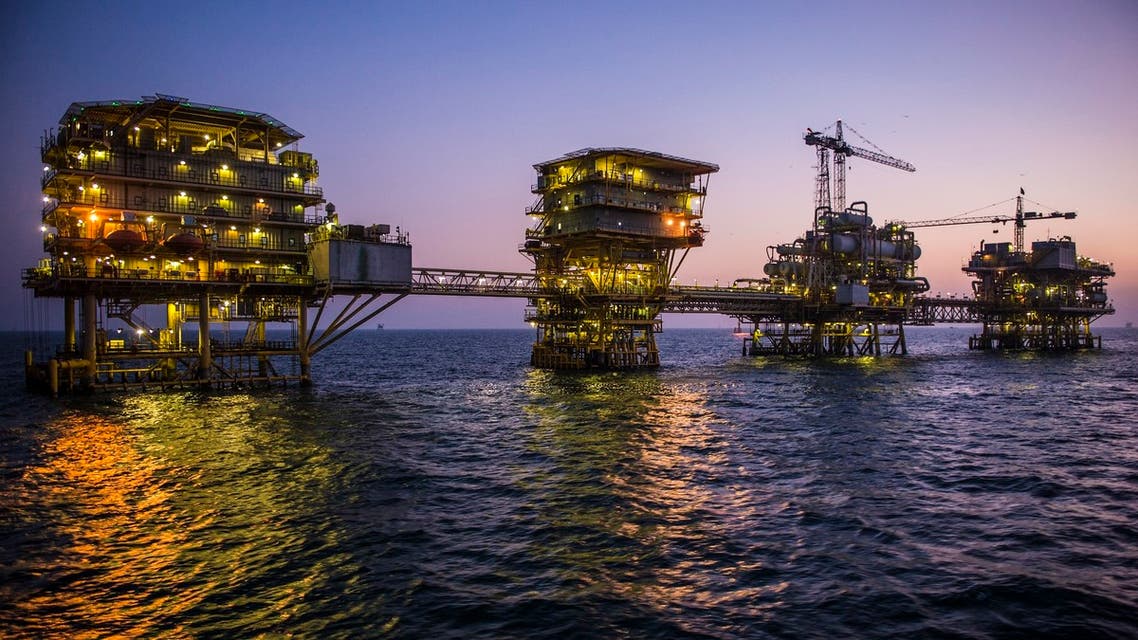
Crude oil futures edged up on Tuesday ahead of a meeting of producers this week that may not lead to a further boost in supply amid concerns a possible global recession could limit energy demand.
The Organisation of the Petroleum Exporting Countries and allies including Russia, known as OPEC+, meet on Wednesday with some saying a modest output hike would be discussed.
OPEC’s Joint Technical Committee (JTC) estimated that this year’s global oil market surplus would be 800,000 barrels per day —a downward revision of 200,000 barrels per day from last month’s estimate.
The full OPEC+ group, including Russia, is set to meet to determine the group’s production strategy for September. The group has officially rolled back the full amount of the targets as of August, although the group has so far seriously undershot its production targets by millions of barrels a day.
This helped the price of the Brent futures rise 51 cents or 0.5 per cent to settle at $100.54 a barrel, while the United States West Texas Intermediate (WTI) crude rose 53 cents or 0.6 per cent to settle at $94.42 per barrel.
Also boosting the market were worries that US Speaker of the House Nancy Pelosi’s visit to Taiwan will escalate tensions between the US and China.
China put its military on high alert and said it will launch “targeted military operations” in response to the visit.
The United States, meanwhile, imposed sanctions on Chinese and other firms it said helped to sell tens of millions of Dollars in Iranian oil and petrochemical products to East Asia as it tries to raise pressure on the Middle East countries to curb its nuclear programme.
Analysts have said a nuclear deal with Iran could add about 1 million barrels per day of crude to the world supply.
This is happening as data showed that manufacturers across the United States, Europe and Asia struggled for momentum in July as dwindling global demand and China’s strict COVID-19 restrictions slowed production.
Pressure also came as the American Petroleum Institute (API) reported a surprise build this week for crude oil of 2.165 million barrels, while analysts predicted a draw of 467,000 barrels.
The build comes as the US Department of Energy released 4.6 million barrels from the Strategic Petroleum Reserves (SPR) in the week ending July 29, to 469.9 million barrels.
US crude inventories have shed some 63 million barrels since the start of 2021, with a 40,000 barrel loss since the start of 2020, according to API data.
The market will be waiting for the official data from the Energy Information Agency (EIA) due on Wednesday.
Economy
Nigeria Accesses $1.5bn from UAE Lender’s $5bn Swap Deal
By Adedapo Adesanya
Nigeria has received the first tranche of its $5 billion derivatives financing arrangement with the First Abu Dhabi Bank (FAB), the United Arab Emirates’ largest lender.
According to a Bloomberg report published on Friday, the federal government drew about $1.5 billion over the past two weeks through a Total Return Swap (TRS) transaction with the lender.
The report stated that Nigeria will provide naira-denominated securities valued at 133.3 per cent of the loan amount as collateral for the transaction, while international financial institutions continue to express concerns about the risks associated with such derivative-based financing structures.
The financing is expected to support the government’s debt management strategy by replacing more expensive borrowings while helping finance the country’s fiscal deficit.
The first tranche is priced at 395 basis points above the Secured Overnight Financing Rate (SOFR), rising to SOFR plus 400 basis points thereafter.
The transaction further expands Nigeria’s financial relationship with First Abu Dhabi Bank, which had earlier provided about $1.2 billion to support the construction of a section of the ongoing Lagos-Calabar Coastal Highway.
The swap deal has come with much scrutiny from critics and international organisations. Recall that the International Monetary Fund (IMF), after a consultation visit, warned Nigeria against the deal, noting that such transactions are often opaque and complex.
“Our view is that the transactions in these types of structures carry risks. Usually they are opaque, so the terms are not always very transparent when we reviewed these instruments across countries,” according to the IMF’s mission chief in Nigeria, Mr Christian Ebeke.
Mr Ebeke said Nigeria could instead issue eurobonds to finance its deficits or other means to raise funding, including on concessional terms.
The Senate in April gave its approval to the agreement put forward by President Bola Tinubu, who said his administration intends to use proceeds from the total return swap to refinance expensive debt and pay for infrastructure.
Economy
Nigeria Needs More Taxpayers, Not Higher Taxes—Oyedele
By Adedapo Adesanya
The Minister of Finance and Coordinating Minister of the Economy, Mr Taiwo Oyedele, yesterday clarified that the federal government is not increasing taxes but making efforts to raise the tax net.
Mr Oyedele made this remark on Thursday while receiving a delegation from the Chartered Institute of Taxation of Nigeria (CITN) at his office in Abuja.
He hailed the institute for introducing a National Tax Awareness Day and for supporting the current tax reforms of the federal government.
The minister charged the institute to double its effort in public enlightenment, stressing that many Nigerians still view taxation as a means for the government to take money from citizens.
He reiterated that the priority of the government is not to increase tax rates but to broaden the tax base by ensuring that all eligible taxpayers meet their obligations.
“We are still not getting enough revenue from taxes.
“It is not about increasing taxes but making sure that those who are supposed to pay taxes. We want to promote fairness in tax administration,” he said.
Nigeria is challenged by the inability to generate adequate revenue from taxation despite ongoing reforms, stressing that a significant number of eligible taxpayers have yet to fulfil their civic obligations.
He said the challenge facing the country was not necessarily about raising tax rates but ensuring that individuals and businesses that ought to pay taxes do so in a fair and transparent system.
The minister also commended the institute for supporting the federal government’s tax reform agenda and promoting public understanding of taxation, but urged it to intensify its advocacy efforts, noting that many Nigerians still harbour misconceptions about taxation.
According to him, many citizens continue to view taxation merely as a tool for the government to take money from the people rather than as a critical instrument for national development.
“We are still not getting enough revenue from taxes. It is not about increasing taxes, but making sure that those who are supposed to pay taxes. We want to promote fairness in tax administration,” he added.
Mr Oyedele stressed that if Nigeria succeeds in building an efficient and equitable tax system, the impact on infrastructure, public services and economic development would be transformative, challenging the institute to introduce annual awards for the country’s most tax-compliant individuals and organisations as a means of encouraging voluntary compliance and recognising responsible taxpayers.
Economy
Akara, Kulikuli, Roasted Corn Business Not Capital Intensive—Remi Tinubu
By Modupe Gbadeyanka
Nigeria’s First Lady, Mrs Oluremi Tinubu, has given Nigerians business advice that may not involve a lot of money to start.
Speaking with newsmen recently, the wife of President Bola Tinubu said businesses like akara (fried bean cake), kulikuli (a crunchy snack from roasted peanuts or groundnuts) and roasted corn can be set up without breaking the bank.
She disclosed that to support her husband’s Renewed Hope agenda, she has provided funding packages to traders and others to the tune of N3.5 billion.
“To start akara business doesn’t take a lot of money. To start roasting corn and kuli-kuli doesn’t take much. We didn’t give them a loan; we gave it to them as a grant,” she stated.
She further said, “We’ve encouraged Nigerians as best as we could, what is within our hands, I have given, and I keep giving. Those are the things we’ve done.”
“I remember giving for TB (tuberculosis) when I heard of many TB cases; I gave N2 billion, to breast cancer, I gave N1 billion, and to [tackle] malnutrition, I gave N500 million.
“These are the things we’ve been doing to assist the government. So, we’ve had impact in agriculture, social investment, education (as scholarship and ICT training) and others. We are still open to doing more,” she disclosed.
-
Feature/OPED6 years agoDavos was Different this year
-
Travel/Tourism10 years ago
Lagos Seals Western Lodge Hotel In Ikorodu
-
Showbiz3 years agoEstranged Lover Releases Videos of Empress Njamah Bathing
-
Banking8 years agoSort Codes of GTBank Branches in Nigeria
-
Economy3 years agoSubsidy Removal: CNG at N130 Per Litre Cheaper Than Petrol—IPMAN
-
Banking3 years agoSort Codes of UBA Branches in Nigeria
-
Banking3 years agoFirst Bank Announces Planned Downtime
-
Sports3 years agoHighest Paid Nigerian Footballer – How Much Do Nigerian Footballers Earn