
Economy
Fitch Revises Nigeria’s Outlook to Negative; Affirms at ‘B+’

By Modupe Gbadeyanka
Fitch Ratings has revised the Outlook on Nigeria’s Long-Term Foreign and Local Currency Issuer Default Ratings (IDRs) to Negative from Stable and affirmed the IDRs at ‘B+’.
The issue ratings on Nigeria’s senior unsecured foreign currency bonds have also been affirmed at ‘B+’.
Also, the Country Ceiling has been affirmed at ‘B+’ and the Short-Term Foreign and Local Currency IDRs have been affirmed at ‘B’.
The revision of the Outlook on Nigeria’s Long-Term IDRs reflects that Tight FX liquidity and low oil production contributed to Nigeria’s first recession since 1994. The economy contracted through the first three quarters of 2016 and Fitch estimates GDP growth of -1.5% in 2016 as a whole.
Fitch said it expects a limited economic recovery in 2017, with growth of 1.5%, well below the 2011-15 annual growth average of 4.8%. The non-oil economy will continue to be constrained by tight foreign exchange liquidity. Inflationary pressures are high with year on year CPI inflation increased to 18.5% in December.
It forecasts that access to foreign exchange will remain severely restricted until the Central Bank of Nigeria (CBN) can establish the credibility of the Interbank Foreign Exchange Market (IFEM) and bring down the spread between the official rate and the parallel market rates.
The spot rate for the naira has settled at a range of NGN305-NGN315 per USD in the official market, while the Bureau de Change (BDC) rate depreciated to as low as NGN490 per USD in November 2016. In an effort to work with the CBN to help the parallel market rates converge with the official, BDC operators subsequently adopted a reference rate of NGN400 per USD.
However, dollars continue to sell on the black market at rates of well above NGN400. The authorities have communicated a commitment to the current official exchange rate range, but the availability of hard currency at those rates is severely constrained. Trading volumes in both the spot and derivative markets increased following the June changes to the official FX market, but remain low, at of USD8.4bn in December, compared to USD24bn in December 2014.
Gross general government debt increased to an estimated 17% of GDP at end-2016, from 13% at end-2015, although it remains well below the ‘B’ median of 56% and is a support to the rating. However, the country’s low revenues pose a risk to debt sustainability. Gross general government debt stands at 281% of revenues in 2016, above the ‘B’ median of 230%. Nigeria’s government debt is 77% denominated in local currency, which makes it less susceptible to exchange rate risk, but the share of foreign currency debt is increasing. Additionally, the government faces contingent liabilities from approximately USD5.1bn in debt owed by the Nigeria National Petroleum Corporation to its joint venture partners.
Fitch forecasts that Nigeria’s general government fiscal deficit will remain broadly stable in 2017, at 3.9% of GDP, just below the ‘B’ category median of 4.2%. Nigeria is likely to experience a recovery in oil revenues, but will continue to struggle with raising non-oil revenues. Total revenues will rise to just 7.4% of GDP, up from 6.2% in 2016, but still below the 12.4% of GDP experienced in 2011-15. Import and excise duties have experienced a boost from the depreciation of the naira, but corporate taxes and the VAT will continue to underperform, owing to issues with implementation and compliance. On the expenditure side, growing interest costs will increase current spending. Fitch forecasts the cost of debt servicing in 2017 will reach 1.4% of GDP, up from an average of 1.1% over the previous five years.
The Nigerian banking sector has experienced worsening asset quality as a result of the weakening economy, problems in the oil industry, and exchange rate pressures on borrowers to service their loans. The CBN reported that industry NPLs grew to 11.7% of gross loans at end-June 2016, up from 5.3% at end-December 2015. Tight foreign currency liquidity has also led to some Nigerian banks experiencing difficulty in meeting their trade finance obligations which were either extended or refinanced with international correspondent banks.
Nigeria’s ‘B+’ IDRs also reflect the following key rating drivers:
Nigeria’s fiscal policy has been predicated on finding sources of external funding to finance increases in capital spending. The draft federal budget for 2017 calls for total spending of NGN7.3trn in 2017, up from the NGN6.1tn contained in the 2016 budget. Fitch does not expect the government to fully execute the capital spending envisaged in the 2017 budget, approximately NGN1.8trn, or 1.5% of GDP, but it will have to finance an overall federal government deficit of approximately NGN2.6trn.
The authorities’ financing plan calls for borrowing between USD3bn-USD5bn from external sources to finance the 2017 deficit and parts of the 2016 budget. The bulk of external borrowing will come from multilateral development banks and the government is also likely to go to market with a Eurobond offering of USD1bn in 1Q17. The Nigerian government has negotiated USD10.6bn in export credits for financing infrastructure development; which is currently awaiting parliamentary approval. The government’s financing plans also call for domestic issuance of approximately NGN1.3bn in 2017 and use of its overdraft facility at the CBN, which the government reports is currently at NGN1.5trn.
Nigeria’s oil sector will receive a boost from the improved security situation in the Niger Delta and Fitch expects oil production to average 2.2 million barrels per day (mbpd) in 2017. Oil production fell as low as 1.5 mbpd in August, before recovering to 1.8 as of October 2016. The recovery in oil revenues and increased fiscal spending could boost the economy in 2017, if the government can arrange improve the execution of capital expenditures. However, the present lull in violence and oil infrastructure attacks will only hold if the government can come to a more permanent peace settlement with Niger Delta insurgents.
The government’s policy of import substitution has contributed to significant import compression, which allowed the current account deficit to narrow to an estimated 1% of GDP in 2016, down from 3.1% in 2016. The naira depreciation in June helped to slow the loss of reserves and forward operations by the CBN allowed the authorities to clear a large backlog of dollar demand. Gross international reserves of the CBN stood at USD27.7bn in late January, down from USD29bn at end-2015, but higher than the August 2016 position of USD24.2bn.
The oil sector has shrunk to account for about 10% of Nigeria’s GDP, but the overall economy is still heavily dependent on oil, which accounts for up to 75% of current external receipts and 60% of general government revenues. The Nigerian senate has promised to pass the Petroleum Investment Bill (PIB) in early 2017. The PIB has been under consideration for nearly a decade and could help increase efficiency and transparency in the Nigerian National Petroleum Corporation.
Nigeria’s ratings are constrained by weak governance indicators, as measured by the World Bank, as well as low human development and business environment indicators and per capita income.
Also, Fitch’s proprietary SRM assigns Nigeria a score equivalent to a rating of ‘B+’ on the Long-term FC IDR scale.
Fitch’s sovereign rating committee did not adjust the output from the SRM to arrive at the final LT FC IDR.
Fitch’s SRM is the agency’s proprietary multiple regression rating model that employs 18 variables based on three year centred averages, including one year of forecasts, to produce a score equivalent to a LT FC IDR. Fitch’s QO is a forward-looking qualitative framework designed to allow for adjustment to the SRM output to assign the final rating, reflecting factors within our criteria that are not fully quantifiable and/or not fully reflected in the SRM.
The main factors that could lead to a downgrade are:
– Failure to secure an improvement in economic growth, for example caused by continued tight FX liquidity.
– Failure to narrow the fiscal deficit leading to a marked increase in public debt.
– A loss of foreign exchange reserves that increases vulnerability to external shocks.
– Worsening of political and security environment that reduces oil production for a prolonged period or worsens ethnic or sectarian tensions.
The current rating Outlook is Negative. Consequently, Fitch does not currently anticipate developments with a material likelihood of leading to an upgrade. However, the following factors could lead to positive rating action:
– A revival of economic growth supported by the sustained implementation of coherent macroeconomic policies.
– A reduction of the fiscal deficit and the maintenance of a manageable debt burden.
– Increase in foreign exchange reserves to a level that reduces vulnerability to external shocks.
– Successful implementation of economic or structural reforms, for instance raising non-oil revenues, increasing the execution of capital expenditures and passing the PIB.
Fitch’s forecasts are for Brent crude to average USD45/b in 2017 and USD55/b in 2018, based on the most recent Global Economic Outlook published in November 2016.




By Adedapo Adesanya
The National Insurance Commission has issued new guidelines for the collection, management, and administration of the Insurance Policyholders’ Protection Fund.
In a circular issued to all insurance institutions on Tuesday, the regulator also set May 31, 2026, as the deadline for insurers to submit their assessment returns for the 2025 financial year.
Recall that on August 5, 2025, President Bola Tinubu signed into law the Nigerian Insurance Industry Reform Act ( NIIRA 2025).
This landmark legislation repeals the Insurance Act 2003, and consolidates related provisions, ushering in a modern regulatory framework. It lays a strong foundation for sustainable growth and increased investment in the country’s insurance sector.
The commission said the guidelines were issued in exercise of its powers under the 2025 Act and other existing insurance laws and regulations to provide regulatory clarity, improve guidance, and ensure ease of compliance across the industry.
According to NAICOM, the guidelines establish a comprehensive structure for the operation of the IPPF, which serves as a statutory safety net to protect insurance policyholders in the event of distress or insolvency of a licensed insurer or reinsurer. The framework also provides direction on the reimbursement of loans by insurers and reinsurers.
NAICOM stated, “The guidelines ensure regulatory clarity, guidance and ease of compliance, as it provides a comprehensive regulatory framework for the collection, management, and administration of the Fund, which serves as a statutory safety net designed to protect insurance policyholders against distress and insolvency of a licensed insurer or reinsurer, including guidance for the reimbursement of loans by an insurer or reinsurer.
“Please be informed that the IPPF Assessment Returns in respect of the year 2025 shall be submitted to the Commission not later than 31st May 2026, while subsequent submissions shall be in line with Section 4.3 of the Guideline on Insurance Policyholders Protection Fund.”
By Adedapo Adesanya
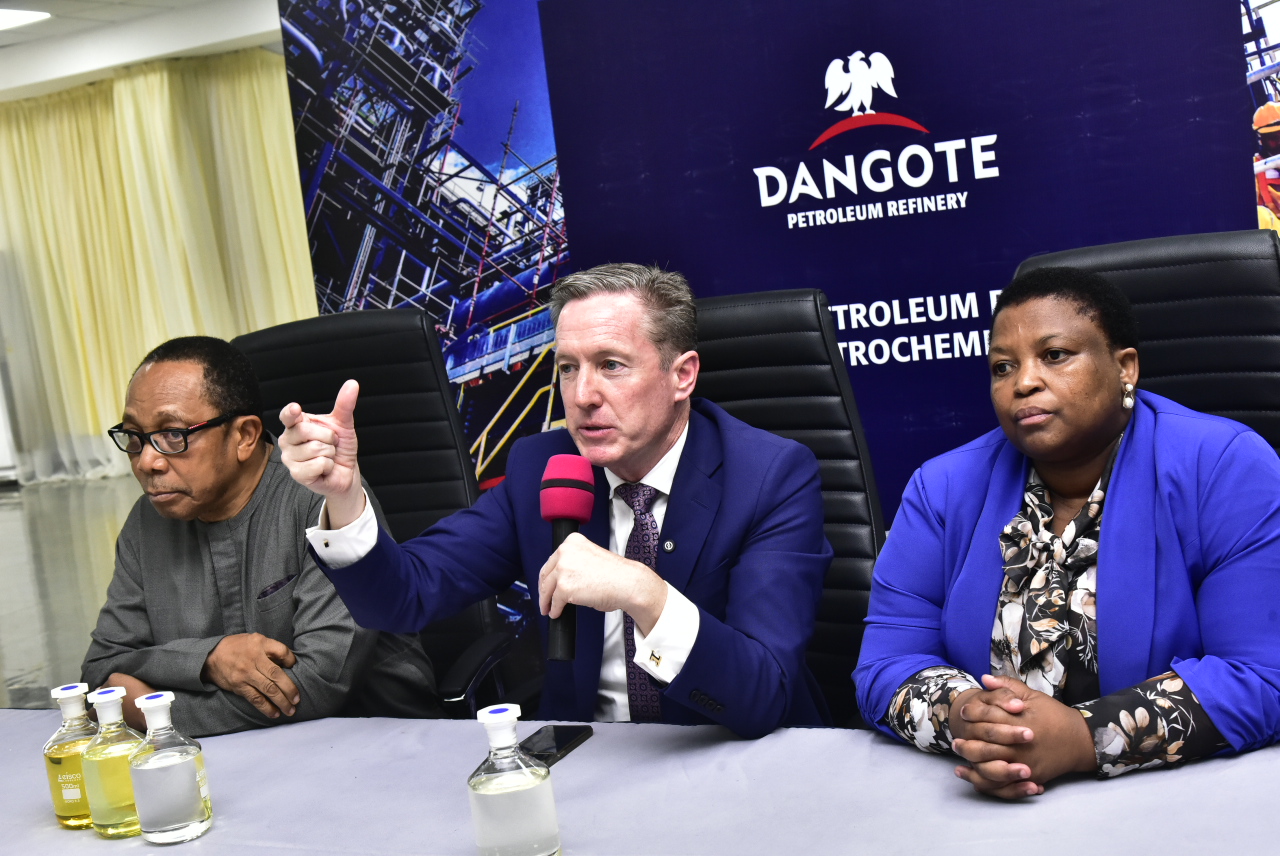
The Dangote Refinery on Wednesday returned the petrol price to N1,200 per litre, less than 24 hours after it increased it by 5 per cent.
The private refinery had raised the ex-depot price by N75 on Tuesday, citing pressure from volatile global oil markets, but quickly brought it back to N1,200 per litre from N1,275 per litre.
The swift downward review is directly linked to a sharp drop in international crude prices. Brent crude has plunged to $95.05 per barrel, after a 13 per cent decline, while the US West Texas Intermediate (WTI) crude closed at $97.18, recording nearly a 14 per cent drop.
This development comes after US President Donald Trump announced a conditional two-week ceasefire with Iran, which eased fears of immediate supply disruptions in the global oil market.
“This will be a double-sided CEASEFIRE!” Trump said on social media, marking a sharp reversal from his earlier warning that “a whole civilisation will die tonight” if Iran failed to comply with US demands.
Iran’s Foreign Minister, Mr Abbas Araqchi, confirmed that the country would halt attacks provided strikes against Iran cease and transit through the Strait of Hormuz is coordinated by Iranian forces.
Despite the breakthrough, tensions remain elevated across the region, with several Gulf states reporting missile launches, drone activity, or issuing civil defence warnings.
While oil prices have fallen back below $100, they remain significantly elevated after surging by a record amount in March. Market analysts noted that regardless of how successful the ceasefire is, geopolitical risk related to the Strait of Hormuz is likely to remain elevated for the foreseeable future under the control of Iran.
By Adedapo Adesanya
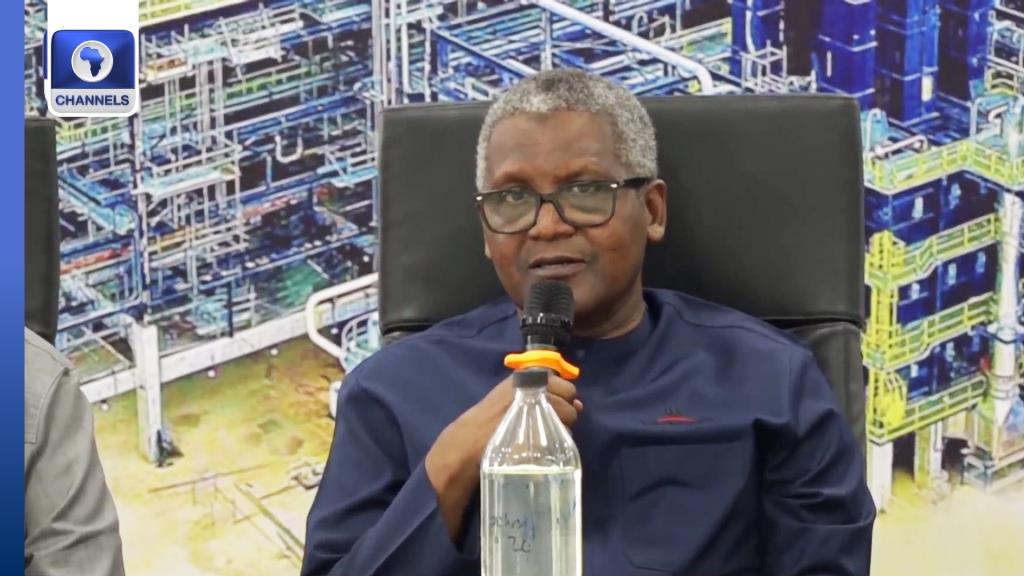
Crude oil deliveries from the Nigerian National Petroleum Company (NNPC) Limited to the Dangote Petroleum Refinery doubled in March, boosting prospects for improved fuel availability.
This was revealed by the chief executive of Dangote Industries Limited, Mr Aliko Dangote, on Tuesday, when he received the Deputy Secretary-General of the United Nations, Mrs Amina Mohammed, at the industrial complex in Ibeju-Lekki, Lagos.
While speaking on feedstock supply, Mr Dangote commended the NNPC for increasing crude deliveries to the refinery in March, noting that volumes rose to 10 cargoes—six supplied in Naira and four in Dollars—to support domestic fuel availability, according to a statement by the Refinery.
“Last month, they gave us six cargoes for Naira and four cargoes for Dollars,” he said.
Despite the improvement, Mr Dangote noted that the supply remains below the 19 cargoes required for optimal operations, with the refinery continuing to bridge the gap through imports from the United States and other African producers.
He also expressed concern over the unwillingness of international oil companies operating in Nigeria to sell to the refinery, stating that their preference for selling crude to traders forces it to repurchase at higher costs, with broader implications for the economy.
Mr Dangote added that the refinery is seeking increased access to domestically priced crude under local currency arrangements as part of efforts to moderate fuel costs and enhance long-term energy and food security across the continent.
On her part, Mrs Mohammed underscored the strategic importance of Dangote Industries Limited -particularly Dangote Fertiliser Limited—in addressing Africa’s mounting food security challenges, while calling for stronger global partnerships to scale its impact.
Mrs Mohammed said the United Nations would prioritise amplifying scalable solutions capable of mitigating the continent’s food crisis, describing Dangote’s integrated industrial model as a critical pathway.
“I think the UN’s job here is to amplify and to put visibility on the possibilities of mitigating a food security crisis, and this is one of them,” she said. “I hope that when we go back, we can continue to engage partners and countries that should collaborate with Dangote Industries.”
-
 Feature/OPED6 years ago
Davos was Different this year
-
Travel/Tourism10 years ago
Lagos Seals Western Lodge Hotel In Ikorodu
-

 Showbiz3 years ago
Estranged Lover Releases Videos of Empress Njamah Bathing
-
 Banking8 years ago
Sort Codes of GTBank Branches in Nigeria
-

 Economy3 years ago
Subsidy Removal: CNG at N130 Per Litre Cheaper Than Petrol—IPMAN
-

 Banking3 years ago
Sort Codes of UBA Branches in Nigeria
-

 Banking3 years ago
First Bank Announces Planned Downtime
-

 Sports3 years ago
Highest Paid Nigerian Footballer – How Much Do Nigerian Footballers Earn