

Economy
IMF Predicts 4.3% Growth for Madagascar in 2017

By Dipo Olowookere
The International Monetary Fund (IMF) has disclosed that Madagascar’s recent economic performance had been encouraging, with GDP growth reaching 4.2 percent in 2016.
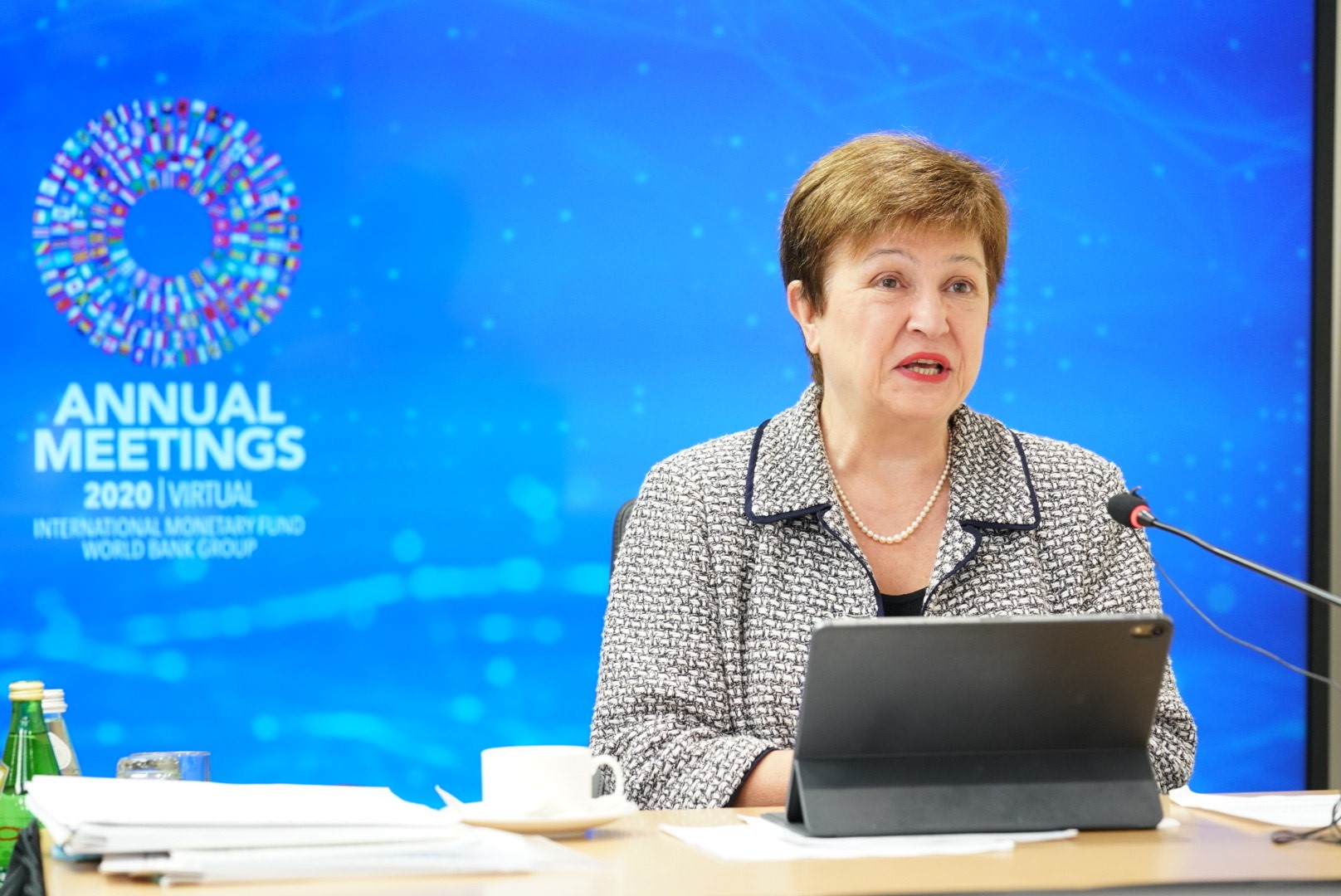
From March 9–22, 2017, a team from the IMF led by Mr Marshall Mills, Mission Chief for Madagascar, visited Antananarivo from to conduct the 2017 Article IV Consultation and hold discussions on the first review of Madagascar’s economic reform program supported by the IMF’s three-year Extended Credit Facility (ECF).
At the end of the mission, Mr Mills said the macroeconomic outlook in the near term was generally positive, aided by growth in public investment, continued strength in export processing zones, and a recovery in mining.
He said this outlook was diminished by a drought in the central plateau and the cyclone that hit the northeast, saying the full impact was not yet clear, and the Fund was continuing discussions with the authorities and development partners to help identify the scale of the damage and financing to address urgent needs.
Growth is currently projected to reach 4.3 percent in 2017, while inflation is expected to remain contained at 7.7 percent. Positive external developments prior to the cyclone enabled the central bank to boost reserves significantly, reaching USD 1.12 billion at end-February 2017, he said.
“The authorities have achieved significant progress under the ECF-supported program, although challenges remain. All quantitative performance criteria for end-December 2016 were met, supported by prudent monetary policy and improving revenue collection that surpassed targets. The government also implemented the measures envisioned in most of the program’s structural benchmarks, although some with a delay.
“Difficulties at state-owned enterprises, especially JIRAMA and Air Madagascar, continue to weigh on the budget and the economy. The difficulties of the public utility JIRAMA, aggravated by drought, will require additional transfers of around 0.5 percent of GDP. However, new management is developing a business plan to restructure operations, which will reduce costs, improve revenue, and contain transfer needs. Air Madagascar is negotiating a strategic partnership, which is expected to involve a substantial, one-off transfer from the government to offset past losses. Staff and the authorities are continuing discussions on recapitalizing Air Madagascar, including obtaining financial assurances, and on restructuring JIRAMA.
“In the medium-term, the authorities aim to break Madagascar’s pattern of low growth by scaling up priority spending and accelerating structural reform. Drawing on substantial pledges of grants and concessional loans at the donor conference of December 2016, the authorities intend to boost investment and social spending steadily from 2017 to 2019, while maintaining a moderate risk of debt distress. To ensure the success of the scaling up and to minimize risks, the authorities are enhancing their investment management and monitoring capacity. Revised frameworks to encourage private investment are also under consideration for mining, petroleum, and special economic zones. Staff stressed the need to incentivize private investment efficiently, without undermining the government’s key objectives of enhancing revenue and containing fiscal risks.
“The authorities continue to make progress in strengthening the legal and institutional framework for enhancing governance and fighting corruption. The government is committed to submitting draft laws on asset recovery, international cooperation, and combating anti-money laundering to the next parliamentary session. It remains important to follow through with implementation.
“The central bank has successfully maintained stable inflation while pursuing reforms to improve monetary policy effectiveness and financial stability. Enhancing the effectiveness of policy instruments, which requires an efficient interbank and repo markets, is a priority. Reforms are being put in place to deepen financial intermediation and inclusion, such as the new law on electronic money. Revisions under preparation to banking and microfinance laws will reinforce stability, as will the ongoing audit of two government-owned non-bank financial institutions.
“The mission met with President Hery Rajaonarimampianina, Speaker of the National Assembly Jean Max Rakotomamonjy, Prime Minister Olivier Solonandrasana, Minister of Finance and Budget Gervais Rakotoarimanana, Minister of Economy and Planning and interim Minister of Energy and Hydrocarbons Herilanto Raveloharison, Central Bank of Madagascar Governor Alain Rasolofondraibe, Commissioner General Léon Rajaobelina, and other members of parliament, senior officials, as well as private sector representatives, civil society and development partners,” Mr Mills said.





By Modupe Gbadeyanka
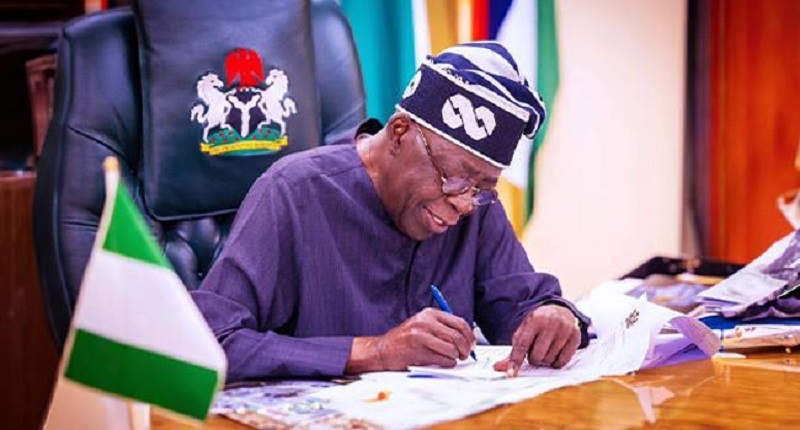
The federal government has been asked by the Nigerian Bar Association (NBA) to suspend the implementation of the controversial tax laws.
In a reaction to the tax reform acts, the president of the group, Mr Afam Osigwe (SAN), the suspension of the laws would allow for a proper investigation into allegations of alterations in the gazetted and harmonised copies.
A member of the House of Representatives, Mr Abdussamad Dasuki, alleged that some parts of the laws passed by the parliament were different from the gazetted copy.
To address the issues raised, the NBA said it is “imperative that a comprehensive, open, and transparent investigation be conducted to clarify the circumstances surrounding the enactment of the laws and to restore public confidence in the legislative process.”
“Until these issues are fully examined and resolved, all plans for the implementation of the Tax Reform Acts should be immediately suspended,” the association declared.
It noted that the controversies “raise grave concerns about the integrity, transparency, and credibility of Nigeria’s legislative process.”
“These developments strike at the very heart of constitutional governance and call into question the procedural sanctity that must attend lawmaking in a democratic society,” it noted.
“Legal and policy uncertainty of this magnitude has far-reaching consequences. It unsettles the business environment, erodes investor confidence, and creates unpredictability for individuals, businesses, and institutions required to comply with the law. Such uncertainty is inimical to economic stability and should have no place in a system governed by the rule of law.
“Nigeria’s constitutional democracy demands that laws, especially those with profound economic and social implications, emerge from processes that are transparent, accountable, and beyond reproach. Anything short of this undermines public trust and weakens the foundation upon which lawful governance rests.
“We therefore call on all relevant authorities to act swiftly and responsibly in addressing this controversy, in the overriding interest of constitutional order, economic stability, and the preservation of the rule of law,” the organisation stated.


By Adedapo Adesanya
Demand for hot stocks, including MRS Oil Plc, buoyed the NASD Over-the-Counter (OTC) Securities Exchange by 0.52 per cent on Tuesday, December 23.
The energy company was one of the three price gainers for the session as it chalked up N19.69 to sell at N216.59 per share versus the previous day’s value of N196.90 per share.
Further, FrieslandCampina Wamco Nigeria Plc gained N2.95 to close at N56.75 per unit versus N53.80 per unit and Golden Capital Plc appreciated by 84 Kobo to N9.29 per share from Monday’s N8.45 per share.
Consequently, the market capitalisation went up by N10.95 billion to N2.125 trillion from N2.125 trillion and the NASD Unlisted Security Index (NSI) rose by 18.31 points to 3,570.37 points from 3,552.06 points.
Yesterday, the NASD bourse recorded a price loser, the Central Securities Clearing System Plc (CSCS), which gave up 17 Kobo to close at N33.70 per unit against the previous trading value of N33.87 per unit.
The volume of securities traded at the session went down by 97.6 per cent to 297,902 units from the previous day’s 12.6 million units, the value of securities decreased by 98.5 per cent to N10.5 million from N713.6 million, and the number of deals remained flat at 32 deals.
By value, Infrastructure Credit Guarantee Company (InfraCredit) Plc ended as the most actively traded stock on a year-to-date basis with 5.8 billion units exchanged for N16.4 billion. This was followed by Okitipupa Plc, which traded 178.9 million units valued at N9.5 billion, and MRS Oil Plc with 36.1 million units worth N4.9 billion.
In terms of volume, also on a year-to-date basis, InfraCredit Plc led the chart with a turnover of 5.8 billion units traded for N16.4 billion. Industrial and General Insurance (IGI) Plc ranked second with 1.2 billion units sold for N420.7 million, while Impresit Bakolori Plc followed with the sale of 536.9 million units valued at N524.9 million.

By Dipo Olowookere
It was another bullish trading session for the Nigerian Exchange (NGX) Limited as it closed higher by 0.59 per cent on Tuesday.
The market further rallied due to continued interest in large and mid-cap stocks on the exchange by investors rebalancing their portfolios for the year-end.
Yesterday, Aluminium Extrusion sustained its upward trajectory after it further appreciated by 9.96 per cent to N14.90, as Austin Laz gained 9.81 per cent to close at N2.91, Custodian Investment improved by 9.69 per cent to N38.50, and First Holdco soared by 9.35 per cent to N50.30.
Conversely, Royal Exchange declined by 7.22 per cent to N1.80, Champion Breweries shrank by 6.57 per cent to N15.65, NASCON lost 5.36 per cent to trade at N105.05, Sovereign Trust Insurance depreciated by 5.28 per cent to N3.77, and Japaul went down by 4.51 per cent to N2.33.
At the close of business, 29 shares ended on the gainers’ table and 27 shares finished on the losers’ log, representing a positive market breadth index and bullish investor sentiment.
This raised the All-Share Index (ASI) by 895.06 points to 153,354.13 points from 152,459.07 points and lifted the market capitalisation by N579 billion to N97.772 trillion from the previous day’s N97.193 trillion.
VFD Group finished the day as the busiest stock after it recorded a turnover of 192.0 million units worth N2.1 billion, GTCO exchanged 63.5 million units valued at N5.6 billion, Access Holdings traded 49.8 million units for N1.0 billion, First Holdco sold 45.8 million units valued at N2.3 billion, and Secure Electronic Technology transacted 38.3 million units worth N28.4 million.
In all, market participants bought and sold 677.4 million units valued at N20.8 billion in 27,589 deals compared with the 451.5 million units worth N13.0 billion traded in 33,327 deals on Monday, showing an improvement in the trading volume and value by 50.03 per cent and 60.00 per cent apiece, and a shortfall in the number of deals by 17.22 per cent.









-
 Feature/OPED6 years ago
Davos was Different this year
-
Travel/Tourism9 years ago
Lagos Seals Western Lodge Hotel In Ikorodu
-

 Showbiz3 years ago
Estranged Lover Releases Videos of Empress Njamah Bathing
-
 Banking8 years ago
Sort Codes of GTBank Branches in Nigeria
-

 Economy3 years ago
Subsidy Removal: CNG at N130 Per Litre Cheaper Than Petrol—IPMAN
-

 Banking3 years ago
First Bank Announces Planned Downtime
-

 Banking3 years ago
Sort Codes of UBA Branches in Nigeria
-

 Sports3 years ago
Highest Paid Nigerian Footballer – How Much Do Nigerian Footballers Earn