Connect with us

Economy

IPMAN Gives Reasons for Fuel Queues, Scarcity

Published

on

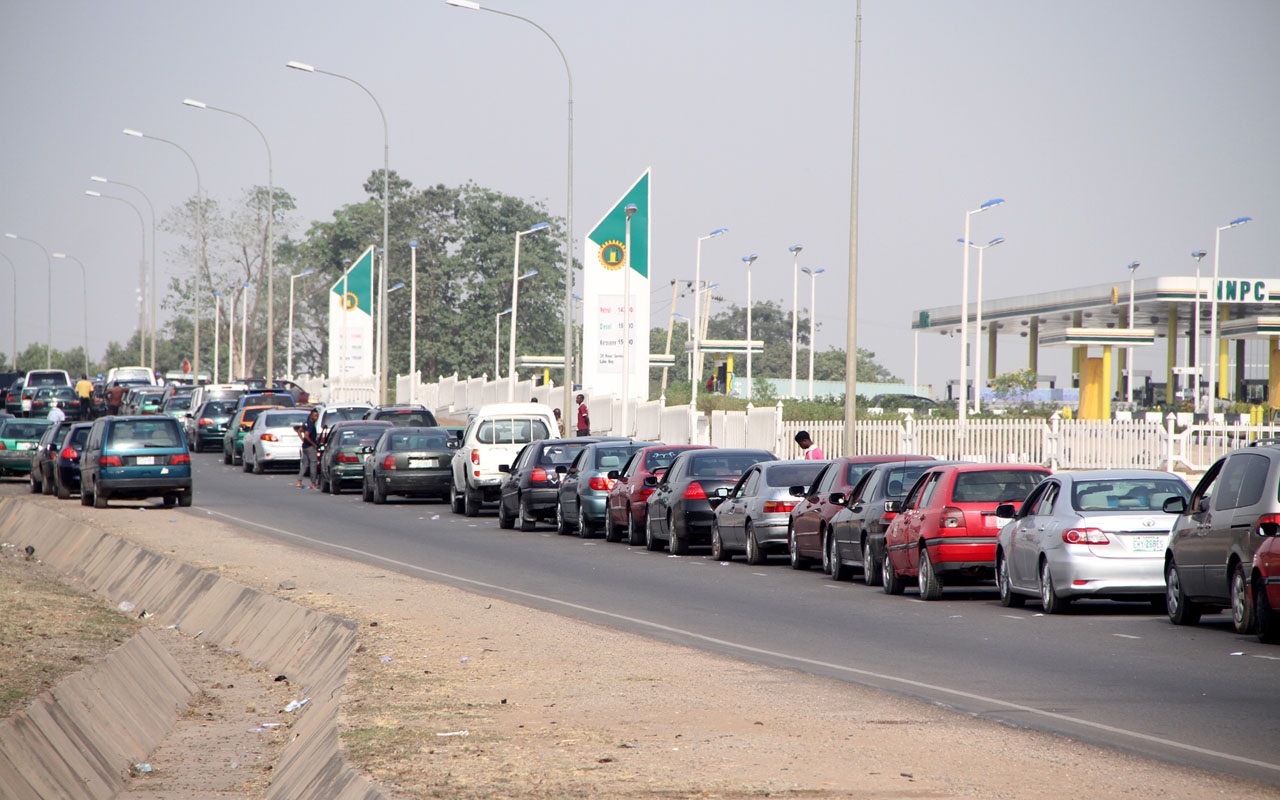
Return of Fuel Queues

By Adedapo Adesanya

As fuel queues return to major cities in Nigeria, straining daily commute and activities, the Independent Petroleum Marketers Association of Nigeria (IPMAN) has explained the reasons.

In an interview with Channels Television, the Lagos Zonal Chairman of IPMAN, Mr Akin Akinrinade, stated that the rationale behind the fuel scarcity is a result of the operating environment which has become hostile to their businesses.

Mr Akinrinade specifically stated that the petroleum marketers were not on strike as feared but have found it difficult to operate considering the dependence on diesel whose price has skyrocketed.

“Members of Independent Petroleum Marketers Association of Nigeria have shut down their stations not because we are striking; we are not on strike,” he said.

“Rather, the business environment has been very hostile to us such that we can no longer do business under this condition. For you to load a litre of petrol, you pay N162 per litre,” he added.

The IPMAN official was quick to say the situation had nothing to do with the removal of subsidy or deregulation of the petroleum sector.

He listed the high cost of buying petrol at the depots, the high cost of diesel for running their station and the increased cost of freight as the major factors responsible.

Mr Akinrinade stressed that it was no longer feasible to sell the product at the recommended price of N165 to a litre, adding that the landing cost of petrol was between N175 to N178 to a litre.

“You now have to add the cost of transportation which is between N6 to N8, depending on the distance within Lagos,” he explained. “If it is outside Lagos, it is much more than that.”

“So, if you add N8 to N162, you already have N170 and the government which is the regulator wants us to sell at N165; we have not even added the charges at the depot and the running cost at our stations.

“You know what diesel says now, and you know how epileptic power supply is; we run on generator, using diesel at N800 per litre. There is no station in Lagos that uses less than 50 litres (of diesel) per day.

“So, our members can no longer sell (petrol) at N165 per litre; in fact, there is no reasonable person in this business that can sell below N180 per litre, so it is not as if we are on strike,” he concluded.

Business Post observed the presence of long queues across major fuel stations in the Agege and Ifako-Ijaiye areas of Lagos State.

Commuters across this route are also forced to pay extra fares for transportation with prices increased by 25 per cent.

For drivers, they told Business Post they need to pay a bribe of about N500 to petrol attendants to be able to get fuel on time.

One of them, Mr John Junior, a Bolt driver, said, “I didn’t stay long at NNPC but I had to settle them for N500.”


Adedapo Adesanya is a journalist, polymath, and connoisseur of everything art. When he is not writing, he has his nose buried in one of the many books or articles he has bookmarked or simply listening to good music with a bottle of beer or wine. He supports the greatest club in the world, Manchester United F.C.

Economy

Brent, WTI Ease on Iran Proposal Despite Ongoing Supply Disruptions

Published

on

Brent crude futures

By Adedapo Adesanya

The prices of the two major crude oil grades moderated on Friday amid news of an Iranian proposal on negotiations with the United States. However, prices remained on track for weekly gains, with Iran still blocking the Strait of Hormuz and the US Navy blocking exports of Iranian crude.

Brent crude settled at $108.17 per barrel after losing $2.23 or 2.02 per cent, while the US West Texas Intermediate (WTI) crude finished at $101.94 a barrel after giving up $3.13 or 2.98 per cent. Both benchmarks gained 2.9 per cent over the week.

It was reported on Friday that Iran sent its latest proposal for negotiations with the US to Pakistani mediators on Thursday, a ⁠move that could improve prospects for breaking an impasse in efforts to end the Iran war.

Oil ​prices have been on the rise since the US and Israel attacked Iran at the end of ​February, resulting in the closure of the Strait of Hormuz and the disruption of shipments of about a fifth of ‌the world’s ⁠oil and liquefied natural gas supply.

Although a ceasefire has been in place since April 8, the oil market appeared to ​be accepting the uneasy truce in ⁠the conflict since Iran had already said and signalled that it won’t open the chokepoint to free traffic and won’t return to negotiations unless the American blockade is lifted.

There are fears of an escalation amid reports that US President Donald Trump would be briefed on further military options to force Iran’s hand to sign a deal, which could involve a ground operation.

Prices could spike to $140 per barrel, according to the Speaker of Iran’s Parliament, Mr Mohammad Bagher Ghalibaf, saying the US Administration is getting “junk advice” from people like [Treasury Secretary] Bessent, “who also push the blockade theory and cranked oil up to $120+. Next stop:140.”

The United Arab Emirates’ departure from the Organisation of the Petroleum Exporting Countries (OPEC) this week may still mean that ​the market’s most striking feature in the next few years is not too little supply, but too much. It left the cartel to boost production (target ~5 million barrels per day by 2027) and gain full control over its oil strategy and global partnerships.

Continue Reading

Economy

LCCI Urges FG to Fix Manufacturing Bottlenecks, Stabilise Economy

Published

on

Industrial Manufacturing

By Adedapo Adesanya

The Lagos Chamber of Commerce and Industry (LCCI) has urged the federal government to prioritise reforms that address constraints in the manufacturing sector as it tackles broader macroeconomic and fiscal challenges facing the Nigerian economy.

President of LCCI, Mr Leye Kupoluyi, gave the advice on Thursday in Lagos, at the chamber’s quarterly state of the nation’s economy news conference.

He stated that the manufacturing sector remained a critical driver of revenue and industrial growth, citing a strong performance in 2025.

Mr Kupoluyi noted that the sector contributed N1.17 trillion in Value Added Tax (VAT), representing a 45.61 per cent increase from N803.53 billion recorded in 2024, adding that the Company Income Tax (CIT) from the sector rose to N881.29 billion, up by 32.83 per cent from N663.46 billion in the previous year.

“This strong year-on-year growth reinforces the sector’s expanding role in generating government revenue and in Nigeria’s industrial development.

“Following these results, we call on the government to invest more in productive infrastructure and economic policies that drive growth through job creation, lower production costs, and fiscal interventions,” he said.

On the global terrain, the LCCI president noted that the global economy remained unsettled, shaped by geopolitical tensions, supply chain disruptions and monetary tightening in advanced economies.

He said these trends had sustained inflationary pressures globally, while exposing emerging markets, including Nigeria, to capital outflows and currency volatility.

Mr Kupoluyi noted that Nigeria had benefited from high crude oil prices, warned against mismanaging the resulting windfall, urging the government to channel oil revenues into the Sovereign Wealth Fund, critical infrastructure and diversification initiatives to reduce import dependence and support long-term growth.

On monetary policy, the chamber’s president commended the Central Bank of Nigeria’s Monetary Policy Committee for reducing the Monetary Policy Rate by 50 basis points to 26.5 per cent at its February meeting.

He described the move as a cautious but important shift, reflecting growing confidence amid improvements in inflation and external sector performance.

Mr Kupoluyi also highlighted improvements in the foreign exchange market, noting that the naira had shown relative stability and appreciated to about N1,350.79 to the Dollar in the official market.

He said the performance reflects improved liquidity, investor confidence and the impact of ongoing reforms, but called for stronger policy coordination, increased FX inflows and fiscal discipline to sustain stability.

On fiscal operations, the LCCI president raised concerns over weak capital budget implementation, citing the rollover of N7.71 trillion in unexecuted 2025 capital projects.

He said delays in fund releases, bureaucratic bottlenecks and inefficiencies had continued to undermine project delivery and strain contractors.

He urged the government to develop a more effective framework for capital budget releases to ensure timely funding and execution of projects.

Addressing the oil and gas sector, Mr Kupoluyi welcomed the ongoing reform efforts aimed at boosting crude oil production and improving regulatory processes.

He called for a fully digital regulatory ecosystem to enhance transparency, accelerate approvals and restore investor confidence.

The official added that high global oil prices presented an opportunity for Nigeria to strengthen its position as a major supplier, provided local production and refining capacities are improved.

The LCCI president, however, expressed concern over high import duties on paper, printing materials and related inputs, noting that the policy had increased production costs across several value chains.

“The situation is worsened by port delays, multiple regulatory checks and inconsistent tariff classifications.

The chamber also called for a review of import duties, integration of regulatory agencies into the National Single Window and measures to reduce cargo clearance timelines.

“A balanced policy mix of moderate tariffs, support for local production and stable macroeconomic conditions would enhance industrial growth and reduce business costs,” he said.

He also reiterated its commitment to continued engagement with government and stakeholders to promote policies that support a thriving business environment.

Continue Reading

Economy

NASD Index Gains 0.16% to Again Rise Above 4,000 Points

Published

on

NASD OTC securities exchange

By Adedapo Adesanya

The NASD Over-the-Counter (OTC) Securities Exchange rose by 0.16 per cent on Thursday, April 29, with the Unlisted Security Index (NSI) returning above the 4,000-point mark after chalking up 6.55 points to settle at 4,005.78 points compared with the previous day’s 3,999.23 points.

During the trading session, the market capitalisation of the platform went up by N3.92 billion to close at N2.396 trillion, in contrast to the N2.392 trillion it ended on Wednesday.

The upliftment of the alternative stock market was influenced by the gains posted by four securities, which offset the losses printed by two securities.

According to data, Central Securities Clearing System (CSCS) Plc chalked up N4.03 to close at N76.02 per share versus the preceding session’s N71.99 per share, Food Concepts Plc appreciated by 24 Kobo to N2.67 per unit from N2.43 per unit, UBN Property Plc climbed 20 Kobo to trade at N2.23 per share versus N2.03 per share, and Geo-Fluids Plc improved by 9 Kobo to N3.00 per unit from N2.91 per unit.

On the flip side, MRS Oil Plc lost N17.65 to end at N178.10 per share compared with the previous price of N195.75 per share, and FrieslandCampina Wamco Nigeria Plc dipped by N9.76 to N90.24 per unit from N100.00 per unit.

The volume of securities traded during the trading day went up by 184.3 per cent to 877,682 units from 308,698 units, the value of securities jumped 5.7 per cent to N26.7 million from N25.2 million, and the number of deals soared by 100 per cent to 56 deals from 28 deals.

Great Nigeria Insurance (GNI) Plc remained the most traded stock by value (year-to-date) with 3.4 billion units worth N8.4 billion, followed by CSCS Plc with 60.1 million units exchanged for N4.1 billion, and Okitipupa Plc with 27.8 million units traded for N1.9 billion.

GNI Plc also closed as the most active stock by volume (year-to-date) with 3.4 billion units sold for N8.4 billion, followed by Resourcery Plc with 1.1 billion units worth N415.7 million, and Infrastructure Guarantee Credit Plc with 400 million units transacted for N1.2 billion.

The market will be closed on Friday, May 1, for Workers’ Day celebration.

Continue Reading

Trending