Connect with us

Economy

Nigeria’s Oil Production Jumps 50,000b/d to 1.49mb/d in December 2023

Published

on

Nigeria's oil production

By Adedapo Adesanya

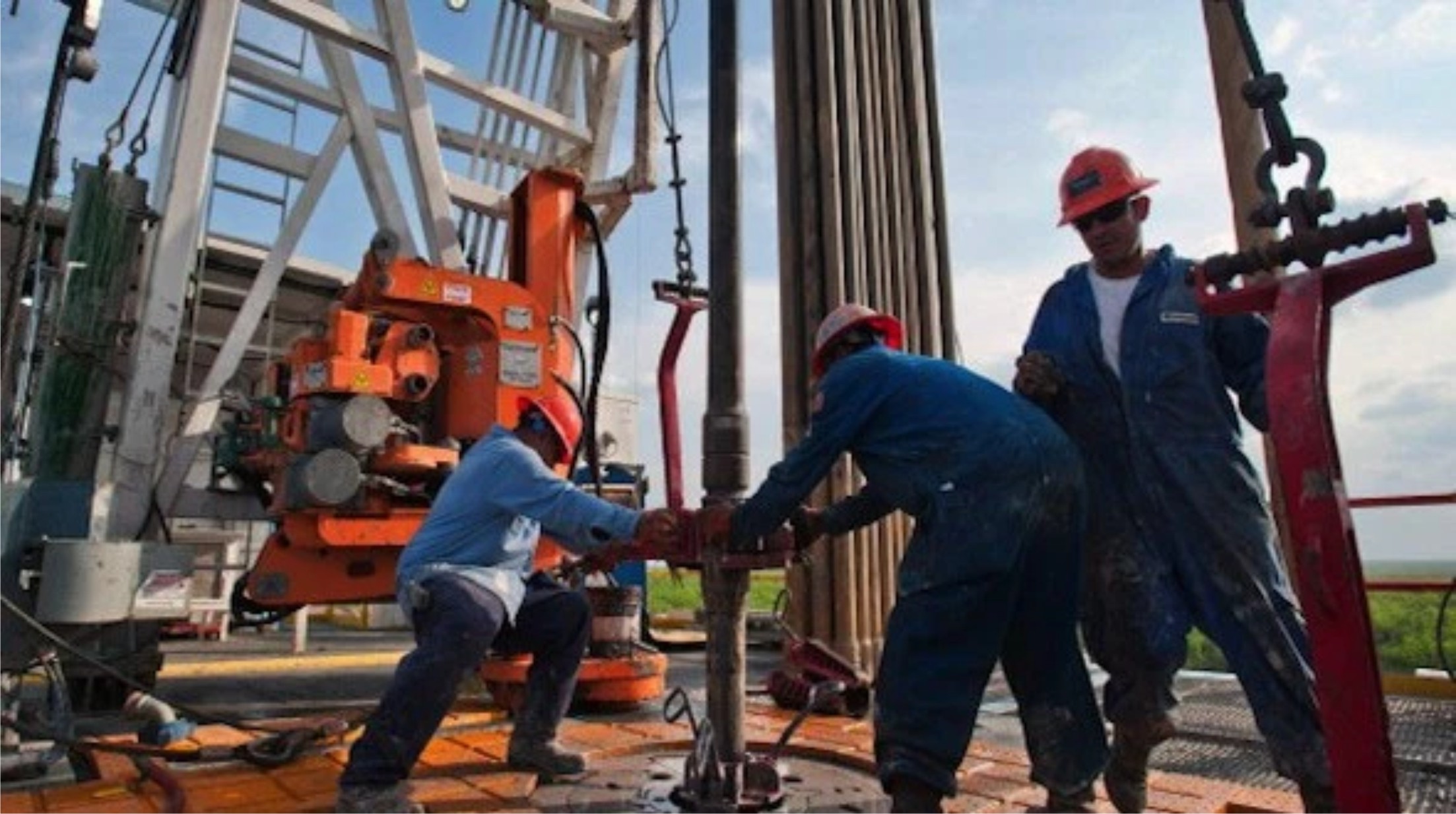
Nigeria bolstered its oil supplies by 50,000 barrels a day to 1.49 million per day in December 2023, a new Bloomberg survey has shown.

The country, which is Africa’s largest oil producer, was one of the major contributors as the Organisation of Petroleum Exporting Countries (OPEC) maintained consistent crude oil production in December 2023, averaging 28.05 million barrels per day.

OPEC adhered to production limitations, as observed in countries such as the United Arab Emirates (UAE) and Angola, which curtailed their output.

However, Nigeria offset these reductions, helping OPEC reach an average of 28.05 million barrels per day last month.

The report stated, “Supply declines from these two members were tempered by increases elsewhere. Nigeria bolstered supplies by 50,000 barrels a day to 1.49 million a day in December, in line with a revised quota that it successfully negotiated for this year.”

OPEC has provided Nigeria with a 2024 target of 1.5 million barrels per day in contrast to the 2024 Budget’s 1.78 million barrels per day.

The move follows a meeting in June where OPEC and its allies, OPEC+ agreed on a complex deal that revised production targets for several members.

OPEC had tasked three consultancies – IHS, Rystad Energy, and Wood Mackenzie – with verifying production figures for Nigeria, Angola, and Congo, and based on their recommendation, Nigeria has to produce at that level.

Nigeria’s oil output has been in decline for years but has picked up in recent months helped by more production offshore, which is less prone to security problems. According to the latest data, Nigeria averaged 1.45 million barrels per day in the third quarter of the year.

The country has unsuccessfully planned on boosting its output to 1.8 million barrels, which in addition to condensate (excluded from the OPEC numbers) will total 2 million barrels per day.

Angola announced its withdrawal from OPEC in December, citing its refusal to accept a reduced limit imposed by OPEC’s leaders. However, its output in December, consistent with the level it had rejected, reflected years of underinvestment.

OPEC+ countries like Saudi Arabia, Russia, the UAE, Iraq, Kuwait, Kazakhstan, and Algeria aim to gradually increase production, contingent on the performance of the oil market.


Adedapo Adesanya is a journalist, polymath, and connoisseur of everything art. When he is not writing, he has his nose buried in one of the many books or articles he has bookmarked or simply listening to good music with a bottle of beer or wine. He supports the greatest club in the world, Manchester United F.C.

Economy

Investors Gain N2.281trn in One Day as Appetite for Stocks Soars

Published

on

exposure to Nigerian stocks

By Dipo Olowookere

The local equity market maintained the bullish momentum on Wednesday, further appreciating by 1.69 per cent at the close of business.

The sustained appetite for stocks buoyed the growth reported by the Nigerian Exchange (NGX) Limited yesterday, although the buying pressure was on the energy and banking sectors, which gained 4.24 per cent and 3.15 per cent, respectively.

Business Post observed that selling pressure caused the insurance index to give up 1.33 per cent, the consumer goods industry to lose 0.20 per cent, and the industrial goods counter to shrink by 0.09 per cent.

But when trading activities came to an end, the All-Share Index (ASI) soared by 3,486.03 points to 209,317.41 points from 205,831.38 points, and the market capitalisation surged by N2.281 trillion to N134.773 trillion from N132.492 trillion.

The market breadth index was negative at midweek after the bourse ended with 35 price gainers and 37 price losers, showing weak investor sentiment.

Airtel Africa topped the advancers’ log after it chalked up 10.00 per cent to trade at N2,746.70. Aradel also appreciated by 10.00 per cent to N1,406.90, Ecobank grew by 9.98 per cent to N55.65, Trans-Nationwide Express improved by 9.89 per cent to N5.00, and Fortis Global Insurance jumped 9.82 per cent to N1.23.

Conversely, Austin Laz lost 9.77 per cent to close at N3.60, John Holt depreciated by 9.72 per cent to N13.00, CWG dropped 7.22 per cent to settle at N21.20, Conoil gave up 6.80 per cent to sell for N190.50, and Omatek decreased by 5.48 per cent to N2.07.

Zenith Bank led the activity with 73.3 million shares worth N8.8 billion, Tantalizers traded 56.5 million equities valued at N220.4 million, UBA sold 49.9 million stocks for N2.3 billion, Access Holdings exchanged 38.1 million shares worth N1.0 billion, and Secure Electronic Technology transacted 32.7 million equities valued at N31.7 million.

In general, investors bought and sold 706.4 million stocks worth N41.9 billion in 46,231 deals during the session versus the 569.3 million stocks valued at N32.3 billion traded in 45,777 deals on Tuesday, indicating an improvement in the trading volume, value, and number of deals by 24.08 per cent, 29.72 per cent, and 0.99 per cent, respectively.

Continue Reading

Economy

Crude Oil Slightly Gains on Supply Fears Despite Trump Remarks

Published

on

Cawthorne crude oil

By Adedapo Adesanya

Crude oil marginally appreciated on Wednesday as ongoing worries about supply disruptions offset ​comments by US President Donald Trump that the war in Iran could be over soon.

Brent futures rose 14 cents or 0.1 per cent to $94.93 a barrel, while the US West Texas Intermediate (WTI) futures gained one cent to settle at $91.29 per barrel.

It was reported that Iran could consider allowing ships to ‌sail freely through the Omani side of the Strait of Hormuz without risk of attack as part of proposals it has offered in negotiations with the United States, providing a deal is clinched to prevent renewed conflict.

Iran’s Revolutionary Guards declared the strait closed more than 40 days ago, ​effectively shutting in about 20 per cent of global oil and LNG shipments. Transit through the waterway remains at only a fraction of the 130-plus daily crossings before the ​war.

Also, the US has enacted a blockade of shipping leaving Iranian ports that its military said has completely halted trade going in and out of the country by sea.

US Treasury Secretary Mr Scott Bessent said the US will not be renewing the waivers that allowed the purchase of some Iranian and Russian oil without facing sanctions.

Finance ministers from almost ​a dozen countries, led by Britain, called on the US, Israel and Iran to implement their ceasefire in full and said the conflict would weigh on the global economy ​and markets even if it was resolved soon.

Meanwhile, President Trump threatened to fire Jerome Powell from his separate seat on the US central bank’s Board of Governors if the Federal Reserve chair does not vacate that post as well when his term as chairman ends on May 15.

Analysts worry that involving more politics in interest rate decisions could reduce the Federal Reserve’s ability to control inflation. President Trump wants the US central bank to cut rates, which would reduce consumer costs and could boost economic growth and demand for oil.

The International Monetary Fund (IMF) expects at least a dozen countries to seek new loan programmes to cope with surging ​energy prices and supply ⁠chain disruptions caused by the Middle East war.

Japan said it would establish a financial framework worth about $10 billion to help Asian countries procure energy resources and bolster their stockpiles.

Crude oil inventories in the US decreased by 900,000 barrels during the week ending April 10, according to new data from the US Energy Information Administration (EIA) released on Wednesday. This follows figures by the American Petroleum Institute (API) that were released a day earlier, which reported that crude oil inventories saw a build of 6.10 million barrels in the period.

Continue Reading

Economy

Wale Edun’s Claims of 1.8mbpd Crude Output Contrast Official Data

Published

on

wale edun

By Adedapo Adesanya

The Minister of Finance, Mr Wale Edun, says Nigeria’s crude oil production has risen to 1.8 million barrels ​a day, contrasting with available production data.

Speaking in an interview with Reuters on Wednesday on ⁠the sidelines of the International Monetary ​Fund and World Bank Group spring ​meetings in Washington D.C., the Minister said the current oil output would generate fiscal breathing space that will allow the government to support vulnerable ​households as it ploughs ahead with ​reforms.

Nigeria, which is a member of the Organisation of the Petroleum Exporting Countries (OPEC), is Africa’s largest oil producer.

Mr Edun said rising crude production was positive for Nigeria’s revenue, foreign exchange ​and the country’s fiscal situation.

“It gives us that extra fiscal space ‌within ⁠which to look at … helping the vulnerable households at this time,” he told the publication, noting that support would be targeted, adding “there is ​no thought ​of any ⁠return or retardation to broad untargeted subsidies.”

Mr Edun also said the Bola Tinubu-led administration was also ​committed to continuing its reform ​programme.

“Nigeria is in a position where the resilience that has been built in ⁠the ​economy is actually very ​obvious for all to see,” he said.

Despite the 1.8 million barrels per day figure claim, Business Post reports that production data for March 2026 from the Nigerian Upstream Petroleum Regulatory Commission (NUPRC) shows that Nigeria attained 1.546 million barrels per day, made up of 1.382 million barrels per day of crude, 42,809 barrels per day of blended condensate and 120,442 barrels per day of unblended condensate.

The average crude production represents 92 per cent of the OPEC quota, which is fixed at 1.5 million barrels per day.

NUPRC Nigeria crude output March 2026

Continue Reading

Trending