Connect with us

Economy

OPEC May Slash Nigeria’s Oil Production Quota

Published

on

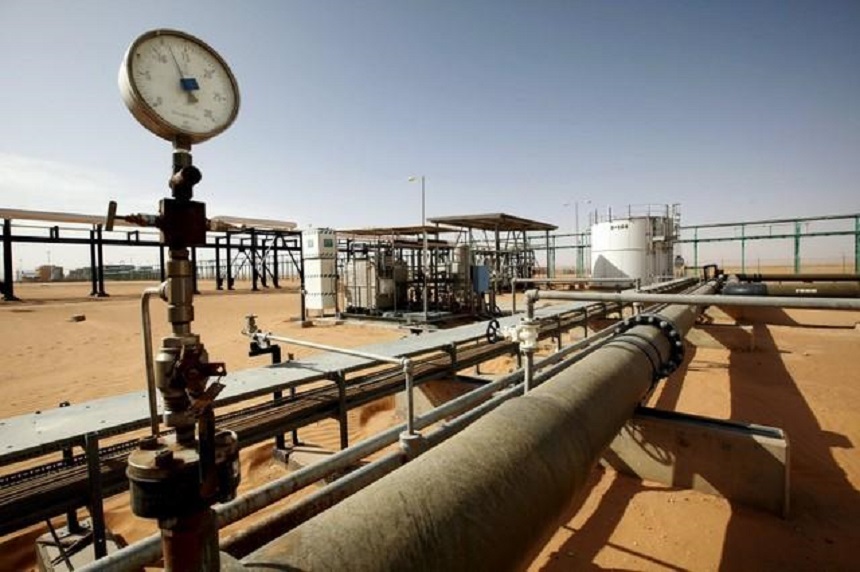
libya oil production

By Adedapo Adesanya

The Organisation for the Petroleum Exporting Countries (OPEC) may consider reducing the oil production quota of Nigeria and some other African producers failing to meet their current output cuts, the African Energy Chamber fears.

The price of crude oil hit $88 a barrel this week and countries like Nigeria, Libya and Angola should be capitalizing this to earn more, but they continue to significantly underperform.

Nigeria, for example, with over 36 billion barrels of oil in place, has the potential to produce upwards of 2 million barrels per day but during December 2021, the country could only produce 1.1 million barrels per day – resulting in an estimated 2.4-million-barrel loss for the month.

Similarly, despite production targets of 1.8 million barrels per day by 2022, during December 2021 Libya also underperformed, producing on average 1.06 million barrels per day.

However, this was largely attributed to blockades at key oilfields due to political conflict, and the country’s production is starting to increase again.

Underperformance in Africa could impact production quota says the Chamber’s Board Executive, Mr Abdur Rasheed Omidiya, adding that, “Continuous inability to meet OPEC production quota means OPEC may at some point review down the African countries quota and source increase in other member countries which will directly impact the economy as crude oil sales made up to one-third of some government budget revenue and 90 per cent of export earnings.”

These production trends, if continued, will have significant impacts on refineries, as well as domestic energy supply, in Africa.

Mr Omidiya described the current situation as a “double-edged sword, as the shortfalls may impact crude supply with the current increase in demand pushing the crude price higher.

“This is good and bad news for a country like Nigeria, which should ordinarily earn more foreign exchange from the sale of crude, but now has to deal with paying more subsidy since there’s a positive relationship between the international prices of the commodity and how much Nigerians get the product at the pump.”

He noted that the need for accelerated investment in Africa has never been more prominent, “The struggle to increase production is due to years of underinvestment in the upstream oil and gas sector with ageing infrastructure magnified by the recent pandemic and called for no new investment in fossil fuels.

“The government and oil and gas operators need to find a new way of stimulating investors’ confidence and appetite with 3C’s: Certainty and Consistency in policies and regulatory law and Competitive in business friendliness,” Mr Omidiya stated.


Adedapo Adesanya is a journalist, polymath, and connoisseur of everything art. When he is not writing, he has his nose buried in one of the many books or articles he has bookmarked or simply listening to good music with a bottle of beer or wine. He supports the greatest club in the world, Manchester United F.C.

1 Comment

Leave a Reply

Your email address will not be published. Required fields are marked *

Economy

FrieslandCampina Wamco, MRS Oil Buoy NASD Exchange by 0.91%

Published

on

NASD securities exchange

By Adedapo Adesanya

The NASD Over-the-Counter (OTC) Securities Exchange extended its gains by 0.91 per cent on Wednesday, June 3, spurred by three price gainers led by FrieslandCampina Wamco Nigeria Plc, which rose by N13.90 to sell N210.41 per share versus the previous day’s N196.51 per share. MRS Oil appreciated by N10 to N190.00 per unit from N180.00 per unit, and Food Concepts Plc added 5 Kobo to sell at N3.00 per share versus N2.95 per share.

As a result, the market capitalisation increased by N23.91 billion to N2.660 trillion from N2.636 trillion, and the NASD Unlisted Security Index (NSI) gained 39.97 points to finish at 4,446.27 points, in contrast to Tuesday’s 4,406.30 points.

The NASD exchange witnessed three price losers at midweek, led by Nipco Plc, which shrank by N21.30 to close at N325.97 per unit compared with the previous session’s N347.27 per unit, Nitrox Industrial Gases Plc went down by N1.20 to quote at N24.30 per share versus the preceding session’s N25.50 per share, and Central Securities Clearing System (CSCS) Plc weakened to by 69 Kobo to N75.41 per unit from N76.10 per unit.

The volume of trades yesterday significantly improved by 71.5 per cent to 527,221 units from Tuesday’s 307,363 units, as the value of transactions soared by 49.9 per cent to N64.2 million from the preceding session’s N49.9 million, and the number of deals surged by 9.5 per cent to 46 deals from 42 deals.

When trading activities ended for the day, Great Nigeria Insurance (GNI) Plc remained the most active stock by value on a year-to-date basis with 3.4 billion units valued at N8.4 billion, followed by Infrastructure Credit Guarantee (Infracredit) Plc with 2.3 billion units worth N6.5 billion, and CSCS Plc with 64.6 million units exchanged for N4.4 billion.

GNI Plc also ended the session as the most traded stock by volume on a year-to-date basis with 3.4 billion units sold for N8.4 billion, followed by Infracredit Plc with 2.3 billion units traded for N6.5 billion, and Resourcery Plc with 1.1 billion units transacted for N415.7 million.

Continue Reading

Economy

Naira Continues Positive Run, Official Market Rate Now N1,357/$1

Published

on

Domiciliary Accounts to Naira

By Adedapo Adesanya

The positive run of the Naira against the US Dollar in the Nigerian Autonomous Foreign Exchange Market (NAFEX) continued on Wednesday, June 3, with the former chalking up N3.79 or 0.28 per cent against the latter, closing at N1,357.26, in contrast to the preceding session’s N1,361.05/$1.

Similarly, the Nigerian currency gained N10.52 against the Pound Sterling in the official market during the session to close at N1,822.67/£1 compared with the previous rate of N1,833.19/£1, and appreciated against the Euro by N9.56 to N1,574.83/€1 from N1,584.39/€1.

Further, at the black market, the Naira improved its value against the greenback at midweek by N5 to trade at N1,375/$1 compared with the N1,380/$1 it was traded a day earlier, and at the GTBank FX counter, it gained N6 to sell for N1,372/$1 versus N1,378/$1.

The boost came as the country’s external reserves continued to gain momentum. A look at the updated data from the Central Bank of Nigeria (CBN) showed that foreign reserves continue to increase with two consecutive inflows in June 2026, settling at $49.876 billion as of Tuesday.

Foreign portfolio investors, exporters and non-bank corporates continue to keep the supply side strong, with the less aggressive FX interventions by the CBN at the official window in recent times helping to ease worries about capital flight.

The apex bank reported that interbank FX turnover declined to $133.731 million across 136 deals, from $169.822 million the previous day.

Meanwhile, the cryptocurrency market remained bearish due to sell-offs triggered by geopolitical uncertainties and the US stock market rally.

Cardano (ADA) dipped by 5.5 per cent to $0.2046, Binance Coin (BNB) slumped by 4.8 per cent to $627.56, Solana (SOL) shrank by 3.9 per cent to $72.99, Ethereum (ETH) depreciated by 2.9 per cent to $1,844.53, and Bitcoin (BTC) slipped by 2.7 per cent to $65,675.87.

Further, Dogecoin (DOGE) depleted by 1.4 per cent to $0.0928, Ripple (XRP) declined by 0.7 per cent to $1.21, and TRON (TRX) lost 0.4 per cent to sell at $0.3336, while the US Dollar Tether (USDT) and the US Dollar Coin (USDC) gained 0.01 each to settle at $0.9986 and $0.9997, respectively.

Continue Reading

Economy

Customs Street Bleeds 1.44% as Lafarge Africa Leads Losers’ Chart

Published

on

customs street

By Dipo Olowookere

Nigeria’s stock market further depleted by 1.44 per cent on Wednesday following panic sell-offs by investors, who are cutting down their exposure to local equities.

Business Post observed that profit-taking dominated Customs Street at midweek, with all the key sectors of the Nigerian Exchange (NGX) Limited closing in red.

The insurance space shed 2.76 per cent, the industrial goods index lost 1.55 per cent, the banking counter declined by 1.53 per cent, the consumer goods segment shrank by 0.28 per cent, and the energy sector weakened by 0.05 per cent.

As a result, the All-Share Index (ASI) contracted by 3,554.05 points to 243,132.61 points from 246,686.66 points, and the market capitalisation moderated by N2.279 trillion to N155.940 trillion from N158.219 trillion.

Lafarge Africa led the losers’ chart yesterday after it gave up 9.97 per cent to trade at N307.90, Zichis lost 9.82 per cent to close at N29.20, Learn Africa depreciated by 9.80 per cent to N11.50, John Holt crashed by 9.80 per cent to N13.80, and Consolidated Hallmark dipped by 8.84 per cent to N6.19.

On the flip side, Abbey Mortgage Bank topped the gainers’ log after it grew by 9.93 per cent to N7.75, International Energy Insurance appreciated by 9.89 per cent to N6.00, Tripple G gained 9.80 per cent to sell for N4.37, Universal Insurance expanded by 8.91 per cent to N1.10, and Royal Exchange improved by 7.14 per cent to N1.50.

A total of 17 stocks gained weight yesterday, while 43 stocks lost weight, indicating a negative market breadth index and weak investor sentiment. This has been the mood of the market since the beginning of this week.

Market participants transacted 923.0 million shares worth N42.3 billion in 69,332 deals on Wednesday, in contrast to the 718.8 million shares valued at N29.3 billion traded in 71,683 deals on Tuesday, representing a drop in the number of deals by 3.28 per cent, and a rise in the trading volume and value by 28.41 per cent and 44.37 per cent, respectively.

Sterling Holdings led the activity chart with 264.6 million units valued at N2.1 billion, Access Holdings traded 76.7 million units worth N1.8 billion, Linkage Assurance exchanged 55.1 million units for N99.2 million, VFD Group sold 35.5 million units worth N378.8 million, and Ellah Lakes transacted 33.1 million units valued at N334.3 million.

Continue Reading

Trending