
Economy
Understanding Stock Market Volatility: How to Manage Risk

Introduction to Stock Market Volatility
No one does stock investing without understanding what volatility means. Stock Market volatility shows just how unpredictable the stock market really is. The higher and more frequently the stock prices move, the more volatile it becomes. Investors must take their time to properly watch these movements to mitigate risks and make informed and wise investment decisions.
Let’s look into what stock market volatility really means, its causes,types and how to understand it and reduce investment risks
Definition of stock market volatility
Stock market volatility refers to the frequent and irregular movement of prices in a stock or market index over a period of time. It is often measured by the standard deviation of returns. In other words, it shows how far prices move away from their average over time.
In 2023 and 2024, we have seen periods where markets swung wildly due to economic surprises and global events, making volatility an important topic for every investor to know about. Examples are Netflix, Amazon, Tesla amongst others. In 2025, the S&P 500 index had a 10% fluctuation showing just how uncertain the market can be while helping investors make the best decisions.
Importance of understanding volatility for investors
As an investor, you need to understand everything that involves the stock market, including its movements. Why should investors care about volatility?
First, volatility helps to understand investment risks. A stock’s movement can either offer high returns and lower risks or low return and even lower risks. An investor that has a higher risk tolerance can decide to go for the one with higher returns.
Next, volatility helps to make wise investment decisions on which investment plan fits into your goals and investment portfolio. For example, a mix of both high and low volatility stocks would create a balance on the investment portfolio.
Finally, volatility affects market and investment sentiments. When uncertainty rises, investors often react emotionally, causing sharp swings. Understanding this helps investors avoid common mistakes like panic selling or chasing quick gains during turbulent times.
Common Misconceptions About Market Fluctuations
There are several myths and misconceptions when it comes to market fluctuations.
One common misconception is that the market should be stable, and ups and downs are always signs of failure. In reality, fluctuations are normal and necessary for markets to function. In fact, times of high volatility can present buying opportunities when prices drop.
Another myth is that it is always best to hold on to stocks no matter what. However, the truth is that while long-term investment has a lot of advantages, it is essential to watch out for high volatility and risks to avoid big losses.
Also, some think low volatility means no risk, but even stable stocks can lose value due to sudden movements. Conversely, increased volatility does not imply that a stock is unfavorable. It may simply require a stronger stomach to withstand short-term swings.
Investors who understand these facts are better equipped to navigate markets that are more unpredictable due to global economic changes and geopolitical events.
Causes of Stock Market Volatility
Economic indicators and data releases
Economic reports like inflation rates, economic growth, employability rate, amongst others can affect investor decisions.
Imagine if the inflation rate of a country moves at the speed of light! This could lead to investors losing their trust in the economy, leading to rapid shares sales, then to prices going down. On another hand, positive economic news, like an increase in companies’ growth or employment rate, builds investor confidence and causes an increase in buying stock prices, making prices go higher.
These reports act like signals that guide investor decisions and can trigger big market swings.
Political Events and Policy Changes
Majorly, politics can affect how the market moves. New government policies, election results or political instability can create uncertainty for businesses and investors.
For example, new tax laws or trade rules can affect the profits and growth of companies. This can make investors nervous and lead to them rushing to sell stocks. Other issues like war, unrest and political tensions can affect prices. An instance is the Arab Spring uprisings in Egypt in 2011, there was a sharp decline in stock prices on the Egyptian Exchange like the EGX 30.
Politics often play a big role in market movements. Changes in government policy, election results, or sudden political tensions can pull down prices quickly.
Corporate earnings reports
Businesses release earnings reports that show their profits and losses every three months. When a well-known company (maybe a blue-chip stock, eg: Apple and Microsoft) releases a report that shows more loss than profit over and over, they begin to lose stock prices. This could also affect other corporations in that sector.
But, when a company earns more than expected, it can improve investor trust and even boost the entire industry. However, if many companies miss earnings targets around the same time, it can trigger a broader market selloff.
Global Market Influences and Crises
Today, markets are interconnected, so a problem in one country or more could lead to a worldwide market instability. Using COVID-19 as an example, the pandemic led to huge price swings all over the world as a result of restricted movements.
Similarly, changes in oil prices or financial troubles in major economies like the United States or China can cut across markets everywhere. Investors often react fast to these global events, which increases volatility.
Market Sentiment and Investor Behavior
Finally, it is important to note that investors are human and will sometimes make decisions based on how they feel. When investors feel good, they are more likely to buy more stocks, leading to an increase in prices. But, if investors face something that makes them nervous, they try to sell quickly leading to prices falling.
There’s also the herd mentality. When people follow the crowd, prices will swing farther than the true worth of the company.
Measuring Stock Market Volatility
Volatility Index (VIX)
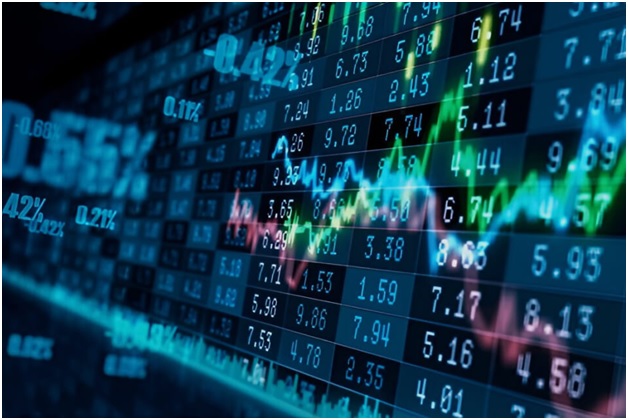
The Volatility Index, also referred to as the VIX, is a measure of expected future volatility of the S&P 500 Index (SPX) – the core index for U.S. equities. It shows how much the stock market is expected to move in the near future, especially over the next 30 days. A high VIX value means that big price swings are expected. On the other hand, a low VIX could mean a stable market with reduced price changes. Today, investors use the VIX to get an understanding of market risk as well as investor sentiment.
Standard Deviation and Variance
Standard deviation and variance are statistical tools that are used to measure how much stock prices move around their average price.
Standard deviation tells us how widely distributed prices are from the average prices. A higher value means higher prices and volatility.
Variance is simply the square of standard deviation and is less commonly used directly but important in calculations. For example, if a stock has a standard deviation of 5%, it means its price typically moves 5% above or below the average price. These numbers help investors understand how risky a stock is compared to others.
Historical volatility vs. Implied Volatility
Historical volatility looks at the story that a stock or index has told over time. It examines how a stock price has changed over a particular span of time, like the past 30 or 90 days. This helps to notice patterns and to understand previous dangers.
On the other hand, implied volatility has more to do with predictions. It forecasts how much price movement the market is expecting.
Both metrics are helpful in managing the difficulties that volatility presents and comprehending how it affects investments.
Types of Market Volatility
Short-term Volatility
Short-term volatility is the quick and sudden change in prices over a few days or weeks. These changes can be affected by news, company reports, political changes, etc. Long-term investors would typically ignore these short fluctuations.
Long-term Volatility
As opposed to short-term volatility, long-term volatility happens over months or even years. They are usually a result of big market changes due to economic cycles, trends, or global events. Let’s look at the FTSE 100, for instance. Its decline started with the financial crisis of 2008, but after going through a period of recovery, economic instability affected it too. Then came the COVID-19 in 2020, leading to big market drops and a slower recovery.
Systematic vs. Unsystematic Volatility
There are two categories of volatility:
Systematic Volatility: This affects the entire market or many stocks at once. Its causes include interest rate changes, inflation, or political instability. It’s like a strong wind that shakes everything in the market.
Unsystematic Volatility: This only affects a specific company or industry. For example, a tech company’s stock may become volatile if it releases a new product or faces a lawsuit. This type can be reduced or avoided by diversifying your investments across different sectors.
Both types show the risk in the stock market, but understanding the difference helps investors manage risk better by spreading their money wisely.
Risks Associated with High Volatility
Loss of Investment Value
One of the biggest risks with high volatility is loss of money. Stock prices can drastically drop, leading to a decreased value in your investments. An example is the significant and sudden fall of Jumia in 2019. This drop was caused by issues with its governance, finance and sustainability. This kind of sudden loss can be scary, especially if you need to sell shares when prices are low.
Increased Trading Costs
Volatility can cause markets to rise, leading to investors buying and selling stocks more frequently. The higher the trading and transaction, the greater the fees, charges and taxes. If an investor trades a lot to capitalize on market movements, these charges can eat into profit. Volatile markets can lead to increased trading expenses more than calmer times.
Emotional Decision-Making
Investors frequently experience anxiety or overconfidence when prices fluctuate wildly. This could lead to emotional decisions like panic selling or impulsive purchases. Long-term success is typically harmed by this behavior. Many investors tend to lose out on profits by selling low and buying high when they respond to market fluctuations too soon.
Impact on Long-Term Portfolio Performance
Though volatility can seem risky, it doesn’t always harm long-term investing. However, if you panic or trade too often during volatile periods, your portfolio returns may suffer. Staying disciplined, diversifying investments, and focusing on long-term goals help reduce volatility’s negative effects. For instance, data shows that patient investors who held stocks through the 2008 financial crisis saw strong rebounds within five years.
Strategies to Manage Risk During Market Volatility
Diversification Across Sectors and Assets
Diversification has always been one of the best risk mitigation strategies. You can do this by spreading your investments across different sectors and/or various asset types. This way, if one sector falls, others might do well, balancing your overall portfolio. For example, during the 2020 COVID crash, some sectors like tech actually grew while others dropped sharply.
Dollar-Cost Averaging
Dollar-cost averaging means choosing to invest a fixed amount regularly, irrespective of what the market is saying. This evens out your expenses over time by enabling you to purchase more shares at low prices and fewer at high ones.It’s an excellent method to relieve the stress of attempting to time the market precisely.
Hedging with Derivatives
Hedging means protecting your investment against losses by using financial tools like options or futures. Although more advanced, these tools can reduce risks, especially for large investors. There have when inflation caused market swings, hedging helped some investors limit their losses.
Maintaining a Cash Reserve
Holding cash during volatile times is a smart idea because you have cash at hand to cover your expenses when market prices drop. Having a cash reserve means you don’t have to sell assets at a loss.
Setting Stop-Loss Orders
A stop-loss order is an instruction to sell a stock automatically if its price falls to a certain level. This prevents bigger losses by exiting a position before the price drops further. For instance, if you buy a stock at 100 naira, setting a stop-loss at 90 naira helps limit your loss to 10%.
Long-Term Investing and Volatility
Staying Focused on Investment Goals
Stock market volatility means prices can move up and down quickly. However, as a long-term investor, you need to put all sentiments aside and focus on your goals. There is a long line of history concerning the movement of stock market. So, keep your eyes on your plans and don’t follow the market noise.
Avoiding Panic Selling
When investors lead with emotions, they can end up panic selling when the market falls. This is usually a bad idea as it could lead to losses. It is, therefore, important to remain calm and avoid emotional or hasty decisions. By resisting the urge to sell when things look bad, you give your investment the best chance to grow.
Taking Advantage of Buying Opportunities
Volatility can actually create chances to buy good shares at lower prices. When other investors panic and sell, prices drop. If you have a long-term mindset, you can use these moments to buy quality stocks cheaply. This helps you build wealth over time as the market recovers and grows. So, rather than fearing volatility, see it as an opportunity to invest more wisely.
Frequently Asked Questions(FAQS)
- What is stock market volatility? Stock market volatility means how much and how quickly stock prices go up or down over a certain time.
- Why do stock markets become volatile?
Volatility can be caused by many things like political changes, company news, economic reports, global events, or even natural disasters. - Is high volatility good or bad for investors?
High volatility means more risk because prices can drop suddenly. But it also creates chances to buy stocks cheap or sell at a profit. It depends on your strategy and risk tolerance. - How can I measure volatility?
Volatility is often measured using standard deviation or indexes like the VIX. These tools show how much stock prices vary from their average. - Does market volatility affect all stocks the same way?
No, some stocks are more volatile than others. Smaller companies or those in unstable industries tend to have more price swings compared to large, stable companies.
Conclusion
Stock market volatility is a natural part of investing, showing how much and how fast prices move over time. Understanding stock market volatility helps you manage risks better and make smarter investment decisions. Remember, while volatility can be scary, it also offers opportunities if you stay patient and focused on your long-term goals. By learning how to handle volatility, you strengthen your path to financial success and build confidence in the stock market.








By Adedapo Adesanya
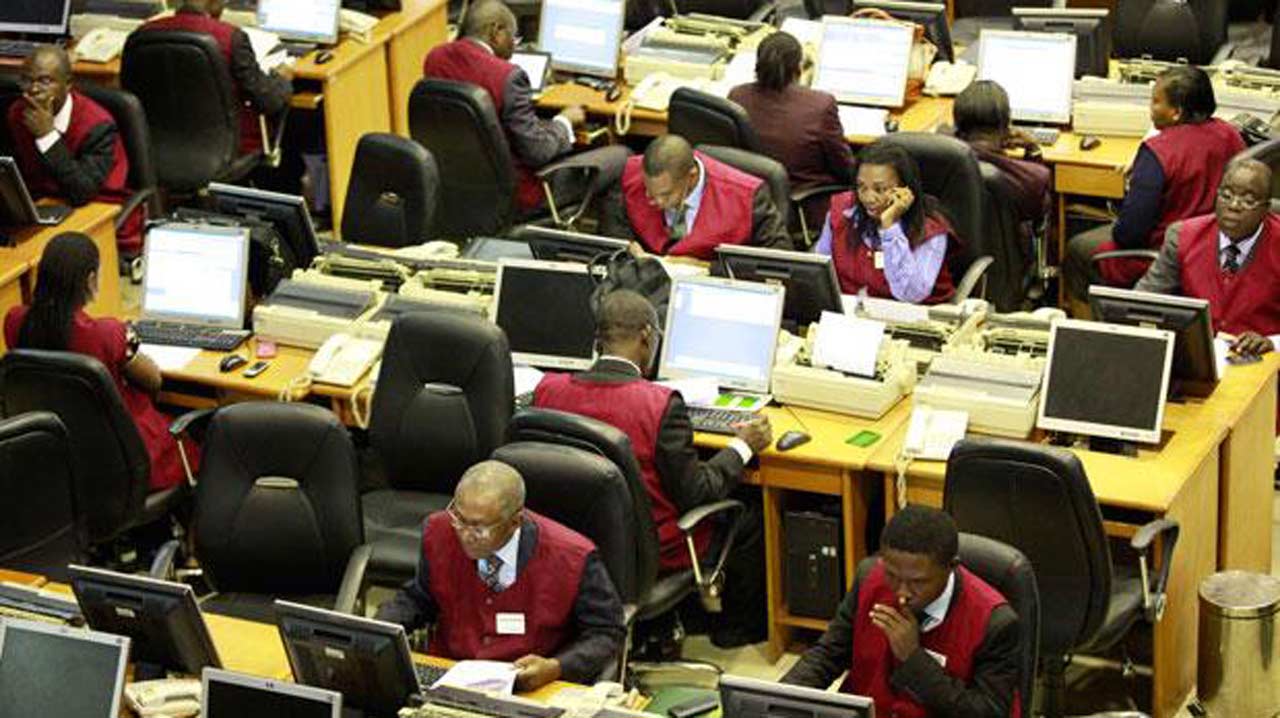
The NASD Over-the-Counter (OTC) Securities Exchange extended its stay in the south territory with a decline of 0.56 per cent on Wednesday, April 2.
This brought down the market capitalisation by N13 billion to N2.417 trillion from N2.430 trillion, and downed the NASD Unlisted Security Index (NSI) by 22.57 points to 4,062.87 points from the previous session’s 4,062.87 points.
It was observed that the NASD exchange ended with three price gainers and three price losers during the trading day.
MRS Oil Plc depreciated by N19.00 to close at N171.00 per unit compared with the previous price of N190.00 per unit, NASD Plc lost N4.14 to trade at N37.36 per share compared with Wednesday’s N41.50 per share, and Central Securities Clearing System (CSCS) Plc gave up N2.00 to sell at N78.00 per unit versus N80.00 per unit.
On the flip side, FrieslandCampina Wamco Nigeria Plc appreciated by 19 Kobo to N93.00 per share from N92.81 per share, Food Concepts Plc expanded by 15 Kobo to N2.87 per unit from N2.72 per unit, and Great Nigeria Insurance (GNI) Plc improved by 2 Kobo to 52 Kobo per share from 50 Kobo per share.
Yesterday, the volume of securities dipped by 91.8 per cent to 260.2 million units from 3.2 billion units, the value of securities went down by 98.1 per cent to N154.2 million from N8.3 billion, while the number of deals soared by 53.3 per cent to 46 deals from 30 deals.
GNI Plc was the most active stock by value on a year-to-date basis with 3.4 billion units worth N8.4 billion, followed by CSCS Plc with 56.9 million units valued at N3.9 billion, and Okitipupa Plc with 27.5 million units traded for N1.8 billion.
The most traded stock by volume on a year-to-date basis was also GNI Plc with 3.4 billion units sold for N8.2 billion, trailed by Resourcery Plc with 1.1 billion units exchanged for N415.7 million, and Infrastructure Guarantee Credit Plc with 400 million units transacted for N1.2 billion.

By Adedapo Adesanya
The Naira dropped N2.09 or 0.15 per cent against the United States Dollar in the Nigerian Autonomous Foreign Exchange Market (NAFEX) on Thursday, April 2, to trade at N1,380.79/$1 compared with Wednesday’s rate of N1,378.70/$1.
However, it appreciated against the Pound Sterling in the official market by N2.77 to quote at N1,824.86/£1 versus the N1,836.57/£1 it was traded at midweek, and improved its value against the Euro by N10.54 to N1,591.92/€1 from N1,602.46/€1.
Yesterday was the last trading session of the week for the local currency in the spot market, as the market will be closed on Friday and Monday for the Easter Holiday.
At the black market, the Nigerian Naira maintained stability against the greenback yesterday at N1,405/$1, but gained N8 at the GTBank FX counter to settle at N1,388/$1, in contrast to the previous session’s N1,396/$1.
Pressure eased on the domestic currency as strong policy indicators have helped calm the majority of worries within the financial systems. Particularly in the remittance segment, the apex bank has directed all International Money Transfer Operators (IMTOs) to route remittance transactions through designated Naira settlement accounts in banks, a move aimed at boosting transparency and channelling more foreign exchange into the formal market.
This helps take off pressure from the foreign reserves, which have fallen below the $50 billion mark as they are gradually decreasing rather than falling sharply.
Meanwhile, the cryptocurrency market was bullish on Thursday, as macro sentiment shifted against recent optimism after reports that Iran is drafting a protocol with Oman to manage traffic through the Strait of Hormuz, easing concerns about disruptions to a key global oil route.
The remarks came after U.S. President Trump on Wednesday night vowed to hit Iran “extremely hard” in the coming weeks and that the Strait of Hormuz would “open naturally” once the war ends.
Cardano (ADA) chalked up 1.9 per cent to trade at $0.2435, Dogecoin (DOGE) grew by 1.2 per cent to $0.0912, Ethereum (ETH) appreciated by 0.8 per cent to $2,066.37, Bitcoin (BTC) added 0.5 per cent to sell at $67,080.53, Solana (SOL) increased by 0.5 per cent to $79.91, and Ripple (XRP) jumped 0.2 per cent to $1.31.
Conversely, Binance Coin (BNB) dipped 0.7 per cent to $586.90, and TRON (TRX) depreciated by 0.3 per cent to $0.3147, while the US Dollar Tether (USDT) and the US Dollar Coin (USDC) closed flat at $1.00 each.

By Dipo Olowookere
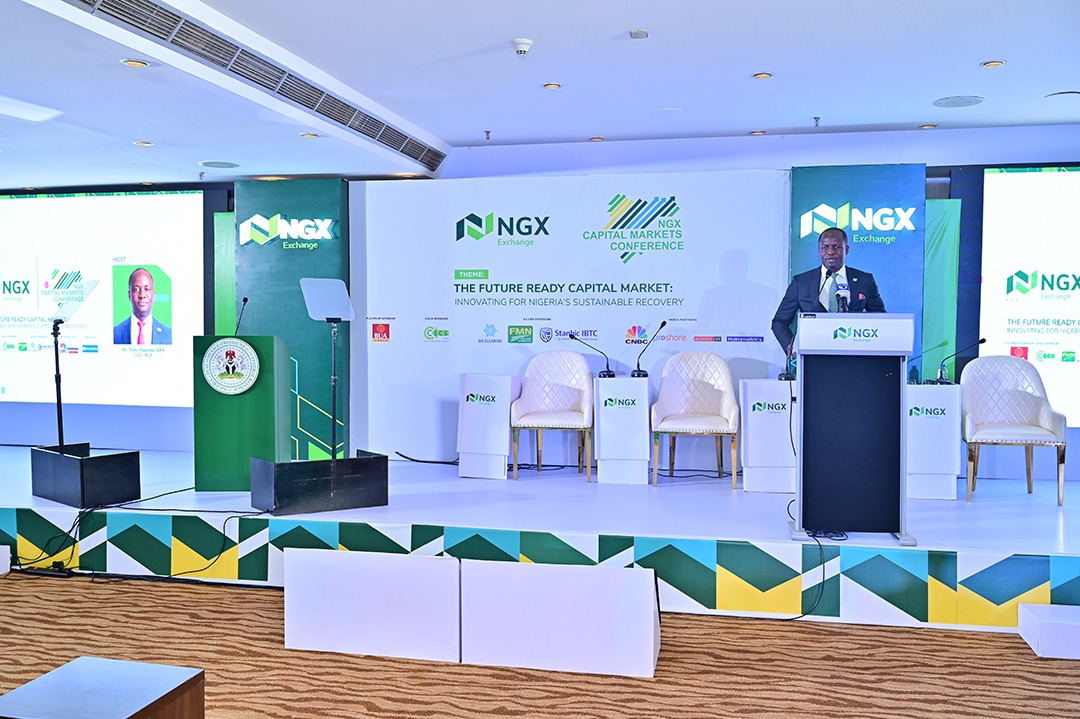
The local stock market was relatively flat on Friday, as the bears and the bulls shared the spoils of war, though investor sentiment turned bullish compared with the preceding session’s bearish posture.
Data from the Nigerian Exchange (NGX) Limited showed that the All-Share Index (ASI) was marginally down by 4.66 points as it ended at 201,698.89 points versus Wednesday’s 201,703.55 points, and the market capitalisation slightly contracted by N3 billion to N129.806 trillion from N129.809 trillion.
Customs Street was shut on Friday because of the public holidays declared by the federal government today and next Monday.
Business Post reports that John Holt declined by 9.91 per cent to N15.45, Abbey Mortgage Bank shed 9.60 per cent to trade at N8.95, International Energy Insurance slipped by 6.48 per cent to N3.32, Chams shrank by 5.30 per cent to N3.75, and Tantalizers depreciated by 5.18 per cent to N4.03.
On the flip side, Unilever Nigeria improved by 10.00 per cent to N103.40, Fortis Global Insurance gained 9.82 per cent to trade at N1.23, Multiverse appreciated 9.81 per cent to N20.15, Legend Internet advanced by 9.38 per cent to N6.30, and Zichis grew by 9.02 per cent to N14.14.
The market breadth index was positive during the trading session, as there were 35 appreciating stocks and 24 depreciating stocks.
Yesterday, investors traded 560.0 million equities valued at N19.3 billion in 49,676 deals, in contrast to the 815.5 million equities worth N33.3 billion transacted in 52,641 deals in the preceding day, representing a drop in the trading volume, value, and number of deals by 31.33 per cent, 42.04 per cent, and 5.63 per cent, respectively.
Secure Electronic Technology dominated the activity log with 59.7 million shares valued at N61.1 million, Wema Bank exchanged 52.0 million equities worth N1.4 billion, VFD Group transacted 36.0 million stocks for N410.5 million, Access Holdings sold 35.3 million shares valued at N914.8 million, and Chams traded 31.0 million equities worth N115.0 million.
-
 Feature/OPED6 years ago
Davos was Different this year
-
Travel/Tourism10 years ago
Lagos Seals Western Lodge Hotel In Ikorodu
-

 Showbiz3 years ago
Estranged Lover Releases Videos of Empress Njamah Bathing
-
 Banking8 years ago
Sort Codes of GTBank Branches in Nigeria
-

 Economy3 years ago
Subsidy Removal: CNG at N130 Per Litre Cheaper Than Petrol—IPMAN
-

 Banking3 years ago
Sort Codes of UBA Branches in Nigeria
-

 Banking3 years ago
First Bank Announces Planned Downtime
-

 Sports3 years ago
Highest Paid Nigerian Footballer – How Much Do Nigerian Footballers Earn