Feature/OPED
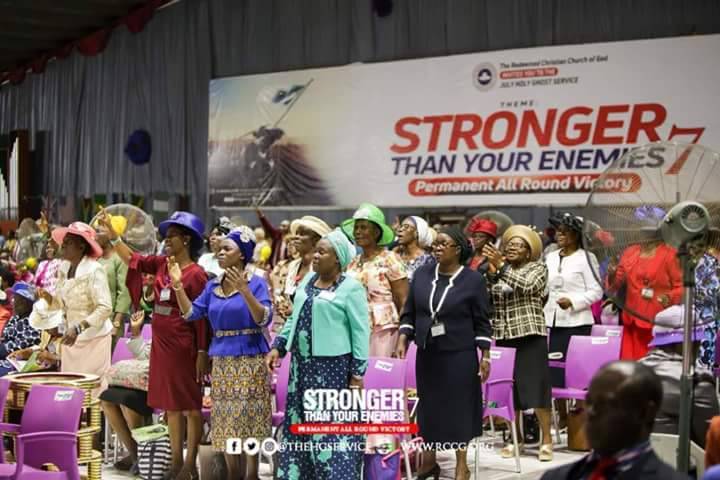
Christianity: The Social Media War Against RCCG and Adeboye
By Nneka Okumazie
Africa is a continent where the little that people have is never enough. What people have is never maximized for purposes. The problem is always that more is not available. So, when things get worse, it is never because of a lack of prudence, since several opportunities in the past, when things were easier, had been lost.
Africa is a continent where those who observe that they are better than others in some respects, forget to notice how many more are far better than they are. They sit on how they are better and lose out on what could be been if they had looked beyond.
Africa is a continent where what should be development efforts from different corners seems to be off target. The primary factors of growth, in recent decades in any society, from European to Asian are not the metrics of growth, but certain qualities that need to be mature, such that while the process is ongoing, they are likely to make it and sustain it.
Individual success is easier than collective success. There are several possibilities towards achievements to have the nice things of this world. There are several directions to legitimate wealth that do not require sophistication. The possibilities of individual success for many in Africa without a collection, for most, show how deficient the common vision is.
Africa is not winning. The fault is everyone’s. There are several aspects of the economy where people already have success, but rather than use that to branch into new anchors for what would produce even more success, everything is still.
In the past, Africa had a government as a hindrance problem, but not anymore. There are too many possibilities for success that are free enough without the government troubles. Using those angles could have resulted in better outcomes for the people than what is currently obtainable.
Africa still has a talent problem. It is either available, but in the wrong places or otherwise. There are too many activities in Africa, especially the private sector where the products and services are too pedestrian, an indication of a lack of talent epidemic.
How does Africa go forward, given how successive governments seem to be worse? The hate that many have for Christianity is that prayer is not like a chat, where you send and receive immediately, as demanded. Yes, there is asking and receiving, there is also the faith factor.
RCCG and their pastor, Adeboye often find themselves in the crosshairs of social media. Those who cannot figure out that government is not the problem cannot figure out that the church is not the problem. Development is often a result of multiple individuals giving their best from every angle, with their abilities. It is not the government that is doing nothing, so we cannot. It is likely to be a problem of lack of capacity, veiled by blaming others.
For many Africans, life is not more than an experience of looking better than others and showing it, or exposing that they are now equal to others.
There are several advancements that the people of Africa benefit from that were works of decades.
Many of those works were started with little resources than what became of the sources after the works were ready.
The works were often from people in their efforts, far away from the government. There are many places in several countries in Africa where there is peace and stability, where options for resources can be sought and found, or tried, for those who want to do so.
Nothing is good in Africa, so run away, is the accepted way of thinking, but how much is different for some when they leave other than the marginal?
What would it look like when many leave, it would look like what it is, now. Just like how it would look when African music goes global. The goal for development, ignoring the government’s ineptitude, is still adrift.
The focus for many is what the RCCG pastor says or what he wishes for the people of the church. The pastor can have spiritual experiences, no matter what it is. The pastor can say prayers or make prophecies as the church chooses. It may cross the mind, but what is the significance of the criticism? How does what the pastor says hold back a country? What is the tangent of development problems in Africa to the existence of RCCG?
The use of criticism against the church, as a show of enlightenment, to others is likely a talent problem.
Before government can be so worse in a country, as obtainable across Africa, the people must have fully failed, or be lacking or be diverted to being critical, perennially.
[2 Corinthians 12:2, I knew a man in CHRIST above fourteen years ago, (whether in the body, I cannot tell; or whether out of the body, I cannot tell: GOD knoweth;) such a one caught up to the third Heaven.]
Feature/OPED
Before Oil Hits $150: A Warning Nigeria Cannot Ignore
By Isah Kamisu Madachi
As of April 30, 2026, the crude price is said to have reached $125 in the global market. The all-time high price per barrel was recorded in 2008, when it surged to $147. It is obvious that the price is heading in that direction or even towards what experts have predicted — crude reaching a new all-time high of $150 in the near future if crude passages remain closed in the Middle East, which would ultimately come with several disproportionate challenges for businesses and households.
In Nigeria, what began as a mild adjustment in the price of gasoline and other refined crude products has not stopped anywhere until it reached N1,400 per litre of petrol at filling stations. When the price was surging, experts in energy, economics, marketing, business and other relevant fields tried to come up with explanations for how Nigeria, despite housing the largest petrochemicals refinery in Africa and being one of the largest oil-exporting countries on the continent, would continue to absorb this shock.
Despite our advantages, Nigeria recorded the world’s second-highest surge in petrol prices following the escalating geopolitical tension in the Middle East. In Africa, Nigeria has the highest spike, with many sources citing it at 39.5% and above. Even non-oil-producing countries in Africa, and countries that do not refine a drop of oil, did not experience this surge. Also, African countries like South Africa at 1%, Morocco at 2.1%, and Tanzania at 2.7% experienced far smaller increases that are nowhere near Nigeria’s.
To put it in context, South Korea, Japan, and China are among the foremost dependents on the Strait of Hormuz, whose closure escalated the crude price, but none of these countries has recorded even a 20% increase in their petrol prices. Nigeria does not import its crude through the Strait of Hormuz. Yet, as an oil-exporting nation, we have suffered some of the sharpest petrol price increases in Africa.
What went wrong in Nigeria to warrant this surge is not the primary focus of this piece. What lies ahead is. As a result of the increase in petrol prices, Nigerians have been disproportionately affected. Life has become unbearably difficult, with sharp increases in transportation costs, rising food prices, and higher costs of goods and services. Even charging points that used to collect N150 for charging a phone or battery now charge N300 or more.
As it stands, the gap between the current crude price and the predicted new all-time high is about $25. This means that if the passages continue to remain closed, we are not far from another historic price peak. It is even said that reopening the passages may not immediately stabilise prices, as crude tankers would still take time to reach their destinations.
What this means for Nigeria is another sharp increase in refined petroleum product prices, which could trigger another wave of stagflation. Already struggling, Nigerians do not deserve this. They are only just adapting to the post-subsidy era, yet are being hit again by another round of global geopolitical tensions. Many are already in deep energy poverty, with businesses struggling due to unstable electricity supply.
Therefore, as crude oil prices hover above $125 per barrel and threaten to reach the predicted $150 if disruptions in the Strait of Hormuz persist, Nigeria must act decisively to shield its citizens. The Dangote Refinery exists. Nigeria refines oil. What the federal government owes Nigerians at this point is a deliberate policy decision to make that the refinery serve domestic needs first, with pricing that does not mirror whatever is happening in the global market. That is not complicated; other oil-producing countries do exactly this.
The NMDPRA has the authority to act on this. The question is whether there is a political will to act before another price wave hits and Nigerians are once again left to absorb what their counterparts elsewhere never have to.
Sub-national governments also have something to do. Commercial motorcyclists and small business owners are the people who feel every petrol price increase the hardest and the fastest. Pushing CNG and LPG adoption among this group beyond the FCT and Lagos, with genuine support, would cushion a significant part of the next shock. Expanding solar access in underserved communities would do the same. A shop owner running on solar is not at the mercy of the next diesel price spike.
These solutions are quite feasible. Nigeria has attempted versions of them before. Where we often seem to get it wrong is in execution, and Nigeria has to treat this with the same urgency and seriousness as given to elections, for the well-being of its citizens. The only thing that has never matched the problem is the seriousness of the response.
Isah Kamisu Madachi is a policy analyst and development practitioner. He writes via [email protected]
Feature/OPED
A Simple Guide to Obtaining Pension Clearance Certificate in Nigeria
By Gbolahan Oluyemi
In 2025, the National Pension Commission (PenCom) directed all Licensed Pension Fund Operators (LPFOs) to demand a Pension Clearance Certificate (PCC) from service providers before engaging their services. This new policy typically affects various types of entities, including small and medium-scale enterprises, most of which are not usually compliance-driven. Following this directive, the PCC has become an essential compliance document for both large, medium and small-scale firms. This article provides a guide on what a PCC is, why it matters, and how it can be obtained.
What is a Pension Clearance Certificate (PCC)?
A Pension Clearance Certificate (PCC) is an official document issued by PenCom confirming that an organisation has complied with the provisions of the Pension Reform Act. It is an annual document that must be renewed every year at no cost. The yearly renewal is intended to ensure that organisations treat compliance as a continuous activity rather than a one-off act.
Why is a PCC Important?
The PCC is important because it demonstrates that an organisation is compliant with the provisions of the Pension Reform Act, especially as it relates to employee pension contributions under Section 4 (1) of the Pension Reform Act and subscription to group life insurance under Section 4 (5) of the Pension Reform Act. It is also required for certain transactions, such as government contracts and engagements with compliance-sensitive partners. In essence, a PCC assures investors, partners, and clients that your business is properly structured and compliant with regulatory requirements.
Who Needs a Pension Clearance Certificate?
Under Nigerian law, companies with three or more employees are required to participate in the Contributory Pension Scheme (CPS). If your organisation employs at least three staff members and provides or intends to provide services to Licensed Pension Fund Operators (LPFOs) or other regulated entities, you are expected to obtain a PCC annually.
How Do I Obtain a PCC?
PenCom issues the PCC electronically and at no cost through its web portal: https://pcc.pencom.gov.ng/. Please note that Applicants who are just beginning compliance and remitting employees’ pensions are required to first obtain an employer code from a Pension Fund Administrator (PFA). This code is necessary to initiate the PCC application on the PenCom portal.
Upon logging into the portal, you will be required to complete your company profile by providing your date of incorporation, contact details, and website (if applicable), as well as uploading your CAC documents.
Next, you will upload an Excel schedule (using the template provided on the website) containing your employee list. After this, you will be required to upload Excel sheets detailing pension contributions. You will also need to upload your organisation’s group life insurance documentation and payment instrument.
Finally, you will review your application and submit it for further processing by PenCom. Before commencing an application, ensure you have the following:
- Certificate of Incorporation (CAC documents)
- Group Life Insurance Policy for employees
- Evidence of Pension Fund Administrator (PFA) registration for employees
- Three years’ proof of monthly pension remittances, including penalties for any defaults (where applicable). For companies less than three years old, provide proof of remittances from the date of incorporation
- A valid Tax Identification Number (TIN)
- An employee schedule showing staff details and contributions (usually in Excel format) Templates are available on the PenCom portal
Also note that for the portal to accept employee details and remittance records, employees must have completed their data capture with their respective Pension Fund Administrator and updated their records to reflect their current employer.
Conclusion
Obtaining a Pension Clearance Certificate in Nigeria may seem technical at first, but once proper processes are established, it becomes routine. The key is consistency in remittance, maintenance of accurate records and prioritisation of compliance in overall operations.
For many Nigerian businesses, the PCC is more than a regulatory requirement; it is a mark of credibility. In a competitive environment, that credibility can make all the difference.
Gbolahan Oluyemi is a Legal Practitioner and currently leads Olives and Candles – Legal Practitioners. For further information, enquiries, or clarification, please contact Gbolahan via: [email protected] or [email protected]
Feature/OPED
David Ogbueli and the Emerging Framework for Value-Driven Global Leadership
By Blaise Udunze
Milestones often invite reflection. Birthdays, especially, offer a pause to measure time not merely in years lived, but in lives shaped and systems influenced. This is especially true for David Ogbueli, who is celebrating his birthday. But instead of focusing on how old he is getting, it is more interesting to think about the impact he has had, not just building visible success, but the quiet, persistent architecture of transformation that his ministry has helped construct across continents.
Come to think of it, that in an era obsessed with visibility, metrics, and viral impact, Ogbueli’s work represents something different and distinguishing, slower, deeper, and far more enduring. Yes, multitude within and outside the country who know him either closely or from a distance definitely can attest that it is common with him, as this happens to be the kind of influence that rarely trends but steadily alters the trajectory of individuals, institutions, and nations.
To understand the global footprint of his work, one must first confront a fundamental shift he embodies, which emphatically is the redefinition of ministry itself. Through Dominion City International, founded from humble beginnings as a campus fellowship in 1991 at the University of Nigeria and later formalised in 1995 in Enugu, Ogbueli has built what is now a vast global movement. With over 2,000 chapters spanning Africa, Europe, Asia, the Middle East, and the Americas, alongside regional offices in the United States, the United Kingdom, and Nigeria, Dominion City has evolved into far more than a church network, into a leadership engine with an ambitious ongoing vision across Nigeria and beyond.
What distinguishes this expansion is not just its scale, but its philosophy. Beyond running a church, Dominion City was never designed merely to gather people; it was built to raise leaders who transform society. One emerging fact today is that the philosophy has shaped a generation of professionals, entrepreneurs, public servants, and ministers who carry its influence into boardrooms, government institutions, and grassroots communities across the world.
At the heart of this ecosystem is a deliberate investment in human capital development. Verifiably, through platforms like the Dominion Leadership Institute, which has produced over 30,000 graduates globally, Ogbueli has undeniably and consistently built a leadership pipeline that addresses one of Africa’s most persistent challenges. These prevailing challenges are the deficit of capable, values-driven leadership. At this point, this narrative definitely contradicts societal beliefs that his curriculum must be confined to spiritual formation; rather, it will interest society to know that his agenda integrates systems thinking, governance, productivity, and ethical leadership, equipping participants to function effectively in complex environments.
This emphasis on leadership extends into a broader scope and platforms. One of them is the Global Leadership Forum, and it would be of interest that it is not just designed for spiritual pursuit, but it is a mentorship and training hub designed to enhance performance and productivity across sectors, including business, politics, ministry, and enterprise. It reflects Ogbueli’s conviction that transformation must be holistic, that transcendence and cutting across every sphere of human endeavour.
Yet leadership, in his framework, is incomplete without economic empowerment. Across his ministry network, initiatives have been structured to move individuals from dependency to productivity. This is evident in large-scale interventions such as a N1 billion entrepreneurship support fund introduced to equip participants with the resources, skills, and networks required to succeed in business and career pursuits. At leadership retreats and empowerment programs, thousands are trained in areas ranging from agriculture and food security to innovation, healthcare, and global enterprise.
Beyond structured programs, his personal actions reinforce this philosophy. has sparked widespread reactions following a remarkable act of generosity during a recent church service
From distributing financial support to individuals in need during church services to empowering teams within the ministry with significant financial gifts, as one recent such act sparked widespread reactions following a remarkable benevolence, gifting about 35 choristers N1 million each during a recent church service. With several other instances of generosity in the past, Ogbueli consistently underscores a critical principle that reveals that while immediate relief matters, sustainable change comes from enabling people to create value. In the course of one such intervention, which captures this ethos succinctly, he said that giving alone is not enough; people must be equipped to build.
With the right mindset, this approach aligns with a broader development truth that clearly states nations do not rise on charity, but on the strength of productive citizens. By embedding this mindset within a faith-based structure, Ogbueli is redefining how development can be pursued at scale.
Equally significant is his ability to mobilise faith as a development asset. It is an irony that in many parts of Africa and the global South, religious institutions remain among the most trusted social structures. Yet, their potential as vehicles for development often remains underutilised. Ogbueli’s model challenges that limitation by positioning the church as a hub for leadership incubation, economic activation, and social accountability.
Through initiatives like the Golden Heart Foundation, he has extended this vision into the nonprofit space. One of the good feats is that the foundation’s flagship program, the National Youth Summit, attracts over 50,000 participants annually from across Africa, focusing on leadership education, value reorientation and entrepreneurial development. These interventions target young people, especially a demographic that represents both Africa’s greatest asset and its most urgent responsibility.
His influence also extends into collaborative networks such as the Global Missions Network, which usher in developmental change, thereby bringing together leaders with a shared mandate of expanding the reach of the Gospel while driving national transformation. One important aspect of Ogbueli’s strategic drive for change is that through such alliances, his ideas are not confined to a single organisation but are disseminated across a broader ecosystem of leaders and institutions.
Beyond ministry and nonprofit initiatives, Ogbueli’s engagement with development takes on an institutional and structural dimension. This is driven through ventures like Huram Development, which is involved in large-scale projects including auditoriums, estates, and universities. Noteworthy also is that he is contributing to physical infrastructure that supports long-term growth. Similarly, Priesthood Institute is equipping ministry professionals with the competence and capacity required for modern-day leadership, while Shalom World ensures the distribution of knowledge resources through books and media.
Also, one significant dimension of Ogbueli’s influence lies in his intellectual contributions, which portray him as a prolific author with nearly a hundred published titles spanning leadership, personal development, spirituality, and nation-building. His more recent works include Pillars of King Solomon’s Wisdom & Wealth, Jewish Secrets, and The Laws of Proper Speech. Meanwhile, this reflects his continued effort to distil timeless principles into practical frameworks for contemporary living and reinforce his broader mission of transforming minds as a pathway to transforming societies.
Ogbueli is the host of the TV and Radio Program Expand Your World, which runs on TV and radio stations across Nigeria, extending his influence to seven continents, reinforcing his role not just as a pastor but as a global thought leader in transformation and leadership.
Importantly, Ogbueli’s credibility is not confined to religious circles only. Being a management and public policy consultant, an alumnus of institutions such as the Harvard Business School, Lagos Business School, and National Institute for Policy and Strategic Studies, he operates at the intersection of spirituality and strategy. It must be established that his engagements with governments, corporate organisations, and policy platforms reflect a rare ability to translate faith-based principles into actionable frameworks for development.
Unbeknownst to many, perhaps the most enduring feature of his model is its emphasis on multiplication. Rather than building a personality-driven movement, Ogbueli has focused on raising leaders who can replicate systems independently. This distributed approach ensures that his influence is not limited by geography or personal presence. It also guarantees continuity, a critical factor in sustainable development.
Of course, the challenge of measuring such an impact remains. Unlike infrastructure projects or economic indices, which are factors on which the government’s progress is reliant, the outcomes of leadership development and mindset transformation are not immediately quantifiable but have a greater impact. They unfold over time, often expressed in stories rather than statistics used for evaluation, a thriving business birthed from a training program, a principled leader emerging in public service, a community mobilised for collective progress.
Yes, in most cases, these outcomes may be difficult to measure, but they are foundational to nation-building and transformation beyond boundaries.
One important aspect the world must clearly know is that Pastor David Ogbueli’s contribution lies not merely in what he has built, but in what he has set in motion, which is transgenerational. This tells that his work challenges conventional development paradigms by emphasising that lasting change begins with people, their values, their thinking and their capacity to build systems that endure.
One of Ogbueli’s outstanding influences, beneath the surface, even in a world grappling with complex challenges, from economic instability to leadership crises, is such that his model offers a compelling reminder that transformation is not only engineered through policies and capital but through the deliberate cultivation of human potential.
His legacy is rapidly unfolding. But already, it is evident that the structures he has built, across ministry, leadership development, youth empowerment, and enterprise, are quietly shaping a future that extends far beyond the pulpit.
And perhaps that is the most powerful kind of transformation, the kind that is not always seen, but is deeply felt, widely spread, and ultimately, enduring.
Blaise, a journalist and PR professional, writes from Lagos and can be reached via: [email protected]
-
Feature/OPED6 years agoDavos was Different this year
-
Travel/Tourism10 years ago
Lagos Seals Western Lodge Hotel In Ikorodu
-
Showbiz3 years agoEstranged Lover Releases Videos of Empress Njamah Bathing
-
Banking8 years agoSort Codes of GTBank Branches in Nigeria
-
Economy3 years agoSubsidy Removal: CNG at N130 Per Litre Cheaper Than Petrol—IPMAN
-
Banking3 years agoSort Codes of UBA Branches in Nigeria
-
Banking3 years agoFirst Bank Announces Planned Downtime
-
Sports3 years agoHighest Paid Nigerian Footballer – How Much Do Nigerian Footballers Earn