Connect with us

Feature/OPED

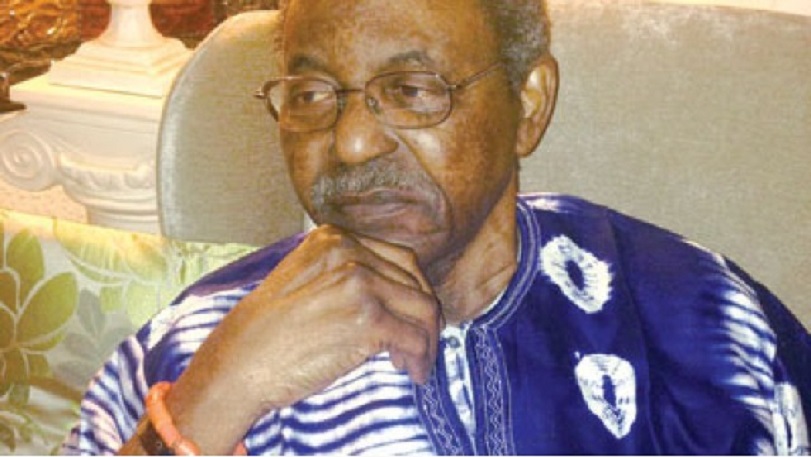
Peter Enahoro, Legacies And Lessons

Published

on

Peter Enahoro Peter Pan

By Jerom-Mario Chijioke Utomi

Though it’s been long known via research that when traumatic events –those involving anxiety and pains occur or are told to those who feel linked by identity to the victims- whether the shared identity is ethnic, religious, historical, cultural, linguistic or nationalistic, it can never produce emotional and physical responses similar to those experienced by the victims.

The above fact notwithstanding, Nigerians a few days ago received with rude shock, disbelief and excruciating pain the news about the demise of Mr Peter Enahoro, eminent satirist, celebrated author, and journalist-extraordinaire. To many, the pains that emanated from that news were, to an appreciable extent, similar to that of the victim.

Adding context to the piece, Peter Enahoro, who passed on at the ripe age of 88, was ‘raw talent’ when he joined the Daily Times in 1955 and became editor of the Sunday Times in 1958 at the tender age of 23. He became the editor of the group, the Daily Times in 1962 at 27. In 1965, he was made the Editor-in-Chief of the Daily Times conglomerate. He was just 30. He was young, restless, cerebral, eager and courageous.

Peter, going by records, was blessed with mastery of the English Language and a deep understanding of our society. He was an incurable wit who soon got a large following. He wrote his Peter Pan column twice weekly.

Aside from practising journalism that qualifies as pro-people, and in sharp contrast with present-day journalism, there are, in the opinion of this piece, very sterling legacies he left behind that present-day journalists must draw lessons from.

First and very fundamental, throughout his period of practice, he recognized and demonstrated that as a journalist, he should watch the society and not be watched over; that he should watch over crimes, injustices, malpractices, and every other act deemed unfair and unlawful. He was not the kind of ‘watchdog’ with ropes tied around his neck and so had no freedom of speech and expression.

He knew what to do, where to go, and how to discharge his duties when due and should not be dictated by any force or power whatsoever. Professionally, he was capped with competence to carry out the duties as a vibrant member of the fourth estate of the realm.

To ensure that this standard was upheld, the Uromi, Edo state-born Enahoro went into a self-imposed exile that lasted for 13 years. That was in the 1960s. While abroad, he functioned as the Contributing Editor of Radio Deutsche Welle in Cologne, Germany, from 1966 to 1976, and was the Africa Editor of National Zeitung in Basel, Switzerland, becoming Editorial Director of New African magazine in London in 1978.

Secondly, he supported the positive purpose of the elected government that did not in any way dent/obstruct the media’s primary responsibility to the masses in a democratic society. He used his writing to inculcate and reinforce positive political, cultural, and social attitudes among the citizens. He created a mood in which Nigerians became keen to acquire skills and disciplines of developed nations.

But he stood stoutly against military rule in Nigeria even at a time when it was considered fashionable to support military rule.

His attributes as a journalist say something more worthy of emulation.

Take, as an illustration, Peter going by his actions and inactions as a journalist, was among the very few who believed that ‘a free press is not a privilege but an organic necessity in a great society. For without criticism and reliable and intelligent reporting, the government cannot govern. For there is no adequate way in which it can keep itself informed about what the people of the country are thinking, doing and wanting.

Similarly, through his weekly analysis in his column Peter Pan, he became reputed for bringing to the surface the hidden political and socioeconomic tension in the country that was already alive to where they could be seen and treated like a boil that can never be cured as long as it is covered up. But it must be opened with all its pus-flowing ugliness to the natural medicine of air and light; injustice must likewise be exposed to the light of human conscience and the air of national opinion before it can be cured.

To him, the function of the press was very high. It was almost holy. It serves as a forum for the people, through which the people may freely know what is going on. Enahoro believed that misstating or suppressing information is a breach of trust. To him, that was sacrosanct and pivotal for a development-oriented society.

However, while the world stands in awe for the late pen pusher because of his time-honoured understanding that the sole aim of journalism is service and in providing this service, one enjoys great power and followership, it remains a painful narrative that modern-day journalists have, unlike Mr Enahoro, used the same profession to communicate more hatred than love, injustice than justice and deprivation than equity.

Very regrettably, their use of the asymmetrical press in the country has brought about a state of affairs where tribal loyalty is now considered stronger and more important than our common sense of nationhood. In recent years, the press in Nigeria has become the stage for fierce political and ideological warfare in ways that negate our rationality as human beings.

Through the unfortunate process, a great amount of innocent human character has been spilt, wars of words waged, and countless souls/ambitions persecuted and martyred. The press has failed to communicate noble ideas and ideals. This consequence of their failures is responsible for why anarchy presently prevails in the country and accounts for why Nigerians daily diminish and are impoverished.

Also, presently in the country, media professionals, in their search for new but personal fields to increase their wealth and well-being, have opted out of its primary mandate of objective reportage to become a willing tool in the hands of these political gladiators.

While some have overtly become more cautious than courageous in performing their agenda-setting roles, others have on many occasions watched the making of political cum economic decisions that breeds poverty and perpetrates powerlessness, yet took the easy way out without addressing the underlying factors.

Curiously, media practice in Nigeria has seen power lately gone the wrong way but assumed it’s the right thing, I watched the nation’s political gladiators redefine democracy in the image of their actions but viewed it as normal.

And very oddly, unlike Mr Enahoro, who used media practice to promote nation-building and development, media professionals in the country presently no longer see themselves as problem solvers or watchdogs of the society but now occupy a high ground they do not understand while leaving the masses that initially depended on them confused.

As the world mourns this iconic writer who was a few days ago described as a national asset by the Edo State Governor, Mr Godwin Obaseki, it will be highly rewarding, in my view, if journalists in the country emulate his sterling virtues. That will be the best way to have him immortalized.

Adieu Peter Enahoro, the pen pusher!!!

Utomi is the Program Coordinator (Media and Politics), Advocacy for Social and Economic Justice (SEJA), Lagos. He can be reached via 08032725374


1 Comment

Leave a Reply

Your email address will not be published. Required fields are marked *

Feature/OPED

Avoiding the Coming Deaths in 2027 Elections

Published

on

Dr. Michael Owhoko -

By Michael Owhoko, PhD

Inevitable deaths are in the offing in 2027.  Those familiar with Nigeria’s electoral mythology, history and patterns know that the 2027 general elections will be a harbinger of death, powered by electoral violence. It will take a miracle to escape what will play out.  People will die. Nigerians will perish. Hospitals will be overwhelmed.  Nigerians must therefore brace up for the coming calamity, as the intensity and scale will make it a memorable year of regrettable carnage.  All six geopolitical areas of the country will be affected.

The event will further rub off on the country’s troubling global perception, and worsen its negative profile as the 5th most violent country in the world, and 4th in the Global Terrorism Index 2026, ranking as the 6th deadliest and 7th most dangerous country for civilians in the world.  Besides, the elections will threaten democratic norms, political stability, and erode faith in public institutions due to brazen manipulation of the electoral process.

The coming calamity will largely be fueled by electoral insecurity engendered by the desperation of political parties to outwit one another, particularly the ruling party, the All Progressives Congress (APC) and the main opposition parties, including the African Democratic Congress (ADC) and the Nigeria Democratic Congress (NDC).  While the APC will go all out and spare nothing to retain the incumbent government of President Bola Ahmed Tinubu for a second term in office, the ADC and the NDC will deploy every resource at their disposal to dislodge and replace the current APC Government, causing public uproar.

Though other political parties will also show strength and slug it out, the election will be fiercely contested by the APC, NDC and ADC.  The stakes are high, and driven by illogical greed and lust for power to control political authority and economic resources, even though the resources are poorly appropriated, and most times, thoughtlessly deployed to protect pride, fund vanity, and maintain empires, as against judicious application for improved living conditions for citizens.

The political parties are likely to deploy political thugs masked as party officials to the field to reinforce their internal strategic plans to achieve programmed goals.  By their planned political conduct and indifference, the political parties will, unwittingly, diminish the value of human lives during the general elections.  This is the picture of what the country will experience in next year’s general elections.

Before you ask me for proof, go and verify the antecedents of political parties and how their leaders ignited the political atmosphere to set the tone for violence and rigging through their utterances and body language, influenced by irrational desires to achieve electoral victory at all costs.  Except for former President Goodluck Jonathan, all presidential candidates since 1999 to date are guilty of stoking the polity through their predilection and declarations.

For example, prelude to the April 2007 Presidential election, the then President Olusegun Obasanjo had alluded that the election would be a “do-or-die affair”.  As simple as the statement was, it encouraged supporters of the Peoples’ Democratic Party (PDP) to go the extra mile to push for victory at all costs without thought of probable consequences.  Evidently, this resulted in violence and fatalities across the country.

Also, during the 2011 elections, when former and late President Muhammadu Buhari, then candidate of Congress for Progressive Change (CPC), lost to Goodluck Jonathan, his demeanour and post-election utterances, undeniably, provoked and encouraged election violence in parts of the country, particularly in the north-west.

According to Human Rights Watch, over 800 people were killed, and more than 65,000 persons were displaced in the 2011 general elections following widespread protests and riots by Buhari’s supporters in the northern states. The killings, which were worsened by sectarian colouration, occurred in Adamawa, Bauchi, Borno, Gombe, Jigawa, Kaduna, Kano, Katsina, Niger, Sokoto, Yobe, and Zamfara.

Without showing empathy for the high number of Nigerians killed, including innocent National Youth Service Corps (NYSC) members, Buhari further threatened that if the next elections scheduled for 2015 were rigged like the 2011 elections, “the dog and the baboon would all be soaked in blood”, implying that violence and death would be inevitable in the 2015 elections. Clearly, Buhari’s comment was an indication of political desperation, intended to use the threat of force and violence to effect the outcome of the political contest, as against allowing the impartial verdict of the Independent National Electoral Commission (INEC).

Luckily for Nigeria, former President Jonathan conceded defeat, preventing Buhari’s threat from coming to pass in 2015.  Jonathan’s action not only doused tension, but it also averted widespread killings and bloodshed that would have accompanied the announcement of the result in his favour, particularly in the northern part of the country.  Jonathan’s position was obviously dictated by his philosophy that his ambition and that of anybody was not worth the blood of any Nigerian, which he held as an article of faith throughout the period of the 2015 general elections, preferring a credible and peaceful election.

Also, the incumbent President, Bola Ahmed Tinubu, is not immune from utterances that have encouraged violence.  While addressing party members in London in 2023, Tinubu said political power was not served a la carte, but must be secured through intense efforts by “fighting for it, grabbing it, snatching it and running with it”.  Whatever that means, this remark was not only unhelpful, it encouraged rigging and violence, as well as opened a new vista of political desperation and redefinition of new premises for an unhealthy autochthonous political process.

A parallel can be drawn between Tinubu’s statement and an incident that occurred at a polling unit in the Lekki axis of Lagos during the 2023 general elections. After queuing for hours in the sun to cast votes, just when ballot papers were to be counted at the end of voting, some thugs emerged from nowhere, scared away voters, seized the ballot box and left with it, perhaps, to thumbprint fresh ballot papers.  Surely, there is a correlation between their actions and the political philosophy of “fighting for it, grab it, snatch it and run with it”.

In a similar vein, the Secretary of the Board of Trustees of the New Nigeria People’s Party (NNPP), Alhaji Buba Galadima, recently advised Nigerians to defend their votes in the coming 2027 elections with “bottles and jerry cans of kerosene”.  This is an obvious reference to violence and an invitation to anarchy.  Indeed, it is a precursor, as a worst-case scenario marked by an unhealthy electoral struggle will be thrown up in the 2027 general elections, where the value of human lives will be degraded.

The culture of killings in every election circle in Nigeria has become legendary.  Among all African countries, and indeed, the world over where elections are conducted, Nigeria is reputed for election manipulation and violence, attracting undue global spotlight. As elections draw closer, skepticism, uncertainty, fear, and apprehension permeate the atmosphere due to expected violence.

Though it is the responsibility of the government to protect and guarantee the safety of lives during elections, past assurances by the government to protect the lives of citizens did not translate to safety. When a few successes are discounted, you find that security agencies have proved to be incapable of handling high-level violence, like what happened in the 2011 elections, where over 800 people lost their lives.

From antecedents, politicians are careless about deaths and can sacrifice the blood of innocent Nigerians on the altar of electoral victory.   Their interests and activities are driven more by the value of votes, as evident during post-election litigations where they seek legal redress for electoral malpractice rather than justice for the dead.

Sadly, the coming deaths will dwarf all previous politically related killings in the country, necessitating the need to prioritise personal safety.  It is imperative to identify and avoid electoral black spots that are notorious for violence.  Political thugs are likely to trigger violence by creating an atmosphere of fear and intimidation at polling units aimed at electoral manipulations.

Citizens are therefore advised to devise safety nets that will shield and guarantee personal safety in the event of an obvious threat to life, even if it means avoiding polling booths.  Recalled that Nigerians who died during previous election cycles had since been forgotten, and the country moved on without them.  Therefore, citizens need to protect themselves to avoid being counted among the dead in the pending catastrophe in 2027.

Dr Mike Owhoko, Lagos-based public policy analyst, author, and journalist, can be reached at www.mikeowhoko.com and followed on X (formerly Twitter) @michaelowhoko.

Continue Reading

Feature/OPED

Trapped Between Nigeria’s Failure and South Africa’s Xenophobic Violence

Published

on

Xenophobic pix

By Blaise Udunze

When the word “xenophobic” is talked about, most affected African countries tend to focus on the pains being experienced by their citizens in South Africa. For a moment, it calls for Nigeria and the rest of the African continent to pause and ask, how did we get here?

The recent happenings across the streets of Johannesburg, Pretoria, and Durban, a painful pattern continues to unfold with frightening and fearful regularity, as Nigerian-owned businesses are looted, migrants hunted, families displaced, and African nationals reduced to targets of rage. If asked, the majority would chorus that the recurring images of xenophobic violence in South Africa are disturbing enough, and no doubt, yes, but the deeper tragedy is beyond the flames and bloodshed. It lies in the silent failures back home that forced many Nigerians into vulnerable exile in the first place.

The reality, as a matter of fact, is that to understand the suffering of Nigerians in South Africa, one must first confront the uncomfortable truth that xenophobia is not merely a South African problem. It is also a Nigerian governance problem exported abroad.

Nigeria, often celebrated as the “Giant of Africa,” has now become the “Mama Africa” who has failed to nurture her many children, with the fact that behind every Nigerian fleeing hardship for survival, known as the “japa” syndrome, in another African country is a story shaped by economic frustration, failed institutions, poor leadership, unemployment, and a financial system disconnected from the realities of ordinary citizens.

One apt way to confirm these inimical factors, the South African president, Cyril Ramaphosa, recently acknowledged this uncomfortable reality when he urged African leaders to address the domestic failures driving mass migration across the continent. Speaking amid renewed anti-foreigner tensions, Ramaphosa identified “misgovernance” as one of the factors forcing Africans to seek refuge in countries like South Africa. Of a truth, his comments may have generated debate, and some “patriotic Nigerians” may also want to prove him wrong, but they reflected a painful reality many African governments would rather avoid.

Nigeria, despite its vast human and natural resources, has increasingly become a country where millions no longer see a future at home. This is a critical irony and the height of it all because a nation blessed with oil wealth and entrepreneurial energy and one of the youngest populations in the world is yet burdened by systemic corruption, policy inconsistency, infrastructural collapse, and a leadership class that has often prioritised politics over productivity, especially with the imminence of an election.

It is so detestable and at the same time fearful that the result is a generation of young Nigerians trapped between hopelessness and migration.

One regrettable experience that has continued to haunt the country for decades is that successive governments have squandered opportunities that could have transformed Nigeria into an industrial and economic powerhouse. Public resources that should have been invested in power, roads, healthcare, manufacturing, education and enterprise development have either disappeared into private pockets or become trapped in wasteful bureaucratic structures.

Reports indicating that over $214 billion in public funds may have been lost, diverted, or trapped in opaque fiscal systems over the last decade capture the scale of Nigeria’s accountability crisis. Whether exact or conservative, such figures reveal a country losing resources or funds rapidly from severe bleeding that could have changed millions of lives.

Looking intently at these developments, one would know that the tragedy is not merely corruption itself but the opportunities corruption destroyed.

Come to think of this fact that with proper governance and strategic economic planning, Nigeria could have developed a thriving SME ecosystem capable of employing millions of citizens. Instead, unemployment and underemployment have become defining realities of national life. The World Economic Forum recently identified unemployment and lack of economic opportunity as Nigeria’s greatest economic threat, yet the country continues to struggle with coherent employment data and long-term economic direction.

This economic suffocation explains why migration has become less of a choice and more of a survival strategy for many Nigerians.

At the centre of this crisis is another troubling contradiction, which is that Nigeria’s banking sector appears increasingly profitable while the real economy continues to deteriorate.

Ordinarily, banks in developing economies are expected to function as engines of growth by financing productive sectors, supporting innovation, and empowering small businesses. Across the world, SMEs are recognised as the backbone of grassroots economic development, and the tangible result is that they create jobs, stimulate local production, and expand economic participation.

In Nigeria, SMEs account for over 70 per cent of registered businesses, contribute nearly half of the country’s GDP and generate between 84 and 90 per cent of employment. Yet, despite their enormous economic importance, SMEs receive barely between 0.5 per cent and one per cent of total commercial bank lending.

This is not just a policy failure; it is an economic tragedy. Rather than financing entrepreneurs and productive enterprises, Nigerian banks have increasingly found comfort in investing heavily in government treasury securities. In 2025 alone, major Nigerian banks reportedly generated N6.68 trillion from total investment securities and treasury bills, benefiting from high-yield government debt instruments instead of supporting businesses capable of creating jobs.

The banking sector’s recapitalisation exercise, which successfully raised N4.56 trillion, was celebrated as a regulatory achievement. But the critical question remains. The recapitalisation is for what purpose?

If stronger banks continue to avoid the productive economy while SMEs remain starved of affordable credit, recapitalisation merely strengthens financial institutions without strengthening national development.

Today, private sector credit in Nigeria remains significantly low compared to many African economies. High interest rates, excessive collateral demands, weak credit infrastructure and risk-averse banking practices have created an environment where small businesses struggle to survive, and these implications are devastating.

Every denied SME loan is a denied employment opportunity. Every failed business is another frustrated entrepreneur. Every frustrated entrepreneur is another Nigerian considering migration.

This is how economic dysfunction transforms into human displacement. In a situation like this, it is noteworthy to state that South Africa naturally becomes an attractive destination because of its relatively advanced infrastructure and larger economy. Today, this has informed Nigerians and other African countries alike to migrate there, not because they hate their country but because they are searching for dignity through work and enterprise.

Yet, in a cruel twist, many become targets of xenophobic violence. Foreign nationals are accused of “taking jobs,” dominating businesses, and contributing to crime. Shops are attacked. Businesses are burned. Lives are lost.

It is not a surprise anymore that the disturbing rhetoric surrounding xenophobia has become increasingly normalised and perceived as fighting against saboteurs. Another major concern is that social media posts celebrating violence against Nigerians reveal a frightening and fearful dehumanisation of fellow Africans. This has continued to be heralded unaddressed, as some extremist anti-migrant groups now openly mobilise hostility against foreign nationals under the guise of economic nationalism.

Yet, as opposition leader Julius Malema rightly asked during one of the recent xenophobic debates. “After attacking foreigners and shutting down their businesses, how many jobs have actually been created?” If you are smart enough to know, it is glaring that this is a question that cuts through the emotional manipulation surrounding xenophobia, which also reflects the fact that destroying a Nigerian-owned shop does not solve unemployment, nor does killing migrants create prosperity. Violence against fellow Africans does not fix structural inequality.

Malema’s argument was blunt but accurate in revealing that xenophobia is not an economic strategy. It must be perceived with the right perspective as the symptom of deeper failures, poverty, inequality, weak governance, and political frustration.

Historically, just like other colonised African countries, South Africa itself carries deep old wounds. The legacy of apartheid left enduring economic inequalities, spatial segregation, unemployment, and psychological scars, but this should not continue to shape social tensions today. What is of concern is that the same people, like other African countries, experienced, were expected to remain forward-looking and forge ahead rather than dwell in the past.

It is even more pathetic that decades after the fall of apartheid, millions of Black South Africans remain trapped in poverty and exclusion; perhaps they are not to be blamed for their failures as they claimed, but the foreigners who didn’t stop them from exerting their skills become the scapegoats.

That frustration often seeks an outlet, and immigrants become easy scapegoats. This, however, does not excuse the brutality.

The stories emerging from xenophobic attacks are horrifying and very dastardly and humiliating, as African migrants have reportedly been beaten, burned alive, stoned, and hunted in communities where they once sought refuge, as two Nigerian citizens were said to have been beaten and burnt to death. To say the least, the pain becomes even more ironic when viewed against history.

Because Nigeria played a major role in supporting South Africa’s anti-apartheid struggle, ranging from financial assistance to diplomatic pressure, scholarships, activism, and cultural solidarity, Nigerians stood firmly with Black South Africans during some of apartheid’s darkest years, which was enough to prevent such ugly events. Nigeria did so much to the point that Nigerian students contributed financially to anti-apartheid campaigns. Nigerian musicians used music to mobilise continental resistance. Successive governments invested enormous diplomatic and material resources into the liberation struggle.

The children and grandchildren of those who made such sacrifices are now among those facing hostility in South Africa today.

History makes the tragedy even heavier. Yet, Nigeria must also confront its own failures honestly. The truth is, if Nigeria had invested half the energy it spent supporting external liberation struggles into building a functional domestic economy, perhaps millions of Nigerians would not be fleeing abroad in search of economic survival today.

The painful reality is that many Nigerians abroad are not economic adventurers; they are economic exiles.

The ugliest side of it all is that they are exiled by unemployment, exiled by corruption, and exiled by policy failures. Again, they are exiled by a system that has repeatedly failed to convert national wealth into shared prosperity but into embezzlement that still finds its resting place in a foreign account.

This is why solving xenophobia requires more than diplomatic protests or emotional outrage, as exuded in the National Assembly by some members like Adams Oshiomhole and others. This calls for the political actors and those in the financial space to fix the conditions that force Nigerians into vulnerable migration in the first place.

One undeniable fact is that, as a country, Nigeria must fundamentally rethink governance and economic management as it takes into consideration the following solutions.

First, public accountability must become non-negotiable and should not be compromised anywhere. Corruption and resource mismanagement are critical and have robbed generations of opportunities, and these are the major traits fueling the exile. Infrastructure, industrial development, education, and healthcare must become genuine priorities rather than campaign slogans, as all these must become a reality, not a feeble promise.

Second, the banking sector must reconnect with the real economy. Financial institutions cannot continue generating enormous profits from government securities while productive sectors collapse. The government should hold a roundtable discussion with banks, which must be incentivised and, where necessary, compelled to increase lending to SMEs and productive industries capable of generating employment.

Third, there must be deliberate and conscious investment in skills, innovation, and entrepreneurship. Young Nigerians should not have to leave their homeland merely to survive because it is an aberration for a country that is enormously rich but still has some of its best hands eloping from the country.

Finally, African governments must reject the politics of division and scapegoating. This contradiction is at its height because Africa cannot claim to pursue continental unity while Africans are hunted in other African countries.

In all of the deliberation, the truth remains the same, in the sense that the story of Nigerians suffering xenophobic violence in South Africa is ultimately a story about failed systems on both sides, one on the side of economic failures pushing migrants out and the social failures turning migrants into enemies.

Until these structural realities are confronted with honesty and urgency, the cycle will continue. More young Nigerians will leave. More migrants will become vulnerable. More African societies will turn inward against each other.

But this trajectory is not irreversible. One gift that can’t be taken away from Nigerians is that Nigeria still possesses the talent, entrepreneurial energy, and human capital necessary to build a prosperous economy that gives its citizens reasons to stay rather than flee. The truth is that what has been lacking is not potential but responsible leadership and economic vision.

The true solution to xenophobia may therefore begin far away from the streets of Johannesburg or Durban. It may begin in Abuja, with governance that works, institutions that serve, banks that invest in people, and leadership that finally understands that national dignity is measured not by speeches but by whether citizens can build meaningful lives at home.

Until then, the “japa” flag will keep flying, as many Nigerians will remain exiled, not merely by borders, but by the failures of the country they still desperately want to believe in.

Blaise, a journalist and PR professional, writes from Lagos and can be reached via: [email protected]

Continue Reading

Feature/OPED

Why East Africa is Emerging as Africa’s Trade Growth Engine

Published

on

Elvis Ndunguru

By Elvis Ndunguru

East Africa, led by Kenya, is emerging as a powerful trade hub driven by infrastructure investment, regional integration and expanding intra-African trade. As a gateway for natural resources, it boasts rare earths, gold, nickel, cobalt, graphite, and other commodities the world needs.

Trade finance is the key to unlocking cross-border flows, supporting SMEs and enabling regional value chains, opening up economic benefits for the region.

As East African trade accelerates, better Foreign Direct Investment (FDI) policies have a stronger bearing on the Tanzanian mainland and Zanzibar, attracting capital movement. As stronger regional demand reshapes trade patterns, increased urbanisation and population growth are driving intra-African trade in fast-moving consumer goods (FMCG), construction materials, and processed goods. Improving macro-stability boosts investability as better fiscal and monetary management emerge.

But global flows demand dependence on solid infrastructure. As corridor-led infrastructure unlocks trade flows, investments in establishing ports, rail, and roads enable trade in new ways. For example, the Port of Mombasa and the Standard Gauge Railway are reducing transit times and connecting important inland markets like Uganda and Rwanda. Regional integration is being driven particularly under the East African Community (EAC) and the African Continental Free Trade Area (AfCFTA), resulting in lowered tariff and non-tariff barriers.

Between South Tanzania and North Kenya, strategically placed ports improve both inter- and intra-continental trade flow. To bolster regional connectivity, Tanzania will spend 12 trillion shillings (TZS) on port expansions. Meanwhile, the $1.4 billion Tazara (Tanzania-Zambia Railway Authority)  Railway rehabilitation is underway. Kenya is investing in rail, and a new fuel pipeline is being established from Uganda to Tanzania. The Tanzania Standard Gauge Railway is indeed positioned to complement and strategically link with the Lobito Corridor, even though they originate in different parts of the continent. The strategic connection lies in creating a transcontinental logistics network for DRC: goods (especially critical minerals like copper and cobalt) can move more efficiently across Africa, either east to Indian Ocean markets or west to Atlantic routes. This reduces reliance on single export routes, improves resilience, and enhances intra-African trade under frameworks like the African Continental Free Trade Area.

 These developments give life to new trade flows, like transporting fuel from Uganda to the Middle East, or moving copper from Congo to China.

In the SADC and EAC regions, comprising over half a billion people, the demand for goods and services, including fuel, is significant. Regional agreements must be fostered to harmonise customs, tariffs, regulations, and the movement of goods, people and services.  Frameworks like the EAC Customs Union and AfCFTA have reduced tariffs, but the system is often plagued by border delays and inconsistent enforcement, which dilute the impact of trade.

If banks with trade finance capabilities, including institutions like Absa with a growing pan-African footprint, support infrastructure development, this will boost connectivity, lower transport costs, and improve trade opportunities.  Currently, it’s cheaper to move goods from China to Dar es Salaam than to transport them from Dar es Salaam to Mwanza, a region within Tanzania.

Trade finance is most impactful in sectors with predictable cross-border demand, such as agriculture, energy, and FMCG. Structured trade finance and supply chain finance help large corporates extend terms to suppliers, indirectly supporting SME participation.

The East African economy is largely driven by SMEs. In Tanzania, 96% of our economy depends on SMEs, but they lack funding to support themselves. The majority are trade-based, with imports from the Middle East, China, India, and others, and exports like minerals or agri-commodities to other parts of the world. While banks can help support SMEs, the locals must also support them to benefit the local market.

Besides raising capital, risk perception and informality are constraints to their success. Better credit data with digital identities and scalable guarantee schemes backed by Development Finance Institutions (DFIs) helps to mitigate risk. While simplified, digital trade finance products are now available, these are still limited. Anchor-led eco-systems with stronger linkage to large corporates are manifesting in the mining, FMCG, manufacturing and agricultural sectors.

DFIs, as key stakeholders, can work alongside financial institutions to help enhance trade routes. While it might be difficult for them to be on the ground, they can collaborate with the banks in certain markets within the continent to extend their reach.

To help with digitisation, we must empower fintechs to enable much stronger platforms. In Tanzania, SME customers work together to collaborate on small platforms to submit bulk orders to China. There’s strength in numbers.

Banks have the capabilities to support trade flows and payments via digitisation in areas like Ethiopia and the DRC. While some markets like DRC are high-risk, our competitors are growing there. Last year, a regional bank made 30% of its profit in Congo, for example. We can find safe ways to play in those markets, selecting the sectors in which we can perform.

Banks with a Pan-African presence, such as Absa, which operates across key trade corridors,  must bring a true corridor strategy to build sector-specific solutions like agri-value chains across multiple countries; use digital platforms to serve mid-market clients, not just large corporates; partner with DFIs to expand risk appetite in frontier markets; and position themselves as a trade enabler, not just financiers, by integrating advisory, foreign exchange, and working capital solutions.

The real differentiator will be the ability to intermediate not just capital, but meaningful connectivity, helping to link clients across markets, currencies, and the supply chain.

Elvis Ndunguru is the Managing Executive for Absa Corporate and Investment Banking, NBC, Tanzania

Continue Reading

Trending