Connect with us

General

Kwara Govt Denies Corruption at Harmony Holdings Ltd

Published

on

By Dipo Olowookere

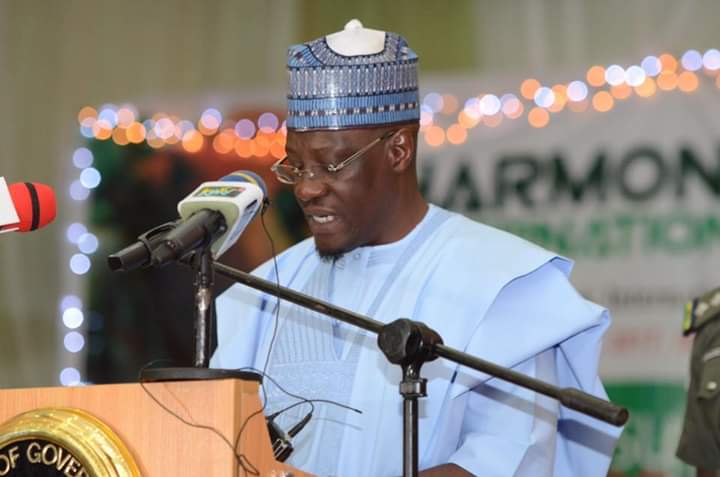
The Kwara State Government has denied social media claims purportedly attributed to the former Managing Director of Harmony Holdings Limited, (HHL), Dr Shehu Kuranga Mohammed, alleging corrupt practices concerning state government properties managed by the company.

In a statement, the state government said the claims of corruption at HHL involving management of state-owned property are creations of the fertile imagination of its authors.

It also absolved Governor Abdulfatah Ahmed and the Senate President, Dr Bukola Saraki of any involvement in the planned lease of a prime state-owned property located in Lagos or in any illegal transaction involving other state-owned assets.

Rather, the government maintained that transactions relating to the proposed lease followed due process and involved relevant state agencies.

The statement also denied the claim that Dr Mohammed resigned due to pressures from Government House to engage a particular company to manage the Victoria Island, Lagos property and to financially disadvantage the state in favour of a private company or individuals.

Instead, the government said Dr Mohammed was asked to review the companies shortlisted for managing the property, recommend one or come up with an alternative company but resigned before the process was completed.

The government stressed that Dr Mohammed was personally head-hunted by Governor Abdulfatah Ahmed based on the former incumbent’s corporate finance experience and capacity and not at the request of the Ilorin Emirate Descendants Progressive Union (IEDPU) as wrongly claimed.

It, therefore, urged the public to ignore the lies about HHL and warned those bent on playing politics with government-owned entities to have a rethink and be mindful of the long-term impact on the image of Kwara State as investors may be reluctant to partner the state if the negative atmosphere of needless controversy is allowed to persist.

The full statement reads thus:
“We have become aware of a social media post alleging corrupt practices at Harmony Holdings Limited, a company fully-owned by the Kwara State Government. For the avoidance of doubt and in the interest of the people of Kwara State who are the ultimate owners of HHL and the assets it is managing, we wish to state clearly that the allegations in the said post are lies concocted in a futile bid to embarrass the administration of Governor Abdulfatah Ahmed.

To restate, Harmony Holdings Limited is a product of the administration’s quest to innovate new funding sources for government programs in the light of a fragile global economy and unstable federal allocation.

To insulate the state from these uncertainties and keep it on a firm pedestal for the benefit of its people, reforms were necessary. One of them was HHL, especially given the existence of state assets which were constituting a drain on state resources rather than augmenting them.

In the light of the vast investment and revenue potentials of these state-owned assets, it was decided to recruit for HHL only those with the capacity and pedigree to successfully attract private partners to invest funds in the dormant assets, and significantly boost the state government’s revenue.

An essential skill in this regard was previous Corporate Finance and related management experience which was deemed necessary for the task of making HHL achieve its target of N50b in annual revenues and ranking as one of the top holding companies in the country. It is also reflected in the capacity, experience and pedigree of the previous board which was headed by a Professor of Public Finance and included credentialed individuals with a strong finance, business and academic backgrounds.

It remains the government’s understanding and resolve that the task of turning these state-owned assets to revenue generating ventures can only be achieved by management manned by technocrats with the necessary capacities.

This need for a Chief Executive with relevant requisite capacity for HHL was the spirit behind Dr Mohammed’s recruitment by the state government when the previous board’s tenure expired.

His mandate was to focus not on HHL’s ongoing concerns that were already contributing revenue but on turning high value but dormant assets into income generating ventures for the government. One of the assets was a state government-owned commercial property located at Victoria Island, Lagos. Before Dr Mohammed’s appointment, the said property was the subject of litigation.

Subsequently, the property was tied up for the duration of the court case which the state government eventually won. HHL was then instructed to review a shortlist of companies bidding for the lease, to recommend one or make new recommendations. Dr Mohammed resigned before the ongoing process to choose a preferred bidder with the required competence and capacity to manage the property, which followed necessary processes and involved other state agencies, was completed.

It is therefore untrue that Governor Abdulfatah Ahmed is involved in any corrupt deals at HHL or any effort to influence the selection of any company to manage government assets.

The state government also exonerates the former state governor and Senate President, His Excellency, Dr Abubakar Bukola Saraki of any involvement in any aspect of HHL’s operations, including the management and sale of any state government asset assigned to the company or indeed any other government property.


Dipo Olowookere is a journalist based in Nigeria that has passion for reporting business news stories. At his leisure time, he watches football and supports 3SC of Ibadan. Mr Olowookere can be reached via [email protected]

Click to comment

Leave a Reply

Your email address will not be published. Required fields are marked *

General

NMDPRA Seeks West African Benchmark to Curb External Fuel Price Shocks

Published

on

NMDPRA

By Adedapo Adesanya

The Nigerian Midstream and Downstream Petroleum Regulatory Authority (NMDPRA) has called for a regional benchmark that better reflects West Africa’s market realities, saying petroleum product prices in Nigeria and other African countries should not be automatically driven by crises in Western Europe and the Mediterranean.

“If we look at the refining capacity on the continent and how it has been increasing, it simply doesn’t make sense that if there is a problem in Western Europe or in the Mediterranean, it is going to affect our pricing in Africa.

“There may be issues which have absolutely nothing to do with what is going on here. And prices should be determined on the basis of geopolitical issues, demand and supply, and complexities within the market. So we feel this is a great opportunity for Africa, and West Africa in particular, to really have something that is specific to us.

“If we have a problem, it is reflected in the pricing. If we don’t have a problem, then we are to be shielded to an extent, I would say, from what is going on in other locations,” the chief executive of the NMDPRA, Mr Rabiu Umar, said this on Tuesday at the second West Africa Refined Fuel Market Conference in Abuja.

The conference is jointly hosted by the Authority, S&P Global Commodity Insights and West Africa Regulator Forum, with the theme Funding West Africa Infrastructure & Distribution to Create a Transparent Market for Regional Price Benchmarks and featured regulators, refiners, traders, financiers and other industry stakeholders renewed efforts to establish a transparent regional pricing system for refined petroleum products.

Mr Umar said West Africa needed a pricing system based on its own supply, demand, inventory, logistics, refining and trading conditions, adding that the objective was not to isolate Nigeria from the international petroleum market but to ensure that regional prices accurately reflected the realities of the market being served.

The NMDPRA boss said the push for a regional benchmark was not simply about publishing another price but creating an entire market structure capable of generating credible and transparent price discovery.

“Last year, our focus was on establishing the foundation. This year, our focus must be on execution,” he said.

He said the roadmap required reliable financing, refinery capacity, stronger logistics and storage networks, interconnected ports, roads, rail and pipelines, harmonised product regulations and standards, transparent market data, stronger cross-border cooperation and regional and international capital.

“A reference price is not by itself a trading hub. A conference is not a market. Regulatory cooperation, important as it is, cannot substitute for physical infrastructure, commercial liquidity, market information, and operational excellence on which a credible trading hub must stand.

“Africa possesses resources. Africa possesses demand. Africa possesses refining capacity, and that is also expanding. What we must now build is the infrastructure that efficiently connects all three,” he quipped.

He also identified differences in petroleum product specifications across countries as another obstacle to cross-border trade.

“We also have the second issue of what is the quality of products. What is the specification of products from one country to another? We cannot have from here to Nigeria, to Ghana, to the United Republic, even our right-next-door neighbours having different products and specifications. What that does is that it makes trading across the border very, very difficult.”

Continue Reading

General

NSIA Plans Renewable Energy Platform to Bridge Financing Gap

Published

on

Renewable Energy projects africa

By Adedapo Adesanya

The Nigeria Sovereign Investment Authority (NSIA) is developing a platform to aggregate small and distributed renewable energy projects across Nigeria into larger investment opportunities capable of attracting institutional investors.

The initiative seeks to address a major financing challenge in Nigeria’s energy transition, where individual renewable energy projects are often too small or fragmented to attract large-scale institutional capital.

By pooling the projects into a single investment structure, the wealth fund aims to create assets with greater scale and clearer risk profiles, making them easier for institutional investors to assess and finance.

The approach could also help attract international capital by placing domestic institutional funding alongside private and foreign investments, while providing investors with greater confidence in projects exposed to Nigeria’s regulatory, currency, infrastructure and commercial risks.

The financing need is significant, with Nigeria’s Energy Transition Plan estimating that about $410 billion will be required by 2060 to support the country’s transition to cleaner energy.

The NSIA’s aggregation model therefore seeks to move beyond financing individual projects towards building renewable energy portfolios that can unlock deeper pools of institutional capital.

The initiative will be relevant to discussions at the Nigeria NOW! Global Investors Expo, scheduled for November 19 and 20 at the Bola Ahmed Tinubu International Conference Centre in Abuja, where mining, infrastructure, finance and fiscal reforms will be among the key investment themes.

The expo will focus on mining, infrastructure, finance and Nigeria’s fiscal reforms, reflecting the broader conditions that determine whether investment opportunities can move from proposals to commercially viable projects.

Continue Reading

General

Six Nigerian News Creators for Google’s Emerging News Voices Growth Lab

Published

on

Emerging News Voices Growth Lab

By Modupe Gbadeyanka

The sextet of Onlinebanker, Adetunji Films, More Branches TV, Wearegst, Iswellthecapitalist and The Republic have been selected for the Emerging News Voices Growth Lab organised by Google News Initiative (GNI).

The six Nigerian independent news creators are among roughly 20 emerging news creators from across the region taking part in the multi-month virtual programme, which runs through late September 2026.

Over the course of the programme, participants work directly with Google trainers and product experts across four areas:

AI in the newsroom: hands-on integration of Google’s AI tools, including Gemini, NotebookLM, Google Trends and SynthID, into daily workflows for research, transcription, translation and verification.

Video and audience growth: practical frameworks for building YouTube channels, using both Shorts and long-form video to reach new audiences.

Direct reader relationships: strengthening open web presence and newsletters to build first-party audiences the newsroom owns.

Sustainable revenue: sessions on monetisation strategy, product differentiation and audience growth models.

“Independent news creators and digital-native newsrooms are shaping how Africans, and Nigerians in particular, find and understand the news.

“The Growth Lab gives these creators what growing newsrooms need most: practical AI skills, a clear video and audience strategy, direct relationships with their readers and a path to sustainable revenue.

“When emerging voices build capability and financial independence, the whole news ecosystem becomes more resilient, diverse and sustainable,” the News Partnerships Lead for the Middle East and Africa at Google, Marianne Erasmus, stated.

Commenting on being part of the cohort, the Editor-in-Chief of The Republic, Mr Wale Lawal, said, “Google’s Emerging News Voices Growth Lab is giving us practical ways to combine audience insight, product thinking and the responsible use of AI as we build a more sustainable future for The Republic’s journalism.”

Also speaking, his counterpart at MoreBranches, Mr Nasir Achile Ahmed, said, “The program has been valuable to our newsroom, providing information that validates observations we’d made previously, as well as access to tools and the knowledge to use them effectively. Beyond that, engaging with experts and fellow journalists has created a supportive environment that is helping us strengthen our storytelling.”

Creator-led digital journalism is changing how Nigerians, especially younger audiences, find and consume news. Social-first channels and digital-native platforms increasingly drive news discovery, yet the newsrooms behind them often run lean, with limited access to the tools, training and revenue expertise available to established publishers. The GNI Growth Lab is built to close that gap.

The Growth Lab grew out of the Global News Gap Project, a continent-wide mapping of independent African news creators conducted with Project Oasis and Code for Africa, which identified where emerging newsrooms most need support.

The Growth Lab is the latest step in Google’s continued support for Nigerian media. Since 2018, Google has funded newsroom transformation projects through the GNI, helped publishers grow advertising revenue through the Ad Manager Academy, and shared ad revenue with Nigerian publishers through Google AdSense and Google Ad Manager.

Since 2024 alone, Google has trained more than 1,500 Nigerian journalists and editors in online safety, advanced Search, digital verification and audience analytics. Google also supports media skilling through its collaboration with the MTN Media Innovation Programme, where fellows receive hands-on sessions on AI as a productivity partner and on newsroom technology, from News Consumer Insights to Gemini.

Continue Reading