Connect with us

General

NEMA Trains Emergency Responders in Lagos

Published

on

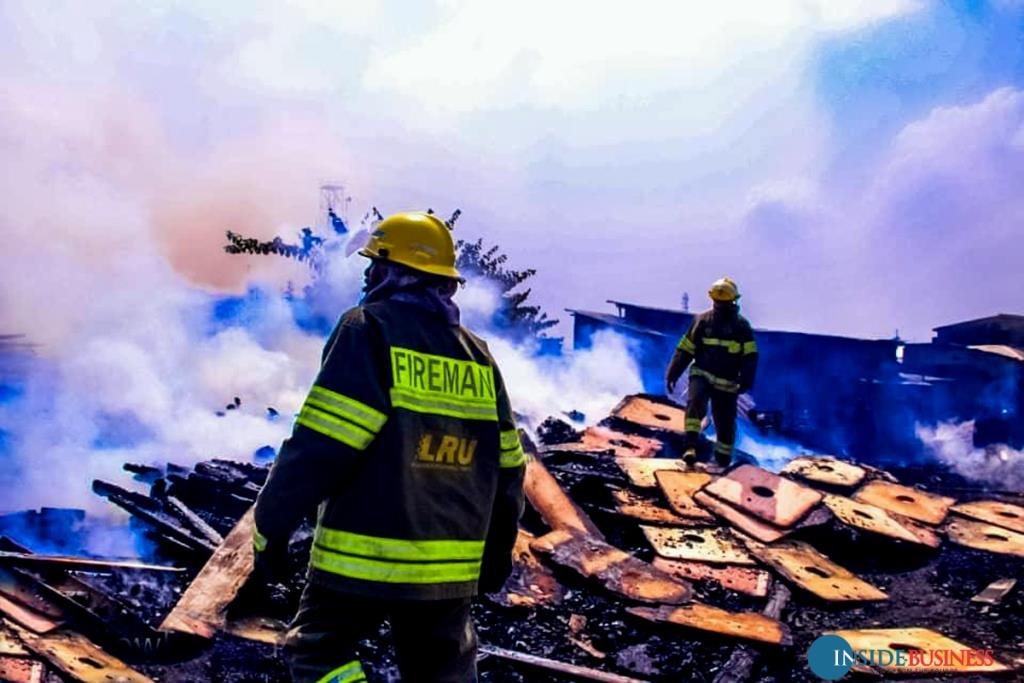
Ketu Plank Market Fire

By Adedapo Adesanya

The National Emergency Management Agency (NEMA) has begun the recertification of emergency response officers in Lagos State to reduce casualty and loss of lives during emergencies.

This made this known by Mr Ibrahim Farinloye, the Acting Zonal Coordinator, South-West Zonal Office at a two-day Basic First Aid/Recertification Course organised for emergency responders in Lagos on Thursday.

The participants included officers of NEMA, Federal Airports Authority of Nigeria (FAAN), Lagos State Emergency Management Agency (LASEMA), LASEMA Response Unit (LRU), Federal Fire Service and Police Disaster Management Unit.

Mr Farinloye said the training, which was being organised in collaboration with the Nigeria Red Cross Society, was to boost the capacity of emergency response officers in the state, especially with the upsurge in COVID-19.

According to him, collaboration among critical stakeholders is crucial to disaster risk reduction.

“The Director-General of NEMA, AVM Muhammadu Muhammed on the assumption of office observed that there were gaps within the capacity of the staffers of the agency and that of the stakeholders.

“This is what necessitated this training on first aid because if we are pro-efficient in first aid implementation, loss of lives during emergencies will be reduced drastically.

“COVID-19 cannot stop emergencies so, in the process of saving lives, emergency responders must adhere to the COVID-19 safety protocols in administering first aid to victims.

“Under the new guidelines, ways of administering first aid to infants have not changed but there are changes in administering first aid to adults and children,” he said.

Mr Farinloye said the training would be done periodically to expose emergency responders to best practices on disaster and safety management.

He added that NEMA would also continue to boost the capacity of its Grassroots Emergency Volunteer Corps (GEVC) to prevent disasters or mitigate its impact in the state.

“Our goal is to work with all stakeholders including members of the public to prevent disasters or to respond in a very timely manner in order to save lives and property,” Mr Farinloye said.

Also speaking, CSP Elizabeth Opadola, Officer in Charge of Disaster Management Unit, Lagos State Police Command, commended NEMA for organising the training.

Mrs Opadola said apart from boosting the capacity of the officers, it had given them the opportunity to bond with other sister agencies, which would improve collaboration in responding to emergencies.

“Collaboration is very essential because at the scene of incidents we usually come together and work in synergy with the goal of protecting people’s lives and property and making sure that the environment is safe,” she said.

Mrs Opadola noted that the major challenge faced by emergency responders in Lagos State was accessibility to the scene of disasters and appealed to the Lagos State Government to create a special route for emergency agencies.

Similarly, Mrs Deborah Adebiyi, Deputy Superintendent of Fire, Federal Fire Service, said the training had exposed the officers to the importance of first aid in emergency management.

She said: “It has given us exposure on what we need to do to save lives under the barest minimum time.

“This training has also emphasised that emergency response requires synergy and that nobody can do it alone.

“So, I think we need more of this kind of training when we are able to come together and discuss emergencies so that when those real-life experiences come we will be able to approach it in a more tactical way.”

Mr Bisiriyu Kabiru, Zonal Coordinator, LASEMA, Lagos West Senatorial District, said the COVID-19 pandemic had made it imperative for emergency responders to embark on a new methodology of saving lives.

“We are working harmoniously with all emergency response agencies to see how we can continue to do our job of saving lives and property in a safer manner,” he said.


Adedapo Adesanya is a journalist, polymath, and connoisseur of everything art. When he is not writing, he has his nose buried in one of the many books or articles he has bookmarked or simply listening to good music with a bottle of beer or wine. He supports the greatest club in the world, Manchester United F.C.

Click to comment

Leave a Reply

Your email address will not be published. Required fields are marked *

General

Court Orders SERAP to Pay DSS Operatives N100m For Defamation

Published

on

serap dss

By Adedapo Adesanya

Justice Halilu Yusuf of the Federal Capital Territory High Court, Abuja, has awarded N100 million in damages against the Incorporated Trustees of the Socio-Economic Rights and Accountability Project (SERAP).

In his judgment, Justice Yusuf held that two operatives of the Department of State Services (DSS) were right to institute a defamation suit against SERAP.

In the suit, filed in the names of the two DSS officials, Ms Sarah John and Mr Gabriel Ogundele, the claimants accused SERAP of making a false allegation that they invaded its office in Abuja on September 9, 2024.

The court also ordered the organisation to tender a public apology to the two operatives, to be published in two national newspapers and broadcast on two television stations.

In addition, the court awarded N1 million against SERAP as the cost of litigation.

The judgment further stipulated a 10 per cent interest on the damages until the sum is fully paid.

The case follows a dispute that began in September 2024 when SERAP alleged that DSS officers “unlawfully invaded” its Abuja office.

In a post on its X account, the group said, “Officers from Nigeria’s State Security Service are presently unlawfully occupying SERAP’s office in Abuja, asking to see our directors.”

It added, “President Bola Tinubu must immediately direct the SSS to end the harassment, intimidation, and attack on the rights of Nigerians.”

The DSS, however, denied the claims.

It said the visit by its officers was routine and meant to engage the organisation’s new leadership.

The officers later sued, insisting that “no invasion occurred” and that the claims damaged their reputation and led to disciplinary action.

However, SERAP maintained its position.

In a later statement, it said, “We stand by our statements of defence and statements on oath,” insisting that DSS officers “unlawfully invaded our Abuja office.”

During court proceedings, witnesses reportedly said no physical assault took place.

SERAP’s Deputy Director, Mr Kolawole Oluwadare, told the court the claims were based on information from a staff member.

Counsel to the DSS officers, Mr Oluwagbemileke Kehinde, urged the court to grant all reliefs, arguing that the claimants had “substantially proved their case.”

Continue Reading

General

UK Court Freezes Nigerian Oil Trader’s Global Assets Over $40m Debt

Published

on

Abdulrahman Musa Bashar

By Adedapo Adesanya

A court in the United Kingdom has taken sweeping action against a Nigerian oil trader, Mr Abdulrahman Musa Bashar, freezing his assets worldwide in a bid to secure repayment of a long-running debt dispute tied to failed fuel transactions.

The order, issued by the High Court in London, prevents Mr Bashar and his firm, Ultimate Oil and Gas FZCO, from selling, transferring, or otherwise dealing with assets across multiple jurisdictions, including Nigeria, the United Arab Emirates, the United Kingdom, and France. The restriction applies up to the value of the outstanding liability, with disclosed holdings estimated at nearly $170 million.

According to Business Day, the dispute traces back to oil trading agreements between 2022 and 2023, when Dubai-based Petrichor Energy supplied gasoil and Jet-A1 aviation fuel to Ultimate.

Court filings indicate that while deliveries were completed, payments were inconsistent and ultimately fell short, leaving the supplier to pursue legal and arbitration routes to recover its funds.

In an attempt to resolve the matter, Mr Bashar entered a personal repayment agreement in early 2024, backing the company’s obligations with his own guarantee.

He also issued a series of signed cheques as security. However, these measures failed to yield results, as the debt remained unsettled and the cheques were rejected upon presentation.

The court’s decision to impose a global freeze was influenced by what it described as troubling conduct during the dispute. Evidence suggested that assets were being sold without proceeds going toward the debt, alongside concerns that not all holdings had been fully disclosed.

The newspaper reported that testimony also pointed to an alleged warning from Mr Bashar that he might move assets out of reach if negotiations broke down, an assertion the court treated as a credible risk of asset dissipation.

The ruling adds to a growing list of legal challenges facing the businessman. He has previously been sanctioned by English courts for failing to comply with orders in a separate commercial dispute, and was also convicted in Dubai, the UAE, in a different cheque-related case.

With the freezing order now active, Petrichor has expanded its recovery efforts beyond the UK, initiating enforcement actions in both the UAE and Nigeria.

The move aims to block any pathways through which assets could be shielded, while also enabling seizure or control where legally permitted.

In a further escalation, the English court has directed two Nigerian-linked companies associated with Mr Bashar to grant access to a Delta State storage facility, allowing the creditor to recover fuel cargoes tied to the unpaid transactions. Failure to comply could trigger additional legal consequences, including contempt proceedings.

Despite ongoing attempts by Mr Bashar and his company to overturn the freezing order, the court has so far declined to lift the restrictions, leaving the enforcement process firmly in motion.

Continue Reading

General

IFC, Norfund Back Nigeria’s Mini-Grid Expansion with $83.2m Funding

Published

on

Mini Grids Programme

By Adedapo Adesanya

The World Bank’s financing arm, the International Finance Corporation (IFC), and the Norwegian investment fund (Norfund) have committed up to $83.2 million to expand solar hybrid mini-grids across Nigeria, in a move expected to connect nearly half a million new users to electricity.

The funding will support five renewable energy companies, Darway Coast Nigeria Limited, GVE Projects Limited, Prado Power Limited, PriVida Power Limited and StarTimes Energy, to build 315 mini-grid sites across underserved communities.

The projects are projected to deliver about 494,189 new electricity connections. Renewable energy solutions

IFC says the intervention is aimed at closing Nigeria’s massive electricity gap, noting that more than 85 million people in the country still live without access to power.

The institution said expanding distributed renewable energy will not only improve electricity access but also cut energy costs and support small businesses in rural areas.

According to IFC, “By supporting distributed renewable energy solutions, this initiative will help expand access to reliable electricity while reducing energy costs, strengthening local economies, and enabling income-generating activities.”

For operators already working in the sector, the new funding is expected to speed up expansion plans.

The chief executive of Darway Coast Nigeria Limited, Mr Henry Ureh, said the support will allow companies to scale faster and reach more communities that have remained off the national grid for years.

“Access to reliable electricity allows us to expand our operations, support local businesses, and create jobs in the communities we serve,” he said.

Nigeria’s off-grid power space has been growing steadily, but access remains uneven. Data from the Africa Solar Industry Association shows that the country currently has over 4.8 gigawatts of installed solar capacity, but only about 115 megawatts come from mini-grids serving rural communities.

The IFC has been one of the biggest institutional backers of this segment. Last year, it announced a separate $16 million financing package for Nigerian developer Virtuitis to build 97 mini-grids expected to serve over 140,000 off-grid consumers by 2027, showing a steady increase in international interest in decentralised power solutions.

With grid supply still unreliable in many parts of the country, mini-grids are increasingly becoming the most practical solution for rural electrification as they supply adequate but limited power for limited power consumption.

For many communities, the impact goes beyond electricity. Reliable power is expected to support trading activities, agro-processing, small manufacturing and education, all of which have struggled under years of unstable supply. But operators also warn that sustained policy support and stable regulation will be key to scaling beyond pilot-level projects.

As deployment begins across the 315 sites, observers are keen on understanding how quickly these projects can move from funding to actual connections to where they are needed.

Continue Reading

Trending