General
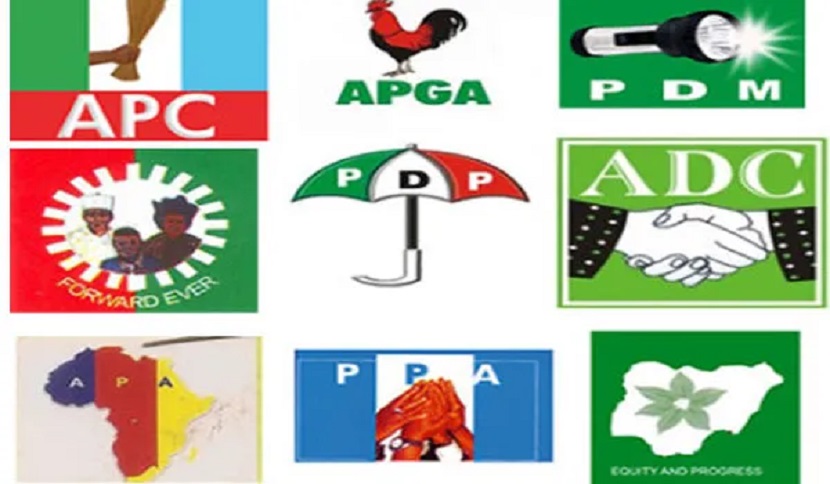
SERAP Wants INEC to Publish Financial Details of Political Parties
By Adedapo Adesanya
In its latest move, the Socio-Economic Rights and Accountability Project (SERAP) has urged the Independent National Electoral Commission (INEC) to publish the reports on the accounts and balance sheets of every political party submitted to the National Assembly since 2015.
The group called on Mr Mahmood Yakubu, the Chairman of the body, to make available the request in a letter dated May 21, 2022, signed by SERAP deputy director, Mr Kolawole Oluwadare.
SERAP urged him to “urgently examine the books and records of financial transactions of political parties, and to make public the outcome of any such examination.”
It also urged him to “provide details of the guidelines, and steps that INEC is taking to prevent vote-buying in the forthcoming elections in Ekiti and Osun states and 2023 general elections, and to prosecute vote buyers and other electoral offenders.”
Recently, the All Progressives Congress (APC) collected N100 million for its presidential form while the opposition Peoples Democratic Party (PDP) collected N40 million for the same purpose for the 2023 elections.
The organisation also alleged that some leading political parties and politicians also spend between N250 to N14,000 to buy votes.
The organisation said: “Nigerians have the right to know about the accounts and financial transactions of their political parties, especially the major parties with a strong possibility to assume government in the future.”
According to SERAP, “transparency and accountability of political parties is important to achieve greater transparency in public life, curb the influence of money in politics, promote a level playing field, and remove the risks to the independence of political actors and would-be public office holders.”
SERAP also said, “It is both immoral and illegal to pay citizens to vote for a particular political party or candidate. Unpunished cases of vote buying and related electoral offences would continue to undermine good governance, the rule of law, moral values, as well as hinder citizens’ participation in elections.”
The letter, read in part: “When a political candidate decides to buy the support of the people rather than contest fairly for their votes, there are possibilities that such candidate will show a disregard for democratic rules and a disposition to adopt illegal means becomes inevitable.
“Vote buying and related electoral offences encourage poor governance and weaken citizens’ capacity to hold their elected officials accountable for their actions.
“SERAP urges you to urgently take measures and to collaborate with appropriate anti-corruption agencies to ensure the effective prosecution of any outstanding cases of vote buying and related electoral offences allegedly committed in the context of the 2019 general elections.
“We would be grateful if the recommended measures are taken within 14 days of the receipt and/or publication of this letter. If we have not heard from you by then, SERAP shall consider appropriate legal actions to compel INEC to comply with our request in the public interest.
“The lack of transparency and accountability in political finance is seriously undermining the legitimacy and credibility of the democratic and electoral processes, and invariably contributing to denying the citizens the right to effective participation in their own government.
“The failure of political parties to comply with transparency and accountability frameworks would undermine citizens’ trust in their political parties and lack of trust will inevitably destroy confidence in the system and decrease citizens’ interest and participation in the democratic process.
“Elections are only one part of the democratic process, and a fair and effective electoral system must be founded in an adequate democratic infrastructure and responsibility of political leaders.
“According to our information, several political parties have for many years failed to submit their annual financial statements to INEC. Many political parties have failed to submit election expenses reports, and to disclose material contributions received from individuals and corporate bodies to the Commission.
“The Commission has also been apparently unable or unwilling to monitor, examine and publish these financial statements.”
“Also, some leading political parties, politicians and other political actors reportedly paid between N250 to N14,000 to buy votes. For many years, allegations of vote buying (the payment of cash or gifts in exchange for voting) and related electoral offences have characterised elections and party primaries in the country.
“SERAP is concerned that despite several provisions of the Electoral Act (as amended), anti-corruption laws, and the country’s international anti-corruption obligations, suspected perpetrators of vote buying and related electoral offences frequently escape justice for their crimes.
“However, INEC has consistently failed to exercise its powers and to provide the leadership that would promote collaboration with appropriate anti-corruption agencies to facilitate and ensure thorough, transparent and effective investigation of cases, and the arrest and prosecution of suspected perpetrators.
“Section 86(1) of the Electoral Act 2022 requires every political party to submit to INEC a detailed annual statement of assets and liabilities and analysis of its sources of funds and other assets and statement of its expenditure. Failure to comply is an offence under Section 86(2), which is punishable by imprisonment for a term of six months or a fine of N1,000,000 or both.
“Under Section 86(3)(4) INEC has the power to examine the records and audited accounts kept by any political party, and to publish the report on such examinations and audit in two national newspapers and Commission’s website within 30 days of receipt of the results.
“Section 226 (1) of the Electoral Act 2022 also requires INEC to prepare and submit a report every year to the National Assembly on the accounts and balance sheet of every political party. Under Section 225(5), INEC has the power to give directions to political parties regarding their books or records of financial transactions.
“The Nigerian Constitution and international standards guarantee and protect the right of all qualified citizens to vote, in state as well as in general elections.
“The right to vote freely for the political party and candidate of one’s choice is of the essence of a democratic society, and any restrictions on that right strike at the heart of representative government.
“The effective exercise of the right of qualified Nigerians to have a voice in the election of those who make and enforce the laws under which, as good citizens, they live can contribute to the enjoyment of other human rights, including to corruption-free public services, freedom of expression and digital and data rights.
“Public confidence in voting systems serves as an indispensable feature of a full and healthy democracy.
“Persistent failure to arrest and prosecute suspected perpetrators of vote buying and related electoral offences may ultimately undermine public confidence, the integrity of the country’s elections, and lead to widespread disaffection with the electoral process.”
General
Terra Industries Unveils Defence Drones, Robots to Support Nigerian Military
By Adedapo Adesanya
Nigeria-backed startup Terra Industries has launched drones and mine-clearing robots for the country’s military use to fight Islamic militants and reduce reliance on imported defence equipment.
The startup on Monday unveiled interceptor drones, mine-clearing unmanned vehicles and battlefield intelligence software that officials said could help troops confronting insurgents who have increasingly used roadside bombs and drones in recent attacks.
The launch shows a growing effort by Nigeria to reduce dependence on imported military hardware and build domestic defence manufacturing capacity, after years of buying aircraft, armoured vehicles and surveillance systems from countries including China, Turkey, Pakistan and the United States.
However, procurement delays, maintenance bottlenecks and rising foreign exchange costs have strengthened the case for local production, with Terra Industries among the first of such beneficiaries.
Terra Industries had previously focused on civilian drones and security technology before expanding into defence systems. In February, it signed a pact with Defence Industries Corporation of Nigeria (DICON) as part of efforts to boost the country’s defence industrial capacity and advance indigenous high-technology development.
“We are unveiling new defence systems such as our interceptor UAVs, our minesweepers, ground vehicles that can detect IEDs on the ground, and our battlefield intelligence software,” according to Mr Nathan Nwachukwu, the chief executive officer of the firm.
The need for security has risen in recent years, as groups such as Islamic State and al-Qaeda are gaining ground in Africa, converging along a swathe of territory that stretches from Mali to Nigeria, which is also battling with Boko Haram and other cells which remain active despite repeated military offensives.
Militants have stepped up attacks against army positions using improvised explosive devices (IEDs) and drones, forcing armies to invest in counter-drone systems, electronic warfare and autonomous ground equipment.
Major General Babatunde Alaya, head of the state-owned DICON, said collaboration with Terra Industries was necessary, given troop casualties caused by hidden explosives and roadside bombs.
DICON has long been central to Nigeria’s ambition to produce more of its own defence equipment, but progress has historically been slow. Partnerships with private firms are increasingly seen as a faster route to innovation and scale.
Terra Industries, which is valued at $100 million, has also announced plans to expand beyond Nigeria, including a manufacturing facility in Ghana, signalling ambitions to serve a wider African market and position itself in the region’s growing security technology industry.
General
Tinubu Tasks Ambassadors to Attract Foreign Investment
By Adedapo Adesanya
President Bola Tinubu has charged Nigeria’s newly appointed ambassadors and high commissioners to help pursue foreign investments from their designated countries, charging them to strengthen strategic partnerships and reposition the country’s global image in line with evolving diplomatic realities.
This is contained in a statement by Mr Yomi Odunuga, Special Adviser on Media and Publicity to the Secretary to the Government of the Federation (SGF), Mr George Akume.
According to Mr Odunuga, the President, represented by the SGF, gave the charge at the opening of an induction course for the envoys in Abuja.
The President said that the appointments of the envoys reflected the administration’s confidence in their capacity to advance Nigeria’s interests on the international stage.
He noted that the global system was undergoing rapid transformation driven by shifting geopolitical dynamics, economic uncertainties, technological disruptions, climate challenges and emerging security threats.
He added that the developments had made the role of diplomats more critical than ever.
”The international system is evolving rapidly. We must be prepared to meet these challenges by focusing on how best to protect and promote Nigeria’s national interest,” he said.
President Tinubu urged the envoys to adopt a modern, results-oriented approach to diplomacy by combining traditional methods with digital engagement, public diplomacy and strategic communication.
He underscored the importance of telling Nigeria’s story in a compelling and credible manner while projecting the achievements of his administration, also calling on them to be proactive and innovative in fostering partnerships, promoting trade and attracting foreign direct investment and technology to Nigeria.
According to him, safeguarding the welfare of Nigerians in the diaspora must remain a top priority.
He also announced a reordering of Nigeria’s foreign policy framework, known as the 4D Doctrine.
He said that the doctrine, originally anchored on Democracy, Development, Demography and Diaspora, had now been rearranged to Demography, Development, Diaspora and Democracy.
According to him, the adjustment places Nigerians at the centre of foreign policy and is aimed at ensuring that international engagements deliver tangible benefits to citizens.
The president further stressed the need for professionalism, integrity and patriotism in the conduct of diplomatic duties, reminding the envoys that they serve not only as government representatives, but also as custodians of the country’s image abroad.
He also emphasised accountability, urging missions to be result-driven, prudent in resource management and guided by clear, measurable goals that would contribute to economic growth and national development.
He encouraged the participants to fully engage in the induction programme, noting that it was designed to equip them with the knowledge and skills required for effective diplomatic service in a rapidly changing world.
He commended the National Assembly for the swift confirmation of the nominees and urged the envoys to justify the confidence reposed in them.” You have a special responsibility in helping to reposition Nigeria in global affairs. The world is watching,” he said.
General
Aisha Achimugu Denies $13m Discovery Claim, Calls Report Misleading
By Adedapo Adesanya
Lagos-based socialite and chief executive of Oceangate Engineering Oil & Gas Ltd, Ms Aisha Achimugu, has denied reports that $13 million was discovered in her residence, describing the claim as inaccurate and misleading.
Ms Achimugu denied the claims during an appearance on Channels Television’s Politics Today late on Monday, where she addressed allegations surrounding a raid on her home by the Economic and Financial Crimes Commission (EFCC).
Addressing the widely circulated claim, Ms Achimugu insisted that no such sum was recovered from her residence.
“Let me also correct an impression that 13 million dollars was not found in my house when my house was raided. And let me also correct that what is published on the website of EFCC is a certain state. I want to believe that it is not Lagos state because the state was not clear.
“So, it’s what is out there. So I won’t also entertain that it’s a Lagos state because that hasn’t been thrown at me. My house was raided, yes, but only $50,000 and 13 million naira belonging to my mom were found in my house and then again, my personal belongings. I don’t know where Nigerians got the impression that I had 13 million dollars in my house. I’m not a bank, so I won’t keep 13 million dollars in my house,” she stated.
She, however, declined to comment extensively on the matter, citing ongoing legal proceedings, but explained that the foreign currency in her possession was kept for practical reasons, noting that her children study abroad.
“It is important to have some foreign currency available for emergencies,” she said.
Speaking on the source of her wealth, Ms Achimugu maintained that her financial success is rooted in legitimate business ventures.
She disclosed that her company participated in oil block bidding rounds between 2022 and 2024 and emerged successful through what she described as a transparent process. Achimugu also dismissed suggestions that her success is tied to political connections.
Recall that Justice Emeka Nwite of the Federal High Court in Abuja affirmed the final forfeiture of $13 million linked to the Lagos socialite in March.
Justice Nwite had, on August 22, 2025, granted the anti-graft agency’s motion ex parte for an interim order forfeiting the sum of $13 million linked to Oceangate Ltd to the Federal Government over allegations that the fund was proceeds of unlawful activity.
The judge had then directed the commission to publish the order in a national daily for interested people to show cause within 14 days why the fund should not be permanently forfeited to the federal government.
In 2024, the businesswoman gained significant media attention for a seven-day birthday celebration in Grenada, which was attended by high-profile guests, reportedly including Lagos State Governor Babajide Sanwo-Olu.
The socialite also defended her widely publicised birthday celebration, noting that it had been “planned for 10 years” and was not funded with any money under investigation.
-
Feature/OPED6 years agoDavos was Different this year
-
Travel/Tourism10 years ago
Lagos Seals Western Lodge Hotel In Ikorodu
-
Showbiz3 years agoEstranged Lover Releases Videos of Empress Njamah Bathing
-
Banking8 years agoSort Codes of GTBank Branches in Nigeria
-
Economy3 years agoSubsidy Removal: CNG at N130 Per Litre Cheaper Than Petrol—IPMAN
-
Banking3 years agoSort Codes of UBA Branches in Nigeria
-
Banking3 years agoFirst Bank Announces Planned Downtime
-
Sports3 years agoHighest Paid Nigerian Footballer – How Much Do Nigerian Footballers Earn