
Technology
NDPC Seeks Dismissal of Meta’s Suit Against $32.8m Fine

By Adedapo Adesanya
The Nigeria Data Protection Commission (NDPC) has asked a Federal High Court (FHC) in Abuja to dismiss, in its entirety, a suit filed by Meta Platforms Incorporated challenging the fine it imposed on the organisation.
The NDPC had on February 18, 2025, imposed a remedial fee of $32.8 million and eight corrective orders against the social media giant, which operates Facebook, WhatsApp, and Instagram.
The American multinational technology company was alleged to have violated the fundamental privacy rights of its Nigerian users with respect to behavioural advertising on Facebook and Instagram.
Dissatisfied with the action, Meta Platforms, in a motion ex-parte dated and filed on February 26, dragged the regulatory agency to court as sole respondent.
In the motion ex-parte marked: FHC/ABJ/CS/355/2025 and moved by Mr Fred Onuofia (SAN) on March 4, Justice James Omotosho granted one of the two orders sought.
The judge had granted leave to Meta to commence proceedings by way of judicial-review seeking, inter alia, an order of certiorari quashing the compliance and enforcement orders dated February 18 issued by NDPC against the company, “and all other investigations, proceedings and actions taken by respondent against the applicant leading to the Final Orders.”
He, however, refused to grant Meta’s relief seeking a stay of the proceedings of all matters relating to the “Final Orders” issued by NDPC against it, pending the hearing and determination of the judicial review proceedings.
Instead, the judge made an order of accelerated hearing of the suit.
The firm, in its originating summons filed by the lead counsel, Mr Gbolahan Elias, wants the court to determine whether NDPC’s investigative process and ensuing compliance and enforcement orders (the Final Orders) issued on February 18 were invalid, null and void.
Meta, in its application dated and filed March 19, hinged the question on the allegation that the commission failed to provide it with adequate notice or an opportunity to be heard on alleged violations of the NDP Act prior to issuing the Final Orders.
Meta argued that such action violated its due process rights, including its right to fair hearing under Section 36 of the 1999 Constitution (as amended), among other reliefs.
But NDPC, in a preliminary objection to Meta’s suit, told the court that the suit is incompetent and the court lacks the jurisdiction to entertain same.
The regulatory agency, in its application dated April 10 and filed April 11 by its lawyer and the head, Alpha & Rohi Law Firm, Mr Adeola Adedipe (SAN), urged the court to either strike out or dismiss the case.
Mr Adedipe, in two grounds of argument, submitted that the originating summons filed by the company is incompetent for non-compliance with the mandatory provision of Order 34 Rule 6(1) of the FHC (Civil Procedure) Rules, 2019.
He also argued that the suit, as presently constituted, is grossly incompetent and academic, the reliefs sought therein, not being capable of activating the jurisdiction of the court.
“The suit is liable to be struck out/dismissed, in limine,” Mr Adedipe argued.
The NDPC, in the affidavit attached to the preliminary objection, stated that by an ex-parte motion, Meta Inc. filed the case.
The commission said that the company had filed the suit, seeking leave to apply for judicial review against the decision of the respondent taken on February 18.
It averred that there was a statement made pursuant to Order 34 of the Rules of the court, supporting the said application, containing the company’s two reliefs.
It said the court granted permission on March 4 for Meta to commence the proceeding, by way of judicial review.
According to the respondent, the originating summons filed by the plaintiff was commenced on 19th March, 2025, 15 days after leave was granted for the judicial review proceedings to be commenced.
NDPC, however, contended that the reliefs contained in the originating summons were completely different from the reliefs contained in the statement filed to support the ex-parte application for judicial review.
The commission also said it would be in the interest of justice for its objection to be sustained.
Also, in a counter affidavit deposed to by NDPC ‘s staff, Mr Osunleye Olatubosun, in opposition to the originating summons filed by Meta on March 19, he said the suit was brought under the judicial review procedure, primarily, to contest the decision of his office against Meta.
Mr Olatubosun averred that in the NDPC‘s decision, Meta was sanctioned after a protracted and thorough process of investigation.
He said the investigative power of the commission was activated by a petition written by an organisation, the Personal Data Protection Awareness Initiative (PDPAI).
The PDPAI had alleged that the company breached the data protection rights of users of Facebook and Instagram.
He averred that in the said petition, the plaintiff was alleged to be engaging in behavioural advertising without obtaining explicit consent of data subjects (users).
He said compelling evidence were provided in support of the petition, revealing Meta’s private policy showing that it conducted behavioural advertising, without obtaining consent from the data subjects.
Mr Olatubosun said during investigation, NDPC drew the company’s attention to some very disturbing violations in this regard, especially as to non-consensual data processing activities.
He said these included the disclosure of sensitive personal data of minors relating to their sex lives; sensitive personal data of minors involving drug use; and sensitive personal data of minor pupils in school, involving erotic dancing.
He said it also revealed sponsored advertisements on gambling, involving the manipulated personal data of a female journalist on TVC; sponsored advertisement on gambling involving the manipulated personal data of a male journalist on Channels TV; and manipulated personal data of public figures, conspiring to commit a felony; explicit video of a woman delivering a child, with her genitals in full display, etc.
He said Meta was, therefore, found in breach of certain provisions of the Nigeria Data Protection (NDP) Act, and that its promotion of debasing images outside the expectation of concerned data subjects offended the principles of fairness, lawfulness, transparency, accountability and duty of care.
Besides, the officer said failure of the company to file a compliance audit with the commission for the year 2022, was a breach of the NDP Act.
He equally said that cross border transfer of data by Meta, contravened mandatory requirements under the NDP Act.
Mr Olatubosun, who said that it was wrong for the plaintiff to process the data of its non-users of it platforms, added that Meta’s privacy policy violates relevant provisions of the NDP Act.
Against these development, the officer said the commission ordered the firm to, henceforth, “seek express consent of data subjects in Nigeria, where their personal data for behavioural advertising will be process.
“Carry out Data Processing Impact Assessment, taking into account the democratic development of Nigeria; update its privacy policy; cease and desist from transferring data out of Nigeria without approval of the commission, in line with the NDP Act.
“Create an appropriate icon link for educative videos, on the dangers of manipulative, unlawful and unfair data processing; put in place sufficient measures for the protection of data privacy on its platforms; and payment of 32, 800, 000 USD.”
Mr Olatubosun said that the case lacks merit, praying the court to dismiss it.
Meanwhile, other reliefs sought by Meta in the main suit, include whether NDPC’s initiation of its investigation, based on a petition submitted by an organisation, rather than on a complaint filed by a “data subject” (as defined under Section 65 of NDPA), invalidates the investigation and the Final Orders.
It also prayed the court for an order of certiorari, quashing the investigation, all proceedings constituted thereby, as well as the ensuing Final Orders issued by the commission against it.
It equally sought an order of injunction restraining NDPC from enforcing or taking steps to enforce any or all of the orders and/or intimidating, harassing or coercing the applicant to pay the purported remedial fee as contained in the Final Orders.
However, Meta, in a motion on notice filed on April 23, sought to amend its statement attached to the ex-parte application, having seen through the notice of preliminary objection which was filed by Mr Adeola Adedipe, SAN, on behalf of the commission.
Mr Onuofia while adopting all their processes, said the motion sought an order granting leave to the company to amend its statement pursuant to Order 34, Rule 3(2)(a) of the FHC rules.
He said it also sought an order deeming the amended statement, which had already been filed and served on NDPC as having been properly filed and served.
Giving grounds why his application should be grated, Mr Onuofia said on March 4, the court heard and granted their motion ex-parte for leave.
He said, thereafter, Meta filed it originating summons on March 19.
The lawyer, however, told the judge that the firm sought to amend the wording of the reliefs and grounds set out in the statement to replicate the wording used in the originating summons.
He said the decision was to ensure efficiency and the full and fair hearing of the issues arising in the originating summons.
According to him, the proposed amended statement highlights the amendments that the applicant seeks permission to make to the statement.
Mr Onuofia said the requested amendment would not cause any injustice to NDPC.
On his part, Mr Adedipe opposed Mr Onuofia’s prayer seeking an amendment, urging the court to dismiss the application.
The senior counsel told the court that a counter affidavit was filed on May 2 in opposition to the motion and argued that the application was presumptuous and misleading.
He submitted that an amendment of a process is not as of right, but entirely at the discretion of the court, where such is practicable and lawful to do so.
Justice Omotosho adjourned the matter until October 3 for consolidated ruling on the preliminary objection and motion to amend.










By Adedapo Adesanya
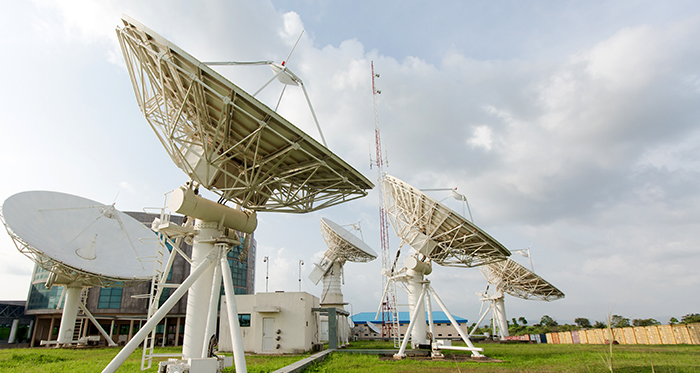
Nigeria has set 2028 and 2029 as the timeline for the deployment of its new satellites, NIGCOMSAT-2A and 2B, respectively.
The Managing Director of NIGCOMSAT, which is Nigerian Communications Satellite Limited and the premier satellite operator in Nigeria, Mrs Jane Nkechi Egerton-Idehen, disclosed this at the second Nigerian Satellite Week in Abuja on Monday. She noted that the development is expected to boost military intelligence, surveillance, and regional connectivity.
“For 2A and 2B, we have started the process. We have closed the tender and are now back into the financing and implementation stage. 2A is built to come up in 2028, and 2B for 2029.
“When they are up and running, they are expected to provide security within the borders and neighbouring countries. They will support the security agencies because data collection and intelligence in real time is important. Satellites like communication satellites allow that, irrespective of where they are,” she said.
In his remarks, the Minister of Communications and Digital Economy, Mr Bosun Tijani, said the satellites form part of the nation’s strategy to strengthen digital infrastructure.
Mr Tijani explained that the satellites will complement ongoing investments in 90,000 kilometres of fibre-optic cable and nearly 4,000 telecom towers, which are being rolled out nationwide and extended to neighbouring countries, including Cameroon, Niger, Chad, Burkina Faso, and the Republic of Benin.
He stressed that satellite technology is critical for national development, affecting education, agriculture, business, and emergency response.
“The president’s approval of NIGCOMSAT-2A and 2B demonstrates a clear commitment to building the future. These satellites will enhance security, connect remote communities, and extend our fibre-optic network into neighbouring countries,” he said.
“Some of these neighbouring countries pay up to ten times more for internet capacity than Lagos. Extending our fibre network will not only improve connectivity but also enhance border security and regional collaboration.
“Satellite technology affects everything, from how a child in a rural community accesses the internet to how farmers make critical decisions and how businesses operate across distance,” the Minister said.
Also speaking, the Chief of Army Staff (COAS), Lieutenant General Waidi Shaibu, welcomed the development, saying the military will leverage the satellites for operational efficiency.
“The Nigerian Army will continue to use space assets to improve intelligence gathering, surveillance, and operational coordination across all theatres of operation,” he said at the event, represented by Major General Kennedy Osemwegie, Commander of the Nigerian Army Cyber Warfare Command (NACWC).

By Modupe Gbadeyanka
A partnership to advance digital payments and financial inclusion across East Africa has been strengthened between Interswitch and KCB Group.
Both parties have agreed to expand digital payment infrastructure and deliver innovative financial solutions that meet the evolving needs of individuals, businesses, and institutions across the region.
The aim is to accelerate seamless, secure, and inclusive digital payments in East Africa, where the leading Africa-focused integrated payments and digital commerce enabler, Interswitch, recently announced an expansion of Verve card acceptance footprint, leveraging its consolidated partnership with KCB Group, Kenya’s largest financial services group by assets, following a similar move in Uganda through the local KCB Franchise in February 2022.
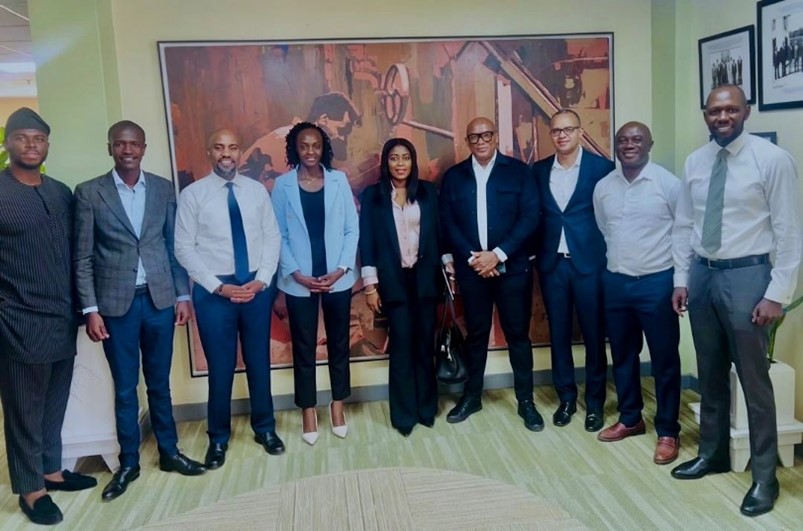
During a recent executive engagement at KCB Group headquarters in Nairobi, the chief executive of Interswitch, Mr Mitchell Elegbe, held high-level discussions with KCB leadership, including its chief executive, Paul Russo.
At the core of the strengthened collaboration is the integration of Interswitch’s robust payment rails, card scheme, and emerging digital token solutions with KCB Group’s expansive regional footprint and trusted banking franchise.
This integration enables the acceptance of Verve cards and tokenised payment solutions across KCB’s extensive merchant point-of-sale network in Kenya and Uganda, significantly enhancing everyday usability for customers while strengthening KCB’s digitally driven retail payments offering.
The consolidated partnership is expected to drive increased merchant acquisition, improve interoperability across payment ecosystems, and expand access to secure, cashless transactions. It also reinforces both organisations’ shared objective of deepening financial inclusion and accelerating digital commerce across East Africa.
“Our collaboration with KCB Group represents a powerful alignment of vision and capability. By combining our technology-driven payment solutions with KCB’s strong regional presence, we are unlocking new opportunities to scale access, drive innovation, and deliver greater value to customers across East Africa,” Mr Elegbe stated.
By Adedapo Adesanya
The Nigerian Communications Commission (NCC) has directed Mobile Network Operators (MNOs) to provide compensation to subscribers whose network quality of service experience is below specified targets within specific locations.
In a Sunday statement, the commission noted that its position is that customers should not be made to bear the full burden of service disruptions where operators fail to meet prescribed standards of service delivery.
Under this directive, NCC said erring operators would compensate affected users directly for breaches of Quality of Service (QoS) Key Performance Indicators (KPIs).
Mobile Network Operators (MNOs) will be required to pay these compensations for instances of poor quality of service recorded within specified time frames.
“The compensation will be provided in the form of airtime credits, calculated based on subscribers’ average spending patterns and their presence within Local Government Areas where service failures occur”, according to the statement.
The directive is rooted in the agency’s broader regulatory philosophy that places the consumer at the centre of Nigeria’s telecommunications ecosystem.
“Telecommunications services today underpin economic activity, social interaction, and access to digital opportunities. When service quality is poor, the consequences affect productivity, commercial activities, and even public confidence in our communications system.
“While regulatory fines have traditionally served as a deterrent against poor service delivery, the Commission is adopting a more consumer-focused approach that strengthens accountability within the industry”.
The commission explained that it has designed this measure to complement existing and ongoing efforts to strengthen service quality monitoring and enforce performance standards.
Further to this directive by the commission to MNOs on compensation to consumers, the regulator has mandated Tower Companies that own the critical infrastructure, such as masts, for Quality of Service delivery, to invest in infrastructure with measurable outcomes using sums that it has fined these companies, in addition to other financial fines the Commission will deem appropriate.
“The commission will continue to reinforce the obligation of operators to invest consistently in network resilience, capacity expansion, and infrastructure upgrades to meet the growing demand for telecommunications services.
“At the same time, it will deploy regulatory tools that promote fairness, transparency, and accountability across the sector, ensuring that every subscriber receives the quality of service they deserve while sustaining a telecommunications industry capable of powering Nigeria’s digital future”, the statement added.
-
 Feature/OPED6 years ago
Davos was Different this year
-
Travel/Tourism10 years ago
Lagos Seals Western Lodge Hotel In Ikorodu
-

 Showbiz3 years ago
Estranged Lover Releases Videos of Empress Njamah Bathing
-
 Banking8 years ago
Sort Codes of GTBank Branches in Nigeria
-

 Economy3 years ago
Subsidy Removal: CNG at N130 Per Litre Cheaper Than Petrol—IPMAN
-

 Banking3 years ago
Sort Codes of UBA Branches in Nigeria
-

 Banking3 years ago
First Bank Announces Planned Downtime
-

 Sports3 years ago
Highest Paid Nigerian Footballer – How Much Do Nigerian Footballers Earn