Travel/Tourism
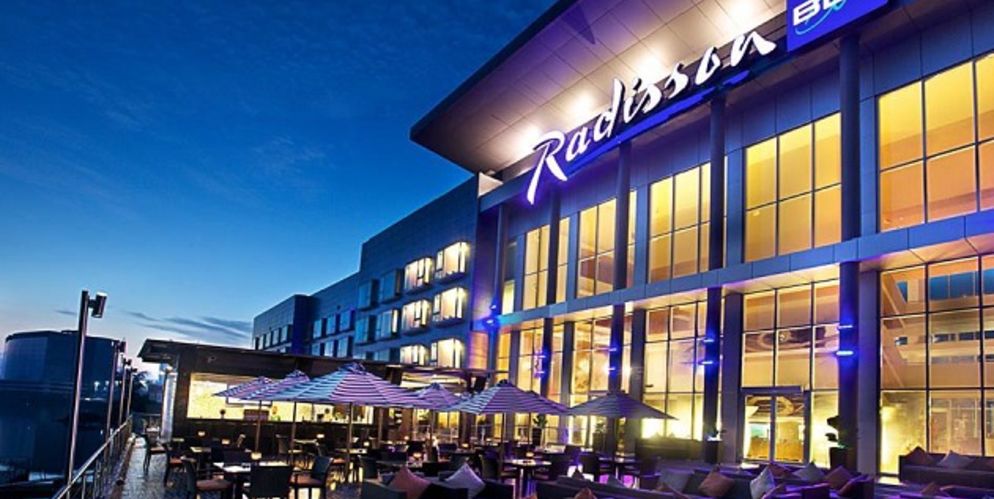
Radisson Blu to Build 258-Room Hotel in Abuja
By Dipo Olowookere
The hospitality business in the Nigerian seat of power, Abuja, will get more competitive and bigger with the planned entry of Radisson Blu in the next four years.
In a statement, Radisson Hotel Group said it was adding six new hotels to its African portfolio, bringing the total to almost 100 hotels across 32 African markets.
One of the six new hotels is to situated in Abuja, the firm said it will be the first in the city. Transcorp Hilton has over the years enjoyed huge patronage of the high and mighty in the private and public sectors in Abuja.
It was stated that the Radisson Blu Hotel Abuja City Centre, scheduled to open in 2024, will complement the existing nine hotels in operation and under development in Nigeria.
Located in the heart of the central business district of Nigeria’s Federal Capital, the 258-room hotel will boast five different food and beverage outlets from a speciality restaurant and all-day-dining restaurant to a Lobby Bar & Café, a picturesque pool terrace and a premium business class lounge.
The leisure facilities will include a 555sqm wellness spa, a gym and a swimming pool to maintain guest’s wellness, the statement said.
“We believe in the vast potential of Africa. The addition of the six hotels, following the announcement of Radisson Hotel Saint Denis earlier this year, places us firmly on track to reach over 150 hotels in operation and under development across the continent within the next five years.
“The new hotel announcements include our debut in new markets, the introduction of additional brands and the strengthening of our presence in cities we’ve identified for scaled growth.
“We thank our hotel partners for their invaluable trust in Radisson Hotel Group and its people,” the Executive Vice President & Chief Development Officer of Radisson Hotel Group, Elie Younes, said.
Also, the Vice President, Development, Africa & Turkey at Radisson Hotel Group, Mr Ramsay Rankoussi, stated, “Our growth has been well balanced between greenfield projects and strategic take-overs of existing hotels.
“We aim to further accelerate our presence across the continent through conversions, especially as liquidity remains a critical challenge. We have revisited our brand architecture to enable us to quickly integrate existing hotels to our network.
“This strategy will be reinforced as our brands continue to demonstrate a better value proposition to our owners.
“Following our revised strategy, we believe we are now geared in providing solutions to the investment community for every type of asset, every segment and at every stage – from funding to construction and repositioning.”
Business Post reports that Radisson Blu plans to open a 200-room affordable luxury hotel in Bamako, Mali within the next six months; launch a 289-room hotel in Johannesburg before year-end; open a 14-room facility in Addis Ababa, Ethiopia in 2021; renovate of an existing 121-room hotel and construct an additional tower which will offer 54 hotel apartments in Accra, Ghana by 2023; and open a 168-room hotel in 2022 at the Durban International Airport in Dube, South Africa.
Travel/Tourism
Nigeria Caps Jet Fuel Prices, Allows Airlines Buy on Credit to Avert Disruptions
By Adedapo Adesanya
The Nigerian government is capping jet fuel prices and allowing airlines to get supplies on credit as part of efforts to avert flight disruptions caused by soaring fuel costs.
Reuters reported that the Nigerian Midstream and Downstream Petroleum Regulatory Authority (NMDPRA) said in an internal document that aviation fuel should sell for N1,760 to N1,988 ($1.29 to $1.46) per litre in Lagos and N1,809 to N2,037 in Abuja, based on benchmarks from April 17 to April 23.
The decision follows emergency talks after airlines threatened to go on a strike, warning that jet fuel prices had jumped by more than 300 per cent, forcing fare increases and raising the risk of capacity cuts.
The strike was averted after the federal government met with the Airline Operators of Nigeria (AON) and other stakeholders.
President Bola Tinubu last week approved 30 per cent relief on airlines’ debts to aviation agencies and ordered fuel marketers, airlines and regulators to agree on a “fair” fuel price within 72 hours to prevent the sector-wide shutdown that would have impacted the country’s economy.
The talks also agreed to grant airlines a 30-day credit window to pay for fuel and tasked the aviation ministry with mediating debt disputes between operators and oil marketers, according to the document.
The NMDPRA also formed a technical committee, which recommended that fuel marketers sell directly to airlines within the indicated price range to cut costs and improve supply-chain transparency.
The committee also urged regulators to engage Dangote Petroleum Refinery and Petrochemicals over the increased premiums applied to international benchmarks used to price jet fuel.
Other recommendations include validating airside fuel distributors with adequate infrastructure, potentially reducing the number of authorised suppliers at airports, and considering jet fuel for Nigeria’s Crude-for-Naira initiative to limit airlines’ foreign exchange exposure. So far, the Crude-for-Naira has only been for upstream operations.
The cost of fuel has generally risen in the last two months due to the escalating war with Iran by the US and Israel, which has triggered one of the most severe energy shocks in decades. Oil prices are currently above $100 per barrel as markets react to escalating tensions and the risk of prolonged disruption.
At the centre of the crisis is the Strait of Hormuz, a chokepoint through which roughly one-fifth of global oil supply flows. With shipping constrained, the effects are cascading across the global economy, raising fuel costs, fueling inflation, and increasing the risk of economic slowdown across many economies. This is forcing airlines to raise fares, curb growth plans and rethink forecasts.
Travel/Tourism
US to Nigerian Travellers: Visa Overstays Not Good for Fellow Citizens
By Adedapo Adesanya
The United States (US) has warned that visa overstays by Nigerian travellers could deny future opportunities for other aspiring applicants.
The United States embassy had earlier in February stated that compliance would help protect visa access for students and business travellers.
In a reminder statement posted on its official X handle on Monday, the US Mission in Nigeria advised that strengthening compliance helps protect visa access for students, business travellers, and families who travel responsibly.
“#Reminder: Visa overstays by Nigerian travellers can affect opportunities for their fellow citizens. Strengthening compliance helps protect access for students, business travellers, and families who travel responsibly. If you are aware of visa fraud, please report it to [email protected] or [email protected],” the statement read.
Last August, the Mission also announced that all non-immigrant visa applicants must now provide details of their social media accounts from the past five years.
In a statement, the embassy said applicants are required to disclose usernames or handles from every platform used within the period when completing the DS-160 visa application form.
“Visa applicants are required to list all social media usernames or handles of every platform they have used from the last 5 years on the DS-160 visa application form. Applicants certify that the information in their visa application is true and correct before they sign and submit,” the statement read.
The mission warned that omitting such information could result in visa denial and render applicants ineligible for future visas.
The DS-160 is the standard online form required for most US non-immigrant visas, including temporary business (B-1), tourism (B-2), student visas (F and M), and work-related categories such as the H-1B.
It insisted the new rules were designed to enhance security, they come amid repeated US criticism of governments accused of clamping down on free speech online.
Travel/Tourism
Tinubu Okays 30% Debt Relief to Airlines, Orders Fuel Price Talks
By Adedapo Adesanya
President Bola Tinubu has approved a 30 per cent relief on debts owed by local airlines to aviation agencies and ordered talks involving fuel marketers, airlines, and regulators to reach a fair jet fuel price.
He had earlier agreed in principle to write off part of domestic airlines’ debts to aviation agencies following successful talks with the Airline Operators of Nigeria (AON).
The group demanded a total waiver of debts owed to aviation agencies to cushion the effect of a 300 per cent increase in aviation fuel prices during a crucial high-level meeting with the Minister of Aviation and Aerospace Development, Mr Festus Keyamo and other critical stakeholders in Abuja.
Recall that the airlines had called off their impending strike due to commence on Monday over the rising cost of operations, particularly for fuel, triggered by the current Middle East crisis.
In an update on Thursday, Mr Keyamo said President Tinubu had approved the 30 per cent write‑off and tasked stakeholders, including fuel marketers, government representatives, airlines, and regulators, to reach a fair jet fuel price by Sunday.
Also, the federal government agreed to set up a committee to review taxes, levies and fees charged on domestic air tickets, to recommend cuts to ease pressure on airlines and passengers.
Engagements among representatives from government, airlines, fuel marketers, and regulators will continue to agree on what the minister described as “fair and reasonable” pricing for jet fuel, with any outcome to be made public.
The cost of fuel has generally risen in the last two months due to the escalating war with Iran by the US and Israel, which has triggered one of the most severe energy shocks in decades. Oil prices are currently above $100 per barrel as markets react to escalating tensions and the risk of prolonged disruption.
At the centre of the crisis is the Strait of Hormuz, a chokepoint through which roughly one-fifth of global oil supply flows. With shipping constrained, the effects are cascading across the global economy, raising fuel costs, fueling inflation, and increasing the risk of economic slowdown across many economies. This is forcing airlines to raise fares, curb growth plans and rethink forecasts.
-
Feature/OPED6 years agoDavos was Different this year
-
Travel/Tourism10 years ago
Lagos Seals Western Lodge Hotel In Ikorodu
-
Showbiz3 years agoEstranged Lover Releases Videos of Empress Njamah Bathing
-
Banking8 years agoSort Codes of GTBank Branches in Nigeria
-
Economy3 years agoSubsidy Removal: CNG at N130 Per Litre Cheaper Than Petrol—IPMAN
-
Banking3 years agoSort Codes of UBA Branches in Nigeria
-
Banking3 years agoFirst Bank Announces Planned Downtime
-
Sports3 years agoHighest Paid Nigerian Footballer – How Much Do Nigerian Footballers Earn