

World
Expanding BRICS for Numerical Strength or Ensuring Qualitative Geopolitical Influence

By Professor Maurice Okoli
As stipulated by the guidelines, Russia will take over BRICS [Brazil, Russia, India, China and South Africa] from January 2024. With the heightening of geopolitical tensions, Russia’s priority focus is on the group’s possible enlargement to counter U.S. hegemony. It plans to push seriously for critical reforms in the international financial architecture and create a solidified platform for building an equitable multipolar world order.
In the past few years, the BRICS group has taken a number of broad initiatives that aim at countering hegemonic policies and against the collective West for imposing the ‘rules of the game’ on the world majority. There have been explicit indications that Russia’s BRICS presidency from January 2024 will constitute another clear chance towards entering into forming alliances with Africa, Asia and Latin America.
Deputy Foreign Minister Sergey Ryabkov said in early October that BRICS had agreed on a list of candidates for partner-state status ahead of the upcoming summit in Kazan in 2024. According to Ryabkov, during the Russian BRICS chairmanship, special attention would be expanding the “circle of BRICS friends,” including in Latin America.
Many Latin American countries have expressed their desire to join the group. African countries, particularly Burkina Faso, Chad, Mali, Niger and Central African Republic have appeared on Russia’s list as potential members. In addition, Angola, Kenya, Nigeria, Senegal and Zimbabwe have appeared in media reports, striking membership deals with Russia, hoping to secure their ultimate accession to BRICS status during Russia’s chairmanship.
Currently, Russia is supporting African countries in their fight against trends of growing neocolonialism, forging close cooperation in preserving their sovereignty and political independence. Russia has persistently been confronting Europe and the United States over dominating and exploiting Africa. The relationship between China and Russia is strengthening. Nevertheless, China and Russia still have their approaches to some global issues. China promotes cooperation even with the United States, while Russia insists on confrontation. Creating divisions and partitions is simply not the right path to global peace and development. Why not attempt to reach ‘consensus’ – the catchword of BRICS? This fierce political confrontation is sharpening disunity across Africa, and impacting the prospects of the African Continental Trade Area [AfCFTA], the African Union’s flagship program under the Agenda 2063.
Despite the continental instability, African countries still seriously consider the traditional markets in the United States and Europe for their revenue products, and the recent Johannesburg summit witnessed in-depth discussions relating to new agreements between the AfCFTA and the African Growth and Opportunity Act [AGOA] which will presumably be extended for another 16 years, until 2041. It offers certain broad conditions as a stepping-stone to address regional and global challenges, especially for Africa’s young and entrepreneurial population. That expected leverage will strengthen trade relations with Africa.
South Africa and BRICS
South Africa has so far displayed pragmatism. It deals with global players without discriminating. Moreover, South Africa has adopted ‘neutrality’ and further taken non-aligned positions on many issues in its foreign policy, thus fulfilling the promise of strategically working on the bilateral relationship with all countries. Research establishes noticeable facts, for instance, that South Africa’s export trade to the United States, United Kingdom and the European Union account for a combined 35%, and with China around 9%. United States trade with South Africa totalled $25.5 billion in 2022. Exports were $9.3 billion; imports were $16.2 billion. Russia’s trade was $1.3 billion with South Africa in 2023.
With an estimated population of 58 million, South Africa [BRICS member] is the southernmost country in Africa. Energy deficit has crippled industrial operations and supplies for domestic use have largely been reduced. Social discontent, as a result of the multiple crises, has engulfed every corner of South Africa. The World Bank has approved a $1 billion loan to support South Africa’s energy sector which is currently experiencing worse conditions including inadequate funds for overhauling, renovation and upgrading.
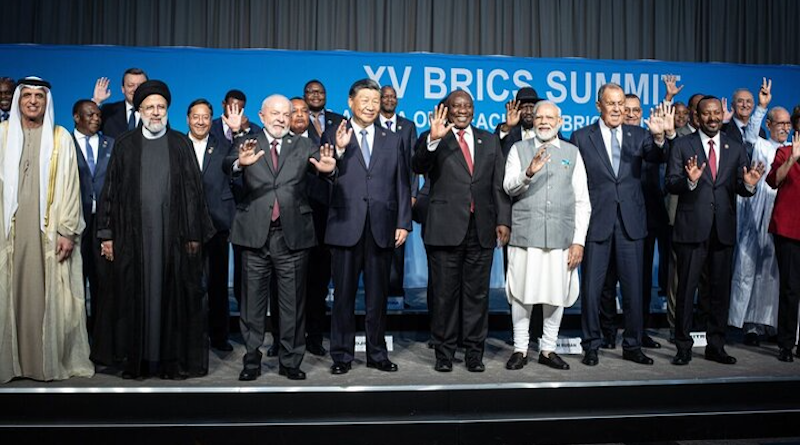
At the end of the 15th BRICS summit held in South Africa, the leaders called for a more active use of national currencies in financial transactions as part of the adopted declaration. But the basic arguable question here remains that the well-established BRICS+ format and many new members joining BRICS in 2024 have, over a long period, had profitable trade ties with the United States and Europe.
For fresh members, it is the significance of trade and economic partnership between them and BRICS. In fact, balancing the economic interests of these African countries is as important for this sustainable world order as lasting peace and indivisible security. Therefore, Russia’s leadership has to provide that platform and step-by-step to advance their development-oriented aspirations and streamline the effective full-scale operational activity with BRICS.
Application process
Discussions about the expansion and entry of new members were little addressed until the early 2020s. The leaders and top-ranking diplomats of the founding bloc began the discussions for the expansion of the group, most often referring to 2010, the year South Africa joined after accepting an invitation from China. BRICS is the acronym composed of the first letters of the countries’ names in English. The term BRIC was originally coined in 2001 by Goldman Sachs economist Jim O’Neill at the University of Manchester, and with South Africa, it was renamed BRICS.
Until today, there is no formal application process as such to join BRICS, but any hopeful government must receive unanimous backing from all existing BRICS members – Brazil, Russia, India, China, and South Africa – to receive an invitation. In a rush to overcome Western imperialist-economic hegemony on the path of strengthening economic integration and developing economic activities, BRICS members, particularly Russia set to indiscriminately ask for applications it termed ‘friendly allies’ from around the world.
While sharing positive concerns for the group’s expansion, existing conflicting issues among new members have to be taken into serious account, as it may likely influence future genuine policy partnerships. The BRICS bloc has not set any concrete criteria, admission of new candidates is determined by a simple ‘consensus’ – a general agreement at the summit. But experts, as the situation over expansion is increasingly evolving, have beamed warning lights over indiscriminate admission of new members.
In August 2023, it was reported that more than 40 countries had shown interest in joining BRICS, including 22 that had formally applied to join. Historically, since 2017 it was China that insisted on promoting the BRICS+ format to attract a large number of non-participating countries to the organization. BRICS’ scope of activities has indeed widened to include issues relating to education and culture, health and living standards, science and technology, finance and politics. Now, of course, many appreciate others joining in building a partnership with BRICS. But now so frequently, and often asked – quality or quantity?
Monitoring various discussions and developments, Alexander Shokhin, head of the Russian Union of Industrialists and Entrepreneurs (RSPP), in early November suggested that BRICS countries should agree on the rules of the game ‘for the five’ before expanding the organization. The BRICS countries have not yet sufficiently formed a common economic policy, whose most important element should be a new monetary and financial system, in order to accept new countries into the organization.
“Considering BRICS as such an alternative [to the Western model of the global economy], to be honest, is that we have not succeeded in rendering BRICS an effective mechanism for forming new rules of global trade, payment and settlement relations, an alternative financial system, and so on, in order to have begun to engage in expansion,” Shokhin said at the plenary session of the International Financial University Forum.
“For me, it would be better for the five [countries] to develop the rules of the game, and to incorporate new members as members joining not the organization, but the rules of the game,” Shokhin added.
Shokhin noted that the process of coming to a consensus is difficult even with the current BRICS composition, “Even when talking about the interests of India and China in creating an alternative monetary and financial system, we see that this is not an easy matter.” In addition, it will be even more difficult to form common rules with such participants as Iran or Ethiopia.
“With the presence of Ethiopia, for example, Iran and a number of other countries, of course, it will be rather difficult to do [to develop new ‘rules of the game’]. In fact, it would be good for us to have Indonesia as a member of BRICS, because Indonesia is one of the examples of a growing economy, based on a combination of the old principles of inexpensive labour resources and technological progress, among other matters, on the latest technological solutions, including robotics, artificial intelligence, and so on,” Shokhin said, describing the preferred vector to expand BRICS.
“BRICS chairmanship should rather aim at trying to make maximum progress in forming the rules of the game within the organization, so that alternative systems could be proposed; and above all, of course, an alternative monetary and financial system, as well as a payment and settlement system,” Shokhin said, summarizing his position regarding the tasks facing BRICS.
Arguments for Expansion
According to Russia’s Ministry of Foreign Affairs, Africa should be an essential part of the BRICS expansion, and form the necessary part of the platform for dealing with growing neocolonialism in the continent. South Africa was considered as a conduit and entry point into Africa when it was admitted as the fifth member in 2010. Despite showing large-scale varying rates of economic development, and unresolved long-standing conflicts between them, Ethiopia and Egypt stand as new members on the recommendation by Russia backed by South Africa and China.
Minister of Foreign Affairs Yusuf Tuggar said in an interview with Bloomberg that Nigeria would seek to become a member of the BRICS group within the next two years as part of a new foreign policy push to have its voice heard in important global organizations.
Nigeria, Africa’s most populous nation, is seeking to assert its leadership role on the continent after years of playing a subordinate in international politics. “Nigeria has come of age to decide for itself who her partners should be and where they should be, being multiple aligned is in our best interest, and therefore it is necessary to transfer cooperation to a new strategic level on the globe,” Tuggar said.
“We need to belong to groups like BRICS, like the G-20 and all these other ones because if there’s a certain criterion, say the largest countries in terms of population and economy should belong, then why isn’t Nigeria part of it?” Tuggar said.
Nigerian President Bola Tinubu, who was invited to attend the G-20 summit in India in September, has said he would push to join as a permanent member. South Africa, the continent’s most industrialized nation, is already a member of the Group of 20 and joined BRICS in 2010, a year after it was formed.
South Sudan’s Ambassador to Moscow Chol Tong Mayay Jang also said that his country is studying the possibility of joining BRICS. The diplomat noted that “given the current geopolitical situation in the world, you see, there are many people who see that BRICS may be the best option.”
The envoy pointed out that “even most of the allies from the Middle East, allies of the West, have already expressed interest to join BRICS.” “Saudi Arabia, which is a very close ally to the US, is now a member of BRICS,” he stressed, adding: “It means that there is something, which is making people now seek a refuge.”
Before we even delve further into the complexity of the possibilities that could happen if those African countries listed to join BRICS, it is important to know what the BRICS agenda has for them or say simply as a show of solidarity, as reports indicated that Central African Republic (CAR) plans to submit an official application to BRICS. Russian Ambassador to the CAR Alexander Bikantov acknowledged in an interview that the CAR continues to develop its relations with the BRICS member states, both at the bilateral level and on various international platforms. “In August 2023, CAR President Faustin-Archange Touadera participated in the [15th] BRICS Summit in Johannesburg,” the diplomat noted. “Contacts were established with the International Alliance of BRICS Strategic Projects. As well, the joint intention for opening representative offices in Moscow and Bangui was declared.”
From various points of view, it is convincing to conclude that the aim of the latest irreversible expansion is touted as a large part of the plan for building a ‘multipolar’ world order that will definitely put weight on hitherto subdued voices of the Global South and brings them up to the centre of the world agenda. Russian President Vladimir Putin said at the St Petersburg International Cultural Forum – Forum of United Cultures on November 17 underlined this fact that the flexible admission of new members to the BRICS association presents an example of “how a compromise can and needs to be sought and achieved without imposing any viewpoint.”
“These are the organizational principles of BRICS, which is not a bloc, all the more so, it is not a military bloc but it creates conditions for achieving mutual understanding,” Putin underscored the principles for enrolling new members.
President Xi Jinping said at the extraordinary BRICS online summit on the Middle East in November that China, along with other BRICS members, would support Russia’s chairmanship of the organization next year. Xi described the BRICS cooperation mechanism as “an important platform for emerging markets and developing countries to strengthen unity and cooperation and safeguard common interests.”
At the Primakov Readings international forum held in late November, Foreign Minister Sergey Lavrov remarked the trends shaping the multipolar order are new realities. The unbalanced and unfair model of globalization is becoming a thing of the past. The emergence of new global development centres, the increasing self-awareness of many developing countries and their refusal to blindly follow former colonial powers.
Today, new players representing the Global South and Global East have stepped onto the international political stage. The geopolitical ambitions of the new global players are buttressed by their economic potential. Their numbers are growing, according to Lavrov, and to support his argument referred to President Vladimir Putin who said at the G20 extraordinary summit on November 22, that a “significant portion of global investment, trade and consumer activity is shifting to the Asian, African and Latin American regions, which are home to the majority of the world’s population.”
“Proceeding from the principles of equality and mutual respect, they are reaching a balance of interests via consensus. It’s no surprise that dozens of states want to get closer to BRICS. The number of BRICS members will double. Another 20 states have made similar inquiries or would like to establish special, privileged relations with this association. Next year, Russia will be chairing BRICS. We will do everything we can for BRICS to strengthen its stature in the international arena and to continue playing an increasingly greater role in creating a fair world arrangement,” underlined Lavrov at the Primakov Readings international forum, which is held yearly for politicians, diplomats, experts and academics, originally initiated since 2015.
Lavrov noted a bit earlier, in mid-Autumn, that “the weight, prestige and role of an individual candidate country and, of course, its position in the international arena” were taken into account in decision-making on accepting new members to expand BRICS. An updated list of candidate countries for BRICS membership will be prepared for consideration at the group’s next annual summit in Kazan under Russia’s one-year chairmanship.
South Africa holds the rotating presidency of BRICS until December 2023 and will pass it on to Russia. According to official sources, BRICS members [Brazil, Russia, India, China and South Africa] have decided to invite Argentina, Egypt, Ethiopia, Iran, Saudi Arabia and the United Arab Emirates to join as full-fledged members of the group from January 1, 2024.
Professor Maurice Okoli is a fellow at the Institute for African Studies and the Institute of World Economy and International Relations, Russian Academy of Sciences. He is also a fellow at the North-Eastern Federal University of Russia. He is an expert at the Roscongress Foundation and the Valdai Discussion Club.
As an academic researcher and economist with a keen interest in current geopolitical changes and the emerging world order, Maurice Okoli frequently contributes articles for publication in reputable media portals on different aspects of the interconnection between developing and developed countries, particularly in Asia, Africa and Europe. With comments and suggestions, he can be reached via email: markolconsult (at) gmail (dot) com


