

World
Russia’s Romance With Africa After Soviet Collapse

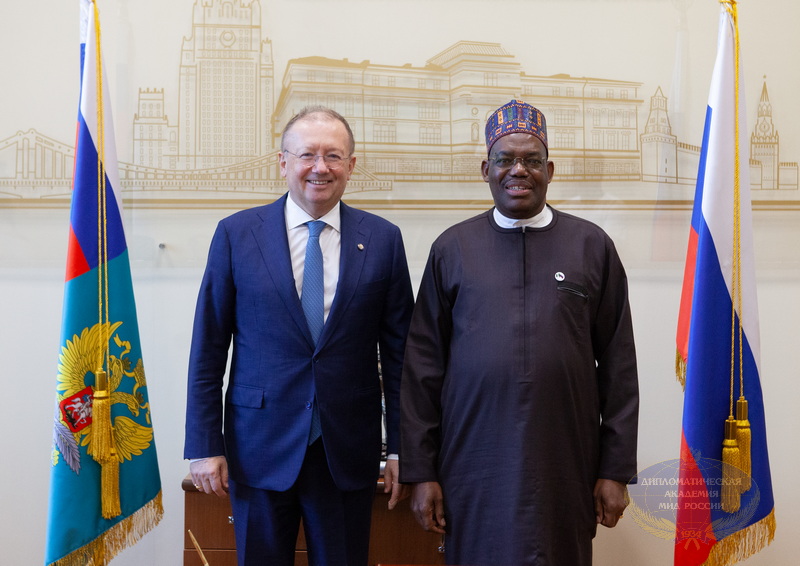
By Professor Abdullahi Shehu
The collapse of the Soviet Union and the decades of the 90s seemed to have reversed the gains made in Africa-Soviet Relations and, by extension, in Africa-Russia relations.
Understandably, it was a period of politico-ideological downturn and harsh economic realities for Russia, the successor nation to the Soviet Union. The speech of H. W Bush on December 25, 1991, was clear and unambiguous. He summarized the victory of the value-based American/Western model thus: “This is a victory for democracy and freedom. It is a victory for the moral force of our values. Every American can take pride in this victory.”
Following the collapse of the USSR, a new wave of democratic change blew all over Africa. Old ideological friends of the Soviet Union changed camps in line with the changing political dynamics. Party models became transformed from single-party to multiparty systems in Africa.
Interestingly, ideologues became transformed in favour of the capitalist-democratic model. The United States sub-committee on Foreign Relations in March 1998 commended Laurent Kabila of the Democratic Republic of Congo, Yoweri Museveni of Uganda, Paul Kagame of Rwanda, Meles Zenawi of Ethiopia and Isaiah Afwerke of Eritrea as examples of the power of democracy in Africa. Incidentally, relations with Russia’s traditional friends and those with which it had diplomatic ties were at their lowest ebb. Many Russian missions in Africa were closed down; those unclosed were severely pruned down.
ln the case of Angola, for instance, where the USSR had made tremendous financial, material, technical and military investments, the Soviet-backed Cuban military and technical personnel were all withdrawn at short notice. Demand was made for the repayment of debts owed to Russia by African countries, including her traditional partners, at a seemingly odd time when Africa’s debt burden was unbearable. These measures facilitated a new romance between African and Western partners, the latter of which were all too eager to entrench themselves in the vacuum left behind by the Soviet Union.
Old Music, New Dance
There are at least two specific commendable initiatives towards Africa designed by the government of H.E President Vladimir Putin to re-launch Russia into Africa’s geopolitical space. These initiatives, in my view, tally with the personality of H.E President Vladimir Putin, who, as an agent of the former KGB (now FSB), saw the collapse of the Soviet Union as “the major geopolitical catastrophe of the century”. In this sense, a new partnership with Africa could be defined not in terms of ideology but by alternative economic and developmental options which give Africa competitive parity.
The two initiatives are H.E President Vladimir Putin’s debt cancellation of twenty billion dollars ($20 billion) owed to Russia by African countries, which, in his very own word, “was not only a mark of generosity but also a manifestation of pragmatism”. In 2019, Russia held the first ever “Russia-Africa Summit” in Sochi, in which it committed $12.5 billion in business deals, mainly in Arms and grains.
Analysts may be quick to interpret this as the usual trend, more in the fashion of United States-Africa, China-Africa, Japan-Africa, France-Africa summits, etc; but as observed by Landry Signé between 2005 and 2015, Africa’s trade with Russia grew by 185% a “reawakening” which commenced since the 2000s.
Though this trade surge is worthy of note, the volume of trade between Russia and Africa was $14.5billion per annum in 2020. This figure, however, pales into insignificance when compared with China, whose trade with Africa has attained $165 billion per annum during the same period and $254 billion in 2021, even with its late-comer status in Africa. This is to say that the doubling of trade relations within the next five years between Africa and Russia, as stated by Vladimir Putin in 2019 in Sochi, is not only a vision in the right direction of growing Russia’s partnership with Africa, but it is also a desirable imperative.
As argued by Emman El-Badawy in the article ‘Security, Soft Power and Regime Support: Spheres of Russian Influence in Africa,’ “two distinct, now common explanations, have emerged to explain Russia’s growing interest in Africa. The first argues that Russia is intent on rekindling old Soviet-era ties to the continent to extract resources in return for security assistance – a mutually beneficial yet opportunistic strategy that is, short-term and transactional…
The alternative suggests that Putin considers Africa a so-called second frontier, after Eastern Europe for encircling Western Europe…” These reasons may sound strategic, yet they remain largely speculative and conjectural. Understandably, the perceived geopolitical irrelevance of Africa by Russia has changed, and new dynamics have beckoned on both sides of subsisting opportunities for increased collaboration between Africa and Russia. One clear thing, therefore, is that Africa-Russia relations are on the ascendancy again after the post-Soviet era of passivity and inaction.
Between 2015 and 2019, a total of 20 bilateral military cooperation agreements were signed between Russia and African states. Many Russian companies such as Lukoil, Gasprom, Rosatom and Restec are some of Russia’s energy and power industries which are actively engaged in Nigeria, Egypt, Angola, Algeria and Ethiopia. Here, it must be stressed that in 2018, “Nigerian oil and gas Exploration Company Oranto Petroleum announced that it would be cooperating with Russia’s largest oil producer, Rosneft, to develop 21 oil assets across 17 African countries.”
Unfortunately, this has not materialized due to Rosneft’s lack of interest in doing business in Africa. Additionally, Russian Rosatom has signed nuclear energy agreements with 18 African countries, including Nigeria, Egypt, Ethiopia and Rwanda, to address the power needs of those countries.
In summarizing the Russian strategic policy interest in Africa and given the strong limitation of its current capability, according to Paul Stronski, one time Senior Analyst for Russian domestic politics for the U.S State Department Bureau of Intelligence and Research, “in many respects, Russia’s reemergence in Africa, is an earnest attempt to resume relations where they were left when the Soviet Union departed the scene.”
Continuing, Paul Stronski further argues that “the Horn of Africa represents an opportunity for Russia to secure a springboard for projecting power into the Red Sea, Gulf of Aden and the Persian Gulf. In sub-Saharan Africa, its priority is on exploiting new commercial opportunities and securing diplomatic support for its positions in multilateral institutions.”
The visible signs of Russian activities in the Central African Republic, Mali, Libya and Angola lend incredulity to Stronki’s assertion judging from the concrete deliverables so far enjoyed from Africa-Russia relationships. For instance, when the United States was unwilling to supply Nigeria with arms in 2014 to execute the war against Boko Haram because of allegations of human rights violations, Nigeria was able to place an order for 12 attack helicopters from Russia. To my Russian friends, I say thank you. Thank you on behalf of H.E Muhammadu Buhari, whom I represent. Thank you on behalf of the Nigerian people whom it is my privilege to serve in Russia.
Africa and Neo-Colonialism
Africa may have divested itself majorly from the vestiges of colonial bondage, yet the yoke of neocolonialism continues to bring new challenging shackles which erode the gains of Africa’s independence. As observed by Charles McKelvey (2017), the new struggle is characterized by “core peripheral economic relations that in essence is a continuation of the economic relations imposed by conquest and force during the colonial era… it is a rule through a figure-head bourgeoisie that inserts itself into the structures of economic penetration and exploitation benefiting itself at the expense of the majority of the people in the nation. It finds expression in economic and cultural imperialism, in conditional aid designed to exert influence or indirect control.”
Although Africa is not alone in this new malaise, its emphatic vulnerability is more reflected in Africa by the weaknesses of its institutions and the pervasive invasion of the world order that keeps it in perpetual economic subjugation to the global north. One of the famous speeches of Julius Nyerere, the former President of Tanzania, on “Ujamaa” aptly captures this situation when he said that before independence, fifteen tons of our maize could buy us a car; today, we have to produce twenty-five tons of maize to buy the same brand of car.
It is in light of the foregoing that an international trading system that guarantees equity and fairness needs to be revisited and renegotiated. In this context, I commend the shift of BRICS in its new method of doing business. This is just a beginning and not an end in the long and tortuous road to the route along which a new world order that will be based on equity, fairness and justice will go. There is no doubt that that long road towards a desired equitable world order of which only a step has been taken by BRICS, will have a series of dangerous rivers to cross in its journey to maturation. The visibility of and the potent challenge against the current world order by BRICS is indicative of the order’s waning influence and its global loss of appeal.
Understanding The Realities
Despite the tidal surge in the new Africa-Russia relations and given the strategic role played by the defunct Soviet Union, now succeeded by Russia, in the attainment of the independence of many African countries, both parties must accept the constraints posed by the former (Russia) by the new economic cum geopolitical realities. The acceptance of these new realities is important in order to properly assist in the management of Africa’s expectations from Russia, particularly in the short term.
The first reality is that though Russia is the successor to the defunct Soviet Union, it is not a substitute for the latter economically, materially, geopolitically and financially. Africa’s mindset must therefore change from that of aid-recipient nations to one of the competitive trading nations in which there must be a valuable addition to its primary products.
Next is that, as demonstrated in the recent sanctions imposed on Russia by the West, Africa holds a good prospect for the viability and profitability of Russian manufacturing companies desirous of relocating to Africa in order to capitalize on the advantage of cheap African labour. If the west is declaring fortunes as profits in Africa, Russian companies can also do so only if they agree and are willing to venture out. The booming young population of Africa and its vast reserve of natural and mineral resources provide the catalytic appeal for a such a profitable venture.
Arms Sales and African Security
A very important component in Russia-Africa relations is the supply of military equipment such as battle tanks, warships, fighter aircraft and combat helicopters. Others are small arms such as pistols and assault rifles like the Kalashnikov AK-200 series. Russian soaring arms interest in Africa can briefly be summarized as follows: arms export from Russia to Africa contributes about 35% of global arms export to the African region, while China accounts for 17%. Others are the United States (9.6%) and France (6.9%).
This increasing export of arms to the African continent by Russia could, however, in a sense, exacerbate insecurity and instability, as well as escalate the level of crimes and the proclivity to criminality. It is, therefore, in the strategic interest of Russia to be critically selective in its arms sales to African countries. Of particular worry and strategic concern to Africa is the “deployment of private Russian mercenary groups” as well as other private military groups in countries like Libya, Sudan, Mozambique and CAR. As noted by Paul Stronski, “guns have opened many more doors for the Kremlin in Africa than butter.”
Support for Africa’s democratic institutions and agencies will lead to a more stable Africa which is in Russia’s overall long-term interest and positive image than immediate short-term economic and financial gain.
Changing the Narratives
Although Russia, through the defunct Soviet Union, has had long-standing warm relations with Africa, particularly during the cold war era, today’s realities offer long-term opportunities which can be explored and exploited by both sides to advantage. An example is that with Africa’s bourgeoning young population and the increasing quality of that population through education, the exportation of Africa’s raw materials to Europe and, by extension, Russia is no longer a feasible and sustainable trajectory in any meaningful Africa-Russian long-term relations. As a viable alternative and sustainable option, I foresee an Africa which will demand more of Russian direct engagement in the extractive and manufacturing sectors.
Today, for instance, Nigeria offers Russia the advantage of that cheap and robust labour. Given Russia’s recent experience of sanctions by America and its western allies, a new model of doing business with Africa through investment has become not only sustainable but also imperative. Perhaps, one of the sectors where this model of doing business can be symbiotically harnessed is in the field of agriculture and its value chain as a result of the steep rise in the large African market and the projected certainty of huge returns on investment in this sector.
Africa holds a sizeable amount of the world’s natural resources. However, as noted by Jideofor Adibe, “Russia – just like other major powers – also covets many of Africa’s raw materials and is creating joint projects and investments in order to access them. From the Democratic Republic of the Congo to the Central African Republic, Russian companies are scaling up their activities in the mining of resources such as coltan, cobalt, gold and diamonds.
In Zimbabwe, for instance, a joint venture between Russia’s JSC Afromet and Zimbabwe’s Pen East Ltd is developing one of the world’s largest deposits of platinum group metal”. Such an example of Russia’s visibility in the collaboration and the exploitation of African natural resources can be extended to the development of vast mineral deposits in, for example, Nigeria. In this connection, contacts have been initiated with the Hon. Minister for Solid Mineral Development of the Federal Republic of Nigeria to initiate business with JSC Afromet so as to jointly explore and exploit the comparative advantage that Nigeria enjoys in its solid minerals.
Given the challenges that most African countries face in providing adequate power and energy, the number of Memoranda of Understanding (MOU) that Rosatom, Russia’s nuclear power company, has signed with at least fourteen African countries is welcoming news. What will be more significant, however, is the extent of the implementation of the MOUs since, by their very nature, the construction and operation of nuclear plants are ventures with prospects for deepening long-term relationships.
Recommendations for Future
The rapid intervention of the Russian SPUTNIK V Vaccine in Africa during the severe COVID-19 period was a magnificent show of solidarity with Africa and its people and thus demonstrated the importance of such collaboration and partnership in the face of future pandemics or calamity. Nigeria, for example, remains ever prepared to collaborate with Russia to deepen scientific knowledge in the areas of research on pandemics such as we have in COVID-19.
Although there is no doubt that Africa has benefitted immensely from its collaboration with Russia, politically, educationally, militarily, financially and security-wise yet, much circumspection and delicate balancing needs to be done by Russia between its commercial interests of arms exports to Africa and the latter’s security concerns. Africa’s long-term sustainability, stability and development are in the overall interest of both parties and the fulcrum of their relations. Nigeria, nevertheless, remains eternally grateful for Russia’s arms assistance whenever its sovereignty is challenged and Russia is called to come to its assistance.
Nigeria offers Russia the economic advantage of “produce in Africa and export elsewhere.” Such a model was effectively used by the United States of America in China. For example, imagine how many Russian pharmaceutical companies Nigeria can cheaply and conveniently service with starch as the world’s largest producer of cassava, the derivative of which is starch?
Part of Africa’s inability to optimize its economic opportunities is as a result of low energy and power. The subsisting contracts signed between Russian energy and power companies such as Lukoil, Gazprom, Rosatom and Restec and Nigeria, Egypt, Angola, Algeria and Ethiopia etc to help solve the power needs in Africa are steps in the right direction. Similarly, Rosneft’s agreement with Nigerian oil and gas Exploration Company Oranto Petroleum to develop 21 oil assets across 17 African countries should now move beyond agreement into concrete deliverables. Furthermore, Rosatom’s nuclear energy agreements with 18 African countries, including Nigeria, Egypt, Ethiopia and Rwanda, to address their energy and power concerns should be transformed into measurable results.
Additionally, the establishment of the African Continental Free Trade Area (AfCFTA), which is the largest of its kind in the world, provides Africa with a unique opportunity for intra-African trade and hence, empowers Africa’s own capacities and investments. In this respect, there has been increased agreement by African leaders for a common African currency so as to protect Africa from the associated shocks due to the vulnerabilities of commodity prices. A such common currency will give Africa a better voice in international trade and will significantly enhance Africa-Russia trade, as well as global competitiveness for foreign investment.
Meanwhile, according to the World Bank projection, by 2050, Nigeria’s population will be about 400 million, making it the third world’s largest. Such a huge market provides sufficient grounds now for strong and strategic partnerships to meet the beneficial ends of Africa and Russia. A further step in this partnership could be the gravitation from BRICS to perhaps a larger partnership that includes Nigeria – BRINCS.
Africa has remained, for too long, an inconsequential pawn on the chessboard of political-power play where the wishes and aspirations of the African people hardly mattered. Like other regions of the world, Africa’s wishes and desires, expressed in the choice of its leaders through free, fair and credible-election processes, remain sacrosanct. Imposition, super-imposition or subversion of this order challenges the sovereignties of member nations, undermines its people and questions the commonality of our shared humanity.
It is in this context that Africa and, indeed, Nigeria desires to assiduously walk and work with the Russian Federation toward the realization of this noble objective of fairly, equitably and creditably electing (not selecting) Africa’s leaders in accordance with the aspiration of the African people. This is going to be a long walk and hard work in which Africa will be at the vanguard or driver’s seat, conscious that in its own hands lies its destiny.
Africa is aware of the inextricable correlation between bad leadership and poverty. Undoubtedly, therefore, many elected African leaders have failed the litmus test of good governance through their primitive accumulation of illegal state wealth by evidential demonstration of corruption, nepotism, ethnicism and tribalism. They have, by doing so, thwarted the critical aspirations of the African people by bequeathing unto them abject poverty and hopelessness.
Yet, the cherished values of the democratic principles under which those leaders were elected provide for the method of their removal from office. In Nigeria, for example, the government of Goodluck Jonathan was voted out of power after a term in office despite his incumbency. Furthermore, the fact that some countries in Africa have recorded certain democratic successes translates to the fact that Africa’s problem is not the system but the operators of the system.
It is, therefore, hoped that Russia, along with other powerful actors in the continent, will continue to respect the integrity and sacrosanct nature of Africa’s political-leadership recruitment and change processes. Such respect provides the solid foundation on which the future stability, progress and development of Africa will be anchored. It also helps to build up the accumulated reservoir of the body of knowledge so required in Africa’s leadership recruitment process and electoral change.
In conclusion, I have attempted to summarize the context and content that shape Africa-Russia Relations. In that context and content, I have discussed Africa’s resonating past, the struggle against colonialism, the independence of African nations and the role of the then Soviet Union and, by extension, Russia in that struggle, as well as the subtle emergence of neocolonialism of the global north against the south. Part of the major essence of this lecture was to look at the past with a view to charting a course for the future, inhaling the fresh aroma of the beauty of the ‘rose’ in the Africa-Russia relationship, weeding out the thorns of inconvenience on which Africa and Russia have marched and straighten any crooked path along which both have passed so as to arrive faster to the desired destination.
Doing so calls for an atmosphere of cordiality and frankness, commitment and re-dedication. Africa-Russia relations have been a warm one, with Russia offering Africa a lot of assistance often, on an ideological basis, during Africa’s decolonization struggle. The immediate post-Soviet era marked a period of aloofness and indifference to Africa. However, the ascendancy of Africa to relevance, marked by the competition for Africa’s resources in what has been described as the “New Scramble” for Africa, has launched Russia as an indispensable part of Africa’s developmental equation.
While Africa cherishes the important MOUs and agreements Russia has with Africa through ROSATOM, GAZPROM, ROSNEFT, etc, there is a need to translate such agreements and MOUs into concrete realities. Additionally, balancing of Russia’s commercial interests of arms sales to Africa will ensure that the latter enjoys relative stability and peace so vital for its own development.
Equally important is that the constitutions of African countries remain sacrosanct with respect to the political-leadership recruitment process. The constitutions of member states of Africa also specify the methods of leadership change rather than creating leaders in perpetuity. Respect for the constitutions of African countries provides the basis for leadership legitimacy and the foundation for enduring democracy and hope in institutions and authority.
It is important to end with a quote from Joseph Siegle, the Director of Research for the African Centre for Strategic Studies, “building more mutually beneficial Africa relations depends on changes in both substance and process. Such a shift would require Russia to establish more conventional bilateral engagements with African institutions and not individuals. These initiatives would focus on strengthening trade, investment, technology transfer and educational exchanges. If transparently negotiated and equitably implemented, such Russian initiatives would be welcomed by many Africans.”
Professor Abdullahi Shehu, Ambassador Extraordinary and Plenipotentiary of the Federal Republic of Nigeria to the Russian Federation with concurrent accreditation to the Republic of Belarus.


