Feature/OPED
Christianity, COVID-19, History, Philosophy & Atheism: Predicting 2020 – 3020
By Nneka Okumazie
If Christ’s second coming does not happen soon, to immediately set in the Book of Revelation, there are likelihoods for the next one thousand years.
The reason for this prognostication is how lost many are in the maximum of present day capability, knowledge, power, problems, etc.
History is forgotten and future is disregarded. A century is diminutive in a larger scope, but a millennium explains better.
The last one ending 1999 was thoroughly eventful.
That thousand years starting in 1000AD could be referred to as M1-AD. This current millennium can be referred to as M2-AD, then next as M3-AD, etc.
M1 is parallel to M2, but lots of significant events of M1 are yet to happen. Some have, in another fashion, seen with common denominators.
There are lots of knowledge javelins, questioning, discrediting and creating new philosophies. But the fiercest of reasoning forgets its recent history – in elevating its own truth.
For most of M1, starting with the Renaissance, lots of thinkers came out against the Christian faith and the Scriptures. Many continue till present arguing against the faith of total morality.
Many debate the possible origins of morality without Christianity, but whatever their debate says, no speech or writing till the end of this earth will – independently – match the totality of the sermon on the mount.
Yes, people are free to use logic and science to question the existence of God, a spirit. But atheists or those in their beliefs should write their own book based on history on the last one thousand years.
They should write about events, mistakes, assumptions, collapse, wars, etc. They must not include anything about the church. If they do, to paint the church in a bad light, they must also include the contributions of the church to progress, those the church supported and great things it set in motion.
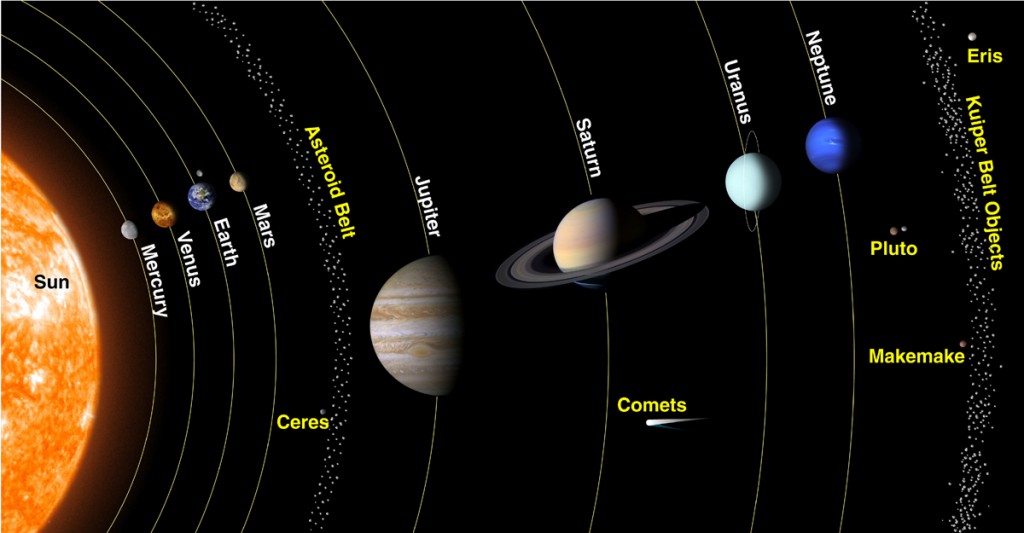
It is true that the church made mistakes, for example, in dismissal of other ideas about the solar system.
That came in centuries of fighting ‘heresy’ but the church did not stop the progress of science – in general, neither did it affect space exploration when complete knowledge for progress was ripe.
True Christianity is never the problem of the world. It is possible that people misinterpret the scriptures, speak or act in defensive ways against obedience to Christ, or make mistakes, but the real problem is always something else – not Jesus.
When some people are sometimes in crisis, they often think what they need now is not Christianity.
They often forget that no matter their problems, there are problems they don’t have. They often also forget a time they had power to do whatever they chose.
Christ came out of the purest of love. It may be hard to comprehend. But God is love.
So much energy is expended to question Christianity, forgetting that discrediting the faith of the good news that preaches pure love, joy, peace, patience, kindness, goodness, faith, gentleness, self-control, makes some hate doing any right thing associated with Christianity.
Through history, the absence of the pure morality of Christianity worsens major collapse.
In the last millennium how did problems or non-problems got worse with these headers: sexual immorality, moral impurity, promiscuity, idolatry, sorcery, hatreds, strife, jealousy, outbursts of anger, selfish ambitions, dissensions, factions, envy, drunkenness, carousing, and anything similar.
The philosophers of the enlightenment, who thought they knew enough to question the Scriptures, didn’t have the know-how to develop modern technologies, even if they had vague imaginations.
Still, many will not accept the truth in the scriptures, in spite of how limited knowledge is.
Assuming modern day science can solve all problems, answer all questions, cure all diseases and cover every ethical weakness, one aspect of frail knowledge is economics.
Economics, touted as the shaper of free enterprise, has required many individuals or businesses to do all sorts of unethical stuff, or things that cannot be reported, just to survive. So, while it is true that economics is the jewel, sticking with it to have a sustainable business has been tougher for many than could be said. Yet, no adjustments in economics against these extra factors, to make the laws of economics provide new ways to play by the rules, and not fail, or make huge losses.
Also, there is no way that knowledge or new massive theories of economics can be designed to make illegal drug trade disobey the laws of demand and supply, as another way to fight drug overdose – growing across, including the budding acceptance of micro-dosing.
The natural selection of free market economics has rendered many people near useless, because they don’t have the value that makes them qualify for jobs, or get better working conditions or perks.
Universal Basic Income – a budding policy proposal, though could really be useful – won’t fill the void when many in a population have nothing to do, seeming like an unwanted economic conscription.
So, how would everyone – of age, become valuable to the labour market, in diverse ways, to make them fit into roles, or provide a channel for what they can do or join.
There are no new – major – economics ideas on these, looking into the field to shape and reshape known flaws. Lots of papers make the case for designer free stuff, but if people – skilled or unskilled don’t fit, no free stuff will change much, in unpredictability of what those who are left out would do.
Yet, many assume the supremacy of knowledge when economics, a major area of knowledge is starving of ideas that are as important to how the world would be better, with less strife, wickedness, envy, greed, etc.
It is possible that the reason there are no ideas on what to do with the ‘unemployable’ or under-employed people across countries is because the knowledge has not been released.
Yes, it can be argued [against] that knowledge is released from anywhere, but what would have stopped the innovations and change in the Renaissance to have happened in the millennium before? Also, why was it that some imaginations of that time only became technically possible centuries later?
Is it not possible that with centuries is knowledge released, or knowledge increasing?
Also, is it not possible that there are often two ends of knowledge released, or as knowledge increases, unanticipated problems show up, or another end of dangerous knowledge also follows?
If knowledge increases, and some ideas are unavailable now, aren’t they likely in eight centuries?
Also, if some of the smartest thinkers were alive during the Bubonic Plague(s) and star scientists during the 1918 flu, yet they could not contrive something fast to stop the deaths, is it not possible that most scientists can only think what they can think, or do what they can do, not everything?
In general, if knowledge increases, and knowledge is released, and those coming will be able to ‘see’ those in history and probably know better, why can people in any century be able to conclusively say the resurrection of Christ, the Savoir does not match their limited reasoning?
[2 Peter 3:8, But, beloved, be not ignorant of this one thing, that one day is with the Lord as a thousand years, and a thousand years as one day.]
The United States: The United States is likely to remain the dominant power for another century, and probably beyond. But it is likely a remote advanced country in the South could need its help in a crisis and some Americans would move there, and may be settle but would likely be a place for majority of the future Americans mid-M2, if things change.
Europe: Domination and power is likely to return to Europe within the first half of this millennium. It is easy to guess that authority would be in Germany, but another country hard to predict may emerge.
Middle East: The Arab Spring was like a warning to what would come for the region this century, as it may have its own religious reformation, new states, and those who would take out grievances on their own people. It is also likely that at least one major country would overplay its power for religious intolerance, with oppression of others, but result in a major war – breaking the country. It is also possible there’ll be major powers to become foes occupying another’s territory – in the next century.
Others: There might strange natural disasters in some places, as climate change becomes ‘normal.’ Some places will get to a point of progress that their poverty won’t matter. Some would beat poverty. Other will remain in poverty. Some would have pandemics within their space. Some would be neutral zones in pandemics. Some would become spaces where others would build a new country. Some would face major secessions. Some would become armed republics. Some would become regions of intense conflict, etc. in the coming years and hundreds of years.
Technology: It is likely that another existence that will become as intelligent as humans will be an animal. If it’s an animal, it may not be domestic or what can be easily guessed. It is unlikely that a general intelligence will be Artificial, or computers. The dream of Artificial General Intelligence is likely to be on the radar of engineers, but if not elusive, may not be necessary.
The weakness of technology is already false information, fakes and conspiracy theories. These will be the Achilles heels of tech hamstringing progress, far more than the church ever tried to. There will also be lots of misdirected and misguided developments that will become troublesome. There might be so many covert sciences – throwing out ethics that will lead to mistakes, or for use as deterrent.
In this century at least, new models of whistle-blowers and privacy breaches will weaken trust in technology, institutions and make many distance from it.
Though technology will bring new great innovation easing lives and helping people, but just like legal notices are clear from the start, so will ethics and transparency have to be extremely clear from the beginning, almost to a painful point.
Science will have unexpected collapse of certainty, where scientific instruments or proven knowledge will be erroneous – in the face of problems. For example, the initial rapacity for mechanical ventilators, for COVID-19 patients, until it didn’t matter to keep many alive.
Though more old diseases will get curable, mutations and replications are likely to become more worrying. Adjustments to green energy are also likely to grow.
Psychology: The world is already in a collapse of mind and behaviour. Lots of people are in a crisis of emptiness. Some are nominally depressed and others have anxiety and other disorders.
Dependence on technology is likely to make this century one of failure for psychology in a manner resulting in all kinds of mind and behavioural suddenness and actions that cannot be explained.
There will, at least, be a century of great psychology, probably from 2250, or beyond, that would look back to this era, and wonder how a people became crushed by their own invention, while thinking they were living in the best time to be alive.
Though psychotherapy will take new forms, and more people will find ways to keep their minds light, but, place in history and usefulness for the future can become pivotal in easing anxieties for people.
Also, for lots of people, pornògraphy will become a recruitment tool for homòsexuality.
Many would be triggered by images of something else, or what another experience would bring – after exhausting satisfactions that always becomes linear.
People addicted to jokes and memes or seeking entertainment always from their smartphones will gradually be eroded from choice cognition and be taken over by something else, whatever it may be.
Drug use and overdose will enter into another territory as mind collapses and many behaviours become undefined. Drug use will lead to an unprecedented amount of ‘waste’. Though, a way to heal for many will be when they see extremes that happened to someone they know, or a different presentation.
Atheism: There will be an explosion of spaces for atheists – online and offline – till at least mid-century this decade, especially as psychology collapses and [what people cannot understand] befall personal lives of many.
But atheism spaces will be crippled by failure of patience where many would see what wrong decisions they took because of lack of Patience – a fruit of the spirit in Christianity.
Also, some members will watch with disgust the lack of wisdom of many of their leaders. Also, they will be surprised by the rejection of doing things right because of their larger belief of nothingness.
Lots of confidences of the atheist teams will fail suddenly, making many reflect on [the outsized way they rated] their strengths and knowledge.
There will also be individuals, who wished for something, and it happens, or wanted something and they got it, but later found no lasting satisfaction.
For example, some people wanted a total collapse before COVID-19, they got lockdown, yet became anxious and panicked.
Some also wanted freedom, or a desire, or a kind of drug, sex, or anything, they got it, yet was not the answer to their emptiness.
There will be lots of fatigues in their community, with deceit, envy, anger, those who breakout will be persecuted.
There is likely to be dedicated factions of atheisms, from general against all religions, to specific. Yes, it seems most atheists are against Christianity, but many would probably focus.
There will be those who will emerge with new thoughtful questions and logic, to initially create new waves, but will always be impaired knowledge.
Since atheists claim to be curious, they can read the Book of Job from Chapter 3 till the end, then come back to read Chapters 1&2. If they cannot find answers there, they can read Psalm 1 – 50. To understand [that] whatever they say isn’t new, also to place why they hate God – love of sin or life’s troubles.
Space: It is possible that man may make Mars this century, however necessity and sustainability could continue or limit that exploration. Within this next one thousand years, it is likely that an unknown planet or star could fly by, defying established theory on distant stars or gravitation, or all the work done to look for life on other planets.
It is also possible that lots of talents and resources that would’ve been useful in revolutionizing economics, etc. will be spent to seek distant astronomy, but won’t yield much after decades.
Judaism
Judaism will enter into a golden age, with its people in major positions and general balance. Also, Israel will benefit from some collapse that may happen in places within its region, expanding its territory and getting genuine conversions.
Catholic Church
People have different interpretation from the Scripture from many of the practices of the Catholic Church. But it is likely that the Lord God Almighty has a covenant of mercy with the Catholic Church, probably [because] the Church was instrumental to Church history prior to Protestant Reformation.
No one can judge the church, except Christ.
If committees in the Catholic Church were to guess what the future may hold for the Catholic Church, it is possible their submission may include that a major crisis may happen that will lead to power sharing of leadership of the Catholic Church with a leader or more of major Pentecostal Churches.
This, in the guess of the committees, may come as a way of forced restitution as God forgives the Church for several errors in the past centuries.
God decides, not committees, or any guess, but if that would happen, it may also involve losing some choice ownership in locations to the Pentecostal Church or Churches.
But in a recommendation, the committees may say towards restitution, intense collaboration with leading Pentecostal Churches, even if to the point of opening up its buildings for worship services, and collaborations on challenges facing the world.
Ultimately, the Catholic Church should keep crying to God, relentlessly for mercy, for so many mistakes of past centuries, and the Lord should remember His covenant with the church.
[Psalm 130:4, But there is forgiveness with Thee, that Thou mayest be feared.]
Also, the Catholic Church has been told by many before and starting from the Reformation about their scriptural misinterpretations. Churches needs to pray – in groaning – to Jesus to show and correct their mistakes and to have mercy so they can make the changes in obedience to Christ alone.
Christianity
This century – at least, will be one of more closet Christians than can ever be measured. The collapse of psychology will be so devastating, mindfulness will be helpless. So many will seek Christianity answers and covertly obey.
So, it will be important to continue true preaching because the word of God does its own work – even if online video views are small, or it seems like no physical crowd, or low metrics.
Religions around the world will often refer to their imitations of the Scriptures as a way to become epicentres of morality.
But within this millennium, it is possible that there will be religions that will mix Christianity and others in what they will say are the way. The only religion that will not [be used] for this mix is Judaism, because of its similarity. But the true word of God is the truth.
There will also be people who will be ready to accept Christ even if the questions are not answered in a way they want, like why is there suffering? Or how really does prayer work?
Also, churches need to try and answer the hard questions, multiple times, with enough realness – of impossible problems many face. Churches must always insist on looking unto Jesus – permanently.
True Christian Churches must be so transparent.
They must also preach obedience always, but with love and hope.
Through the scriptures, the Lord God can save or call anyone, but a common factor is how God loves obedience. There is no other way to carry one’s cross and follow Christ than to [trust and] obey.
Churches have to be more tolerant of each other, minimizing criticisms over who misinterpreted what Scripture because on the day of trouble criticism, like atheism, is useless.
It is unlikely that through this millennium Christianity will – generally – face the kind of persecution that the Apostles faced, after Christ.
But, if at any point the burden becomes hard everywhere and Christians unite to cry to God for mercy – the prayer that thy kingdom come. Christ may return.
Yes, that is not what is in the scriptures but if that is the prayer, with probable cause, God looks mercifully on sincere prayers for mercy, because mercy is also a nature of God along with holiness.
The word of God is the future. Predictions can be grim or lofty, but the Lord, the Creator, decides.
[Psalm 135:6, Whatsoever the Lord pleased, that did He in heaven, and in earth, in the seas, and all deep places.]
Feature/OPED
Nature has been Sending us Signals. Our Farmers Read Them First
By Mannir U. Ringim (PhD)
Long before the satellite forecasts and the seasonal advisories, the African farmer learned to read the sky. He watched the colour of the clouds, the behaviour of the birds, the first scent of rain on hot ground, and he planted accordingly. For generations, that knowledge was reliable enough to feed nations. Today, it is faltering not because the farmer has forgotten how to read the signs, but because the signs themselves have changed. The rains that once came in April now arrive in May, or not at all. The harmattan lingers. The river that once flooded every decade now floods twice in five years. Nature is still sending its signals; they have become harder and crueller to read.
Today, the world marks World Environment Day. This year’s theme, “Inspired by Nature. For Climate. For Our Future,” will be examined in Baku and echoed in boardrooms and headlines across the world. It is a worthy conversation, but the people who live that theme most literally will not be in any of those rooms. They are the smallholder farmers of northern Nigeria and the wider Sahel, the rice growers of the Niger basin, the cassava, cocoa, and oil palm households from Cross River to the forests of the coast. It is a Nigerian story, but not only a Nigerian one: the same signals are being read across West Africa, and in the last decade, the reading has grown harder.
I want to make a single argument on this day of World Environment Day, and although it begins in the field, it ends in the boardroom: in our part of the world, agricultural finance is climate finance. The most direct, most local and most consequential form of climate action available to the region’s financial sector is not a distant carbon market or an offset scheme negotiated abroad. It is the decision to put serious, patient and intelligent capital into the hands of the people working the most climate-exposed asset we possess — our land. Get that decision right, and we address food security, rural livelihoods and climate resilience in a single motion. Get it wrong, and we will keep treating three faces of one crisis as though they were unrelated problems.
The signals from the land
To understand why this matters, it helps to travel the land as those of us in business banking do. Across the Sahel, the desert is not a metaphor; it advances year upon year over farmland that fed families in living memory. Lake Chad — once one of Africa’s great freshwater bodies, shared by Nigeria, Niger, Chad and Cameroon — has retreated to a fraction of its former size, carrying fishing and farming livelihoods with it. In the middle belts, the rains have turned violent and unpredictable, and a single night of flooding can erase a season’s labour and a year’s income. Along the coast and the eroding river valleys, gully after gully swallows farms, homes and roads. These are not isolated misfortunes; they are the local expressions of a global phenomenon, and the people absorbing them first are the people who feed everyone else.
This is the part of the climate story we too often misfile. We log the late rains under “agriculture,” the flood under “disaster relief,” the rising cost of a meal under “the economy,” and we reserve the word “environment” for tree-planting campaigns. But these are not separate ledgers. The farmer who cannot plant because the rains failed, the trader who charges more because the harvest shrank, the young person who leaves the village because the farm no longer pays — all are responding to the same signal. In our region, climate change announces itself first as an agricultural event. We will not manage it as an environmental one until we are willing to finance it as an economic one.
A paradox of capital
Here lies a contradiction we have tolerated for far too long. Agriculture employs more people than any other sector in Nigeria and across much of West Africa, and contributes a substantial share of national output. By any honest measure, it is the foundation of the real economy, and yet, for decades, it has drawn only a single-digit share of total bank lending, which is a fraction of its weight in jobs, in food, and in stability. We have built financial systems that are, in effect, under-invested in the very sector that sustains them.
The reasons are familiar to every banker. Agriculture has long been judged too risky, too seasonal, too informal and too hard to collateralise. A farmer’s income arrives once or twice a year, not monthly; his balance sheet consists of a few hectares, some livestock, and a great deal of practical knowledge. No conventional credit model was built to value it. So, capital did the rational short-term thing: it stayed away, or lent briefly and expensively, on terms that suited the lender’s calendar rather than the crop’s. That caution made sense in a stable climate. In a changing one, it is self-defeating because the farmer who cannot borrow cannot adapt. He cannot buy the drought-tolerant seed, install the modest irrigation that frees him from relying on a single rainy season, or afford the storage that keeps a good harvest from spoiling before the market. We have been asking our most climate-exposed citizens to face the hardest conditions in memory with the least capital available to them. That is not prudence; it is a slow failure of both economics and adaptation, and the bill arrives at every table as more expensive food.
Risk is also a design problem
If there is good news here, it is that much of what we call “agricultural risk” is not a law of nature. It is a design problem, and design problems can be solved. The past few years have produced a genuinely more sophisticated toolkit, and the institutions willing to use it are finding the sector far more bankable than the old assumptions allowed. It begins with lending that fits the farmer rather than forcing the farmer to fit the facility: cash-flow facilities structured around the crop cycle, disbursing at planting and falling due after harvest. Value-chain and anchor-borrower models, in which a credible off-taker sits between the bank and thousands of smallholders, solve the scale, collateral, and market access problems at a single stroke. Warehouse-receipt systems let stored grain serve as collateral, so a farmer need not sell everything at harvest, when prices are lowest, merely to raise cash.
Around that core sits an expanding set of instruments: input and mechanisation finance to lift yields; irrigation finance to break the dependence on the rains; cold-chain and storage finance to attack the staggering share of what we grow that is still lost after harvest, losses that are, in their own quiet way, as much an environmental cost as an economic one, since every wasted tonne is water, land, fuel and labour spent for nothing. Weather-index insurance can pay out automatically when rainfall falls below a threshold, turning an uninsurable risk into a priced one, and the spread of mobile technology and farm-level data — satellite imagery, mapping, digital payment histories — is finally giving lenders an evidence-based way to assess the smallholder they once treated as invisible. None of this is theoretical; each instrument is already in use somewhere in the region today. The task is not to invent new tools but to deploy the existing ones at scale, and with discipline.
Here, agricultural finance and the climate agenda converge, because the instruments that make farming bankable are, almost without exception, the ones that make it resilient. Irrigation is an adaptation. Drought-tolerant seed is an adaptation. Healthier soils, smarter water use, agroforestry that holds back the desert, storage that wastes less — these are not optional “green” extras; they are the difference between a farm that survives a harsher climate and one that does not. The point lands with particular force in West Africa, among the most climate-vulnerable yet least climate-financed regions on earth. The global conversation has turned decisively to climate finance — Azerbaijan, this year’s World Environment Day host, carried that agenda as president of COP29 — but climate finance is not only something that happens at altitude. Its most grounded form, for us, is the facility that enables a cooperative to drill a borehole or build a warehouse. The local reality is how the global ambition gets delivered.
Shared risk, shared frontier
None of this can rest on the banks alone, and it should not. The risks are real, and the most durable way to manage them is to share them among the actors who each hold a piece of the solution. Governments set the frameworks, build rural infrastructure, and provide the guarantees that make long-tenor lending viable. Development finance institutions, the African Development Bank chief among them, with their long-standing ambition to feed the continent, bring the patient, blended capital that crowds in commercial lenders rather than out. Insurers price the weather risk that banks should not carry alone. Agritech firms and aggregators supply data and market linkages. Banks bring structure, reach, governance and capital. Nigeria has tried versions of this before — the Agricultural Credit Guarantee Scheme and the Anchor Borrowers’ Programme among them, and the experience taught us both the promise of public-private agricultural finance and the discipline it demands: such partnerships work only when they are designed with rigour, governed transparently, and judged by outcomes rather than by money disbursed.
For those of us whose responsibilities include the public sector, the most valuable role a bank can play is often not as lender of last resort but as honest broker, aligning the ambitions of government, the capital of development partners, and the needs of the farmer into structures that actually move money to the field, and the prize is larger than risk management. It is tempting, faced with advancing desert and shrinking water, to speak of the Sahel and the rural North only in the language of crisis. However, that language is incomplete and self-fulfilling. The same regions hold vast arable land, established value chains in grains, livestock and horticulture, and one of the youngest workforces on earth. When a young person can finance an irrigated dry-season crop, or a women’s cooperative can secure inputs and a guaranteed buyer, agriculture stops being a fallback and becomes a future. That shift — from relief to investment, from managing decline to financing growth — is the single most powerful contribution finance can make to the regions on the climate front line. It is also good business: the young and the underserved are not a market to be pitied, but the largest growth opportunity in African banking.
Where we choose to stand
At Union Bank, this is not a new conviction. An institution that has banked Nigerian communities for more than a century has watched the relationship between people and land change in real time and has come to regard agricultural finance not as a niche or an act of charity, but as national infrastructure — and, increasingly, as climate infrastructure. The question we put to ourselves is not whether agriculture is worth financing, but how to finance it in a way that builds resilience rather than extends credit, and how to do so at the scale the moment now demands.
The campaign behind this year’s World Environment Day speaks of the signals the Earth is sending us, and the signals we choose to send back. It is an apt frame for a banker. For too long, the signal our financial system sent the farmer was a quiet, discouraging one: you are too risky, too small, too far away to be worth our capital. The farmer heard it clearly, and many of his children left the land. We can now send a different signal.
“For Climate” and “For Our Future” are not phrases to be admired from a distance. For Nigeria and its neighbours, there are decisions to be made at home in how we price risk, where we direct capital, and whether we are finally willing to stand behind the people who have been reading nature’s signals all along. The most meaningful climate commitment our financial sector can make this World Environment Day is not a statement; it is a willingness to finance the land that feeds us, intelligently and at scale. The moment, as the campaign rightly insists, is now. Now for climate — and, just as urgently, now for the farmer.
Mannir U. Ringim is Executive Director, Business Banking at Union Bank of Nigeria, with responsibility for the Public Sector and the Bank’s Northern, South-South and South-East businesses.
He is versatile in spearheading new business development, cultivating partnerships,
and fostering healthy stakeholder relationships, with a focus on driving business growth and achieving revenue milestones.
Mannir’s educational qualifications include a PhD in Economics (focus on Financial Inclusion) from Bayero University, Kano, and Bachelor of Science and Master of Science degrees in Economics from the same institution. He also holds executive certifications from INSEAD Business School in Singapore, Kellogg School of Management in Chicago, and Euromoney in London, reflecting his dedication to continuous growth and excellence. Mannir has been an Honorary Senior Member of the Chartered Institute of Bankers of Nigeria (HCIB) since 2015.
Feature/OPED
Nigeria’s Children Under Siege as Politics Trumps over Governance
By Blaise Udunze
Chapter Two, Section 14 (b) of the 1999 Constitution of Nigeria (as amended) is explicit when it states that the security and welfare of the people shall be the primary purpose of government. Hence, by every standard, the welfare of Nigerians should be the first priority of the government. What would be said if the same government had failed on this path? Judging by this rhetorical question and series of unfolding events, indications have shown that Nigeria is drifting into a dangerous territory where politics increasingly overshadows governance, and the amazing part of it is that insecurity, poverty and social despair continue to consume the very foundations of the state.
Surprisingly, this is eventually playing out when millions of Nigerians expect leadership, empathy and decisive action, the political class appears preoccupied with permutations for 2027, coalition-building, defections, endorsements and electoral calculations. Meanwhile, criminals are expanding their territory.
The horrendous, tragic kidnapping of pupils, teachers and school workers in Oriire Local Government Area of Oyo State has become one of the most painful symbols of Nigeria’s deepening security crisis. Shamefully, it would be recalled that recently armed terrorists invaded three schools in Ahoro-Esinle and Yawota communities. Yes, this might not be the first time of abducting school pupils, but one thing that is more troubling in this case is that dozens of schoolchildren and teachers were abducted, as this includes toddlers barely old enough to understand what was happening around them.
Intently looking at the incident, one vicious act is that among those abducted were two-year-old Christianah Akanbi and three-year-old Sikiru Salami, who are also not exempt from the daily torture.
The horror became even more devastating when a video emerged confirming the gruesome murder of Michael Oyedokun. He was a Mathematics teacher who had simply gone to work on a Friday morning to educate Nigerian children. He never returned home. The life of a teacher, a father and a mentor was cut short when beheaded in captivity by terrorists in Nigeria in May 2026.
His death is not merely a tragedy for his family. But the harrowing experience is that it is an indictment of a nation that appears increasingly unable to guarantee the safety of its citizens.
Let us consider the recent attack in Oyo State; this is not an isolated incident. It is part of a growing pattern that demonstrates the alarming deterioration of security across the country. And this is one harrowing and traumatic situation that might continue to heighten fear in the southwest: barely days after the Oyo school abductions, gunmen invaded Yashikira in Baruten Local Government Area of Kwara State, attacked the Emir’s palace, set parts of it ablaze and abducted ten residents. Also, of great concern is that just days earlier, worshippers had been killed and others abducted from a prayer ground in the same state.
Worst still, these nightmares have been the lived realities confronting Nigerians across Benue, Plateau, Katsina, Zamfara, Borno, Niger and other states. Stories of killings, kidnappings and displacement have become routine headlines.
The frightening reality is that Nigeria is gradually normalising the abnormal. Schools are becoming targets. Highways have become theatres of terror. Farms have become killing fields. Communities are becoming refugee camps. And citizens increasingly feel abandoned.
What makes the situation even more troubling is the growing perception that governance has been subordinated to politics.
This is to say that it has become glaring that while communities mourn their dead and families desperately search for abducted loved ones, the “sorry” situation is that public attention at the highest levels of government often appears focused on political calculations ahead of the 2027 elections.
This perception gained further traction following the Oyo school abductions. Nigerians watched grieving parents cry on television. Videos emerged showing abducted teachers pleading for help from captivity. This has triggered a negative notion, as many citizens felt there was insufficient urgency from the federal authorities in responding to one of the most horrifying school attacks in recent years.
Leadership is not measured only by policies and speeches. It is measured by empathy, responsiveness and the ability to assure citizens that their pain matters.
Section 14(2)(b) of Nigeria’s Constitution leaves no room for ambiguity. It states clearly that the security and welfare of the people shall be the primary purpose of government. Not politics. Not elections. Not defections. Not coalition building. Security and welfare.
Unfortunately, many Nigerians increasingly believe that the priorities of government no longer reflect this constitutional obligation. The consequences extend far beyond security. The educational sector is becoming one of the biggest casualties of the country’s security collapse.
The vicious incidents have brought the society to a standpoint whereby parents who once worried about examination results now worry whether their children will return home alive from school. Meanwhile, teachers who have continued to work tirelessly and still should be focused on learning outcomes are increasingly forced to think about survival.
One glaring adverse impact from all these abnormalities is that school enrolment in vulnerable communities is likely to decline as parents choose safety over education.
The long-term implications are frightening because the fact is that every child denied education today becomes a future economic liability. Every school abandoned due to insecurity creates another generation vulnerable to poverty, extremism and social exclusion. Every teacher lost to violence weakens Nigeria’s human capital.
Another aspect that is more of concern is that the abduction of children from schools represents more than a security challenge, but this is a thorough attack on Nigeria’s future. Perhaps the most heartbreaking and horrendous aspect of these attacks is the psychological damage inflicted on children. It must be established beforehand that when rescued, many victims may never fully recover from the trauma. This could be linked to, especially to the screams, the gunshots, the confusion, the separation from parents and the terror of captivity.
With the recent and past occurrences, without any iota of doubt, such experiences often leave invisible wounds that endure for years. Considering that the children who should be learning multiplication tables and nursery rhymes are instead learning fear.
The real question is, can a nation that cannot protect its children confidently speak about its future? Never! Emphatically, it should be understood that beyond education, insecurity is fueling a broader socio-economic epidemic.
Nigeria is already grappling with one of the worst affordability crises in its history, which also depicts the continued governance complacency. Talking of the removal of fuel subsidy and exchange rate liberalisation, inflation has eroded purchasing power, while food prices, transportation costs, rents and utility bills continue to soar, and worse off is the skyrocketing price of cooking gas.
Yet insecurity is making the crisis even worse. Farmers cannot access their farmlands. Harvests are disrupted. The country has witnessed the rural economies collapsing heavily. The resultant effect is that food production has continued to decline, and supply chains are increasingly vulnerable. The result is predictable because the simple arithmetic is that higher food prices, worsening hunger and deeper poverty.
The level of security collapse has shown that many northern farming communities, bandits now function as parallel authorities, imposing levies and determining who can farm and who cannot. This directly impacts food availability in urban centres hundreds of kilometres away.
Thus, insecurity is no longer merely a security problem; the truth is that it has become an economic problem, which is developmental, educational, and humanitarian. And ultimately, a governance problem.
The inability to effectively confront insecurity also raises difficult questions about institutional capacity.
As public affairs commentator Leonard Umunna recently observed, weak institutions produce weak outcomes. Corruption, poor accountability and ineffective governance structures have collectively undermined the state’s ability to deliver security and development.
Some of the terrifying truths Nigerians must take into cognisance are that when institutions become compromised, citizens lose confidence. Also, when accountability disappears, impunity flourishes, as the same applies when governance fails, criminality fills the vacuum. One truth that cannot be argued is that the vacuum is becoming increasingly visible across Nigeria.
The irony being experienced today in Nigeria is that while political actors are preparing intensely for 2027, the very foundations required for democratic stability are being eroded.
The terror and anxiety are definitely obvious, and the fact is that democracy cannot thrive in an environment of widespread fear.
Citizens who cannot travel safely, farm safely, worship safely or send their children to school safely are unlikely to have confidence in democratic institutions.
Perhaps, some ought to translate these messages to those at the helm of affairs in Nigeria that security is the foundation upon which every other national aspiration rests. And, without security, economic reforms become ineffective. Without security, educational investments become vulnerable. Without security, foreign investment declines. Without security, national unity weakens. Also, another underlying fact is that without security, democracy itself becomes fragile.
The well-known truth, which is quite unfortunate today, is that Nigeria’s challenges are not insurmountable because the country possesses the manpower, resources and institutional structures necessary to reverse the tide.
What appears lacking is the political will, urgency and strategic focus required to confront the crisis comprehensively.
This moment demands more than condolences after attacks. It demands intelligence-driven operations. It demands stronger coordination among security agencies. It demands improved local intelligence networks. It demands accountability. It demands institutional reforms. Most importantly, it demands leadership that places governance above politics.
As Nigeria inches toward another election cycle, political leaders must recognise a simple truth, and that truth is that there may be little value in winning elections in a nation increasingly overwhelmed by insecurity, poverty and social fragmentation.
The pursuit of political power cannot become more important than the survival of the republic itself. The death of Michael Oyedokun should haunt the conscience of the nation. So should the tears of Christianah Akanbi. So, should every parent be afraid to send a child to school? So should the pain of every community living under the shadow of terror. Nigeria is at an intersection; it has reached a tough moment where important and critical decisions must be made.
One path leads to deeper insecurity, educational decline, economic hardship and national instability. The other requires courage, responsibility and a renewed commitment to governance. The choice should not be difficult.
For if politics continues to take precedence over governance, the greatest casualty may not be any political party or administration. It may be Nigeria itself. The country is redeemable, and there is still hope for a better Nigeria.
Blaise, a journalist and PR professional, writes from Lagos and can be reached via: bl***********@***il.com
Feature/OPED
Facing the Reality of Inflation in Everyday Life
By Timi Olubiyi, PhD
Currently, many are passing through one of the most difficult times due to inflationary pressures. From transportation to food, electricity, healthcare, school fees, rent, and communication, the rising cost of living has altered the daily experience of millions of households. What used to be considered necessities have now become luxuries for many families. Across the country, the average citizen is under enormous pressure to survive amid worsening inflation, shrinking purchasing power, and economic uncertainty.
While inflation is a global phenomenon, the Nigerian experience has become particularly severe because of the combined effects of fuel subsidy removal, exchange rate volatility, high transportation costs, insecurity in food-producing regions, and weak wage growth. The reality of petrol selling at nearly N1,400 per litre in some parts of the country has significantly changed household economics and business sustainability. The consequences are visible everywhere in markets, offices, homes, schools, hospitals, and on the streets.
In practical terms, transportation fares have more than tripled in many cities within a short period. Food inflation has equally become alarming. Bread, eggs, cooking gas, yams, tomatoes, beans, and other staple foods continue to rise beyond the reach of average Nigerians. Electricity tariffs and telecommunications costs have also increased, while rent in urban centres keeps climbing. Unfortunately, salaries and wages have not kept pace with these realities. This is perhaps the greatest crisis confronting workers and small business owners today. Many employees still earn wages negotiated several years ago under entirely different economic conditions. Yet the value of those salaries has been severely eroded by inflation. In real terms, many workers are poorer today despite remaining employed.
The truth is that the salary structure available now can no longer effectively support decent living standards for many households. Even professionals with stable employment now struggle to meet basic obligations. Civil servants, teachers, artisans, small traders, entrepreneurs, and even middle-income earners are feeling the weight of the economic squeeze.
For many families, survival now depends on borrowing, reducing consumption, postponing healthcare, or sacrificing savings and investments. More troubling is the psychological effect of this prolonged hardship. Economic pressure is increasingly and significantly affecting mental health, marriages, productivity, and social stability.
Anxiety, frustration, depression, anger, and emotional exhaustion are becoming common experiences among citizens trying to survive difficult conditions. Difficult times and hardship often fuel marital conflicts, domestic tension, and reduced emotional well-being. In workplaces, economic uncertainty lowers morale, concentration, and productivity as employees struggle to cope with transportation costs, food, and other basic needs.
In fact, many people now live permanently in survival mode, uncertain about what tomorrow may bring. Businesses are equally under pressure. Rising operational costs continue to threaten sustainability, especially for small and medium-scale enterprises. Diesel prices, transportation costs, imported raw materials, electricity bills, taxation, and weak consumer spending have reduced profitability across many sectors. Several businesses have downsized operations, reduced staff strength, or shut down completely. Others remain in operation but merely struggle to survive.
Consequently, the era when a single salary could comfortably sustain a family is gradually disappearing in Nigeria. One of the clearest lessons from the current economic climate is that relying solely on one source of income has become increasingly risky. Economic realities now require individuals and households to think beyond traditional salary structures and embrace income diversification. In fact, multiple streams of income are no longer optional; they are becoming a necessity for financial survival and resilience. Families that depend entirely on one monthly salary are highly exposed to economic shocks, inflation, job loss, or business disruptions. The harsh reality is that even regular employment no longer guarantees financial security.
Therefore, Nigerians must begin to intentionally explore additional income opportunities that can complement existing earnings. This does not necessarily mean abandoning primary jobs or businesses, but rather creating alternative sources of income that can provide support during difficult times. Technology and digital platforms have made this more possible than ever before. Social media, e-commerce, freelancing, online consulting, digital content creation, virtual training, and remote services now offer opportunities for additional income generation.
Many professionals can monetise their knowledge, experience, or talents through side engagements without compromising their primary employment. In a way, passive income opportunities such as agriculture, cooperative investments, real estate, dividend-paying stocks, mutual funds, and small-scale trading can help cushion economic shocks over time. Land acquisition, for instance, remains one of the most reliable long-term stores of value in Nigeria despite current economic challenges. Assets that appreciate over time can provide financial protection against inflation. More so, living below one’s means may no longer be a matter of choice but a practical necessity under present realities. The culture of excessive social competition and pressure to maintain appearances despite declining income can worsen financial stress. Economic survival today requires financial honesty, discipline, and strategic planning.
In conclusion, the current economic realities in Nigeria demand a shift in mindset, financial behaviour, and survival strategies. Fuel at N1,400 per litre is not merely an energy issue; it affects transportation, food prices, school fees, healthcare costs, business operations, and overall quality of life.
Inflation has redefined daily living for millions of Nigerians. Therefore, building multiple streams of income, improving financial literacy, embracing prudent spending, and investing for the future are no longer luxury ideas but necessary responses to economic realities.
The truth is simple: depending solely on salary income in today’s Nigeria may no longer be sufficient for financial stability. The earlier households adapt to this reality, the better positioned they may be to survive and thrive despite the challenges ahead. Good luck!
How may you obtain advice or further information on the article?
Dr Timi Olubiyi is an expert in Entrepreneurship and Business Management, holding a PhD in Business Administration from Babcock University in Nigeria. He is a prolific investment coach, author, columnist, and seasoned scholar. Additionally, he is a Chartered Member of the Chartered Institute for Securities and Investment (CISI) and a registered capital market operator with the Securities and Exchange Commission (SEC). He can be reached through his Twitter handle @drtimiolubiyi and via email at dr***********@***il.com for any questions, feedback, or comments. The opinions expressed in this article are solely those of the author, Dr Timi Olubiyi, and do not necessarily reflect the views of others.
-
Feature/OPED6 years agoDavos was Different this year
-
Travel/Tourism10 years ago
Lagos Seals Western Lodge Hotel In Ikorodu
-
Showbiz3 years agoEstranged Lover Releases Videos of Empress Njamah Bathing
-
Banking8 years agoSort Codes of GTBank Branches in Nigeria
-
Economy3 years agoSubsidy Removal: CNG at N130 Per Litre Cheaper Than Petrol—IPMAN
-
Banking3 years agoSort Codes of UBA Branches in Nigeria
-
Banking3 years agoFirst Bank Announces Planned Downtime
-
Sports3 years agoHighest Paid Nigerian Footballer – How Much Do Nigerian Footballers Earn