
Banking
Why We Are Championing Crusade For NIMMA—Odiakose


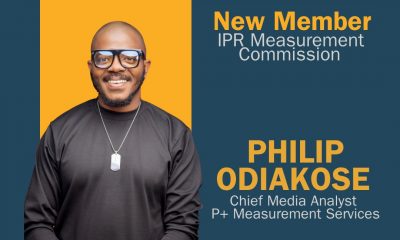
Lead Consultant of Nigeria’s leading and fastest growing Independent PR measurement and evaluation agency, Mr Philip Odiakose, has been in the forefront of establishing the Nigerian Media Monitoring and Measurement Association (NIMMA).
In this interview with BrandArena, Mr Odiakose explained why he is backing this and also the benefit of having that body to regulate the activities of Independent Media Monitoring and Measurement Agencies in Nigeria.
You have been a strong advocator for an Independent Media Monitoring and Measurement body in Nigeria for a year now, what has been the reaction of the IMC industry at large to your advocacy?
As I have always said, independent media measurement is the future and we are glad that that the IMC industry has started yielding to our plea. Since we started the campaign for an Independent measurement and evaluation to better brand experience, acceptance from PR agencies and communications managers has increased by 20% from 0%. Again, we are not there yet, but we are taking giant strides to make both PR agencies and clients understand the value of an independent measurement and evaluation service.
You were recently in Ghana for AMEC Measurement Month, can you share with us some of the highlights of the event and what can you say the acceptance of Independent Measurement and Evaluation in the continent like presently?
Yes, we co-hosted the event with Media Monitor in Ghana for the AMEC Measurement Month. The AMEC Measurement Month initially used to run within a period of one week, but due to the increasing interest of practitioners in Measurement and Evaluation, AMEC Measurement Week became extended to a period of one month. It was a forum that required PR Measurement consultants around the world to sensitize PR agencies, communications managers and media practitioners on the importance to integrate measurement and evaluation into their communications strategy and the importance of the new AMEC framework.
We were also there to communicate our success rate as there has been an increase in awareness for brands and communications managers to see the need to engage an Independent measurement and evaluation agency for brand health check and performance audit, which is something that P+ has been pioneering and preaching for the Nigeria market. Brands are starting to understand that allowing their PR agencies to mark their own homework is doing a lot of damage to brands.
Is the current Advertising Value Equivalent (AVE) method being used by practitioners good enough for communication/PR evaluation?
The fight against the use of AVE has been on for decades, the use of AVE in this part of the country is still very high as agencies believe it is the only way to show value for their spend, which the AVE analysis has been doing a lot of damage than good to brands in their care. It is important to note that at P+ Measurement Services we use measurement standards which are acceptable all over the world and we stand with the Barcelona Principle 2:0 vs 5 which states that AVE is not the true reflection of value for ROI. Let me make this clear, that the word ROI is wrongly used in the PR practice, as all eyes tend to look at the financial figure in PR, neglecting the fact that PR is all about reputation, image building, crisis management and media relations. So when measuring the impact of PR on brands, key KPIs like, JRM, SOI, SOV, reach, cyberspace analysis, spokesperson impact, reputation measurement, journalist/Blogger loyalty analysis, message sentiment analysis, competitive analysis should be looked deeply into. Public and Media perception Audit of a brand should be checked quarterly or bi-annually; which will require the input of an Independent Measurement and Evaluation agency.
Why do you think we should have an Independent Measurement and Evaluation body in Nigeria? What are the pros and cons?
I think the creation of such body is long overdue, we have a lot of media monitoring and evaluation agencies in Nigeria, which have been in operation in Nigeria for years under the umbrella of PRCAN and APCON. I think it is time we own an association and a body that regulates and creates best practices for media monitoring and evaluation in Nigeria. For example, South Africa has an Independent Association called SAMMA (South African Media Monitoring and Measurement Association) governing the Media Monitoring and Measurement consultant. There are no Independent associations in Nigeria for the consultant in Nigeria, which is why some of us run to APCON or PRCAN when an association letter is required to get certain businesses which are very wrong.
Secondly, the non-availability of an Independent monitoring and measurement body, gives the reason why PR or advertising agencies can take Independent monitoring briefs; which is unethical, unhealthy and unprofessional for an agency to mark their own homework. It is not right for you to be the accused, the judge and jury of your work
Having an Independent Monitoring and Measurement association will break such unethical practices and bridge the gap between PR agencies and independent measurement practitioners.
There are rumours that some PR agencies are considering the establishment of new agencies that will cover communication measurement and evaluation, do you think it’s possible for such agencies to be objective in their reports?
Really, that will be unprofessional for such PR agency, as well as unhealthy for a brand. I think we need to stop looking at the monthly PR retainer for a minute and think of the brand health, questions like ‘Is it healthy for me to mark my own homework and still deliver value to the brand”?
It is still awkward when I hear PR agencies say they do media monitoring in-house, a known Communications director said and I quote “PR agencies marking their own homework is just like a student who writes an exam and also mark his own scripts”. I think PR agencies should start seeing Independent Measurement and Evaluation agencies as friends rather than competitors as we are all in the business to create an unforgettable brand experience.
Are brand owners giving encouraging support for your operations so far?
I will say the sensitization is penetrating gradually and fast, as brands are beginning to separate Media monitoring and measurement from PR agency briefs. Communications and PR managers are also turning advocates for the independent measurement as they have seen the impact and value we have provided with our timely media intelligence report. Business decisions are made and strategies are created from our work and we expect more ownership from more communications and brand managers in the future to be advocates. An example of such is the just concluded Edo state governorship election, which P+ Measurement Services was appointed as the Independent Monitoring and Measurement Consultant for one of the aspirant, our timely delivery and media intelligence report played a major role in the emergence of the current elected Governor of the state; in which we worked alongside Tony Usidamen, the CEO of UBURU an Independent communications agency in Lagos, and Media manager to the Governor during the campaign.
How many Independent Monitoring and Measurement agencies do we have presently in Nigeria?
You will be shocked to know, we have over 7 known media monitoring and measurement agencies in Nigeria; that is why it is imperative to create an Independent Monitoring and Measurement body to regulate and set best practices for our industry and guiding measurement and evaluation activities in the right direction.
Any on-going plan towards the establishment of a government recognized body a reality?
The plan is already in motion and being implemented as we speak, but that will not stop members from belonging to the global body AMEC, which governs the activities of all measurement and evaluation practitioners in the world. P+ Measurement Services happens to be a member of AMEC.
What else will you like to share with us?
The future of the monitoring and measurement industry in Nigeria is an industry where we are called in during the planning phase to help determine a scope for how to measure results of campaigns on all media platforms from the start. Where brands and consumers will enjoy a full brand experience knowing that the right research and data is given all through each campaign, where agencies and clients are in unison and I will not stop preaching the importance of a unified smooth working IMC which includes independent measurement and evaluation.












By Dipo Olowookere
Tech enthusiasts interested in participating in the Take on Squad Hackathon, organised by Guaranty Trust Holding Company (GTCO) Plc, can now enter the contest via the official portal at https://squadco.com/hackathon.
The programme enters its third edition in 2026, and the theme for this year is Smart Systems: The Intelligent Economy, according to a statement issued by the organisers.
The hackathon brings together developers, designers and entrepreneurs across Nigeria in a collaborative environment to build practical solutions across key sectors, including financial services, healthcare, commerce and digital inclusion.
Participants are challenged to design and build intelligent, data-driven solutions that transform how communities engage with money.
It is part of the organisation’s commitment to fostering innovation, empowering talent, and supporting the development of technology-driven solutions that address real-world challenges across Africa.
“Today’s dynamic, digitally driven world demands continuous innovation, which is shaping how economies grow, how businesses scale, and how societies evolve.
“Through Take on Squad Hackathon, we are deliberately investing in the ideas and talent that will define the future.
“Our objective is not simply to encourage innovation, but to enable its translation into scalable solutions that deliver real and measurable impact.
“This reflects GTCO’s role as a financial services platform that connects capital, capability, and creativity to drive sustainable progress,” the Managing Director of HabariPay, Ms Eduofon Japhet, stated.
The social coding event remains a cornerstone of HabariPay’s mission to foster creativity and problem-solving among emerging tech talents. Competing teams will leverage Squad’s advanced APIs to create scalable digital tools that address everyday challenges faced by businesses and individuals.
Through initiatives such as this, GTCO continues to position itself at the intersection of finance, technology and enterprise, actively shaping the future of digital transformation in Africa.
By Dipo Olowookere
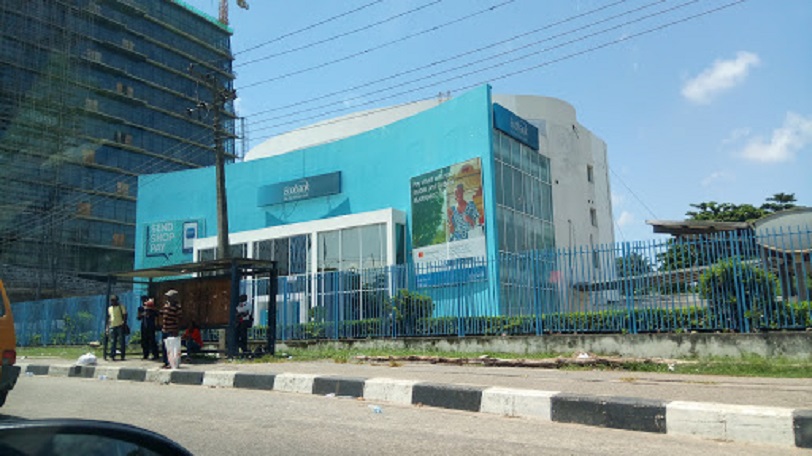
Banking services will not be interrupted throughout the Easter public holidays, from Friday, April 3, to Monday, April 6, 2026, for any reason, Ecobank Nigeria has assured its customers.
In a message over the weekend, the member of Africa’s leading pan-African banking group, Ecobank Transnational Incorporated, said customers would continue to enjoy quality service delivery during the period.
It noted that its secure and robust digital platforms would remain fully operational to support financial activities during the festive period.
All digital channels, including the Ecobank Mobile App, Ecobank Business App, USSD *326#, Ecobank Online, OmniPlus, Omnilite, EcobankPay, Ecobank Cards, ATMs, PoS terminals, and over 35,000 Ecobank Xpress Point agent locations nationwide, will remain accessible throughout the holiday, the financial institution further said, urging customers to conveniently conduct transactions at any time using this wide range of digital solutions.
Ecobank customers were encouraged to maximise the bank’s alternative channels for transfers, bill payments, airtime purchases, card services, and account management.
They were also advised to stay vigilant by shopping only on trusted websites; avoiding the sharing of PINs, passwords, and one-time passwords (OTPs); refraining from banking on public Wi-Fi networks; being cautious of urgent or emotionally charged messages; and regularly monitoring their account activity.
“Customers will continue to enjoy a full bouquet of services during the holiday, including local and international funds transfers, bill payments, airtime top-ups, merchant payments, balance enquiries, account statements, and cardless cash withdrawals via ATMs,” the Head of Products & Analytics, Consumer & Commercial Banking at Ecobank Nigeria, Mr Victor Yalokwu, stated.
“We understand that festive seasons come with increased financial activity, and our priority is to ensure our customers enjoy fast, reliable, and secure banking wherever they are.
“Our digital channels are designed to support uninterrupted transactions, and we have strengthened our systems to guarantee optimal performance throughout the Easter break,” he added.
Mr Yalokwu noted that, “Ecobank remains committed to providing innovative financial solutions and exceptional customer service. We wish all our customers and partners a peaceful and joyful Easter celebration.”
By Dipo Olowookere
Customers may have difficulty accessing the digital platform of Polaris Bank, known as VULTe, during the Easter holidays from Friday, April 3, to Monday, April 6, 2026.
This is because the financial institution is carrying out system maintenance on the platform in its effort to ensure users enjoy a better banking experience.
In a notice over the weekend, the lender said “access to VULTe may be limited,” but it provided an alternative, which is the PolarisXperience.
Polaris Bank, which expressed regret over “any inconvenience” this action may cause its customers, said the “scheduled system maintenance” would happen from 10 pm to 8 am daily, promising that normal service would return after the maintenance.
“In continuation of our commitment to delivering a seamless and improved banking experience, we will be conducting a scheduled system maintenance during the Easter holidays.
“During this period, access to VULTe may be limited. We have provided an alternative channel, PolarisXperience:
“Please go to our website to onboard or use it as an existing user. You can also use this link: (https://elogin.polarisbanklimited.com).
“We regret any inconvenience and appreciate your understanding. Normal service will resume after the maintenance,” parts of the notice seen by Business Post read.
-
 Feature/OPED6 years ago
Davos was Different this year
-
Travel/Tourism10 years ago
Lagos Seals Western Lodge Hotel In Ikorodu
-

 Showbiz3 years ago
Estranged Lover Releases Videos of Empress Njamah Bathing
-
 Banking8 years ago
Sort Codes of GTBank Branches in Nigeria
-

 Economy3 years ago
Subsidy Removal: CNG at N130 Per Litre Cheaper Than Petrol—IPMAN
-

 Banking3 years ago
Sort Codes of UBA Branches in Nigeria
-

 Banking3 years ago
First Bank Announces Planned Downtime
-

 Sports3 years ago
Highest Paid Nigerian Footballer – How Much Do Nigerian Footballers Earn