Connect with us

Banking

Financial Inclusion: 9PSB CEO Proposes Digital Content Strategy

Published

on

9PSB CEO Digital Content Strategy

By Modupe Gbadeyanka

In order to deepen financial inclusion in Nigeria, there is a need for all stakeholders within the financial ecosystem, including content creators, to urgently work collectively to develop and implement a digital content strategy for the unbanked to move the financial inclusion needle and ultimately advance the economy, society and improve the life of every Nigerian.

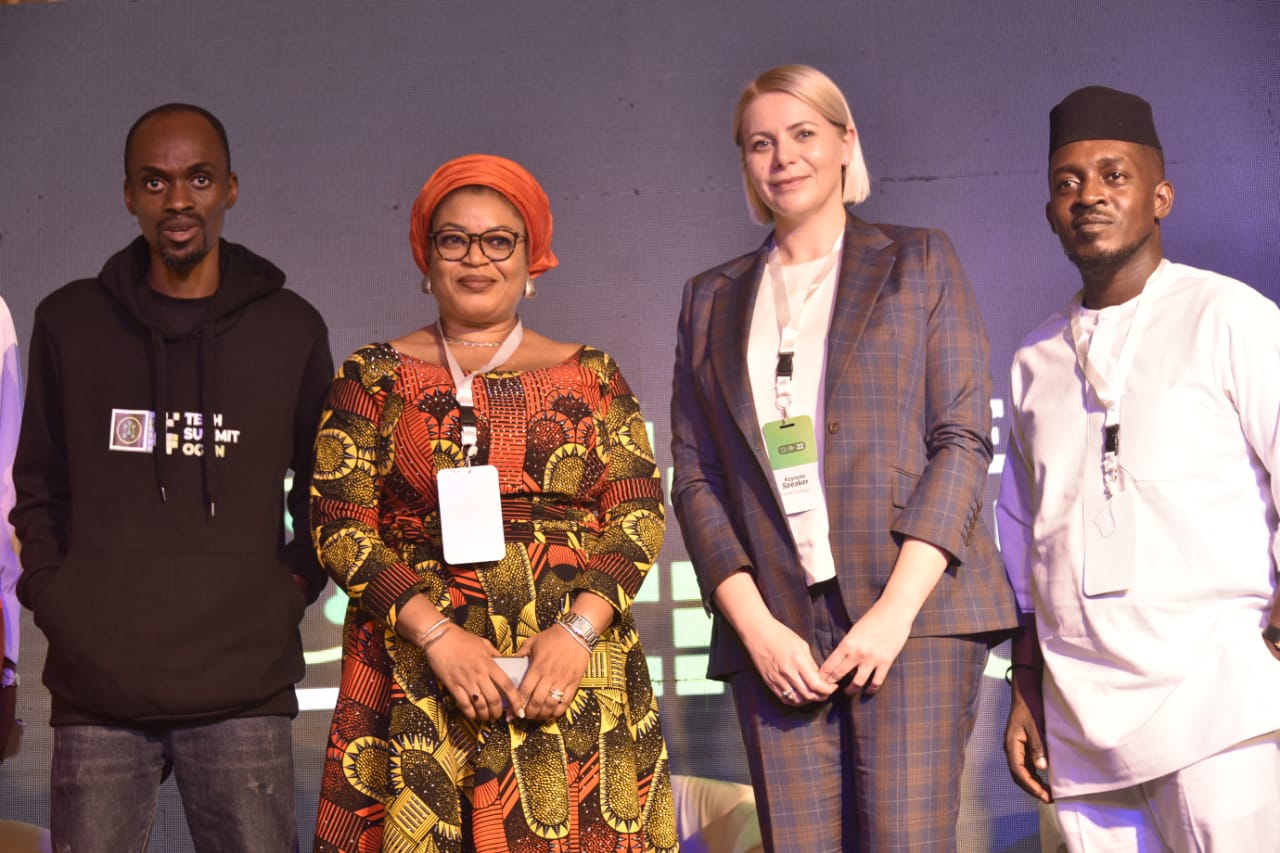
This was the submission of the Chief Executive Officer of 9PSB, Ms Branka Mracajac, at the Tech Summit Ogun 2022, which was held at the Olusegun Obasanjo Presidential Library Abeokuta, Ogun State on Thursday, February 17, 2022.

During her presentation of a keynote address themed Content Creation and Financial Inclusion; The Future of Digital Banking, Ms Mracajac emphasized the need to pay close attention to content creation as an important factor in driving and accelerating financial inclusion in the country, stating that it was capable of enhancing the future of digital banking in the long-term.

According to her, while there are ongoing efforts to support the country’s financial inclusion drive, a lot more rest on formulating tailored strategies that address specific needs.

“Providing access to the banking agents and touchpoints, across the country is happening as we speak; payment service banks, microfinance banks, and FinTech companies are all working on this,” she said.

But will this be enough?  Will the access to digital banks change the mindset of Nigerians in rural areas of the country and be enough to drive the transition from cash to a cashless society?” she questioned.

Proffering the way forward, Ms Mracajac stressed the need to provide financial literacy through content that speaks to an average Nigerian in unserved rural areas of the country, stating that financial inclusion is a process, not just a point in time and space that we want to reach.

She added that developing content that speaks only to the already banked and mirroring the digital financial habits of those who are fully included and heavily banked, will not help to keep the newly onboarded in the system long-term.

“While creating and delivering the content for financial inclusion, we need to have in mind the needs of its beneficiaries, the targeted end-users of the financial services who are currently underserved and the only sustainable way is that we join our forces and create the content – apps and services that will address the specific needs of a farmer in Benue, market women in Onitsha, the trader in Kano, the fisherman in Delta, and the woman selling ofada rice in Ogun State,” she stated.

Speaking further, Ms Mracajac noted that to drive the offline individuals and MSMEs from cash to cashless, from analogue to digital and from informal to formal, content creators need to focus on two major goals; one, to deliver relevant and on-point digital financial literacy content, educating people about the principles, ways, modules, and benefits of banking.

The second one, she stated, is needed for sustainable financial inclusion, delivery of digital banking services that are a reflection of the lifestyle of the currently unbanked and underserved population.

In his keynote address titled Disruptive Innovation: Production and Distribution of Creative Content, the Minister of Communications and Digital Economy, Mr Isa Ali Ibrahim Pantami, who was represented by the CEO of the Nigerian Communications Satellite Limited (NIGCOMSAT), Dr Abimbola Alale, remarked that the quality of creatives and start-ups that Nigeria has produced is a testament to the potential of the ecosystem, and as such the ministry will continue to support the tech and creative entrepreneurs to play their part in developing Nigeria’s digital economy.

The Tech Summit Ogun is an annual convergence of Tech disruptors, innovators, startups, organizations and technology enthusiasts in Ogun State, aimed at spurring technological innovation towards the digital transformation and technological advancement of Ogun State. This year, the summit attracted over 2000 participants, mainly the youths and start-ups.


Modupe Gbadeyanka is a fast-rising journalist with Business Post Nigeria. Her passion for journalism is amazing. She is willing to learn more with a view to becoming one of the best pen-pushers in Nigeria. Her role models are the duo of CNN's Richard Quest and Christiane Amanpour.

Banking

CBN, NCC Set up Committees to Protect Consumers Against Fraud

Published

on

CBN NCC

By Modupe Gbadeyanka

In a bid to ensure consumer safety across the telecommunications and financial services sectors, the Central Bank of Nigeria (CBN) and the Nigerian Communications Commission (NCC) have decided to work together.

On Monday, both organisations sealed a Memorandum of Understanding (MoU) for the establishment of joint committees for the protection of consumers against fraud in the sectors.

The two teams set up by the CBN and the NCC include the Joint Committee on Payment Systems and Consumer Protection, and the Joint Committee on Telecoms Identity Risk Management System (TIRMS) Portal.

Through the TIRMS portal, which aggregates data on churned (recycled) phone numbers, as well as numbers flagged within the financial services sector, it will now have enhanced visibility into the status of phone numbers, one of the most widely utilised resources in the sector, although regulated by the NCC.

With this, according to the chief executive of NCC, Mr Aminu Maida, financial institutions will be able to determine when a line is active, when it has been swapped, when it has been disconnected due to inactivity and reassigned to a new subscriber, and when it has been flagged for suspicious or fraudulent activity. “This ensures that our financial services industry is better equipped with timely and relevant information to effectively combat e-fraud, particularly those perpetuated using phone numbers, in the country,” he stated.

It was stated that the partnership between the two parties will reduce electronic fraud, which has become increasingly pervasive, with significant implications for the integrity of the digital economy.

In his remarks, the Governor of the CBN, Mr Yemi Cardoso, said the MoU will strengthen coordination on approvals, technical standards, and innovation trials, including sandbox testing that supports market-led solutions, while safeguarding stability.

“Going forward, the CBN remains fully committed to working with the NCC to deliver a safer, more resilient, and more inclusive digital financial system that supports national productivity, protects consumers, and strengthens trust in Nigeria’s digital economy,” the central bank chief said.

Continue Reading

Banking

Wema Bank Looks to Deepen Role as Catalyst for Growth, Market Presence

Published

on

wema-bank-logo

By Aduragbemi Omiyale

Mid-level Nigerian lender, Wema Bank Plc, has set its eyes on expanding its market presence and supporting the government in achieving its $1 trillion economy by 2030.

In a statement, the financial institution said it hopes to achieve these and others through its recently recapitalisation exercise, which saw its capital base rise to about N265 billion, well above the N200 billion-threshold set by the Central Bank of Nigeria (CBN) for its category of licence.

Wema Bank operates with a national licence, and based on the regulator’s requirement, the capital base must be at least N200 billion.

Before the March 31, 2026-deadline set be the CBN, banks were required to have at least N25 billion, but to meet up with the 2030 target of the federal government, this threshold was raised, with banks operating branches out the country asked to have at least N500 billion, while regional banks were told to have a minimum of N50 billion.

To comply with the new directive, Wema Bank embarked on a strategic capital raise through the stock market, successfully strengthening its shareholder base and securing the required capital through strong participation from existing investors.

Its N150 billion rights issue, which opened on April 14, 2025, and closed on May 21, 2025, marked a significant step in this journey. This was subsequently complemented by a N50 billion special placement later in the year, ensuring the bank not only met but exceeded the regulatory threshold well ahead of schedule.

“The successful completion of our recapitalisation exercise is a defining moment for Wema Bank. It is a strong validation of our strategy, our performance, and the enduring confidence our shareholders and stakeholders have in our vision.

“We have not only met the CBN’s requirements; we have exceeded them, reinforcing our position as a National Bank with the scale, strength, and stability to compete and lead,” the chief executive of Wema Bank, Mr Moruf Oseni, stated.

“Looking ahead, we remain focused on deepening our market presence, driving customer-centric innovation, and strengthening our role as a catalyst for growth across retail, SME, and corporate segments.

“This is not just about retaining our license; it is about building a bigger, stronger, and more impactful Wema Bank,” the bank executive further stated.

Continue Reading

Banking

Nigeria to Invest $75m in Flutterwave’s IPO Drive

Published

on

flutterwave IndusInd Bank India

By Adedapo Adesanya

President Bola Tinubu has given approval for the investment of $75 million in Flutterwave, as part of the payments company’s efforts to raise $250 million through an Initial Public Offering (IPO).

The investment is expected to be executed through the Ministry of Finance Incorporated (MoFI), according to reports on Monday.

Since its founding in 2016, Flutterwave has rapidly expanded and now has a presence in about 30 African countries. The company’s valuation is at $3 billion.

According to the reports, the fintech company approached the federal government last year to participate in the offer, which has been in motion since it was first touted as far back as 2022.

Flutterwave’s IPO has been delayed by its lack of sustained profitability, earlier governance and misconduct scandals, and unfavourable global market conditions.

It was gathered that MoFI engaged two of the Big Four global accounting and auditing firms to carry out a detailed review of the company’s financial statements and operations, in a move aimed at ensuring due diligence and strengthening investor confidence.

Citing sources, the newspaper said Flutterwave brought Nigerian government participation to secure sovereign backing and reinforce confidence in Nigeria’s growing technology sector.

According to the sources, the move was also intended to project Nigeria’s potential on the global stage, adding that the company is also using the IPO to widen ownership and allow more Nigerians to invest in its growth.

The paper also reported that the IPO would expand ownership, giving more Nigerians the opportunity to invest in one of Africa’s leading fintech companies.

Market interest in the offer is said to be strong, with existing investors indicating plans to increase their stakes, while new institutional players are also positioning to participate.

This development is coming after the Central Bank of Nigeria (CBN) granted Flutterwave a license to operate microfinance banking services in Nigeria. The license enables the company to hold funds and deposits directly, strengthening its financial infrastructure across its largest market and enabling more efficient financial services and settlement flows for consumers, businesses and enterprises.

Continue Reading

Trending