Connect with us

Brands/Products

Want to Survive a Period of Economic Crisis? Don’t Kill Your Marketing Spend

Published

on

Tintin Imevbore online retail

By Tintin Imevbore

During times of economic downturn, such as the one Nigeria’s currently experiencing, businesses are frequently forced to make tough choices when it comes to cutting back on costs. Unfortunately, marketing is often among the first cost items to be cut. While the reasons for cutting back on marketing as a whole are understandable, doing so could potentially cause detrimental damage to the business in the long run.

In fact, there’s a strong case to be made that, rather than making wholesale cuts, organisations could aim to reallocate spending to suit the current economic climate while also driving efficiency and adapting to changing consumer behaviours. And that, in turn, could mean putting an increased focus on digital marketing. Doing so comes with several advantages. Not only does it minimise the pitfalls that come with cutting back on marketing spend (including lost brand visibility and diminished customer loyalty), but it could also help businesses stand out against competitors who do cut their marketing budgets in a bid to save short term.

But, in order to enjoy these advantages to their fullest extent, organisations have to take the right approach to digital marketing. That includes working with advertising partners who understand the digital landscape as well as the platforms and digital ad products most suitable to each business’s requirements.

Understanding the psychology of cutbacks 

Before looking at how businesses can ensure that they get the full benefits of digital marketing, it’s worth getting a clearer understanding of why it’s so often among the first items to be cut in a company budget.

One of the biggest reasons is that cutting back on marketing spend provides immediate savings to the business. That could help the business preserve immediate cash flow in the short term. While that’s not as applicable to digital marketing channels as it is to traditional ones (such as broadcast and outdoor), businesses looking to preserve cash flow and save jobs will try and save anywhere they can.

Additionally, marketing budgets are seen as more flexible compared to fixed costs like salaries or commercial rent. As such, some business owners and executives believe that it’s easier to scale back or eliminate marketing campaigns than it is to make drastic changes to the organisation’s structure.

To add to it, , in a period where business survival is perceived to be more important than growth and expansion, long-term investments like marketing campaigns might take a backseat in favour of short-term cost-cutting measures.

Short-term gains but long-term pain 

As understandable as that logic is, the short-term gains made by cutting back on advertising can result in long-term pain for businesses.

Reducing or eliminating marketing efforts during an economic downturn can lead to reduced brand visibility, a loss of market share, and diminished customer loyalty. This, in turn, could make it more challenging for the business to recover once the economic situation improves.

And in an emerging market like Nigeria, that could mean missing out on considerable long-term growth. While the economy might be struggling now – thanks to a combination of volatile exchange rates, the removal of the fuel subsidy, rapidly rising inflation, and global macroeconomic factors – that won’t always be the case.

The country’s expanding youthful population, growing levels of connectivity, and rich natural resources mean that it is primed for long-term growth. In fact, research from Goldman Sachs suggests that Nigeria could have the fifth-largest economy on the globe by 2075.

The businesses that will be best positioned to enjoy the fruits of that growth are the ones that build personalised relationships with their customers, and digital marketing remains one of the most efficient ways of doing that.

Use the right partners 

But that doesn’t mean that businesses have to adopt a “business-as-usual” approach when it comes to digital marketing. It is, after all, still possible to recognise the importance of maintaining a digital presence while also being aware of the broader economic situation.

Achieving this balance can be a lot easier when businesses choose to work with the right advertising partners. The ideal partner would be able to help a business identify which platforms and formats work best for its business needs. The partner will also be able to help deliver the kind of campaigns that provide the maximum return on the business’s marketing spend.

Businesses should also consider looking for an advertising partner that has an established in-market presence with local on-ground expertise. By doing so, the business is more likely to understand and adapt to the shifting economic conditions. It’s additionally important to use an advertising partner that prices transparently, meaning the business knows it’s getting the fairest possible price from the start.

An ongoing investment 

Ultimately, then, it should be clear that while cutting digital marketing budgets is understandable, it should never be viewed as desirable.  Businesses that choose to keep their advertising during activities running through challenging economic times could potentially come out stronger on the other side. In order to reap maximum benefits, they should consider working with partners who can help them ensure their marketing budgets work as efficiently (and as economically) as possible during uncertain times.

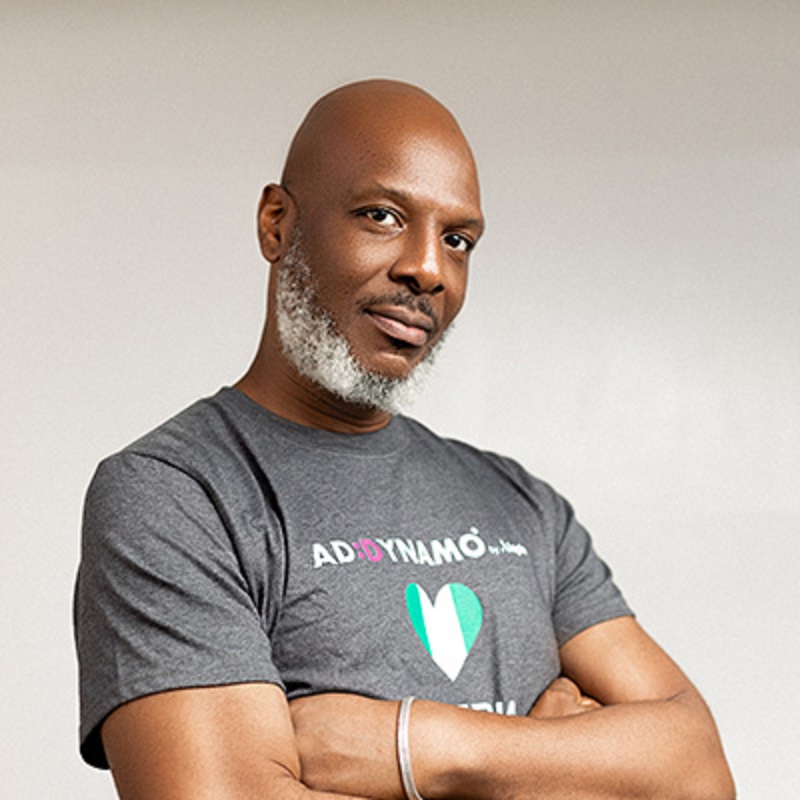
Tintin Imevbore is the Managing Director for Nigeria at Ad Dynamo by Aleph

Click to comment

Leave a Reply

Your email address will not be published. Required fields are marked *

Brands/Products

MultiChoice Now Full Subsidiary of Canal+—CEO

Published

on

CANAL+ MultiChoice

By Aduragbemi Omiyale

The chief executive of Canal+ Africa, Mr David Mignot, has disclosed that MultiChoice is now fully integrated into the media group.

Mr Mignot disclosed this via a statement issued on Thursday, noting that this development marks a new phase in the evolution of one of Africa’s leading pay television operators.

He noted that the integration positions MultiChoice within a global media organisation with an extensive international footprint.

“MultiChoice is now a full subsidiary of a truly international media group operating in 70 countries. The group was founded in France, is listed in London and Johannesburg, and has a strong African presence with operations in more than 45 countries,” Mr Mignot said.

The statement underscores the scale of the combined business, highlighting Canal+’s global reach alongside its significant investments across Africa.

The completion of the transaction is expected to strengthen MultiChoice’s position in the African media and entertainment market by giving it access to the broader resources, expertise and international capabilities of the Canal+ Group, while reinforcing the group’s commitment to the continent.

MultiChoice operates across sub-Saharan Africa through platforms including DStv and GOtv, serving millions of subscribers with entertainment, sports and news content.

Continue Reading

Brands/Products

FoodCourt Pauses Operations as Unpaid Salaries, Debt Mount

Published

on

FoodCourt

By Adedapo Adesanya

FoodCourt, a Nigerian cloud kitchen startup backed by Y Combinator, has suspended operations after months of unpaid salaries and mounting debts to vendors triggered a staff strike and forced the company to halt customer orders, according to a report by TechCabal.

The publication reported that customers first noticed on March 4 that they could no longer place orders through the FoodCourt app after the company disabled ordering as kitchen workers, delivery personnel and branch staff embarked on strike over unpaid wages. The company also owed outstanding payments to vendors.

By April 19, FoodCourt had temporarily shut its last operating branch after suspending activities across its Lagos and Abuja locations while seeking fresh funding and restructuring the business, according to the report.

The company’s chief executive, Mr Henry Nneji, said the decision to pause operations was not caused by a single issue but by a combination of operational, organisational and working-capital challenges.

“It’s important to clarify that the decision to pause operations wasn’t driven by one single issue. We reached a point where it became clear that continuing to patch those issues while operating wasn’t the right long-term decision,” he said.

“The objective is to build a stronger business than the one that existed before the suspension. We fully intend to bring FoodCourt back,” he added in an emailed response.

The company acknowledged outstanding obligations to employees, vendors, riders and service providers, but declined to disclose the number of affected workers or the total amount owed. It said efforts were underway to resolve the liabilities as part of its restructuring process.

It was also reported that the startup’s financial difficulties worsened after expansion into additional locations increased operating costs, while its cloud kitchen model came under pressure from rising labour, logistics, food and marketing expenses.

Despite the shutdown, Mr Nneji said FoodCourt intends to relaunch after completing its restructuring, adding that the company believes demand for its products remains strong.

Founded in 2021 by Henry Nneji and Paul Adokiye Iruene, FoodCourt operates cloud kitchens under multiple virtual restaurant brands through its consumer app. According to TechCabal, the startup had previously disclosed raising $1.7 million, delivering more than one million meals and reaching $4.3 million in annual recurring revenue by the end of 2024.

Continue Reading

Brands/Products

Chicken Republic Introduces Improved Smokey Jollof Recipe

Published

on

Chicken Republic smokey jollof

By Aduragbemi Omiyale

To further reinforce its commitment to continuous enhancement of customer experience through menu innovation and quality improvements, Chicken Republic, Nigeria’s leading quick-service restaurant brand and a flagship brand of Food Concepts Plc, has improved its Smokey Jollof recipe across restaurants nationwide.

As a customer-centric brand, Chicken Republic regularly evaluates consumer feedback, dining trends, and product performance to ensure its menu continues to deliver the quality and value to which customers have become accustomed.

The updated Smokey Jollof is part of this ongoing commitment to continuous improvement.

The refreshed recipe represents the latest evolution of one of the brand’s most popular offerings.

Developed with a focus on richer flavour, greater consistency and an even more satisfying eating experience, the improved Smokey Jollof reflects Chicken Republic’s dedication to meeting the evolving tastes and expectations of its customers.

“At Chicken Republic, our customers are at the heart of every decision we make. We are constantly listening, learning and looking for ways to improve the experience we deliver.

“The improved Smokey Jollof is a reflection of that commitment. We’ve refined the recipe to deliver an even richer, more enjoyable taste experience while maintaining the flavour profile our customers know and love,” the Managing Director of Food Concept, Mr Olumide Aniyikaiye, stated.

“Great brands evolve with their consumers. This update is not about changing what people love, but about making it even better.

“We are confident that customers will enjoy the improved recipe and appreciate the attention we continue to invest in delivering quality meals every day,” Mr Aniyokaiye added.

The improved Smokey Jollof is now available at Chicken Republic outlets nationwide, allowing customers to experience a more flavourful and consistent version of a fan-favourite menu item.

This latest enhancement underscores Chicken Republic’s broader commitment to innovation, quality and creating memorable meal experiences for customers across Nigeria.

Continue Reading