Connect with us

Economy

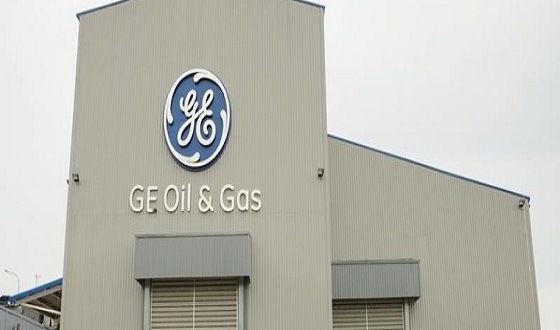
UKEF Backs GE Oil & Gas Contract in Ghana with $400m

Published

on

By Dipo Olowookere

UK Export Finance (UKEF) has announced that it will provide $400 million in support for a GE Oil & Gas contract with Ghana’s Offshore Cape Three Points Project.

GE Oil & Gas, which is headquartered in the UK, is providing subsea production systems to the project, which will develop oil and gas fields approximately 60km offshore from the western side of Ghana’s coast.

Following first gas production in 2018, the new fields are expected to continuously feed Ghana’s thermal power plants for more than 20 years.

Mr Greg Hands MP, Minister for Trade and Investment, said: The Offshore Cape Three Points Project will greatly improve Ghana’s energy security. Thanks to the UK Government’s support, via UK Export Finance, and our global leadership in oil and gas, UK companies are ideally placed to support Ghana’s future development and seize the huge export potential that brings.

Mr Lorenzo Simonelli, President and CEO of GE Oil & Gas, said: This contract represents GE’s ability to invest to build local partnership, resource and infrastructure capabilities, and will utilise engineering and manufacturing expertise from the UK, across the supply chain. Export credit agency financing is an important source of support for our customers, and the MoU signed with UKEF in 2015 has helped to support this success.

The Offshore Cape Three Points (OCTP) project will develop gas reserves expected to generate an additional 1,100MW of power for Ghana, which will alleviate the country’s reliance on energy imports, providing long-term energy security and supporting Ghanaian industrial development. This transformational natural gas project will help the country achieve its COP21 commitments for climate mitigation by displacing heavy fuel oil use with gas – equivalent to taking 1.2 million cars off Ghana’s roads each year or planting 152 million trees.

Support for the contract is a result of the Memorandum of Understanding signed between GE and UKEF in 2015, affirming UKEF’s support for GE and GE’s commitment to continued investment in its UK operations.

UKEF will provide US $400 million of support to the OCTP project, including a loan under its Direct Lending Facility. This will be UKEF’s first direct loan for a project in Africa. UKEF support will finance the specialised systems and equipment, a significant proportion of which has been sourced from the UK.

OCTP is understood to be the world’s first upstream oil and gas development transaction where a European export credit agency (ECA) has supported a major hybrid finance structure comprising both project finance and reserve-based lending. As the sole ECA, UKEF played a pioneering role in establishing this precedent, reinforcing its growing reputation as one of the world’s most innovative and flexible ECAs. The transaction has been named Project Finance International’s African Oil & Gas Deal of the Year for 2016.

Total investments in the development of the OCTP are estimated to be $7.9 billion over the life of the project, represents the largest foreign direct investment in Ghana’s history. UKEF’s support is provided as part of a larger USD$1.35 billion financing package alongside that of the International Finance Corporation and Multilateral Investment Guarantee Agency of the World Bank Group, as well as commercial banks HSBC Bank plc, Standard Chartered Bank, Société Générale (London Branch), ING Belgium SA/NV, Natixis, Bank of China, Singapore Branch, Mizuho Bank Ltd and MUFG (Europe) N.V.


Dipo Olowookere is a journalist based in Nigeria that has passion for reporting business news stories. At his leisure time, he watches football and supports 3SC of Ibadan. Mr Olowookere can be reached via [email protected]

Click to comment

Leave a Reply

Your email address will not be published. Required fields are marked *

Economy

NASD OTC Exchange Inches Up 0.03% as CSCS Outshines Four Price Decliners

Published

on

Nigerian OTC securities exchange

By Adedapo Adesanya

Central Securities Clearing System (CSCS) Plc bested four price decliners on the NASD Over-the-Counter (OTC) Securities Exchange on Monday, April 27. The alternative stock market opened the week bullish during the session with a 0.03 per cent uptick.

According to data, the security depository company added N2.61 to its share price to close at N76.26 per unit compared with the preceding session’s N78.87 per unit.

As a result, the market capitalisation of the platform increased by N820 million to N2.425 trillion from N2.424 trillion, and the NASD Unlisted Security Index (NSI) gained 1.38 points to finish at 4,053.97 points compared with the 4,052.58 points it ended last Friday.

The four price losers were led by NASD Plc, which slumped by N3.80 to sell at N34.70 per share versus N38.50 per share. FrieslandCampina Wamco Nigeria Plc fell by N1.45 to N98.10 per unit from N99.55 per unit, Food Concepts Plc slid by 27 Kobo to N2.43 per share from N2.70 per share, and Geo-Fluids Plc dipped by 9 Kobo to N2.91 per unit from N3.00 per unit.

The value of securities transacted by market participants went down by 82.0 per cent to N7.4 million from N41.3 million units, the volume of securities declined by 28.5 per cent to 319,831 units from 447,403 units, and the number of deals dropped by 34.1 per cent to 29 deals from 44 deals.

Great Nigeria Insurance (GNI) Plc was the most active stock by value on a year-to-date basis with 3.4 billion units worth N8.4 billion, followed by CSCS Plc with 59.6 million units sold for N4.0 billion, and Okitipupa Plc with 27.8 million units exchanged for N1.9 billion.

Also, GNI Plc was the most traded stock by volume on a year-to-date basis with 3.4 billion units valued at N8.4 billion, followed by Resourcery Plc with 1.1 billion units traded for N415.7 million, and Infrastructure Guarantee Credit Plc with a turnover of 400 million units worth N1.2 billion.

Continue Reading

Economy

Naira Opens Week Weaker at N1,364/$ at NAFEX After N5.80 Loss

Published

on

NAFEX Rate

By Adedapo Adesanya

The first trading day of the week in the currency market was bearish for the Naira in the Nigerian Autonomous Foreign Exchange Market (NAFEX) on Monday, April 27.

Yesterday, it lost N5.80 or 0.43 per cent against the United States Dollar to trade at N1,364.24/$1, in contrast to the N1,358.44/$1 it was traded last Friday.

In the same vein, the Nigerian currency depreciated against the Pound Sterling in the official market by N13.70 to close at N1,847.72/£1 versus the preceding session’s N1,834.02/£1, and slumped against the Euro by N11.56 to sell at N1,602.29/€1 versus N1,590.73/€1.

Also, the Nigerian Naira tumbled against the greenback during the trading day by N5 to quote at N1,385/$1 compared with the previous rate of N1,380/$1, and at the GTBank FX desk, it traded flat at N1,370/$1.

The poor performance of the domestic currency could be attributed to liquidity shortage at the official currency market on Monday, which came amid surging demand for international payments. At $76.50 million, interbank liquidity printed higher across 79 deals, up from the $43.572 million reported on Friday.

Nigeria’s gross external reserves declined to $48.45 billion amid a month-long decline in inflows, amid uncertainties in the global commodity market. The depletion of foreign reserves could be partly attributed to the Central Bank of Nigeria’s intervention in the FX market.

The market remains perturbed by persistent concerns over liquidity constraints, policy transparency, and weakening confidence in Nigeria’s FX market, while boosters, including oil prices, continue to look rocky due to stalled discussions and unclear ceasefire negotiations between the US and Iran.

A look at the cryptocurrency market, Bitcoin (BTC) has been rejected near $79,000 three times in eight sessions, leaving the level as the de facto ceiling of its current trading range even as major cryptocurrencies trade lower over the past day. It lost 0.9 per cent to sell at $77,003.61.

Analysts say that upcoming US Federal Reserve policy decisions and top tech firms’ earnings this week could provide the catalyst to push bitcoin decisively above $80,000.

The market also continued to weigh Iran’s interim deal proposal to reopen the Strait of Hormuz, which failed to advance over the weekend. The White House said US officials were discussing the latest Iranian proposal but maintained “red lines” on any deal to end the eight-week war.

Solana (SOL) dropped 1.8 per cent to $84.25, Ripple (XRP) went down by 1.6 per cent to $1.39, Ethereum (ETH) depreciated by 1.3 per cent to $2,290.00, Binance Coin (BNB) declined by 0.5 per cent to $625.18, and Cardano (ADA) fell by 0.2 per cent to $0.2480.

However, Dogecoin (DOGE) rose by 2.0 per cent to $0.1002, and TRON (TRX) appreciated by 0.2 per cent to $0.3242, while the US Dollar Tether (USDT) and the US Dollar Coin (USDC) remained unchanged at $1.00 apiece.

Continue Reading

Economy

NASCON Targets Deeper Cost Optimisation, Accelerated Digital Transformation, Others

Published

on

NASCON AGM shareholders

By Aduragbemi Omiyale

One of the leading salt makers in Nigeria, NASCON Allied Industries Plc, has set its eyes on some strategies aimed to deliver more value to shareholders.

The chief executive of the company, Mrs Aderemi Saka, said efforts are being made to surpass the performance of last year.

In the 2025 financial year, the organisation recorded a 27 per cent growth in revenue, while post-tax profit grew by over 100 per cent to N33.5 billion, with the earnings per share (EPS) expanding by 115 per cent to N12.41 from N5.77 Kobo in the previous year.

The impressive performance, attributed to a clear strategic vision, disciplined execution and sustained focus on cost-saving initiatives across production, logistics and fleet management, resulted in a 200 per cent increase in dividend payout to shareholders to N6 per share.

Mrs Saka, at the firm’s Annual General Meeting (AGM) in Lagos, said the strategic priorities for the coming year include deeper cost optimisation, expanded market penetration, strengthened energy diversification and sustainability initiatives, as well as accelerated digital transformation and process automation.

Earlier, the chairman of NASCON, Mr Olakunle Alake, informed shareholders that the achievements for last year were due to improved operational efficiency, strict cost management and the dedication of the company’s workforce.

“The operating environment in 2025 was characterised by economic volatility, persistent inflation and structural changes across key sectors. Yet, NASCON remained resilient and strategically focused, delivering outstanding value to shareholders,” Mr Alake said.

He noted that operational sustainability remains a core pillar of the organisation’s strategy, stressing that during the year, NASCON introduced Compressed Natural Gas (CNG) trucks into its logistics fleet to reduce fuel costs and minimise exposure to diesel price volatility.

In addition, the company’s state-of-the-art salt refinery, its largest production facility, now runs entirely on natural gas, significantly boosting efficiency while reinforcing NASCON’s commitment to environmental sustainability.

A director in the organisation, Mrs Tonya Lawani, emphasised that the firm remains firmly committed to the principles that have driven its excellent performance, noting that NASCON approaches the new financial year from a position of strength, with further opportunities for growth and improvement.

Speaking on behalf of shareholders, Mr Faruk Umar expressed strong confidence in the company’s trajectory, citing NASCON’s rising share price, which recently crossed the N100 mark, and projecting further appreciation.

He commended the quality of the Board and management team, noting that strong leadership and recent executive appointments have positioned the entity to deliver even greater value to all stakeholders.

Continue Reading

Trending