World
Can Africa Prioritise and Solve its Food Security Challenges?
By Kestér Kenn Klomegâh
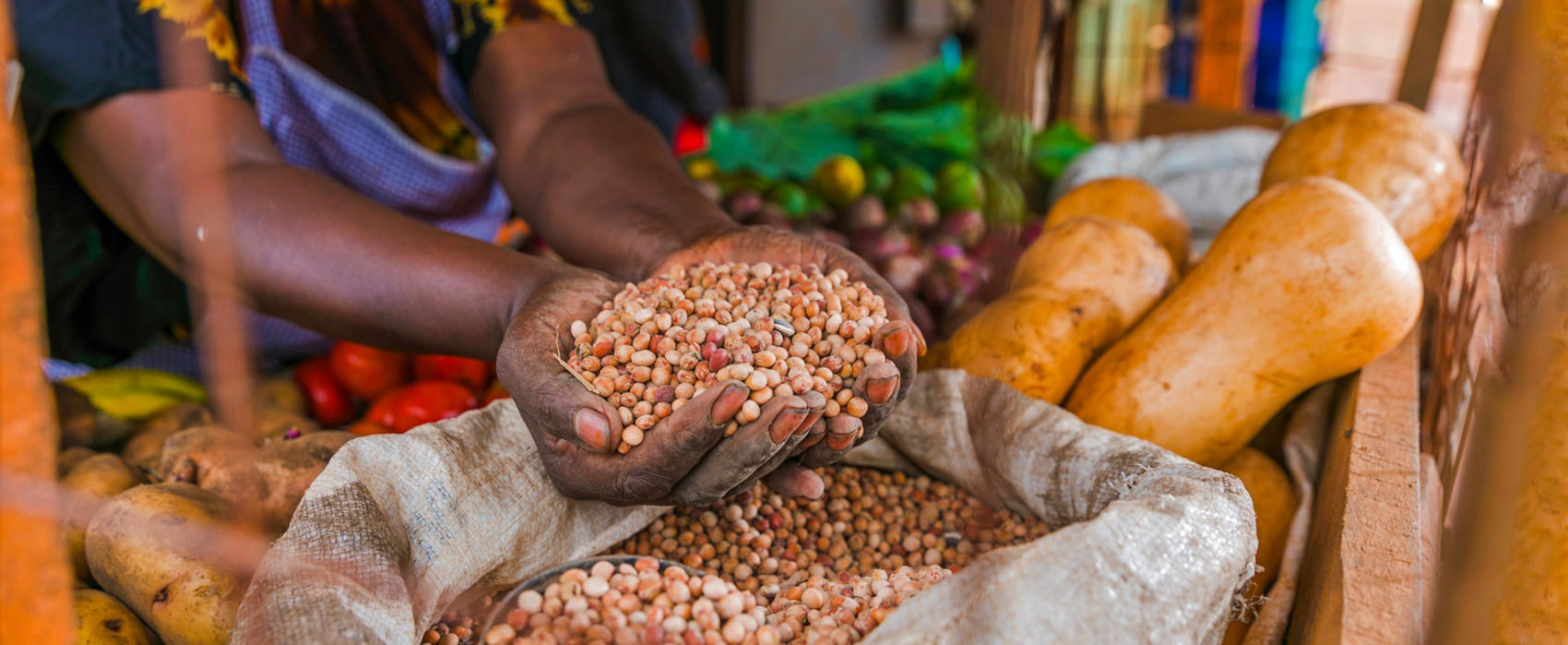
Global food security, especially in Africa, has been in the media publications these past few months. While a few outspoken African leaders shifted blame to the Russia-Ukraine crisis, others focused on spending the state budget to import food to calm rising discontent among the population. Some experts and international organizations have also expressed the fact that African leaders have to adopt import substitution mechanisms and use their financial resources to strengthen agricultural production systems.
At the G7 Summit in June, President Biden and G7 leaders announced over $4.5 billion to address global food security, over half of which will come from the United States. This $2.76 billion in U.S. government funding will help protect the world’s most vulnerable populations and mitigate the impacts of growing food insecurity and malnutrition, including from Russia’s war in Ukraine, by building production capacity and more resilient agriculture and food systems around the world and responding to immediate emergency food needs.
U.S. Congress allocated $336.5 million to bilateral programs for Sub-Saharan African countries, including Burkina Faso, the Democratic Republic of the Congo, Ethiopia, Ghana, Guinea, Kenya, Liberia, Madagascar, Malawi, Mali, Mozambique, Niger, Nigeria, Rwanda, Senegal, Sierra Leone, Somalia, South Sudan, Tanzania, Uganda, Zambia, and Zimbabwe and regional programs in southern Africa, west Africa, and the Sahel.
Also, of this $2.76 billion, USAID is programming $2 billion in emergency food security assistance over the next three months. As of August 8, 2022, the U.S. has provided nearly $1 billion specifically for countries in Africa toward this $2 billion commitment, including the Central African Republic, the Democratic Republic of the Congo, Ethiopia, Kenya, Mali, Mozambique, Nigeria, Somalia, South Sudan, and Uganda.
That compared, Russia plans to earn (revenue) $33 billion by the end 0f 2022 through massive export of grains and meat poultry to Africa. The plan aims to marginalise local production, cut out foreign contributions to support livelihoods through local production and make African leaders spend their hard-earned revenue on food imports instead of supporting agricultural production.
Primarily, Russia needs to export an estimated 50-60 million tonnes of grain this agricultural year from July 2022 to June 2023. Agriculture Minister Dmitry Patrushev and Algerian Agriculture and Rural Development Minister Mohamed Abdelhafid Henni, co-chairing the Russian-Algerian Intergovernmental Commission in late September, agreed on increased wheat exports from Krasnodar Territory and Siberia regions to Algeria.
The Agriculture Ministry’s Agroexport Center said in a report that Russia has to increase exports to Angola. The estimated potential for Russian agribusiness exports to Angola is $100 million per year, including grains, foremost wheat, soybean oil, beef, poultry, edible pork by-products, yeast and other agribusiness products.
Agroexport Federal Center for Development of Agribusiness Exports, in close partnership collaboration with Trust Technologies and the business expert community, drew up a concept for the development of exports of principal agricultural products (grain, dairy, butter, meat and confectionery products) to promising markets of African countries. It is estimated to build on the total volume of exports to African countries, which in 2021 amounted to $33 billion.
“The African continent is an interesting and promising area for developing Russian food exports. However, when working in this market, it is important to take into account a number of factors: strong differences in the level of welfare of the population, political instability in some countries, state regulation of prices for a number of goods, et cetera,” Agroexport head Dmitry Krasnov was quoted as saying in the statement and reported by Russian media including the Interfax News Agency.
By increasing grain exports to countries in Africa, Russia aims to enhance the competitiveness of Russian agricultural goods in the African market. According to the business concept report, five African countries have been identified and chosen as target markets for the delivery of agricultural products. These are Angola, Cameroon, Ethiopia, Ghana, Kenya, Mauritius, Nigeria, Tunisia and South Africa.
In sharp contrast to food-importing African countries, Zimbabwe has increased wheat production, especially during this crucial time of the current Russia-Ukraine crisis. This achievement was attributed to efforts in mobilizing local scientists to improve the crop’s production. Zimbabwe is an African country that has been under Western sanctions for 25 years, hindering imports of much-needed machinery and other inputs from driving agriculture.
At the African Green Revolution Forum (AGRF) summit held in September in Rwanda, President Emmerson Mnangagwa told the gathering that “we used to depend on importation of wheat from Ukraine in the past, but we have been able to produce our own. So, the crisis in that country has not affected us. There is an urgent need to adopt a progressive approach and re-purpose food policies to address the emerging challenges affecting our entire food systems.”
There are various local efforts to attain food security on the continent. For instance, the African Development Bank’s (AfDB) African Emergency Food Production Facility (AEFPF) to increase the production of climate-adapted wheat, corn, rice, and soybeans over the next four growing seasons in Africa. The International Fund for Agricultural Development’s (IFAD) Crisis Response Initiative (CRI) helps protect livelihoods and build resilience in rural communities. The Africa Adaptation Initiative (AAI) to develop a pipeline of bankable projects in Africa to leverage private equity.
The Africa Risk Capacity (ARC) Africa Disaster Risk Financing Programme (ADRiFi) helps African governments to respond to food system shocks by increasing access to risk insurance products. A fertilizer efficiency and innovation program to enhance fertiliser use efficiency in countries where fertilizer tends to be over-applied. Support for the UN Food and Agriculture Organization (FAO) will fund soil mapping spanning multiple countries to provide information allowing for wiser water usage, greater fertilizer conservation, and improved climate resilience impacts.
Significant to note that during the business conference held at the Atlantic Council’s Africa Center on April 22, African Development Bank Group President Dr Akinwumi Adesina, speaking as a guest of the Washington, DC, US-based think tank, called for an increased sense of urgency amid what he described as a once-in-a-century convergence of global challenges for Africa, including a looming food crisis. The continent’s most vulnerable countries have been hit hardest by conflict, climate change and the pandemic, which upended economic and development progress in Africa.
Adesina said the ramifications of Russia’s invasion of Ukraine on Feb. 24 spread far beyond the conflict to other parts of the world, including Africa. Russia and Ukraine supply almost 30% of global wheat exports, and the price has surged nearly 50% globally, reaching levels reminiscent of the 2008 global food crisis.
Adesina said the tripling of fertilizer costs, rising energy prices and rising costs of food baskets, could worsen in Africa in the coming months. He noted that wheat made up 90% of Russia’s $4 billion in exports to Africa in 2020, and of Ukraine’s nearly $3 billion exports to the continent, 48% was wheat and 31% was maize.
Adesina said Africa must rapidly expand its production to meet food security challenges. “The African Development Bank is already active in mitigating the effects of a food crisis through the African Food Crisis Response and Emergency Facility, a dedicated facility being considered by the bank to provide African countries with the resources needed to raise local food production and procure fertilizer,” Adesina said. “My basic principle is that Africa should not be begging. We must solve our own challenges ourselves without depending on others…”
The bank chief spoke about early successes through the African Development Bank’s innovative flagship initiative, the Technologies for African Agricultural Transformation (TAAT) program, which operates across nine food commodities in more than 30 African countries. TAAT has helped to rapidly boost food production at scale on the continent, including the production of wheat, rice and other cereal crops.
“We are putting our money where our mouth is,” Adesina said. “We are producing more and more of our food. Our Africa Emergency Food Production Plan will produce 38 million metric tons of food.” He said TAAT already delivered heat-tolerant wheat varieties to 1.8 million farmers in seven countries, increasing wheat production by over 1.4 million metric tons and a value of $291 million. He added that during the drought in southern Africa in 2018 and 2019, TATT was able to help deploy heat-tolerant maize varieties, which were cultivated by 5.2 million households on 841,000 hectares.
In a similar argument and direction, the World Bank has also expressed worry over sub-Saharan African countries’ high expenditure on food imports that could be produced locally using their vast uncultivated lands and the devastating impact on budgets due to rising external borrowing. According to the bank, it is crucial to increase the effectiveness of current resources to expand and support local production, especially in agriculture and industry sectors during this crucial period of the Russia-Ukraine crisis.
In a press release titled – African Governments Urgently Need to Restore Macro-Economic Stability and Protect the Poor in a Context of Slow Growth, – High Inflation, the global lender said African governments spent 16.5 per cent of their revenues servicing external debt in 2021, up from less than 5 per cent in 2010. Eight out of 38 IDA-eligible countries in the region are in debt distress, and 14 are at high risk of joining them.
In late May 2022, the IMF and World Bank considered 16 low-income African countries at high risk of debt distress, while 7 countries – Chad, Republic of the Congo, Mozambique, São Tomé and Príncipe, Somalia, Sudan and Zimbabwe – were already in debt distress. Bright spots, such as Côte d’Ivoire and Rwanda, are expected to exhibit rapid growth in 2022, the report said. However, 33 African countries need external assistance for food, and acute food insecurity is likely to worsen in 18 of these economies in the next months.
With the above facts, African leaders have to demonstrate a higher level of commitment to tackling post-pandemic challenges and the Russia-Ukraine crisis that has created global economic instability and other related severe consequences. And this requires collaborative action and a much stronger pace of transformation to cater for the needs of the population of over 1.3 billion in Africa.
Máximo Torero, the chief economist of the Food and Agriculture Organization, has observed that African policies have relatively failed to alleviate food security problems. It has emphasised the fragility of over-dependence on a globalised agricultural system. To achieve a more integrated and regionalized agricultural system, coordinated public policy responses are needed to support agribusiness. These responses must ensure small and medium-sized farmers are included.
Action can be taken at a regional level too. And it would help identify issues relating to market access, border and transport-related problems, and possible anticompetitive behaviour. The integration of regional economies is one vehicle for alleviating pervasive food security issues. But regional integration can’t be achieved without the appropriate support for investment in production, infrastructure and capabilities.
An estimate suggests that rich Africans were holding a massive $500 billion in tax havens. Africa’s people are effectively robbed of wealth by an economy that enables a tiny minority of Africans to get rich by allowing wealth to flow out of Africa.
According to our basic research, Africa is not poor, as foreign players are stealing its wealth. But, there is $203 billion leaving the continent. Based on a set of new figures, sub-Saharan Africa is a net creditor to the rest of the world to the tune of more than $41 billion. Then there’s the $30 billion that these corporations repatriate – profits they make in Africa but send back to their home country or elsewhere to enjoy their wealth.
In an opinion article published in September by Foreign Policy in Focus, Imani Countess wrote that every year nearly $90 billion of African resources are lost to the global north in Illicit Financial Flows or IFFs. It isn’t just the Russians, but also U.S.-based corporations and others throughout the global north. Russians are flying an unprecedented huge quantity of gold out of Sudan and precious resources from the extractive industry out of the Central African Republic and Guinea.
According to him, “the financial mechanisms that facilitate illicit financial flows are complex, most often through opaque deals and contracts involving government officials. People in these plundered communities do not have a voice. They face harm to local biodiversity, loss of their livelihoods, and a lack of meaningful benefits, especially in providing sustainable development. The losses are breathtaking and heartbreaking, representing revenue that should be invested in sustainable development in Africa.”
Dr Richard Munang is UNEP’s Africa Regional Climate Change Programme Coordinator, and Ms Zhen Han is a doctoral student at Cornell University, wrote in a joint article that people living in extreme poverty in sub-Saharan Africa increased from 290 million in 1990 to 414 million in 2010. The region currently spends more than $35 billion on food imports annually.
Of the challenges currently facing the continent, climate change has greatly slowed down Africa’s progress towards MDGs, especially those related to eliminating hunger and poverty, improving human health and ensuring environmental sustainability. This is because climate change disproportionately affects the livelihoods of the most vulnerable population by increasing the occurrence of natural disasters, affecting the continuity of ecosystem functioning and the ecosystem services it provides. Climate change also damages the critical natural resources that vulnerable communities depend on.
Establishing food security is important for millions of people facing hunger in Africa and is crucial for sustainable economic development and the long-term prosperity of the continent. Therefore, addressing food security in a changing climate is key for a rising Africa in the 21st century. From the discussions above and various perspectives, African leaders have to focus and redirect both human and financial resources toward increasing local production, the surest approach to attain sustainable food security for the over 1.3 billion population in Africa, and this falls within the framework of the Agenda 2063 of the African Union.
World
Essent Slashes Contact Centre Technology Costs by 50%
By Modupe Gbadeyanka
The Netherlands’ largest energy provider, Essent, has cut the technology costs of its contact centre infrastructure by half.
The organisation, which serves 2.5 million customers, recorded zero critical incidents post-migration and improved agent workplace satisfaction by 36 per cent.
The migration was delivered in partnership with AI-first customer experience transformation specialists, Sabio Group, and was completed in under 12 weeks for an operation spanning over 1,000 agents across two locations.
Agents were forced to juggle multiple disconnected screens simultaneously — a workflow that was as inefficient as it was stressful.
“Our agents were constantly working with different screens — multiple chat instances open at once, multiple agent desktop instances. It was messy, and in some cases, quite stressful,” SAFe Product Manager for Customer Interaction, Omnichannel and Digital Transformation at Essent, Michiel Kouijzer, stated.
“A lot of colleagues were saying I was mad for even suggesting this approach. It kind of feels like a victory on a personal level that it did work out. You just have to be a little ambitious — and have the right expert partner who can make it work,” Kouijzer added.
With stable cloud infrastructure now firmly in place, Essent is turning its attention to the capabilities that were impossible in its legacy environment: AI-powered call summarisation, agentic customer self-service, and next-generation workforce optimisation.
Rather than a reckless ‘big bang’ cutover that could have affected service to millions of households, Sabio engineered a phased migration strategy — beginning with Essent’s SME segment to validate technical readiness before scaling to the full enterprise operation.
“This project showcases Sabio’s unique position in the contact centre technology landscape. We’re not just moving Essent to the cloud — we’re establishing a foundation for continuous improvement in their customer experience delivery,” the Country Manager for Sabio Group Benelux, Wouter Bakker, commented.
World
Africa: A New Market for Russian Business
By Kestér Kenn Klomegâh
On April 11, the presentation of the book “Africa: a new market for Russian business” took place, which aroused lively diverse interests among business representatives, entrepreneurs and employees of federal structures of Russia. The event was dedicated to discussing the prospects of Russian companies entering the African market and became a platform for the exchange of views and experiences.
Participating guests, packed in the small hall, included:
– representatives of business circles,
– entrepreneurs interested in new directions of development,
– employees of federal agencies curating foreign economic activity.
The presentation was held in a constructive and friendly atmosphere. The author of the book, Serge Fokas Odunlami, detailed the key ideas and conclusions presented in the publication. Particular attention was paid to the practical aspects of operating in the African market, as well as the analysis of opportunities and risks for Russian companies.
During the lively discussion, participants asked questions, shared their experiences and made suggestions for developing cooperation with African countries. This format allowed not only to get acquainted with the content of the book, but also to discuss topical issues of expanding business relations.
Meaning of the book: The publication, “Africa: a new market for Russian business” offers readers not only analytical, but also practical recommendations on investment and market trends, and how to enter the African market. The book will be a useful tool for those considering Africa as a promising destination for investment and business development.
The presentation of the book became a significant event for the Russian business community interested in expanding cooperation with Africa. Serge Fokas Odunlami introduced the participants to the new edition, which is a comprehensive business guide that gives an impetus for dialogue and implementation of joint entrepreneurial projects and corporate initiatives across Africa.
World
Ryan Collyer Reveals Reasons Behind Africa’s Significant Energy Deficit
By Kestér Kenn Klomegâh
Perhaps Russia’s state nuclear corporation, Rosatom, is at the frontline, shaping Africa’s energy security. And African countries are also accelerating coordinated efforts to build nuclear power plants primarily to supply their energy, which will drive industrialisation and boost power capacity for domestic utilisation.
Energy experts say adopting nuclear can further support a diverse energy mix, reduce reliance on fossil fuels, and help across the continent. Over the past two decades, Russia has been collaborating with African countries, adopting energy initiatives to provide power to approximately half the continent’s population, and making it an important component of Africa’s future energy strategy and solutions. At this point, however, it is necessary to underline the irreversible fact that Russia’s ultimate goal is to ensure long-term African energy security.
In this interview, Rosatom’s Chief Executive Director for Central and Southern Africa, Ryan Collyer, reiterates the strategic importance of Russia-Africa’s energy cooperation through strengthening bilateral agreements on collaboration on the peaceful use of nuclear energy. Collyer explains that the Russian approach is its ability to offer an integrated solution, from technology and financing to training and localisation. According to him, partnerships must be built on mutual benefit and on the principle of transparency. Here follows the interview excerpts:
What are the expectations, specifically in the nuclear energy sphere, for Africa during the forthcoming Russia–Africa Summit scheduled for 2026?
The expectation is a clear shift from dialogue to delivery. Over the past few years, we have built a strong foundation through agreements, feasibility discussions and partnerships. The 2026 Russia–Africa Summit is an opportunity to demonstrate tangible progress.
In practical terms, I would expect greater focus on implementation readiness. That includes regulatory development, human capital, financing models and localisation strategies. We also expect to see more structured cooperation in areas like small modular reactors, which are particularly relevant for many African grids, as well as stronger emphasis on education and training partnerships. Ultimately, the success of the Summit will be measured by how many initiatives move from concept to execution.
Why, despite many bilateral agreements, is Africa still experiencing a significant energy deficit?
Africa’s energy deficit is not a result of a lack of ambition or agreements. It is primarily a question of scale, financing and infrastructure readiness. Energy projects, especially large-scale ones, require long-term investment, stable policy frameworks and strong institutional capacity. Many countries are working under fiscal constraints, and at the same time, demand is growing rapidly due to population growth and urbanisation. So, even when progress is made, it can be outpaced by rising demand.
It is also important to understand that many agreements are not meant to deliver immediate infrastructure. They are part of a longer preparation cycle, including feasibility studies, regulatory development and workforce training. Nuclear projects in particular are long-term by nature, and while this can be perceived as slow progress, it is actually a reflection of the level of diligence required.
How do you assess the contribution of nuclear energy to climate change mitigation and technological development in Africa?
Nuclear energy plays a dual role in Africa’s development, both as a clean energy source and as a driver of technological advancement. From a climate perspective, nuclear provides reliable, low-carbon electricity at scale. Africa needs a significant expansion of its energy capacity to support economic growth, and this growth must be both stable and sustainable.
Nuclear allows countries to increase power generation without increasing emissions, while ensuring a consistent baseload supply. At the same time, its impact goes beyond electricity. Nuclear technologies support medicine, agriculture, water management and industrial processes. Across Africa, they are already used in areas such as cancer treatment, food preservation and environmental monitoring, making nuclear a broader platform for sustainable development.
In this context, Rosatom offers integrated solutions across the full nuclear value chain. This includes large-scale and small modular reactors, as well as advanced non-power applications such as nuclear medicine and irradiation technologies. Our focus is on delivering practical, tailored solutions that support long-term development and local capacity building.
Is Africa unprepared to deal with nuclear waste, as some critics suggest?
I would say that preparedness varies across countries, but it would be inaccurate to suggest that the issue is being ignored. Responsible nuclear programmes require a comprehensive approach to waste management from the very beginning. This includes legal frameworks, regulatory oversight, storage solutions and long-term planning. These elements are part of international best practice and are supported by organisations such as the IAEA. What is true is that this topic is often undercommunicated in the public space. It should be discussed more openly, because transparency builds trust.
Countries that are serious about nuclear energy understand that waste management is not optional. It is a core component of the programme, and it is addressed in parallel with all other aspects of development. Rosatom offers comprehensive solutions for spent fuel and radioactive waste management. These include technologies for safe storage, transportation, reprocessing and recycling of nuclear materials. In fact, advanced reprocessing solutions allow for the reuse of valuable components of spent fuel, significantly reducing the volume of waste and improving the overall sustainability of the nuclear cycle.
Nuclear power remains controversial. Why do you believe it is important for Africa, and what role does it play in the energy mix?
Africa needs a balanced and pragmatic energy strategy. The conversation should not be about choosing one technology over another, but about building an energy mix that is reliable, affordable and sustainable. Renewables will play a critical role and are already expanding rapidly. However, they are variable by nature. For industrialisation, countries also need stable, continuous power that is baseload. This is where nuclear can make a meaningful contribution. A diversified energy mix that includes renewables, nuclear, hydropower and other sources allows countries to reduce risk, improve energy security and support long-term economic growth.
Nuclear is not the only solution, but it is an important part of a resilient system, especially for countries with growing industrial ambitions. In this context, Rosatom is able to support countries with integrated energy solutions that combine reliability, sustainability and long-term partnership models, tailored to national development priorities.
How can we shift public perception, given the legacy of Chornobyl and Fukushima?
We cannot rewrite history, and we should not try to. Events like Chornobyl and Fukushima shaped public perception for a reason. The starting point is respect for those concerns, not dismissal. At the same time, what is often missing in the conversation is what happened after those events. Chornobyl, in particular, fundamentally reshaped the entire philosophy of nuclear safety. It led to a complete rethinking of reactor design, emergency response, and regulatory oversight. Independent regulators were strengthened, safety responsibilities were clearly separated from operators, and safety culture became not just a principle but a legal requirement supported by continuous drills and probabilistic risk assessments.
Technologically, the industry also changed dramatically. Modern reactors are designed to withstand even worst-case scenarios, with multi-layered “defence-in-depth” systems, core melt traps, and passive safety mechanisms that rely on natural physical processes rather than human intervention. These are not incremental improvements. They are the direct result of lessons learned at a very high cost. But facts alone do not change perception. People do not build trust through reports. They build it through experience and transparency. That is why our approach in Africa is deliberately open.
We create opportunities for students, young professionals and journalists to visit nuclear facilities, research centres and training programmes. When people can see how systems operate, how safety is managed, and how seriously it is taken, the conversation becomes more grounded and less abstract. There is also an important human dimension that is often overlooked.
The history of Chornobyl is not only a story of tragedy. It is also a story of professionalism, responsibility and the people who managed the crisis and generated the knowledge that made today’s safety standards possible. Acknowledging that the full picture helps move the discussion away from fear alone toward understanding. At the same time, we need to broaden the narrative. Nuclear is not only about power generation. It is about cancer treatment, food security, water management and high-skilled employment. When communities begin to connect nuclear technology with real benefits in their own lives, it stops being an abstract risk and starts becoming a practical solution. Ultimately, perception does not change through persuasion. It changes through consistency. Through transparency, long-term engagement, and real-world impact.
What are your final thoughts on Russia’s preparedness to support Africa’s nuclear ambitions?
Russia has demonstrated that it is committed to long-term partnerships in Africa, particularly in the nuclear sector. We are already seeing concrete examples of cooperation in areas such as project development, education and skills transfer. The key strength of the Russian approach is its ability to offer an integrated solution, from technology and financing to training and localisation. Partnerships must be built on mutual benefit and transparency. Africa’s priorities are clear: energy security, economic development and local capacity building. Any partner that is ready to contribute to these goals consistently and practically will have a meaningful role to play. If we look country by country, the picture becomes even more interesting.
Take Ethiopia. This is a country thinking long-term about energy security and industrialisation. It has strong hydropower, but also understands the need to diversify. Ethiopia is prepared to take a big step towards nuclear energy. In Rwanda, the approach is different. It is focused on innovation and speed. There is a strong interest in small and flexible nuclear technologies, alongside active use of nuclear science in healthcare and agriculture. What stands out is the clarity of vision and pace of implementation.
Then, there is Namibia. As a major uranium producer, the question is how to move up the value chain. Partnerships can help connect resources to technology, skills and future energy applications. So, Russia’s role is not one-size-fits-all.
The real strength lies in adapting to each country’s strategy. If that continues, nuclear cooperation becomes not just about energy, but about shaping long-term technological development. Rosatom is one of the few global players capable of delivering the entire nuclear value chain. This includes reactor technologies, fuel supply, waste management solutions, including reprocessing, as well as long-term operational support and human capital development. This comprehensive capability is what allows us to move projects from concept to reality in a structured and sustainable way.
-
Feature/OPED6 years agoDavos was Different this year
-
Travel/Tourism10 years ago
Lagos Seals Western Lodge Hotel In Ikorodu
-
Showbiz3 years agoEstranged Lover Releases Videos of Empress Njamah Bathing
-
Banking8 years agoSort Codes of GTBank Branches in Nigeria
-
Economy3 years agoSubsidy Removal: CNG at N130 Per Litre Cheaper Than Petrol—IPMAN
-
Banking3 years agoSort Codes of UBA Branches in Nigeria
-
Banking3 years agoFirst Bank Announces Planned Downtime
-
Sports3 years agoHighest Paid Nigerian Footballer – How Much Do Nigerian Footballers Earn