Connect with us

Brands/Products

Future of Food Delivery Service in Nigeria Very Bright—Banky W

Published

on

Food Delivery Service

By Ahmed Rahma

Last year, many businesses in the world, including Nigeria, had it tough because of COVID-19 pandemic, which triggered the closure of offices, shops and many enterprises.

For months, some businesses, including those in the food sector, were unable to connect to their customers because of limited digital footprints.

But Africa’s leading e-commerce platform, Jumia, was able to help players in the food business, partnering with several local restaurants to keep their food, beverage and grocery services going.

One of the firms that benefited from this was Sooyah Bistro, a food company owned by a popular pop singer, Mr Bankole Wellington, otherwise known as Banky W.

“The lockdown was an incredibly challenging period for most people and businesses alike. Sales dropped drastically, companies shut down, and a lot of people lost their jobs.

“We’re grateful that Jumia kept their operation going; it was reassuring to customers, helped give them options for food at a very uncertain and difficult time, and for vendors like us, it was a huge help to still be able to keep sales going during that period.

“The one thing we didn’t want to have to do was to do a mass layoff like a lot of other companies; at that point, it wasn’t so much about making a profit, as it was about making payroll.

“And even though we ran a limited operation during the lockdown, the sales we got through Jumia helped greatly in keeping our employees paid, and our operation running,” he said.

For Banky W, his experience during the lockdown and the role Jumia played in keeping his company afloat has reaffirmed his stance that the food industry in Nigeria is very bright with the likes of Jumia.

Banky W noted that in the future, the sector would be hugely influenced by technology and its accompanying marketplace platforms.

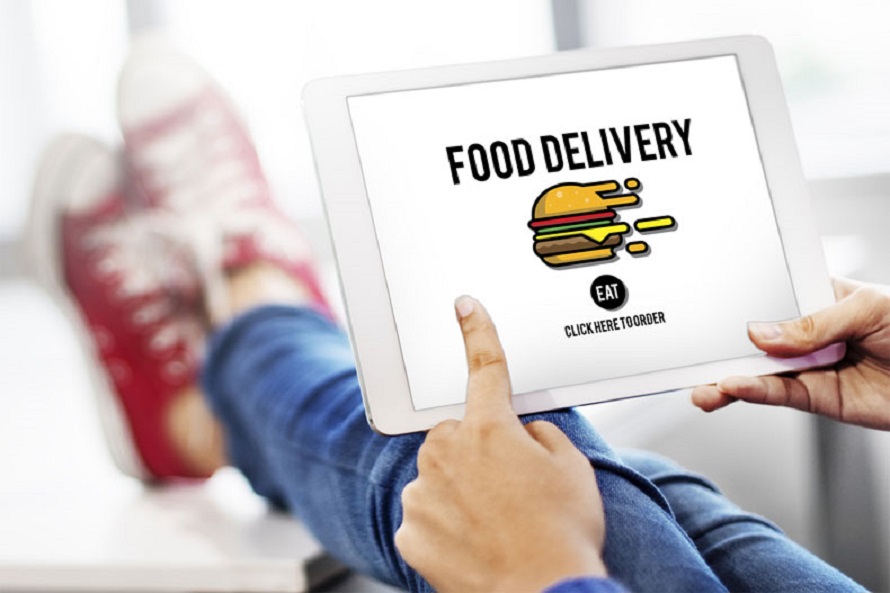
He said, “I think one of the trends that we’re seeing on the rise is the demand for food delivery services.

“That was already the case prior to the COVID-induced lockdown era, but the lockdown certainly escalated it exponentially, especially in a metropolitan area like Lagos, the traffic challenges alone are enough to encourage people to stay in the comfort of their homes and offices and have the food come to them.

“We’re even seeing an uptick in people who choose to use Grocery delivery services as well.

“There’s also an increase in food trucks, pop-up restaurants, and quick-service food options.

“I think the use of technology, especially as regards delivery services and retail/point-of-sale/inventory management systems will continue to be the number one game-changer in the Nigerian Food scene.

“Another point is food restaurants embracing social media to engage their customers, and customers embracing their favourite food brands online as well.

“About a year or so ago, we only had a little over 1,000 followers on Sooyah Bistro’s Instagram handle.

“Right now that number is at about 21,000 – so brands like ours are embracing social media as a way of telling our stories, communicating our culture and connecting with our customers, and the customers themselves are being receptive to engaging with their favourite food spots in that way,” he said.

Other restaurants such as Chicken Republic, Sweet Sensation, Kilimanjaro, Drumstick, to mention a few, have also embraced Jumia to reach more customers. The progress made in the online food community during the lockdown was captured in the recent food index report released by Africa’s leading e-tailer, Jumia.


Ahmed Rahma is a journalist with great interest in arts and craft. She is also a foodie who loves new ideas. She loves to travel and would love to visit other African countries someday. She is a sucker for historical movies and afrobeat.

Click to comment

Leave a Reply

Your email address will not be published. Required fields are marked *

Brands/Products

Mathesis Analytics to Scale AI-Powered Credit Infrastructure Across Nigeria

Published

on

Mathesis Analytics Winston Osuchukwu

By Aduragbemi Omiyale

An institutional investor, First Ally Capital, has strengthened a leading Nigerian financial technology company, Mathesis Analytics, to scale its proprietary credit decisioning infrastructure.

It made this possible by injecting fresh capital into the firm, which specialises in AI-powered credit decisioning infrastructure, an action that will directly support the growth and scaling of Mathesis’ core mission of providing the intelligence and infrastructure needed to bridge the credit gap for millions of unscored or underscored individuals across Nigeria.

With this investment, Mathesis will enable financial institutions to confidently assess and extend credit to borrowers who lack a formal credit history by leveraging an expanded pool of alternative behavioural and transactional data.

To date, Mathesis’ systems have supported more than 8 million loans for over 2 million unique borrowers in Nigeria, and the company is actively deploying its infrastructure to establish a growing pan-African footprint.

With the investment from First Ally Capital, Mathesis is well positioned to transform how the credit ecosystem operates, driving financial inclusion in partnership with lenders across the continent.

A significant barrier to credit access in Nigeria, which prides itself on being Africa’s largest economy, is data fragmentation. Borrowers frequently build positive financial behaviours across multiple digital platforms by repaying microfinance loans, saving through fintech wallets, or servicing Buy Now, Pay Later (BNPL) facilities.

However, under traditional credit infrastructure, these achievements remain invisible to new lenders.

Mathesis addresses this challenge through the concept of Personal Equity—the quantified expression of an individual’s financial behaviour aggregated across every institution with which they have transacted.

By translating these disparate signals into a precise, portable measure of creditworthiness, Mathesis creates a comprehensive credit identity that reflects the full breadth of a person’s financial life.

“True financial inclusion cannot be achieved in a vacuum; it requires structural collaboration in which lenders and fintech companies work as partners within the ecosystem.

“This investment from First Ally Capital validates our approach to reshaping credit infrastructure. By quantifying Personal Equity, we empower lenders to safely look beyond the constraints of formal credit histories and recognise a borrower’s true creditworthiness. This capital enables us to accelerate our pan-African expansion while maintaining the robust, institutional-grade infrastructure our partners rely on,” the chief executive of Mathesis Analytics, Winston Osuchukwu, stated.

On his part, the chief executive of First Ally Capital, Mr Ebenezer Olufowose, said, “At First Ally Capital, we pride ourselves on being a one-stop destination for financial solutions, offering a diverse portfolio of services ranging from investment banking and asset management to trusteeship, inclusive banking, and real estate.

“Our investment in Mathesis Analytics reflects our strong belief in the company’s vision and our commitment to supporting forward-thinking enterprises that deliver excellence.”

Continue Reading

Brands/Products

MultiChoice Now Full Subsidiary of Canal+—CEO

Published

on

CANAL+ MultiChoice

By Aduragbemi Omiyale

The chief executive of Canal+ Africa, Mr David Mignot, has disclosed that MultiChoice is now fully integrated into the media group.

Mr Mignot disclosed this via a statement issued on Thursday, noting that this development marks a new phase in the evolution of one of Africa’s leading pay television operators.

He noted that the integration positions MultiChoice within a global media organisation with an extensive international footprint.

“MultiChoice is now a full subsidiary of a truly international media group operating in 70 countries. The group was founded in France, is listed in London and Johannesburg, and has a strong African presence with operations in more than 45 countries,” Mr Mignot said.

The statement underscores the scale of the combined business, highlighting Canal+’s global reach alongside its significant investments across Africa.

The completion of the transaction is expected to strengthen MultiChoice’s position in the African media and entertainment market by giving it access to the broader resources, expertise and international capabilities of the Canal+ Group, while reinforcing the group’s commitment to the continent.

MultiChoice operates across sub-Saharan Africa through platforms including DStv and GOtv, serving millions of subscribers with entertainment, sports and news content.

Continue Reading

Brands/Products

FoodCourt Pauses Operations as Unpaid Salaries, Debt Mount

Published

on

FoodCourt

By Adedapo Adesanya

FoodCourt, a Nigerian cloud kitchen startup backed by Y Combinator, has suspended operations after months of unpaid salaries and mounting debts to vendors triggered a staff strike and forced the company to halt customer orders, according to a report by TechCabal.

The publication reported that customers first noticed on March 4 that they could no longer place orders through the FoodCourt app after the company disabled ordering as kitchen workers, delivery personnel and branch staff embarked on strike over unpaid wages. The company also owed outstanding payments to vendors.

By April 19, FoodCourt had temporarily shut its last operating branch after suspending activities across its Lagos and Abuja locations while seeking fresh funding and restructuring the business, according to the report.

The company’s chief executive, Mr Henry Nneji, said the decision to pause operations was not caused by a single issue but by a combination of operational, organisational and working-capital challenges.

“It’s important to clarify that the decision to pause operations wasn’t driven by one single issue. We reached a point where it became clear that continuing to patch those issues while operating wasn’t the right long-term decision,” he said.

“The objective is to build a stronger business than the one that existed before the suspension. We fully intend to bring FoodCourt back,” he added in an emailed response.

The company acknowledged outstanding obligations to employees, vendors, riders and service providers, but declined to disclose the number of affected workers or the total amount owed. It said efforts were underway to resolve the liabilities as part of its restructuring process.

It was also reported that the startup’s financial difficulties worsened after expansion into additional locations increased operating costs, while its cloud kitchen model came under pressure from rising labour, logistics, food and marketing expenses.

Despite the shutdown, Mr Nneji said FoodCourt intends to relaunch after completing its restructuring, adding that the company believes demand for its products remains strong.

Founded in 2021 by Henry Nneji and Paul Adokiye Iruene, FoodCourt operates cloud kitchens under multiple virtual restaurant brands through its consumer app. According to TechCabal, the startup had previously disclosed raising $1.7 million, delivering more than one million meals and reaching $4.3 million in annual recurring revenue by the end of 2024.

Continue Reading