Economy
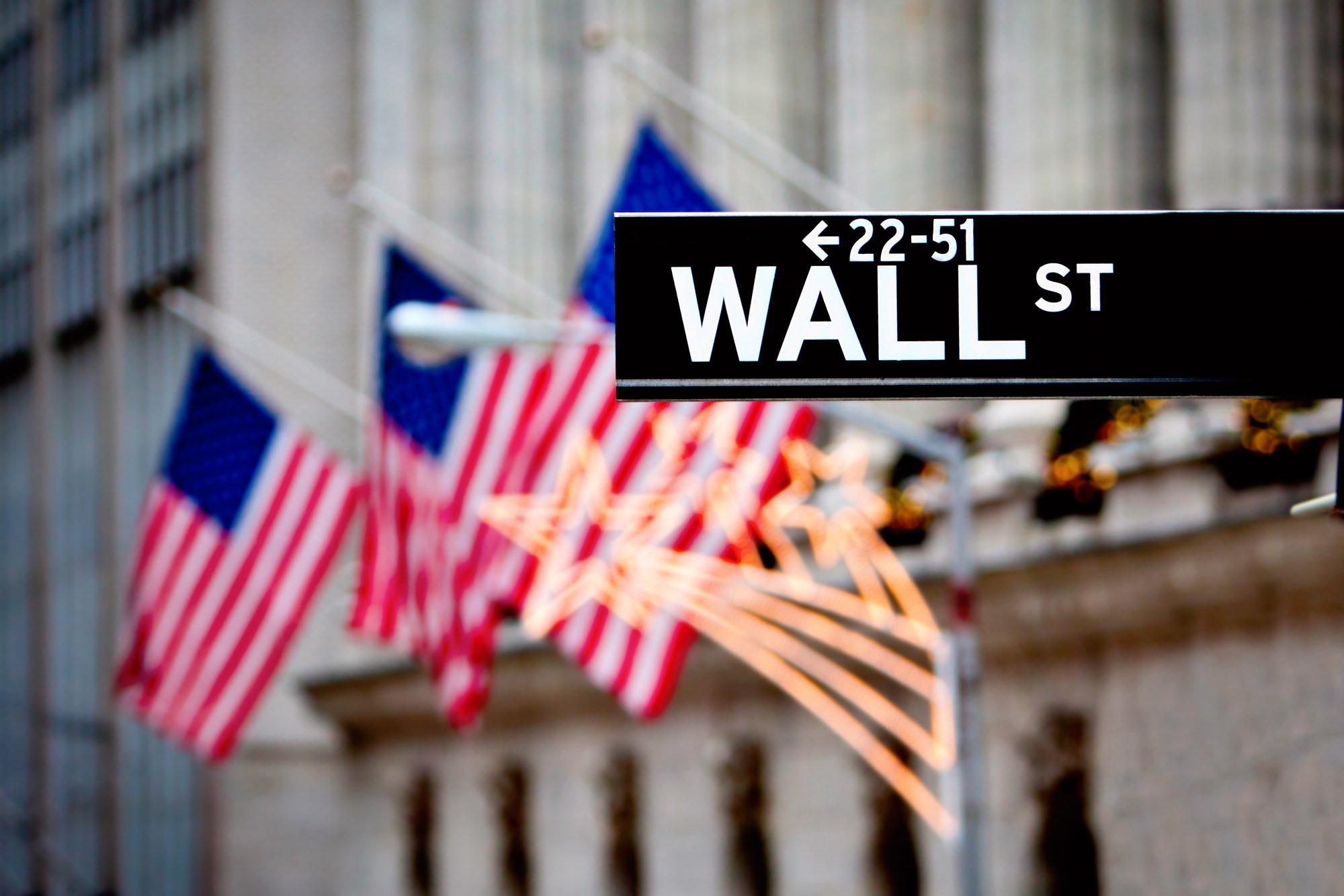
Profit Taking May Contribute to Initial Weakness on Wall Street
By Investors Hub
The major U.S. index futures are pointing to a lower opening on Monday following the upward move seen last week. Profit taking may contribute to initial weakness on Wall Street.
Trading activity may be somewhat subdued, however, with some traders likely to stick to the sidelines ahead of the release of some key economic data and earnings news in the coming days.
After ending Thursday’s trading mixed, stocks moved mostly higher over the course of the trading day on Friday. With the upward move on the day, the tech-heavy Nasdaq and the S&P 500 climbed to new record closing highs.
The major averages all closed in positive territory, but the Nasdaq outperformed its counterparts by a wide margin. The Nasdaq spiked by 144.49 points or 2.2 percent to 6,701.26, while the S&P 500 climbed 20.67 points or 0.8 percent to 2,581.07 and the Dow inched up 33.33 points or 0.1 percent to 23,434.19.
For the week, the Nasdaq jumped by 1.1 percent, the Dow rose by 0.5 percent and the S&P 500 edged up by 0.2 percent.
The strength on Wall Street came in reaction to upbeat earnings news from several well known companies.
Amazon (AMZN), Microsoft (MSFT), Intel (INTC) and Alphabet (GOOGL) all moved notably higher after reporting quarterly earnings that beat analyst estimates after the close of trading on Thursday.
Additionally, Merck (MRK), Chevron (CVX) and Exxon Mobil (XOM) also reported quarterly earnings before the start of today’s trading that exceeded expectations.
Positive sentiment was also generated in reaction to a report from the Commerce Department showing stronger than expected economic growth in the third quarter.
The report said real gross domestic product jumped by 3.0 percent in third quarter after surging up by 3.1 percent in the second quarter. Economists had expected GDP to increase by 2.5 percent.
Meanwhile, a separate report from the University of Michigan showed consumer sentiment improved by slightly less than initially estimated in October.
The report said the consumer sentiment index for October was downwardly revised to 100.7 from 101.1 but is still up from 95.1 in September. Economists had expected the index to be downwardly revised to 100.9.
In other news, reports said President Donald Trump is leaning toward nominating Federal Reserve Governor Jerome Powell as the next Fed Chair.
People familiar with the matter told Bloomberg the decision is not yet final and cautioned that Trump could change his mind at any time.
With Microsoft leading the way higher, software stocks showed a substantial move to the upside on the day. Reflecting the strength in the sector, the Dow Jones Software Index jumped by 3.4 percent.
Microsoft surged up by 6.4 percent in reaction to its upbeat quarterly results, helping the software index reach a record closing high.
Significant strength was also visible among natural gas stocks, as reflected by the 2.5 percent gain posted by the NYSE Arca Natural Gas Index. Cabot Oil & Gas (COG), Chesapeake Energy (CHK), and QEP Resources (QEP) posted standout gains.
Retail, semiconductor, internet, and trucking stocks also saw considerable strength, while computer hardware stocks showed a notable move to the downside.
Within the hardware sector, Electronics for Imaging (EFII) posted a steep loss after reporting weaker than expected third quarter results.
Economy
Naira Continues Positive Run, Official Market Rate Now N1,357/$1
By Adedapo Adesanya
The positive run of the Naira against the US Dollar in the Nigerian Autonomous Foreign Exchange Market (NAFEX) continued on Wednesday, June 3, with the former chalking up N3.79 or 0.28 per cent against the latter, closing at N1,357.26, in contrast to the preceding session’s N1,361.05/$1.
Similarly, the Nigerian currency gained N10.52 against the Pound Sterling in the official market during the session to close at N1,822.67/£1 compared with the previous rate of N1,833.19/£1, and appreciated against the Euro by N9.56 to N1,574.83/€1 from N1,584.39/€1.
Further, at the black market, the Naira improved its value against the greenback at midweek by N5 to trade at N1,375/$1 compared with the N1,380/$1 it was traded a day earlier, and at the GTBank FX counter, it gained N6 to sell for N1,372/$1 versus N1,378/$1.
The boost came as the country’s external reserves continued to gain momentum. A look at the updated data from the Central Bank of Nigeria (CBN) showed that foreign reserves continue to increase with two consecutive inflows in June 2026, settling at $49.876 billion as of Tuesday.
Foreign portfolio investors, exporters and non-bank corporates continue to keep the supply side strong, with the less aggressive FX interventions by the CBN at the official window in recent times helping to ease worries about capital flight.
The apex bank reported that interbank FX turnover declined to $133.731 million across 136 deals, from $169.822 million the previous day.
Meanwhile, the cryptocurrency market remained bearish due to sell-offs triggered by geopolitical uncertainties and the US stock market rally.
Cardano (ADA) dipped by 5.5 per cent to $0.2046, Binance Coin (BNB) slumped by 4.8 per cent to $627.56, Solana (SOL) shrank by 3.9 per cent to $72.99, Ethereum (ETH) depreciated by 2.9 per cent to $1,844.53, and Bitcoin (BTC) slipped by 2.7 per cent to $65,675.87.
Further, Dogecoin (DOGE) depleted by 1.4 per cent to $0.0928, Ripple (XRP) declined by 0.7 per cent to $1.21, and TRON (TRX) lost 0.4 per cent to sell at $0.3336, while the US Dollar Tether (USDT) and the US Dollar Coin (USDC) gained 0.01 each to settle at $0.9986 and $0.9997, respectively.
Economy
Customs Street Bleeds 1.44% as Lafarge Africa Leads Losers’ Chart
By Dipo Olowookere
Nigeria’s stock market further depleted by 1.44 per cent on Wednesday following panic sell-offs by investors, who are cutting down their exposure to local equities.
Business Post observed that profit-taking dominated Customs Street at midweek, with all the key sectors of the Nigerian Exchange (NGX) Limited closing in red.
The insurance space shed 2.76 per cent, the industrial goods index lost 1.55 per cent, the banking counter declined by 1.53 per cent, the consumer goods segment shrank by 0.28 per cent, and the energy sector weakened by 0.05 per cent.
As a result, the All-Share Index (ASI) contracted by 3,554.05 points to 243,132.61 points from 246,686.66 points, and the market capitalisation moderated by N2.279 trillion to N155.940 trillion from N158.219 trillion.
Lafarge Africa led the losers’ chart yesterday after it gave up 9.97 per cent to trade at N307.90, Zichis lost 9.82 per cent to close at N29.20, Learn Africa depreciated by 9.80 per cent to N11.50, John Holt crashed by 9.80 per cent to N13.80, and Consolidated Hallmark dipped by 8.84 per cent to N6.19.
On the flip side, Abbey Mortgage Bank topped the gainers’ log after it grew by 9.93 per cent to N7.75, International Energy Insurance appreciated by 9.89 per cent to N6.00, Tripple G gained 9.80 per cent to sell for N4.37, Universal Insurance expanded by 8.91 per cent to N1.10, and Royal Exchange improved by 7.14 per cent to N1.50.
A total of 17 stocks gained weight yesterday, while 43 stocks lost weight, indicating a negative market breadth index and weak investor sentiment. This has been the mood of the market since the beginning of this week.
Market participants transacted 923.0 million shares worth N42.3 billion in 69,332 deals on Wednesday, in contrast to the 718.8 million shares valued at N29.3 billion traded in 71,683 deals on Tuesday, representing a drop in the number of deals by 3.28 per cent, and a rise in the trading volume and value by 28.41 per cent and 44.37 per cent, respectively.
Sterling Holdings led the activity chart with 264.6 million units valued at N2.1 billion, Access Holdings traded 76.7 million units worth N1.8 billion, Linkage Assurance exchanged 55.1 million units for N99.2 million, VFD Group sold 35.5 million units worth N378.8 million, and Ellah Lakes transacted 33.1 million units valued at N334.3 million.
Economy
Oil Prices Rise 2% as Middle East Hostilities Escalate
By Adedapo Adesanya
Oil prices rose around 2 per cent on Wednesday as hostilities in the Middle East erupted anew and talks between Iran and the United States showed little progress.
Brent futures grew by $1.81 or 1.89 per cent to $97.81 per barrel, and the US West Texas Intermediate (WTI) crude climbed $2.26 or 2.41 per cent to $96.02 a barrel.
According to reports, Iran launched ballistic missiles toward regional neighbours Kuwait and Bahrain, killing one person and injuring dozens, while the US forces conducted strikes on Iran’s Qeshm Island.
Iranian drones and missiles struck Kuwait International Airport overnight, causing the country to immediately suspend air traffic, activate emergency procedures, and divert flights to alternative airports.
Iran’s Revolutionary Guard said the operation was retaliation for recent US military actions and warned that regional states supporting American operations could face further consequences. Kuwait hosts major US military facilities and serves as a key logistics hub for American operations across the Middle East, but until then had largely avoided becoming a direct target.
Following the overnight attack, the United Arab Emirates (UAE) called for a united Gulf stance.
Meanwhile, President Donald Trump said Iran had agreed not to have a nuclear weapon and that Supreme Leader Ayatollah Mojtaba Khamenei was involved in negotiations. He has insisted this week that discussions remain active and said a broader agreement could emerge within days, while Iranian officials have delivered contradictory messages.
Iranian Foreign Minister Abbas Araqchi said contacts with American representatives have not been cut off, but no progress has been made in the negotiations.
The prolonged closure of the Strait of Hormuz continues to bottleneck global energy supplies, driving sustained upward pressure on oil markets.
The International Energy Agency (IEA) has warned that global oil inventories could hit critical levels ahead of peak summer demand if stock draws continue at their current pace.
Crude oil inventories in the US decreased by 8.0 million barrels during the week ending May 29, according to data from the Energy Information Administration (EIA) released on Wednesday. The EIA’s data release follows figures by the American Petroleum Institute (API) that were released a day earlier, which reported that crude oil inventories saw a draw of 6.75 million barrels in the period.
-
Feature/OPED6 years agoDavos was Different this year
-
Travel/Tourism10 years ago
Lagos Seals Western Lodge Hotel In Ikorodu
-
Showbiz3 years agoEstranged Lover Releases Videos of Empress Njamah Bathing
-
Banking8 years agoSort Codes of GTBank Branches in Nigeria
-
Economy3 years agoSubsidy Removal: CNG at N130 Per Litre Cheaper Than Petrol—IPMAN
-
Banking3 years agoSort Codes of UBA Branches in Nigeria
-
Banking3 years agoFirst Bank Announces Planned Downtime
-
Sports3 years agoHighest Paid Nigerian Footballer – How Much Do Nigerian Footballers Earn