Connect with us

Education

Nigeria Gets N13.5bn from Korea for Teachers’ Digital Skills

Published

on

lagos teachers

By Adedapo Adesanya

Nigeria has attracted N13.5 billion ($10.4 million) in funding from South Korea for its new teacher development programme, the Teacher Internship Scheme (TIS), designed to support teachers with skills and knowledge in digital technology.

The Minister of Education, Professor Tahir Mamman, disclosed this on Thursday in Abuja, noting that the federal government is committed to providing Information and Communication Technology (ICT) infrastructure to enhance teaching and learning in the country.

The Minister welcomed the funding from the Korean government through the Korea International Cooperation Agency (KOICA), saying the scheme, put together by the Universal Basic Education Commission (UBEC), was geared towards helping in the implementation of smart education in the country.

He also inspected a facility by the UBEC Digital Resource Centre and said it would serve as a hub for creating and distributing resources to schools as well as training the school personnel.

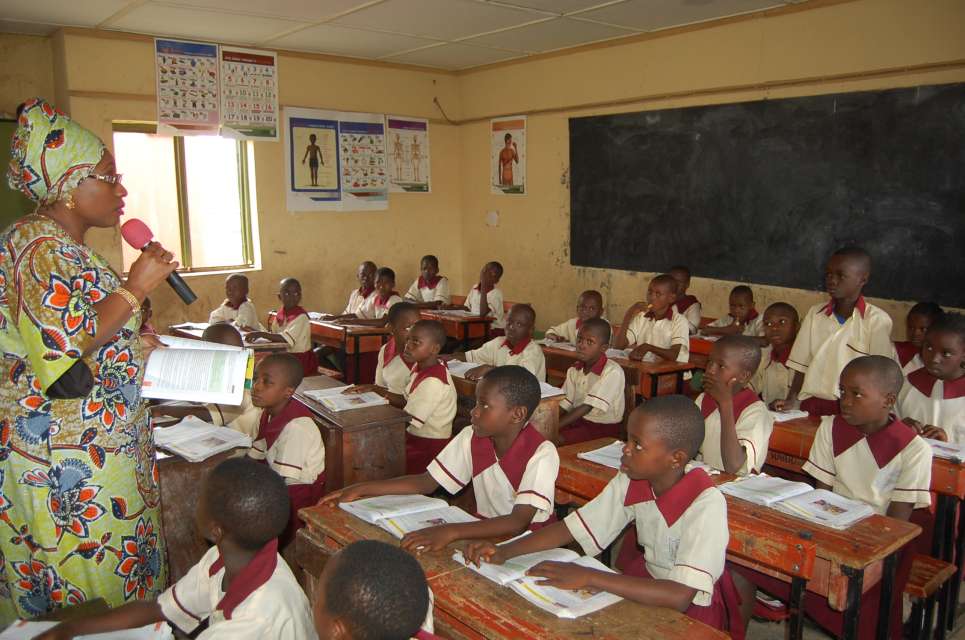
According to him, ICT has dominated every spectrum of life and Nigeria must make a paradigm shift from the traditional method of teaching children using blackboard and chalk.

He commended the Executive Secretary UBEC, Mr Hamid Bobboyi and his management team for the initiative, noting that one could not be talking of the quality of education without teachers with the right skills and knowledge to drive the teaching profession.

Earlier, the Executive Secretary of UBEC, Mr Bobboyi, explained that participants of the teacher Internship scheme were graduates of education selected on merit from all the states of the federation.

He said the teachers were expected to go through intensive training for two years.

“It is envisaged that at the end of the two-year programme, the Interns would emerge as a new breed of teachers, equipped with the skills and knowledge to harness the power of technology and transform the learning experience.

“They would not just be teachers; they will be smart teachers who would be innovators, catalysts for change, and architects of a brighter future for the Nigerian child,” he said.

Mr Bobboyi stressed that the traditional method of teaching and learning was no longer adequate to prepare learners for the challenges and opportunities of the 21st century.

He, therefore, underscored the need to expose Nigerian teachers to digital platforms and pedagogies for them to rise to the challenge of preparing the next generation of children to survive and thrive in a globalised and competitive world.

According to him, the COVID-19 pandemic had laid bare the vulnerabilities of the traditional education system and brought to the fore the need to explore an alternative mode that enables learning to take place anytime and anywhere.

On his part, the Country Director, KOICA, Nigeria Office, Mr Son Sungil, confirmed the $10.4 million budget to support Nigeria in the establishment of Smart Schools in the country.

He said the support was largely in the areas of digital content development for mathematics and science subjects, content development studio for digital content creation, and others.

He further pledged the commitment of KOICA to continue to work with UBEC and other stakeholders to make the future better for Nigerian children.

The scheme was introduced by the commission to address the dearth of teachers in the field of smart education.


Adedapo Adesanya is a journalist, polymath, and connoisseur of everything art. When he is not writing, he has his nose buried in one of the many books or articles he has bookmarked or simply listening to good music with a bottle of beer or wine. He supports the greatest club in the world, Manchester United F.C.

Click to comment

Leave a Reply

Your email address will not be published. Required fields are marked *

Education

60 Ijebu-Igbo Students Receive Bursary to Boosts Access to Education

Published

on

Ijebu Igbo students bursary

By Modupe Gbadeyanka

No fewer than 60 students from the host communities of Dangote Granite Mines in Ijebu-Igbo have received bursary awards in a bid to improve access to education in the area.

The beneficiaries were awarded the financial aid over the weekend by the company at a ceremony attended by monarchs, community leaders and others from the vicinity.

Dangote Granite Mines, a subsidiary of Dangote Industries Limited (DIL), said it gave out the bursary to cement its commitment to educational advancement and sustainable community development.

The beneficiaries, comprising 40 tertiary institution students and 20 secondary school students, were selected from the four host communities of Ayebandele, Olorunmodu, Saliu Babarisi and Idi Omo under the company’s annual education support programme.

The General Manager of Community Relations at Dangote Granite Mines, Mr Joseph Alabi, described the bursary scheme as one of the organisation’s most impactful investments in the future of its host communities.

According to him, education remains a powerful catalyst for individual and societal advancement, making it imperative for corporate organisations to support young people in achieving their academic aspirations.

“Every year, we are delighted to support brilliant and deserving students from our host communities because we recognise that education is the foundation of sustainable development.

“These beneficiaries represent the next generation of leaders, professionals and change-makers who will contribute meaningfully to society,” Mr Alabi said.

He highlighted several interventions undertaken by the company over the years, including classroom rehabilitation, donation of school furniture, healthcare support initiatives and the provision of potable water through solar-powered boreholes.

“Our commitment extends beyond annual bursaries. We have consistently implemented projects that improve access to education, healthcare and other essential services. Our goal is to ensure that our operations create lasting value and tangible benefits for our host communities,” he stated.

Commending the initiative, the Sopinlukale of Oke-Sopin, Ijebu-Igbo, Mr Mufutau Adesesan Yusuf, lauded Dangote Granite Mines for its longstanding dedication to community development and educational empowerment.

“For more than a decade, Dangote Granite Mines has consistently fulfilled its commitments to our communities through meaningful and impactful interventions. The annual bursary programme has become a source of hope and encouragement for many families, enabling students to pursue their educational ambitions,” the monarch said.

Some of the student beneficiaries expressed appreciation to the firm for the annual gesture, promising not to disappoint the company but to continue to display academic excellence that earned them the awards.

Continue Reading

Education

FG Halts Proposed Fee Hike for 2027 WASSCE, NECO Examinations

Published

on

waec neco

By Adedapo Adesanya

The federal government has suspended the proposed review of registration fees for the 2027 West African Senior School Certificate Examination (WASSCE) and the National Examinations Council (NECO) Senior School Certificate Examination (SSCE).

The Federal Ministry of Education made the announcement on Monday in a statement signed by the Director of Press and Public Relations, Mrs Boriowo Folasade.

The ministry announced that the letter conveying the proposed fee adjustment, dated June 18, 2026, has been withdrawn to allow for a comprehensive review and broader consultations with all relevant stakeholders before a final decision is taken.

The Minister of Education, Mr Tunji Alausa, directed that the proposal be placed on hold, with the Ministry acknowledging the concerns and constructive feedback received from the public since the planned increase became known.

The Ministry said the proposed fee review was driven by rising operational costs that have accumulated over several years without a corresponding adjustment to examination registration fees.

It said the current fees have remained largely unchanged for several years despite significant increases in costs covering logistics, security, printing of examination materials, technology deployment, quality assurance and other services required to maintain the integrity of public examinations.

“The proposed review was informed by the prevailing economic realities and the rising cost of conducting credible national examinations,” the statement said.

“The current examination registration fees have remained largely unchanged for several years despite significant increases in operational costs,” the Ministry added.

The ministry said the proposed fee hike will no longer take effect as earlier planned, while acknowledging that the concerns raised by Nigerians warranted a pause in the process.

“The proposed review of examination registration fees will not take effect, as earlier communicated, pending the conclusion of the consultation process,” the statement confirmed, adding that the June 18 letter conveying the proposed adjustment has been formally withdrawn.

“This decision underscores the Ministry’s determination to ensure that policies affecting millions of Nigerian students and their families are carefully considered, socially responsive and reflect the collective interest of the nation,” it said.

The Ministry outlined a fresh stakeholder engagement process that must be concluded before any decision on examination fees is made, signalling that the review has been delayed rather than permanently shelved.

The Ministry said it will engage extensively with examination bodies, state ministries of education, school proprietors and administrators, parents’ associations, organised labour and other education stakeholders as part of the renewed consultation process.

It said the goal of the consultation is to ensure that any future decision is “fair, sustainable, transparent and responsive to prevailing realities while safeguarding access to education,” framing the suspension as a course correction rather than an outright reversal of policy intent.

“The Ministry acknowledges the concerns and constructive feedback received from the public and appreciates the keen interest shown by Nigerians in matters relating to access to quality education,” the statement read.

The Ministry assured Nigerians it would keep the public fully informed throughout the consultation process, saying the welfare of students and equitable access to quality education “remain at the heart of the Renewed Hope Agenda of President Bola Ahmed Tinubu for the education sector.”

Continue Reading

Education

FG Raises WAEC, NECO Examination Fees by 82% to N50,000

Published

on

waec neco

By Modupe Gbadeyanka

The examination fees of Senior School Certificate Examinations (SSCE) conducted by the West African Examinations Council (WAEC) and the National Examinations Council (NECO) have been increased by the federal government by about 82 per cent to N50,000 from N27,500.

A circular signed by the Director of Senior Secondary Education in the Federal Ministry of Education, Mr Adeniji Ibrahim, disclosed that the new fees would become effective in 2027.

In the notice, it was disclosed that the government approved the upward review of the fees following a request by WAEC.

It was further disclosed that the decision to jack up the fees was reached after a March 31, 2026, meeting between the Minister of Education and examination bodies, where the need to review examination fees was discussed.

“You may recall that at a meeting of examination bodies held with the Minister of Education on March 31, 2026, where the need for upward review of examination fees was discussed, the Minister directed that WAEC and NECO should adopt a uniform fee for the conduct of WAEC and NECO SSCE,” the statement read.

“Consequently, I am directed to convey the Minister of Education’s approval of the sum of N50,000 only, as the new examination fee per candidate, with effect from NECO SSCE (Internal), 2027,” it added.

Continue Reading