
Feature/OPED
The Economics of Nigerians Destroying Nigeria: Seeking Help of the Divider-in-Chief

By Oremade Oyedeji
In one of my previous articles published a few months back titled Pandemic of the Prodigal Generation, I predicted that Nigeria’s politics will reset to align with the coming post-pandemic changes in world political thought and the balance of power.
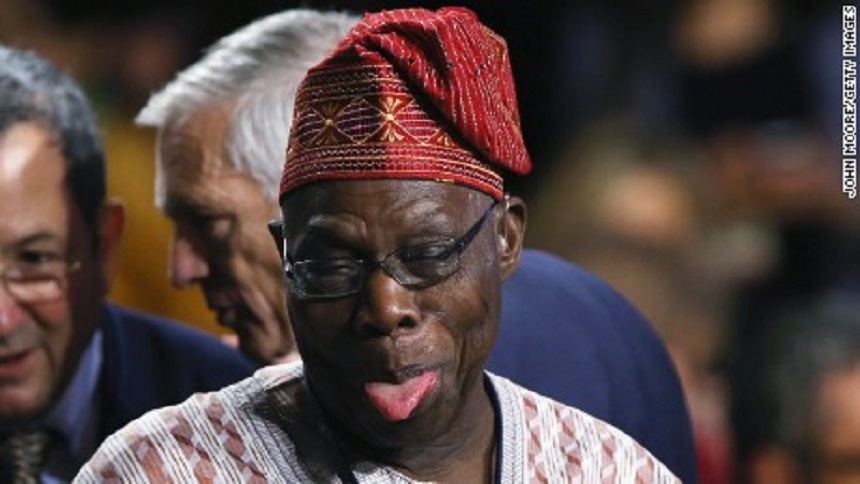
This is because it is no longer business as usual. Pretty much is former president Olusegun Obabsanjo shaking things up with his comments and captioned in news headlines like Nigeria is a fail state. I strongly encourage former President Goodluck Jonathan to follow suit.
In response to his comments, I saw this screaming headline on the internet (Vanguard) Buhari prevented Nigeria from becoming failed state, Obasanjo now divider-in-chief — Lai Mohammed on September 14, 2020. Seeing this headline, I couldn’t but laugh in Chinese 大笑Dà xiào.
Speaking through the Minister of Information, the presidency challenged former President Obasanjo to help in proffering solutions to the problems plaguing the country instead of being Nigeria’s Divider-in-Chief. (Me: at least they are now asking for help).
The Minister claimed that President Muhammadu Buhari’s assumption of office in 2015 prevented Nigeria from becoming a failed state.
Hmmm… anyways, it is still the same old Economics or Buharinomics they now call it – same old stories if you ask me.. Who will love Nigeria better if not this same Divider-in-Chief?
There is an African adage that says Ogbon die Omugo die ohun ni Oba fi nto ilu (meaning: little wisdom mixed with little foolishness is how a king builds the city). I rest my case.
Talking of the old story of Economics, we have heard of how a former CBN Governor turned a town hall meeting into an Economics 101 class even in the presence of top professionals including a renowned World Bank expert, Mrs Ngozi Okonjo–Iweala.
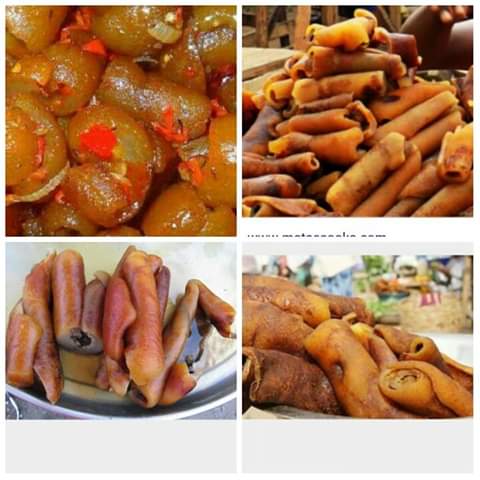
I knew there is a problem, same old story where Lamido Sanusi Lamido at his time as CBN chief (another example) said Nigerians are eating up the GDP through the consumption of ponmo (cow skin) delicacy. At that point, I knew all these professors have all run out of ideas; they are all speaking big grammar.
Ponmo is a commercially run trade and is probably employing over two million women in the distribution chain in western Nigeria alone and a whole agriculture and butchery ecosystem in Ijebu Igbo. For some to say this trade is not adding to the GDP, I beg to differ.
“We produce cotton, we import textiles. We have hides and skin but we import shoes and bags from China. Not that we don’t kill the cattle, but what do we do with the leather? We eat ponmo. It is a delicacy; we consume our GDP,” the deposed Emir of Kano was quoted as saying.
Same old Economics and please tell me, must we destroy the trades done by over two million women or the thriving butchery business in Ijebu Igbo or the agriculture ecosystem for the leather industry so as to grow Nigeria’s GDP? Walahi, this life no balance o; same old story if you ask me, I am beginning to believe this is their “hate & love” for Nigeria and a desperate attempt to hold on to power again. No wonder anyone with a solution for Nigeria is now the Divider-in-Chief. Nigeria I hail o.
Contrary to the Minister of Information comment, the Daily Times recently said in one of its headlines on September 7, 2020, that Nigeria’s economy is collapsing — Yemi Osinbajo.
On Monday, our dear Vice President, Prof. Yemi Osinbajo, said the coronavirus pandemic has diminished revenue and foreign-exchange earnings in the country.
I even want to ask, what exactly is the problem of Nigeria; is it foreign debt to GDP ratio, revenue to GDP or is Nigeria officially a fail state really?
In summary, the higher the debt-to-GDP ratio, the less likely the country will pay back its debt and the higher its risk of default.
A study by the World Bank said if the debt-to-GDP ratio of a country exceeds 77 per cent for an extended period of time, it slows economic growth.
Okay, let us understand it from Nigeria’s six geopolitical zones or the federating states. Who among them is a debtor and who among them will meet its debt obligation? Simple Economics you say.
An African adage says Olowo kan larin atoshi mefa atoshi ni gbogbo won (meaning, a rich man among six poor men is also poor).
In fact, we need more Dividers-in-Chief to speak up, I am appointing myself as P.A to the Divider-in-Chief and it will be a great honour.
The Debt Management Office (DMO) listed Nigeria’s debts to World Bank, AfDB, China, Germany, and others on September 13, 2020. Nigeria’s highest external debt stock to a multilateral or bilateral financial institution is $10.46 billion (N3.965 trillion at the official rate of N379/$) and it is to the World Bank Group and it associates including: International Development Association ($10.05 billion) and International Bank for Reconstruction and Development ($409.51 million).
Nigeria’s total indebtedness to the multilateral institutions during the period under review was put at $16.36 billion, representing 51.97 per cent of the country’s total external debt stock.
The DMO put the country’s indebtedness to the AfDB Group at $5.896 billion.
Others are Arab Bank for Economic Development in Africa ($5.88 million), European Development Fund ($52.52 million), Islamic Development Bank ($30.22 million) and International Fund for Agricultural Development ($201.68 million).
Further analysis of the country’s external debts showed that Nigeria’s total indebtedness to some bilateral organisations, which in this case include foreign nations, was $3.948bn as of June 30.
This alone represents 12.54 per cent of the country’s entire $31.477 billion external debt stock during the period under review.
Nigeria’s indebtedness to China (Exim Bank of China) was $3.24 billion, while its debt to France (Agence Francaise Development) was $403.65 million.
The country’s debt to Japan (Japan International Corporation Agency) was $76.69 million, while Nigeria owes India (Exim Bank of India) $34.87 million. Nigeria also owes Germany $192.7 million.
Still under Nigeria’s external debt stock as of June 30, the DMO put the country’s Eurobonds at $10.87 billion, while its Diaspora Bond was $300 million.
Eurobond and Diaspora Bond are commercial external debt stock and account for $11.168 billion, representing 35.48 per cent of the country’s external debt stock.
Is Nigeria A failed state?
As contained in the Medium-Term Expenditure Framework and Fiscal Strategy (MTEF/FSP) report recently released by the Federal Ministry of Finance, Budget, and National Planning, Nigeria’s debts reached a new milestone with the country’s debt service as a percentage of revenue rising to 99 per cent in the first quarter of 2020.
A cursory review of the data obtained from the MTEF/FSP report showed that in Q1 2020, Nigeria paid N943.12 billion to service its debts (interest on the loans) while the federal government retained revenue was put at N950.56 billion. This means Nigeria’s debt service to revenue is now 99 per cent, meaning for every N100 the country generated as revenue, it used N99 to pay interest.
The continued depletion in Nigeria’s revenue is raising questions around the solvency of the Nigerian economy. Generally, debt sustainability can be explained using either debt to GDP or debt service to revenue ratio. With these yardsticks, Nigeria’s total public debt is below 30 per cent of GDP. The reality is that, debt-to-GDP is not regarded as the best indicator of debt sustainability, especially in Nigeria where tax-to-GDP is low.
For Nigeria, a better indicator of debt sustainability is the debt service-to-revenue ratio, which has in recent years risen to worrying levels, and now 99 per cent as at Q1 2020. Did I hear you say Buharinomics?
Let conclude this article on a lighter note, with a line from a late Abeokuta born musician, Fela Anikulapo-Kuti.
♫ ♬.. When we dey pikin – FATHA/MAMA BE TEACHER
When we they for school – TEACHER BE TEACHER
Now dey University – LECTURER BE TEACHER
When we start to work – GOVERMENT BE TEACHER
♫ “Who be Government Teacher ♫ ♬.. CU-ULTURE AND TRADITION – Cu-ulture and Tradition♬.
Facts about ancient Ijebu Igbo Town
1 – Ijebu Igbo is the home to ponmo Ijebu. The town has over 30 ponmo making industries known as buka, employing thousands of men and women. Ijebu Igbo is the major supplier of ponmo to over 20 million consumers of the delicacy living in Lagos, Oyo and Ogun States.
2 – Ijebu Igbo is the home of cow meat and the town is one of the originators of butcher business locally called alapata. Ijebu Igbo is one of the major distributors of cow meat to Epe, Aja, Sagamu and all other towns within and around Ijebu land with around 40 million people.
People come from most parts of the country to buy cow meat in Ijebu igbo because it is blessed with professional butchers. Butchery is a proud profession of men who provide food for their families in Ijebu Igbo.
3 – Ijebu Igbo has an agricultural ecosystem and is the second largest town in Ogun State in terms of GDP and landmass. The land is arable for farming. There are hundreds of towns, villages and hamlets under Ijebu Igbo and there major occupation is farming and they depend on organic wastes from the town.



Feature/OPED
2027: The Unabating Insecurity and the US Directive to Embassy, is History About to Repeat Itself?


By Obiaruko Christie Ndukwe
We can’t be acting like nothing is happening. The US orders its Embassy Staff and family in the US to leave Nigeria immediately based on security concerns.
Same yesterday, President Donald J. Trump posted on his Truth Social that Nigeria was behind the fake news on his comments on Iran.
Some people believe it was the same way the Obama Government came against President Goodluck Jonathan before he lost out in the election that removed him from Aso Rock. They say it’s about the same thing for President Asiwaju Bola Ahmed Tinubu.
But I wonder if the real voting is done by external forces or the Nigerian electorate. Or could it be that the external influence swings the voting pattern?
In the middle of escalating security issues, the opposition is gaining more prominence in the media, occasioned by the ‘controversial’ action of the INEC Chairman in delisting the names of the leaders of ADC, the new ‘organised’ opposition party.
But the Federal Government seems undeterred by the flurry of crises, viewing it as an era that will soon fizzle out. Those on the side of the Tinubu Government believe that the President is smarter than Jonathan and would navigate the crisis as well as Trump’s perceived opposition.
Recall that in the heat of the CPC designation and the allegations of a Christian Genocide by the POTUS, the FG was able to send a delegation led by the NSA, Mallam Nuhu Ribadu, to interface with the US Government and some level of calm was restored.
With the renewed call by the US Government for its people to leave Nigeria, with 23 states classified as “dangerous”, where does this place the government?
Can Tinubu manoeuvre what many say is history about to repeat itself, especially with the renewed call for Jonathan to throw his hat into the ring?
Let’s wait and see how it goes.
Chief Christie Obiaruko Ndukwe is a Public Affairs Analyst, Investigative Journalist and the National President of Citizens Quest for Truth Initiative
By Abiodun Alade
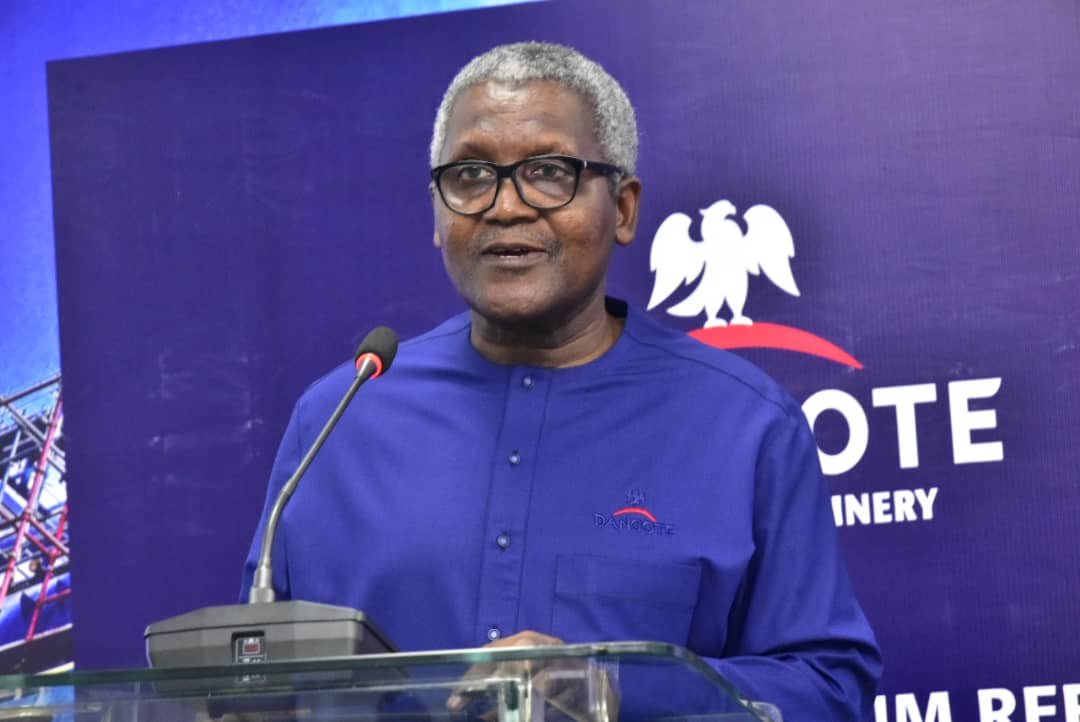
As Aliko Dangote turns 69, his story demands to be read not as a biography of wealth, but as a case study in Africa’s unfinished industrial argument.
For decades, the continent has lived with a structural contradiction. It exports raw materials and imports finished goods. It produces crude oil but imports refined fuel. It grows cotton but imports textiles. It produces cocoa but imports chocolate. It harvests timber yet imports something as basic as toothpicks. This imbalance has not merely defined Africa’s trade patterns; it has shaped its vulnerability.
Dangote’s career can be viewed as a sustained attempt to break that cycle.
What began as a trading enterprise has evolved into one of the most ambitious industrial platforms ever built on African soil. Cement, fertiliser, petrochemicals and now oil refining are not random ventures. They are deliberate interventions in sectors where Africa has historically ceded value to others.
This is what many entrepreneurs overlook. Not the opportunity to trade, but treading the harder, riskier path of building production capacity where none exists.
Recent analyses, including those from global business commentators, have framed Dangote’s model as a “billion-dollar path” hidden in plain sight: solving structural inefficiencies at scale rather than chasing fragmented market gains. It is a strategy that requires patience, capital and an unusual tolerance for long gestation periods.
Nowhere is this more evident than in the $20 billion Dangote Petroleum Refinery in Nigeria, a project that signals a shift not just for one country, but for an entire continent. With Africa importing the majority of its refined petroleum products, the refinery represents an attempt to anchor energy security within the continent.
Its timing is not incidental.
The global energy market has become increasingly volatile, particularly during geopolitical disruptions such as the recent crises in the Middle East. For African economies, which rely heavily on imported refined fuel, such shocks translate immediately into inflation, currency pressure, fiscal strain and higher poverty.
In those moments, domestic capacity ceases to be a matter of convenience and becomes one of sovereignty.
Dangote Petroleum refinery has already begun to play that role. By supplying refined products at scale, it reduces Africa’s exposure to external supply shocks and dampens the transmission of global price volatility into local economies. It is, in effect, a buffer against instability in a world where supply chains are no longer predictable. The refinery is not infrastructure. It is insurance against global instability.
But the ambition does not end there.
Dangote has articulated a vision to grow his business empire to $100 billion in value by 2030. This is not simply a statement of scale. It is a signal of intent to build globally competitive African industrial capacity.
When realised, such a platform would place an African conglomerate in a category historically dominated by firms from China, the United States and India—economies that have long leveraged industrial champions to drive national development.
The implications for Africa are significant.
Industrial scale matters. It lowers costs, improves competitiveness and attracts ecosystems of suppliers, logistics networks and skilled labour. Dangote’s cement operations across more than ten African countries have already demonstrated this multiplier effect, reducing import dependence while stabilising prices in local markets.
The same logic now extends to fertiliser, where Africa’s largest urea complex is helping to address agricultural productivity, and to refining, where fuel supply stability underpins virtually every sector of the economy.
Yet perhaps the most interesting shift in Dangote’s trajectory is philosophical.
In recent years, Dangote’s interventions have moved beyond industry into social infrastructure. A N1 trillion education commitment aimed at supporting over a million Nigerian students suggests an understanding that industrialisation without human capital is incomplete.
Factories can produce goods. Only education produces capability.
This dual focus—on both production and people—mirrors the development pathways of countries that successfully transitioned from low-income to industrial economies. In South Korea, for instance, industrial expansion was matched by aggressive investment in education and skills. The result was not just growth, but transformation.
Africa’s challenge has been the absence of such an alignment.
Dangote’s model, while privately driven, gestures toward that possibility: an ecosystem where energy, manufacturing and human capital evolve together.
Still, there are limits to what just one industrialist can achieve.
No matter how large, private capital cannot substitute for coherent policy, regulatory clarity and institutional strength. Industrialisation at scale requires coordination between state and market, not tension between them. This remains Africa’s unresolved question.
Beyond scale and industry, Aliko Dangote’s journey is anchored in faith—a belief that success is not merely achieved, but granted by God, and that wealth is a trust, not an end. His philanthropy reflects that conviction: that prosperity must serve a higher purpose. History suggests that, by divine providence, such figures appear sparingly—once in a generation—reminding societies that impact, at its highest level, is both economic and spiritual.
Dangote’s career offers both inspiration and caution. It shows that African industrialisation is possible, that scale can be achieved and that global competitiveness is within reach. But it also highlights how much of that progress still depends on singular vision rather than systemic design.
At 69, Dangote stands at a pivotal moment, not just personally, but historically.
He has built assets that did not previously exist. He has challenged economic assumptions that persisted for decades. And he has demonstrated that Africa can do more than export potential; it can manufacture reality. But the deeper test lies ahead.
Whether Africa transforms these isolated successes into a broader industrial awakening will determine whether Dangote’s legacy is remembered as exceptional—or foundational.
In a fragmented global economy, where supply chains are shifting and nations are turning inward, Africa has a unique opportunity to redefine its place.
Africa must now make a deliberate choice. For too long, its development path has been shaped by external prescriptions that prioritise consumption over production, imports over industry and short-term stability over long-term capacity. International institutions often speak the language of efficiency, yet the outcome has too frequently been a continent positioned as a market rather than a manufacturer—a destination for surplus goods rather than a source of value creation. This model has delivered dependency, not resilience. Industrialisation is not optional; it is the foundation of economic sovereignty. Africa cannot outsource its future. It must build it—by refining what it produces, manufacturing what it consumes and resisting the quiet drift towards becoming a permanent dumping ground in the global economy.
At 69, Aliko Dangote stands not at the end of a journey, but on the cusp of a larger question. His factories, refineries and investments are more than monuments of capital; they are proof that Africa can build, can produce and can compete. But no single individual can carry a continent across the threshold of industrialisation. The deeper test lies beyond him.
Whether Africa chooses to scale this vision or retreat into the familiar comfort of imports will define the decades ahead. Dangote has shown what is possible when ambition meets execution. The question now is whether others—governments, institutions, and investors—will match that courage with corresponding action.
History is rarely shaped by what is imagined. It is shaped by what is built.
Abiodun, a communications specialist, writes from Lagos
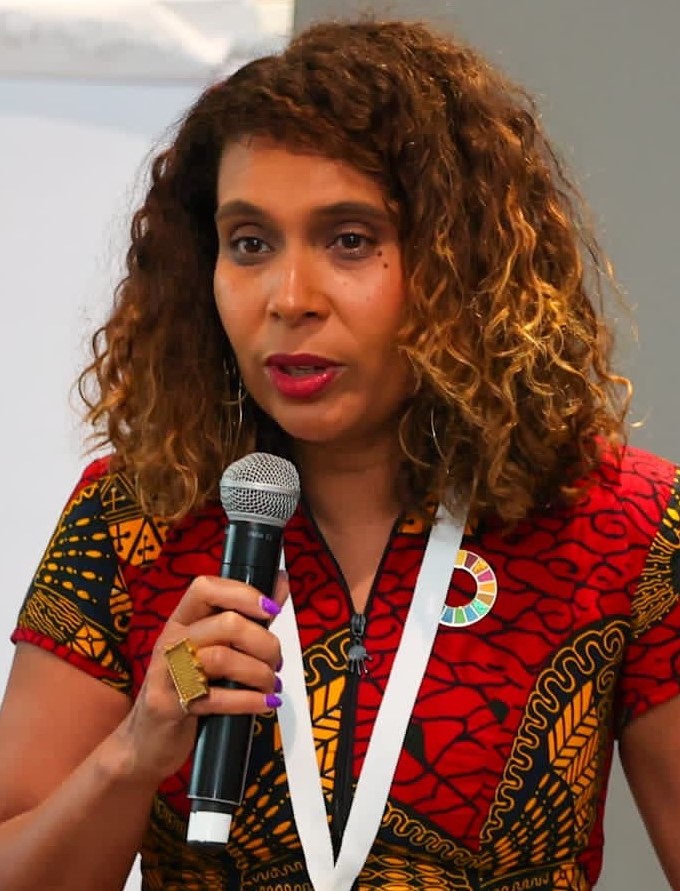
By Professor Myriam Sidíbe
Awards season this year was a celebration of Black creativity and cinema. Sinners directed by Ryan Coogler, garnered a historic 16 nominations, ultimately winning four Oscars. This is a film critics said would never land, which narrates an episode of Black history that had previously been diminished and, at some points, erased.
Watching the celebration of this film, following a legacy of storytelling dominated by the global north and leading to protests like #OscarsSoWhite, I felt a shift. A movement, growing louder each day and nowhere more evident than on the African continent. Here, an energetic youth—representing one-quarter of the world’s population—are using creativity to renegotiate their relationship with the rest of the world and challenge the social norms affecting their communities.
The Academy Awards held last month saw African cinema represented in the International Feature Film category by entries including South Africa’s The Heart Is a Muscle, Morocco’s Calle Málaga, Egypt’s Happy Birthday, Senegal’s Demba, and Tunisia’s The Voice of Hind Rajab.
Despite its subject matter, Wanuri Kahiu’s Rafiki, broke the silence and secrecy around LGBTQ love stories. In Kenya, where same sex relationships are illegal and loudly abhorred, Rafiki played to sold-out cinemas in the country’s capital, Nairobi, showing an appetite for home-grown creative content that challenges the status quo.
This was well exemplified at this year’s World Economic Forum in Davos when alcoholic beverages firm, AB InBev convened a group of creative changemakers and unlikely allies from the private sector to explore new ways to collaborate and apply creativity to issues of social justice and the environment.
In South Africa, AB inBev promotes moderation and addresses alcohol-related gender-based violence by partnering with filmmakers to create content depicting positive behaviours around alcohol. This strategy is revolutionising the way brands create social value and serve society.
For brands, the African creative economy represents a significant opportunity. By 2030, 10 per cent of global creative goods are predicted to come from Africa. By 2050, one in four people globally will be African, and one in three of the world’s youth will be from the continent.
Valued at over USD4 trillion globally (with significant growth in Africa), these industries—spanning music, film, fashion, and digital arts—offer vital opportunities for youth, surpassing traditional sectors in youth engagement.
Already, cultural and creative industries employ more 19–29-year-olds than any other sector globally. This collection of allies in Davos understood that “business as usual” is not enough to succeed in Africa; it must be on terms set by young African creatives with societal and economic benefits.
The key question for brands is: how do we work together to harness and support this potential? The answer is simple. Brands need courage to invest in possibilities where others see risk; wisdom to partner with those others overlook; and finally, tenacity – to match an African youth that is not waiting but forging its own path.
As the energy of the creative sector continues to gain momentum, I am left wondering: which brands will be smart enough to get involved in our movement, and who has what it takes to thrive in this new world?
Professor Sidíbe, who lives in Nairobi, is the Chief Mission Officer of Brands on a Mission and Author of Brands on a Mission: How to Achieve Social Impact and Business Growth Through Purpose.
-
 Feature/OPED6 years ago
Davos was Different this year
-
Travel/Tourism10 years ago
Lagos Seals Western Lodge Hotel In Ikorodu
-

 Showbiz3 years ago
Estranged Lover Releases Videos of Empress Njamah Bathing
-
 Banking8 years ago
Sort Codes of GTBank Branches in Nigeria
-

 Economy3 years ago
Subsidy Removal: CNG at N130 Per Litre Cheaper Than Petrol—IPMAN
-

 Banking3 years ago
Sort Codes of UBA Branches in Nigeria
-

 Banking3 years ago
First Bank Announces Planned Downtime
-

 Sports3 years ago
Highest Paid Nigerian Footballer – How Much Do Nigerian Footballers Earn