Connect with us

General

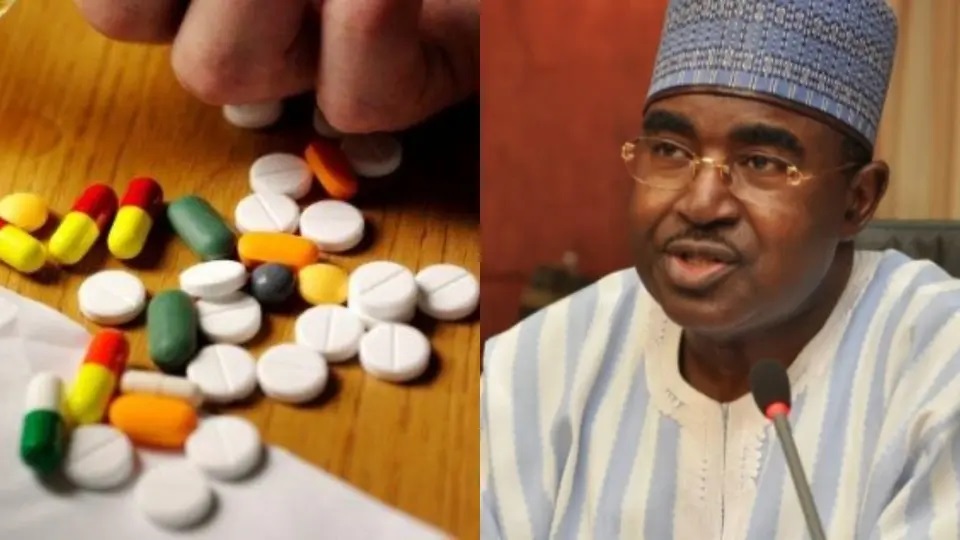
Drug Trafficker Conceals 23.55kg of Heroin in Baby Food

Published

on

drug integrity test

By Adedapo Adesanya

A suspected drug trafficker has been arrested by operatives of the National Drug Law Enforcement Agency (NDLEA) for concealing  22 blocks of heroin weighing 23.55 kilograms in packs of baby food at the Murtala Muhammed International Airport (MMIA), Ikeja, Lagos.

According to a statement issued on Sunday by the agency, the consignment with a street value of over N4.5 billion came from Johannesburg, South Africa on board a South African Airways flight on Wednesday, June 29 as part of a consolidated cargo that arrived at the SAHCO import shed of the Lagos airport.

After a series of follow-up operations that led to the arrest of two freight agents, the actual receiver of the drug consignment, Mr Chike Okeke Eweni, who allegedly distributes the substance for his South Africa-based partner, was arrested the following day, Thursday, June 30 at a logistics warehouse in Ajao Estate, Ikeja.

Mr Chike who hails from Anaocha LGA, Anambra State, claimed during a preliminary interview that he’s also into fish farming.

Before his arrest, NDLEA officers at the airport had on Monday, June 27 arrested a former driver with a public transport company, BRT, Mr Muyiwa Babalola Bolujoko, for ingesting 90 pellets of cocaine. He was arrested at the screening point before boarding a Qatar Airways flight en route from Doha to Sharjah, with his trip expected to terminate in Dubai, UAE.

The 39-year-old from Ijebu South LGA, Ogun State, was placed under excretion observation after body scan results confirmed drug ingestion. While in custody, the suspect excreted all the 90 pellets in four excretions.

He claimed he left his N60, 000 per month job as a BRT driver in February and decided to work as a drug courier to raise funds to buy a shuttle bus popularly called Korope in Lagos to continue his transport business.

Operatives also on Thursday, June 30, intercepted an inbound consignment of khat leaves, which arrived at the NAHCO import shed of the Lagos airport on a Royal Air Maroc flight from the Middle East. A total of 71 cartons of dried khat leaves with a gross weight of 2,434.3 kg were discovered in the cargo.

In the same vein, anti-narcotic officers of the Agency also last Thursday seized 36 parcels of Colorado, a variant of cannabis with a total weight of 19.30kg which arrived at the NAHCO import shed from Los Angeles, US on a Delta Airlines flight.

After a series of follow-up operations in which four persons were arrested, the alleged owner of the drug consignment, Mr Abibu Afis Sola was eventually nabbed on Friday, July 1 in the Gbagada area of Lagos.

Meanwhile, in Rivers state, NDLEA operatives on Wednesday, June 29 arrested a 68-year-old woman, Mrs Celina Ekeke at Obunku community, Oyigbo LGA with 231.2kg cannabis, while one Mr Shedrack Eze, was arrested the following day Thursday, June 30 at Yankarfe, Zaria, Kaduna state with 250,000 tablets of Exol 5, weighing 75 kg.

In Borno state, Mr Usman Haruna, 27, was arrested at the BCG checkpoint in Biu on Saturday, July 2 with 19.7kg of cannabis.

In his remark, the Chairman/Chief Executive of the NDLEA, Mr Mohamed Buba Marwa expressed satisfaction with the exemplary performance of the officers and men of the MMIA command in the past week while also commending those of Rivers, Kaduna and Borno for being vigilant.

He charged them and others across the country to remain steps ahead of the tricks by the desperate drug cartels.


Adedapo Adesanya is a journalist, polymath, and connoisseur of everything art. When he is not writing, he has his nose buried in one of the many books or articles he has bookmarked or simply listening to good music with a bottle of beer or wine. He supports the greatest club in the world, Manchester United F.C.

Click to comment

Leave a Reply

Your email address will not be published. Required fields are marked *

General

Nigeria’s New Alphanumeric Postcode System to Launch October 1

Published

on

Alphanumeric Postcode System

By Adedapo Adesanya

The Minister of Communications, Innovation and Digital Economy, Mr Bosun Tijani, has announced that Nigeria will launch a new alphanumeric postcode system on October 1, 2026, with every home expected to have a unique postcode.

Mr Tijani disclosed the development in a video post on X, describing the new system as a more precise and digitally oriented approach to addressing locations across the country.

He said the initiative would mark a significant shift in Nigeria’s postal addressing system by assigning unique postcodes to individual homes.

The initiative marks a major step in Nigeria’s digital transformation agenda. By replacing the outdated numeric-only system, the alphanumeric codes provide a more flexible and scalable framework that can accommodate the country’s rapid urban growth and diverse settlement patterns.

For emphasis, an alphanumeric postcode system is a postal indexing system that uses a combination of both letters (alpha) and numbers (numeric), along with spaces or punctuation, to identify specific geographic locations, streets, or individual buildings for mail delivery.

​Unlike purely numeric postcode systems (such as the 5-digit US ZIP Code or 5-digit codes used in some European countries), alphanumeric codes offer a much higher number of unique combinations using fewer total characters. This flexibility allows postal authorities to pinpoint locations with incredible precision, often down to a single side of a street or a specific large building.

“On October 1st 2026 Nigeria’s new Alphanumeric Postcode System goes live,” Mr Tijani said.

“For the first time, every home will be assigned a unique postcode that’s simple, precise and built for a digital future,” he added.

The minister urged Nigerians to prepare to generate their individual postcodes ahead of the launch.

The new system is expected to strengthen Nigeria’s digital addressing infrastructure and improve the identification and location of homes and properties for postal and other location-based services.

The initiative is being implemented in collaboration with the Nigerian Postal Service (NIPOST) as part of broader efforts to modernise the country’s addressing and digital infrastructure.

Continue Reading

General

Tinubu Directs Finance Minister to Give Reforms Scorecard to Nigerians

Published

on

Tinubu's Portrait

By Modupe Gbadeyanka

The Minister of Finance and Coordinating Minister of the Economy, Mr Taiwo Oyedele, has been directed to give an account to Nigerians on how the current government has fared since its inception on May 29, 2023.

This directive was given by President Bola Tinubu in a message posted on his verified social media handles on Wednesday.

This coincides with the commencement of campaigns for the 2027 presidential election scheduled for January 16.

According to the timetable of the Independent National Electoral Commission (INEC), candidates seeking to become the country’s president are eligible to kick off their campaigns from today, Wednesday, August 19, 2026.

In his message today, Mr Tinubu said, “When we began this journey of reform in 2023, I promised that the difficult decisions we were making would serve the purpose of building an economy that works better for you and a country that is stronger for our children.

“Today, your government presents The Reforms Scorecard. It sets out what our reforms have achieved, what they have cost us, and the greater costs and harms we have prevented by acting when we did.

“I have therefore directed the Minister of Finance and Coordinating Minister of the Economy, Taiwo Oyedele, to give an account to Nigerians, to explain the numbers, the choices we have made, the progress recorded, and the work that remains.

“You deserve to see the numbers. You deserve to know what has changed and what these reforms mean for you, your family, your business and our country.

“This is your government. This is your country. This is our account to you.”

Shortly after he took the oath of office over three years ago, President Tinubu declared that subsidies on petroleum products were gone. He later approved foreign exchange (FX) reforms, which devalued the Nigerian Naira, shooting from about N800 per Dollar to nearly N2,000 per Dollar. However, it is currently slightly above N1,340 per Dollar in the official market.

Continue Reading

General

NNPC, Agip Intensify Efforts to Develop 500m-Barrel Deepwater Assets

Published

on

nnpc agip

By Adedapo Adesanya

The Nigerian National Petroleum Company (NNPC) Limited and the Nigerian Agip Exploration (NAE) Limited are advancing discussions on the development of deepwater assets estimated to hold 500 million barrels of oil reserves.

The development followed a meeting between the chief executive of the state oil company, Mr Bayo Ojulari, and Agip’s Vice Chairman and Managing Director, Mr Maurizio Pinna, in Abuja.

The talks focused on ongoing work on deepwater acreage jointly held by NNPC, NAE and Shell Nigeria Exploration and Production Company (SNEPCo) as well as plans to bring the associated resources into production.

According to NNPC, the acreage comprises the Zabazaba and Etan deepwater fields, with estimated reserves of about 500 million barrels.

The fields are located in Nigeria’s deepwater terrain and are considered significant to the country’s efforts to expand its upstream oil production base, particularly as operators seek to advance projects capable of delivering additional barrels over the medium to long term.

While details of the expected production timeline were not disclosed, the meeting underscores renewed industry focus on unlocking Nigeria’s deepwater resources and growing crude oil production.

The acreage comprises licences converted from OPL 245 and is operated by NAE in partnership with NNPC Limited and SNEPCo.

Mr Ojulari and Mr Pinna also reviewed the work currently underway on the assets and the expected production outlook, with the discussions centred on advancing deepwater development.

The engagement comes amid renewed efforts to attract investment into Nigeria’s offshore petroleum resources and increase national oil production.

Continue Reading