Connect with us

General

Nigeria Faces Six-Year Delay in Achieving SDGs—IMF

Published

on

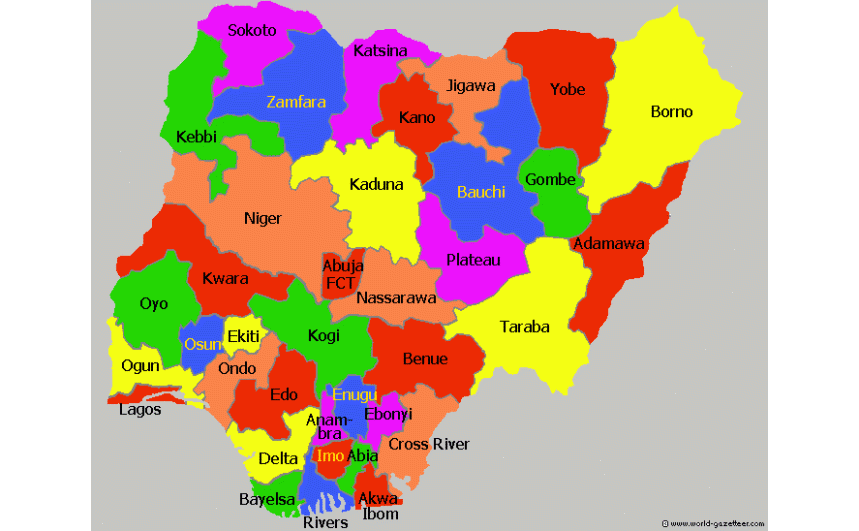
map of nigeria

By Modupe Gbadeyanka

Nigeria may need an extra six years to meet its Sustainable Development Goals (SDGs), the Managing Director of the International Monetary Fund (IMF), Ms Kristalina Georgieva, has said.

Speaking on Tuesday during a meeting with the United Nations (UN) High-Level Political Forum on Sustainable Development, the IMF chief said the delay would come from the devastating effect of the COVID-19 pandemic, which struck in 2020.

She pointed out that one of the goals, eradication of poverty, was worsening as a result of the global health crisis, lamenting that, “For the first time in 20 years, the unthinkable is happening. We are losing the fight against poverty. Global poverty is significantly increasing. It is an economic calamity—and a human tragedy.”

In order to address this issue, she advised policymakers to “take the necessary actions now to vaccinate at least 60 per cent in all countries by mid-2022.”

“As Dr Tedros mentioned, together with the World Bank, the WHO, and the WTO, we formed a war room to track, coordinate and advance the delivery of COVID-19 health tools to developing countries to mobilize relevant stakeholders and to remove roadblocks.”

“You might have seen, IMF staff came up with a plan to accelerate the exit from the pandemic at a cost of around $50 billion.

“The benefits are overwhelming—boosting global output by $9 trillion between now and 2025—the best public investment in our lifetime,” she stated.

Speaking further, Ms Georgieva noted that, “Our staff recently presented new research on how the crisis has set back the path to the SDGs. We analysed the financing gaps to achieve the SDGs in five key sectors: education, health, roads, electricity, and water and sanitation.

“And we applied this framework to four country case studies—Rwanda, Nigeria, Pakistan, and Cambodia. Not surprisingly, achieving the SDGs will be even more challenging after the pandemic.

“To be more specific, what we are assessing is that the financing needs of the SDGs will increase by an average annual 2½ percentage points of GDP or almost $60 billion per year for all low-income countries.

“In other words, the road to travel has become tougher. Enormous challenges are faced by all countries with high vulnerabilities.

“In Nigeria, for instance, because of the pandemic, the country faces a six-year delay in achieving SDGs. In Rwanda, it is five years.”

“As we work to beat the pandemic and safeguard the recovery, we must also work to give everyone a fair shot at the future that is sustainable, more resilient, and more inclusive,” she submitted.


Modupe Gbadeyanka is a fast-rising journalist with Business Post Nigeria. Her passion for journalism is amazing. She is willing to learn more with a view to becoming one of the best pen-pushers in Nigeria. Her role models are the duo of CNN's Richard Quest and Christiane Amanpour.

Click to comment

Leave a Reply

Your email address will not be published. Required fields are marked *

General

SERAP Urges Tinubu to Reverse NBC Directive Over Censorship Fears

Published

on

national broadcasting commission NBC

By Adedapo Adesanya

The Socio-Economic Rights and Accountability Project (SERAP) has urged President Bola Tinubu to withdraw a recent directive issued by the National Broadcasting Commission (NBC), describing it as a dangerous attempt to impose censorship on the media.

NBC on Friday issued a strong warning to broadcasters over what it described as rising cases of unethical conduct among presenters and programme anchors, warning that violations of the Nigeria Broadcasting Code will attract sanctions ahead of the 2027 general elections.

The commission said it had observed a disturbing decline in professionalism across news, current affairs and political programmes, with some presenters breaching standards of fairness, balance and neutrality.

According to NBC, there has been an increase in cases where anchors present personal opinions as facts, fail to provide equal opportunity for opposing views, and allow the broadcast of inflammatory or divisive content.

In a Sunday statement posted on its official X handle, SERAP called on President Tinubu to direct the Minister of Information, Mohammed Idris, and the NBC to reverse the notice.

According to the statement, Nigerian journalists, including presenters, are allowed to freely carry out their constitutional responsibilities and exercise their fundamental human rights.

“We’ve urged President Bola Tinubu to direct Mr Mohammed Idris Malagi, Minister of Information and National Orientation, and the National Broadcasting Commission (NBC) to immediately withdraw the unlawful ‘Formal Notice’ issued last week by the NBC, which threatens sanctions against broadcast stations and presenters on vague and unjustified grounds, including the expression of ‘personal opinions,’ alleged ‘bullying or intimidation’ of guests, and failure to ‘maintain neutrality.’

“We urged him to direct the Minister of Information and the NBC to immediately abstain from imposing prior censorship on broadcast stations and Nigerian journalists, including presenters, and to allow them to freely carry out their constitutional responsibilities and exercise their fundamental human rights,” the statement said.

It added, “The request followed the notice issued to broadcasters by the NBC on 17 April 2026, alleging a rise in breaches of the 6th Edition of the Nigeria Broadcasting Code in ‘news, current affairs, and political programming’, and threatening that it would ‘enforce strict compliance and impose sanctions for Class B breaches.’

“The NBC’s notice represents a dangerous attempt to impose prior censorship on the media and suppress legitimate journalistic expression.”

SERAP emphasised that journalistic opinion is a protected form of expression, adding that the Nigerian Constitution and international human rights law protect broadcasters and presenters.

“The Nigerian Constitution and international human rights law protect both the absolute right to hold opinions and the qualified right to express ideas of all kinds. Journalistic opinion is a protected expression,” the statement concluded.

Continue Reading

General

We Did Not Ban Airtime, Data Borrowing Services—FCCPC

Published

on

FCCPC

By Aduragbemi Omiyale

The Federal Competition and Consumer Protection Commission (FCCPC) has denied asking telecommunications companies to offer airtime and data lending services to their customers.

In a statement, the FCCPC explained that it only required the telcos to put in place a fairer and more transparent system for such offerings.

According to the agency, the telcos were only mandated to have proper registration, provide responsible lending conduct, clear disclosure of fees and terms, accessible consumer complaint channels, data protection safeguards, stronger accountability for third-party partners, and effective regulatory oversight.

It was stated that these requirements were mandated after “a deluge of consumer complaints bordering on opaque charges, unexplained deductions, aggressive recovery practices, poor disclosure standards, and inadequate accountability in segments of the digital lending and advance-services market.”

“The commission has not prohibited airtime borrowing or data advance services, and no directive was issued preventing consumers from accessing lawful telecom value-added services,” it clarified.

It stressed that the DEON Consumer Lending Regulations were introduced in July 2025 to, among other reasons, “curb the excesses of abusive service providers whose practices had generated persistent consumer harm and undermined confidence in the market.”

“In the telecom sector, our findings indicated that some operators engaged in exclusionary third-party technical arrangements in clear disobedience to the provisions of the Federal Competition and Consumer Protection Act, 2018. The Regulations sought to unlock the market to allow local participants alongside foreign partners, in line with free market principles.

“These measures benefit Nigerians by reducing abusive practices, improving transparency, strengthening consumer choice, and encouraging responsible innovation by legitimate operators,” the statement noted.

“We are aware that some vested interests and their foreign collaborators are opposed to the creation of safe markets and fair competition, therefore resorting to a campaign of disinformation.

“Operators are expected to structure their commercial relationships in a manner consistent with Nigerian law. Commercial arrangements or outsourcing decisions do not displace competition and consumer protection obligations.

“At the commencement of the framework in July 2025, affected operators were granted an initial 90-day compliance period to regularise their products, structures, and operations.

“That opportunity was not utilised within the prescribed timeframe, specifically in the telecom sector. The compliance window was subsequently extended until January 5, 2026, providing additional time for alignment with applicable requirements. Despite that further extension, the necessary compliance steps were still not completed by the relevant operators.

“Notwithstanding clear regulatory requirements, some operators chose to maintain the status quo by failing to register and regularise their services. In doing so, they continued operating monopolistic models that had long generated consumer complaints, including concerns relating to transparency, deductions, charges, and accountability.

“Any temporary suspension, restriction, or operational change introduced by service providers should therefore be understood as a business or compliance decision by those operators, not a ban imposed by the FCCPC.

“It is inaccurate to attribute avoidable disruption to regulation where regulated entities had adequate notice and sufficient opportunity to comply.

“Attempts to misrepresent temporary service inconvenience as the result of lawful consumer regulation are mischievous. Nigerians deserve accurate information, not sensational claims,” the FCCPC said, urging consumers and members of the public to disregard “false and misleading narratives on this issue.”

MTN Nigeria and Airtel Nigeria announced the suspension of their data and airtime borrowing services because of regulatory requirements.

Continue Reading

General

Nigeria Pushes Bid to Host AU Monetary Institute

Published

on

AU Monetary Institute

By Adedapo Adesanya

Nigeria has intensified its bid to host the African Union (AU) African Monetary Institute (AMI), with the Federal Ministry of Finance leading coordinating efforts to secure the institution ahead of its planned 2026 operationalisation.

The renewed push was made on the sidelines of the IMF/World Bank Spring Meetings in Washington D.C., where Nigeria is advancing its case as a credible host for the continental institution central to Africa’s monetary integration agenda.

Speaking through the Permanent Secretary of the Ministry, Mr Raymond Omachi, the Honourable Minister of Finance and Coordinating Minister of the Economy, Mr Wale Edun, underscored the country’s full political and institutional backing for the initiative. He stated that Nigeria has moved beyond policy commitments to concrete delivery, with the necessary infrastructure and administrative arrangements already in place.

The Nigerian government emphasised that hosting the institute aligns with Nigeria’s broader economic strategy of positioning Abuja as a hub for continental financial coordination.

It noted that the institute represents a critical step toward deeper monetary cooperation, improved macroeconomic convergence, and a more integrated African financial system.

Earlier, the Governor of the Central Bank of Nigeria, Olayemi Cardoso, had reaffirmed Nigeria’s readiness through his representative, the Deputy Governor, Economic Policy, Mr Muhammad Abdullahi.

He indicated that a dedicated office facility has already been secured in Abuja and made available for inspection, reflecting the country’s preparedness to meet host country obligations.

According to the Ministry, Nigeria remains actively engaged with the African Union and is prepared to conclude all required agreements to ensure a seamless take-off of the institute within the stipulated timeline.

The African Monetary Institute, approved in February, is designed to strengthen policy coordination, stabilise exchange rate frameworks, and lay the groundwork for eventual monetary unification across the continent.

On his part, the Chief Economist and Vice President of the African Development Bank (AfDB), Mr Kevin Urama, noted that the institute would strengthen financial stability, improve debt sustainability, and address structural constraints posed by multiple currencies across the continent.

Nigeria hosting the institute would mark the presence of another African-based organisation in Africa’s most populous country, which also plays host to the African Energy Bank.

Continue Reading

Trending