Connect with us

General

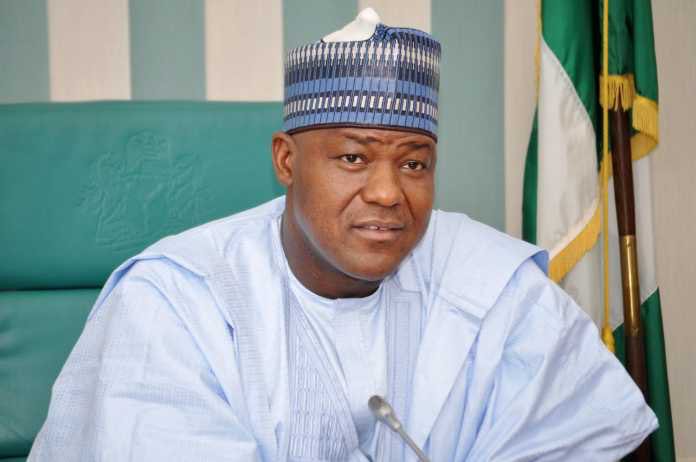
Reps at 2: Read Full Speech of Yakubu Dogara

Published

on

ADDRESS BY HON. SPEAKER, HOUSE OF REPRESENTATIVES OF THE FEDERAL REPUBLIC OF NIGERIA, RT. HON. YAKUBU DOGARA, ON THE OCCASION OF THE SECOND YEAR ANNIVERSARY OF THE 8TH HOUSE OF REPRESENTATIVES ON 9TH JUNE, 2017.

Protocols:

Permit me to welcome all of us to this very important event marking the 2nd year anniversary of the 8th House of Representatives. It is indeed a rare privilege to preside over this House on such a momentous occasion attended by many of our predecessors who made this institution what it is: a House of the Nigerian people.

  1. We have chosen to mark this day, not because we are in the mood for celebrations. No. We are marking this day even when the nation is struggling to exit from the excruciating economic recession and anguish being faced by our people.
  2. Our intention therefore is to simply appraise ourselves, to find out at mid-term, how far we have kept faith with our constituents and Nigerians in the contract or social charter we entered into at the inception of the 8th House of Representatives via our LEGISLATIVE AGENDA. We wish to be availed an honest assessment of the achievements and failures we have recorded so far, as a deliberate effort that may lead to deepening our democracy and its tools with which to approach with the needed confidence, the next two years left of our mandate.
  3. It is important to ask ourselves some hard questions. Have we always placed the interest of our Constituents and Nigerians first in all our endeavours? Have we always placed national interest above self, regional and other interests? Are we patriotic or partisan? Have we used our legislative authority to expose corruption, inefficiency and waste in government activities? Have we made laws for the peace, order, and good government of Nigeria? Have we shown fidelity to the Fundamental Objectives and Directive Principles of State Policy enshrined in Chapter two of the Constitution?
  4. The answer to above posers is the criteria and yardstick to assess who we are. Are we leaders or mere politicians? The difference is that while politicians are just interested in the next election, leaders are cultural architects because they create the environment by which others can grow and flourish.
  5. On my part, I will answer the above posers with qualifications. Yes, we have done reasonably well in most of the indices indicated. But there is a very large room to do even more. I answer these questions, fully conscious of the fact that self-appraisal is inherently problematic and is prone to bias. The appraisal of the general public and our peers will be more objective. Let me therefore save myself from the dishonour of marking our own script and submit to the judgement of those given the task of appraising our performance today.
  6. However, I must hasten to add that for our appraisal not to miss the mark, it must take into account our promise to bring change to and render nugatory the old narratives about our Parliament. We must never discount the fact that it is not what you change from but what you change to that brings true transformation. Change is about what you embrace not what you abandon. Objective assessment is often difficult in an environment such as ours where we want those in government to live the way we want but we want to be free to live anyhow.
  7. Hon colleagues and distinguished guests, before I hand over this issue to others, I would crave your indulgence to make few comments and observations on our scorecard. In terms of the core mandate of law-making, we have remained a bastion of legislative activism. Indeed members of the 8th House of Representatives are in keen competition with one another in fashioning out legislative solutions to myriad of problems facing the nation. That is why in all facets of law-making, we can comfortably and conveniently assert that we have broken all records.
  8. Statistics bear this out. The total number of Bills introduced so far are 1064 out of which Executive Bills are 50, Senate Bills transmitted to the House – 21 and Private Members Bills – 993. A total of 126 Bills have been passed by the House and the others are at various stages in the legislative mill. 27 Bills have received Presidential assent and a lot more are in the pipeline. Each of the achievements highlighted above is unsurpassed by any previous Assembly. The sheer volume of these Bills attests to the vibrancy of the House in its attempt to legislate on key areas of our national life at a very trying time in our history.
  9. Public Petitions received in the last two years are over 500 in number and the Committee on Public Petitions conducts Public Hearings on these petitions almost every week to ensure citizen access to the legislature.
  10. Whereas it is immediately difficult to measure the impact of these Bills, a thorough examination of them shows the interest of the House in getting the economy out of the current recession that has affected both large and small businesses as well as families across Nigeria.
  11. On issue of Budget, we kept our promise to Nigerians at the beginning of the legislative session to ensure transparent deliberation and passage of the 2017 Appropriations Bill which will be signed into law early next week. We have also carried out significant Budget Reforms. For the first time in the history of Nigeria, a Public Hearing was conducted in the National Assembly to get the input of Nigerians in the budgetary process. Further reforms introduced include the details of the Appropriation Act being available to all members before passage in plenary; the requirement that members of each Committee should sign the Report of their Committees before being sent to the Committee on Appropriations. All these novel measures are unprecedented in the history of our Parliament. These proactive measures ensured that the House’s debate and consideration of the 2017 budget proposal presented by the President was evidence based and geared towards galvanizing the economy for greater growth.
  12. In addition to these, the House has considered and passed several Bills designed to stimulate economic growth and promote competition. These include: The Bill for an Act establishing Federal Competition and Consumer Protection Commission, etc. This legislation has the potential to engender innovation and efficient allocation of resources, eliminate barriers to entry and restrictive trade practices in our market. It will have a hugely positive impact on the quality of goods and services and their prices in the interest of the Nigerian consumer. Several Bills and Resolutions aimed at improving ease of doing business in Nigeria have been passed and more are in the works.
  13. Realising that underemployment is as grave a problem as unemployment, we in the House have introduced a Bill on new minimum wage Bill to promote the welfare and well-being of Nigerian Workers especially in light of changing economic realities. For us it is unacceptable that the average Nigerian worker is shut out from the promise of democracy, which is: “life, liberty and the pursuit of happiness”. Our democracy must be made to work for all Nigerians including our workers who must have the tools with which to pursue happiness while in active service or in retirement.
  14. One other challenge that the country has had to grapple with is corruption. Our legislative response has been by way of legislation and Resolutions. Many Bills in this respect have been passed, and many are still in the mill. Some motions have led to the series of investigative Hearings that are ongoing. Besides we have injected oversight emphasis in that direction.
  15. This 8th House of Representatives introduced Sectoral Debates. The idea is to get Ministers to share their vision and how they intend to achieve them so that Parliament can hold them accountable to goals they themselves have set. The first phase of the debate on diversification of the Nigerian economy has been concluded. The other phases are scheduled in the next Session.
  16. I must mention this to our collective credit, that the cohesion in the House is one of the major achievements of the 8th House. Without this, all else would have fallen apart as valuable hours of legislative business would have been dissipated on the management of internal squabbles. This we achieved by always placing patriotism above partisanship which is key to the unremitting exemplary maturity that is seen on the floor, week in week out. It was Albert Einstein who said, “life is like riding a bicycle. To keep your balance, you must keep moving”. Dear colleagues patriotism is and will always be what keeps us moving and balanced. Permit me to commend and deeply appreciate you all as we look forward to even greater cohesion in the years ahead.
  17. This self-appraisal cannot be complete without mentioning areas for further improvement. The timely submission of Reports by various Committees require improvement in the next legislative Session. To this end, we would ensure that timelines for legislative measures referred to Committees are strictly enforced. We need to also ensure that Ad-Hoc Committees do not constitute themselves into permanent or Standing Committees.
  18. Furthermore, we need to do a better job of coordinating the activities of various Committees to ensure synergy and avoid overlapping of activities and functions.
  19. On this note, it is my singular pleasure to once again welcome us all to this Special Session, and to specially thank my Honourable colleagues for your support, solidarity, patience, understanding, comradeship, hard work and harmony exhibited in the last two years in spite of many daunting challenges. Having said this, it is now time for me, to surrender the floor to our eminent assessors for their appraisal.
  20. Thank you all, God bless you and bless the Federal Republic of Nigeria.

Modupe Gbadeyanka is a fast-rising journalist with Business Post Nigeria. Her passion for journalism is amazing. She is willing to learn more with a view to becoming one of the best pen-pushers in Nigeria. Her role models are the duo of CNN's Richard Quest and Christiane Amanpour.

General

4th South Africa Focus Week Begins in Lagos to Strengthen Bilateral Ties

Published

on

South Africa Focus Week

By Adedapo Adesanya

The South African Consulate General in Lagos, in partnership with Brand South Africa and the Development Bank of Southern Africa (DBSA), is hosting the 4th edition of the South Africa Focus Week in Lagos, Nigeria, from April 22 – 26, 2026.

The annual platform continues to grow as a strategic initiative aimed at fostering social cohesion between South Africans and Nigerians while positioning South Africa as a preferred destination for business, tourism, and education. Since its inception in 2023, South Africa Focus Week has attracted over 1,500 participants, bringing together stakeholders from across sectors, including trade and investment, arts and culture, tourism, aviation, and the culinary industry.

The 2026 edition holds particular significance as it coincides with the 30th anniversary of South Africa’s democratic Constitution, enacted in 1996, as well as 32 years of unbroken diplomatic relations between South Africa and Nigeria, established in February 1994. These milestones underscore the enduring partnership between the two nations, rooted in shared history and strengthened through formal agreements and ongoing collaboration.

The 2025 economic relationship between South Africa and Nigeria reflects a strategically significant, multi-dimensional partnership anchored in trade, energy security, investment flows, and strong institutional cooperation. While bilateral trade remains structurally imbalanced – with South Africa exporting US$468.48 million and importing $1.69 billion, resulting in a $1.22 billion deficit – this dynamic is largely driven by South Africa’s reliance on Nigerian crude oil, positioning the relationship as one of strategic interdependence rather than imbalance alone.

This partnership is further elevated by the relative economic weight of both countries. According to IMF projections, South Africa’s economy is valued at approximately $443.6 billion, while Nigeria’s stands at around $334.3 billion in nominal terms for 2026. As two of the largest economies on the continent, their bilateral engagement constitutes a central axis of African economic activity, with disproportionate influence on the success of continental integration efforts.

Beyond trade, the relationship is reinforced by deep two-way investment linkages. South African firms -including MTN Group, Shoprite, and Standard Bank – maintain a strong presence in Nigeria, while Nigerian companies such as Access Bank and Paystack have established a growing footprint in South Africa. Although investment flows are asymmetrical and some Nigerian firms have faced operational challenges, these exchanges reflect an emerging bi-directional economic corridor that extends beyond goods trade into services, finance, and digital innovation.

Aligned with Brand South Africa’s mandate to build the country’s global reputation and competitiveness, the week-long programme will convene leaders from government, business, civil society, academia, and the media. Discussions will focus on leveraging the African Continental Free Trade Area (AfCFTA) as a tool for market access and global positioning, with Nigeria serving as a key focal point.

The South Africa Focus Week has features a series of high-level engagements and cultural activities designed to deepen economic ties and promote collaboration: South Africa–Nigeria Infrastructure Investment Conference (April 22, 2026) which was held under the theme South Africa–Nigeria Partnership: Unlocking Infrastructure Opportunities,” the conference will bring together key stakeholders in infrastructure development to explore collaborative projects in road, rail, and transportation systems.

The forum also examined the role of Public–Private Partnerships (PPPs) and facilitated discussions on project financing and implementation with institutions such as the DBSA and Nigeria’s Infrastructure Concession Regulatory Commission (ICRC).

This was followed by the 2nd Economic Diplomacy Roundtable (Thursday, April 23, 2026), which was hosted in partnership with MTN Nigeria under the theme Role of Technology in Infrastructure Development, the roundtable will convene senior government officials, private sector leaders, and industry experts to identify investment opportunities and strengthen strategic partnerships.

Friday, April 24, was for Arts and Culture Experience, which is a dedicated cultural day will showcase Lagos’ creative spaces and features a panel discussion on South Africa’s arts, film, music, and culture. The programme includes a South African film screening, engagements with filmmakers, and a networking reception aimed at fostering collaboration between the creative industries of both countries.

The event continues on Thursday, April 25, with Freedom Day Celebration and Closing Ceremony. This commemorative event will celebrate 30 years of South Africa’s Constitution, 32 years of freedom and democracy, and the enduring diplomatic relations between South Africa and Nigeria. The ceremony will also provide an opportunity to reflect on outcomes from the week and outline future areas of cooperation.

The celebration forms part of Brand South Africa’s Global South Africans Programme, which recognises and connects South Africans in the diaspora as ambassadors of the nation’s values and identity.

The week climaxes with the 4th edition of the South Africa Golf Tournament at Ikoyi Golf Club on Saturday, April 26, 2026, which will be done in partnership with Crossflex International.

According to a statement, the event aims to strengthen people-to-people relations through sports diplomacy, bringing together South African and Nigerian golfers in a spirit of camaraderie and collaboration.

Continue Reading

General

EFCC Arrests Ex-Skye Bank Chair Tunde Ayeni Over Alleged Diverted Loans

Published

on

tunde ayeni

By Modupe Gbadeyanka

The former chairman of the defunct Skye Bank Plc, Mr Tunde Ayeni, has been apprehended by the Economic and Financial Crimes Commission (EFCC).

Spokesperson of the anti-money laundering agency, Mr Dele Oyewale, confirmed the arrest of the businessman on Friday but declined to provide further details, according to TheCable.

Mr Ayeni was accused of diverting the N36.5 billion and $30 million loans from Polaris Bank Limited to companies with which he has links.

He was alleged to have obtained the credit facilities for marine security, electricity distribution, and real estate projects, but moved them to telecom investments tied to NITEL/MTEL assets via a NATCOM account.

After the Central Bank of Nigeria (CBN) revoked the operating licence of Skye Bank in 2018, it nationalised it to Polaris Bank.

The EFCC has been looking into the alleged diversion of funds by Mr Ayeni, resulting in his arrest in Abuja on Thursday, April 23, 2026.

He is being grilled over the matter and would be arraigned in court once the investigation is concluded.

This is not the first time Mr Ayeni has been nabbed and probed by the EFCC, as this happened a few months after his bank lost its licence.

The then acting spokesman for the EFCC, Mr Tony Orilade, said Mr Ayeni was quizzed by detectives over issues related to fraud and embezzlement allegedly committed by him when he was Chairman of the bank a few years ago.

Continue Reading

General

Customs, Police Commence Tighter Security at Ports to Protect Oil Trade

Published

on

nigeria customs police

By Adedapo Adesanya

The Nigeria Customs Service (NCS) and the Nigeria Police have begun securing the country’s maritime corridor as part of critical moves to safeguard oil and gas trade flows through the nation’s ports.
This follows a recent strategic engagement between the Ibeto Seaport and Terminals Command of Customs and the Eastern Port Police Command in Port Harcourt, where both agencies reaffirmed their commitment to joint operations.
Customs Area Controller, Mr Usman Yahaya, described inter-agency cooperation as essential to protecting critical economic infrastructure.
“This visit is timely and highly appreciated. It reflects the importance of sustained cooperation among agencies entrusted with the security of our nation and the protection of critical economic assets,” he said.
Mr Yahaya stressed that collaboration between Customs and Police remains central to maintaining order and preventing criminal activities within port environments.
“Customs and the Police share common responsibilities in safeguarding the port environment. Synergy remains the cornerstone for achieving our collective mandate,” he added.
He further assured continued support for the Police Command to enhance operational effectiveness.
“Customs Area Controller Usman Yahaya (sitting, right) and Commissioner of Police Shuaibu Audu (sitting, left) with other Customs and Police personnel

“We are fully committed to working with the new Commissioner of Police and giving all necessary support towards the successful discharge of his responsibilities.”

On his part, the Commissioner of Police, Eastern Port Command, Mr Shuaibu Audu, said the visit was aimed at strengthening existing ties between both agencies.
“My presence here today is to reinforce the cordial relationship between the Nigeria Police Force and the Nigeria Customs Service. No organisation can function effectively in isolation,” he said.
Mr Audu emphasised the strategic importance of ports to Nigeria’s economy, particularly in the energy sector.
“Our ports are strategic national assets, and we must work together to keep them secure,” he stated. “Synergy among security agencies is essential to addressing emerging threats.”
Continue Reading

Trending