Connect with us

General

Reps Summon Lai Mohammed to Explain Reason for Twitter Ban

Published

on

Reps Summon

By Aduragbemi Omiyale

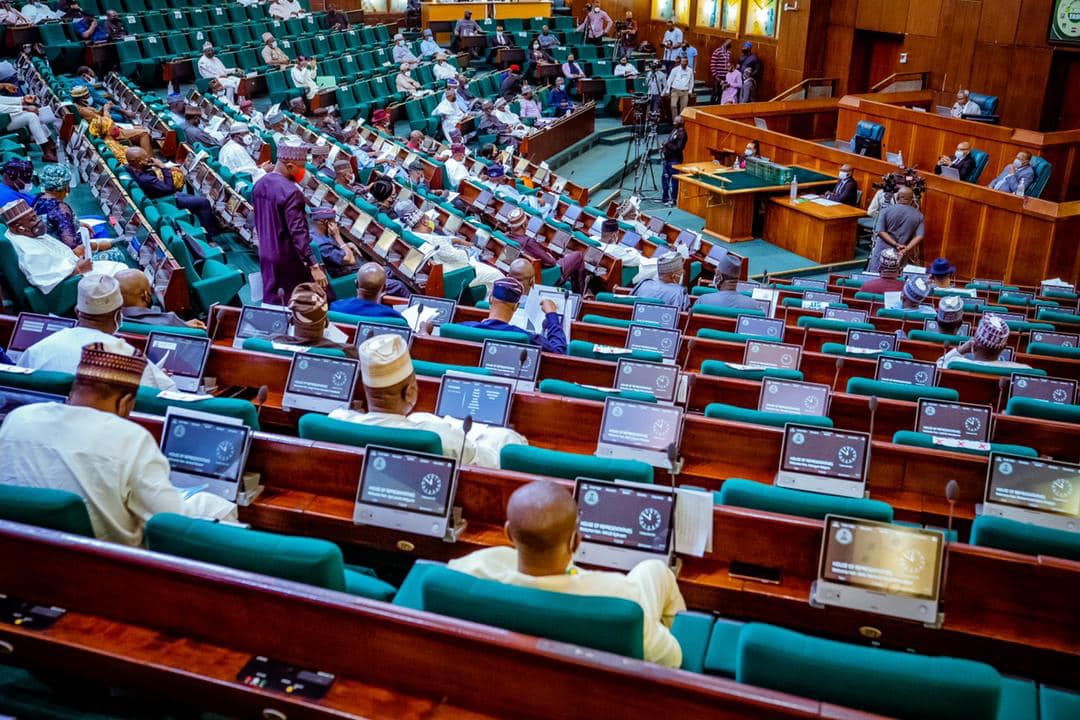
The Speaker of the House of Representatives, Mr Femi Gbajabiamila, has mandated the lower arm of the parliament to investigate the legality of the suspension of operations of Twitter in Nigeria by the federal government.

Last week, the Minister of Information and Culture, Mr Lai Mohammed, announced a ban on the use of Twitter in the country indefinitely, citing “the persistent use of the platform for activities that are capable of undermining Nigeria’s corporate existence.”

To make the ban effective, after some Nigerians began to bypass the blockage, the Minister of Justice, Mr Abubakar Malami, said violators of the directive would be prosecuted.

At the plenary on Tuesday, Mr Gbajabiamila said the green chamber of the National Assembly recognises that Twitter, like other social media networks, is an important tool for communication and commerce in Nigeria, particularly amongst the younger generation who have used these networks for enterprise and innovation with great success.

“The House also recognises that as social media has been a tool for good, it can also be a tool for bad actors.

“As such, the government has a legitimate interest in ensuring that these platforms are not used to commit vile actions against individuals and the state,” the Speaker.

According to him, the proper role of the legislature in circumstances like this is first to peel back the layers of the decision-making process to unravel the issues until we develop an understanding of the why and the how of executive decisions.

“Following that, the legislature must make sure that regulatory and enforcement actions by the government are in accordance with the laws of the land, that due process of law has been followed to the latter and that the outcomes of regulatory decisions do not result in adverse consequences for the country and all our people.

“Fidelity to our responsibilities in situations like this requires the legislature and legislators to as in the words of Rudyard Kipling, keep your head when all about you are losing theirs.

“We listen to the agitation of the people, but we also hear from the government so that from the abundance of information, we reach the level of awareness that allows us to discharge our role dispassionately.

“It is in service of our obligations under the constitution of the Federal Republic of Nigeria and our moral duty to the Nigerian people, that the leadership of the House has decided to mandate the House Committees on Communication, Justice, Information and Culture, and National Security and Intelligence to immediately commence an investigation to determine:

“The circumstances of the decision by the Federal Government of Nigeria to suspend the operations of Twitter in Nigeria; and

“The legal authority for the ban on the operations of Twitter in Nigeria.

“The Committees are additionally mandated to Invite the Minister of Information and Culture, Alhaji Lai Mohammed to brief the House of Representatives on the objectives, intent, and duration of the suspension on the operations of Twitter in Nigeria, and to report to the House within 10 days.

“The report of the Committees will guide further action by the House of Representatives on this matter. Therefore, I urge the Committees to act with speed and sound judgment to address this issue that has animated our national conversations over the last few days,” he said.


Aduragbemi Omiyale is a journalist with Business Post Nigeria, who has passion for news writing. In her leisure time, she loves to read.

Click to comment

Leave a Reply

Your email address will not be published. Required fields are marked *

General

Tinubu Confirms Killing of Abu-Bilal Al-Manuki by Nigerian, US Forces

Published

on

Tinubu kill Abu-Bilal Al-Manuki

By Modupe Gbadeyanka

President Bola Tinubu on Saturday confirmed the killing of a senior ISIS leader, Mr Abu-Bilal Al-Manuki, in an overnight operation carried out by the United States and Nigeria.

President Donald Trump had earlier announced the elimination of the notorious terrorist via a post on his Truth Social.

Later, in a statement today, Mr Tinubu praised the action, describing it as “a significant example of effective collaboration in the fight against terrorism.”

“Our determined Nigerian Armed Forces, working closely with the Armed Forces of the United States, conducted a daring joint operation that dealt a heavy blow to the ranks of the Islamic State,” he said in the statement.

According to him, early assessments confirm the elimination of the wanted IS senior leader, Abu-Bilal Al-Manuki, also known as Abu-Mainok, along with several of his lieutenants, during a strike on his compound in the Lake Chad Basin.

He commended the partnership between Nigeria and America in waging war against terrorists, thanking his US counterpart “for his leadership and unwavering support in this effort.”

“I commend the personnel involved on both sides for their professionalism and courage, and I look forward to more decisive strikes against all terrorist enclaves across the nation,” the Nigerian leader added.

Continue Reading

General

Nigeria Steps up AI Surveillance, Anti-Drone Systems for National Security

Published

on

Anti-Drone Systems

By Adedapo Adesanya

Nigeria is set to strengthen its defence architecture by deploying artificial intelligence-powered surveillance systems and advanced anti-drone technology as part of efforts to modernise the country’s military capabilities, according to the Minister of Defence, Mr Christopher Musa.

He disclosed this during a high-level visit to Monaco, where he led a Nigerian delegation to conclude discussions on the multi-domain Hybrid Intelligence Shield (HIS) project.

According to Mr Musa, the initiative is designed to enhance border security, protect urban centres and improve the country’s response to emerging security threats.

The project is expected to introduce AI-driven surveillance systems capable of identifying threats rapidly through smart algorithms, while anti-drone technology will be deployed to intercept and neutralise unmanned aerial threats.

The government also plans to establish national and regional command-and-control centres to improve real-time coordination and response to security incidents across the country.

Mr Musa said the initiative would place strong emphasis on technology transfer and local capacity development through the establishment of a military Centre of Excellence in Nigeria.

He added that the federal government would leverage partnerships with international firms, including Marss UK Ltd, while simultaneously building indigenous capabilities to address insurgency, illegal mining, piracy and other security threats.

Nigeria has continued to battle multiple security challenges in recent years, including insurgency in the North-East, banditry and kidnappings in the North-West, farmer-herder clashes in the North-Central region, crude oil theft in the Niger Delta and piracy in the Gulf of Guinea.

Nigeria is stepping up its defence as the border region of Nigeria, Benin and Niger on the southern edge of the Sahel region is becoming a new stronghold for jihadists, as militants turn forests and pastoral networks in West Africa into bases for recruitment and international attacks.

Attacks in Nigeria have also risen, with data from the website of the Armed Conflict Location & Event Data (ACLED), a conflict-monitoring group, affirming that the number of suicide bombings in Nigeria by March already matched the annual average over the past six years.

The Nigerian military has also been dealt a blow to its military bases and senior figures targeted. In April, Brigadier-General Oseni Omoh Braimah was killed when Islamist fighters attacked a base in Borno State.

To also meet the defence goal, Nigeria is stepping up efforts to build domestic arms-manufacturing capacity.

Continue Reading

General

Nigeria, Morocco to Seal Atlantic Gas Pipeline Deal by Q4 2026

Published

on

nigeria morocco

By Adedapo Adesanya

Nigeria and Morocco are set to sign a major intergovernmental agreement later this year to push forward the long-delayed Nigeria-Morocco Gas Pipeline project, a multi-billion-dollar energy corridor expected to reshape gas trade across West Africa and Europe.

The agreement, expected to be signed in the fourth quarter of 2026 by President Bola Tinubu and King Mohammed VI of Morocco, follows the completion of preliminary technical studies for the ambitious project, according to officials from both countries.

The pipeline, also known as the African Atlantic Gas Pipeline, is projected to stretch about 6,900 kilometres along offshore and onshore routes across West Africa, making it one of the largest gas infrastructure projects on the continent.

With an estimated cost of $25 billion, the pipeline is designed to transport up to 30 billion cubic metres of gas annually once completed.

Discussions on the project gained fresh momentum during a telephone conversation between Nigeria’s Minister of Foreign Affairs, Mr Bianca Odumegwu-Ojukwu, and her Moroccan counterpart, Mr Nasser Bourita.

The project would not only strengthen energy cooperation between the two countries but also improve regional economic integration and expand Africa’s access to European energy markets.

According to Morocco’s hydrocarbons and mining agency, ONHYM, part of the gas supply will support Morocco’s domestic energy demand, while large export volumes will be directed to Europe.

The project, first proposed about a decade ago, is seen as a strategic alternative gas supply route amid rising global energy security concerns and Europe’s search for more diversified energy sources.

Beyond the pipeline, Nigeria and Morocco are also exploring broader economic partnerships, particularly in fertiliser production and distribution to support food security across Africa.

Both countries also agreed on the need to revive the Nigeria-Morocco Business Council to strengthen trade and investment relations under the African Continental Free Trade Area framework.

Analysts noted that the project could significantly boost gas monetisation opportunities for Nigeria, expand regional infrastructure development, and deepen economic ties between West African nations and Europe if successfully executed.

Continue Reading

Trending